

Fashion
India’s Textiles Ministry rolls out Kharif cotton plan with 550 hubs


Recognising cotton as a critical sector for millions of farmers, the ministry, in a meeting with cotton-growing states, the Cotton Corporation of India (CCI), and ministry officials, outlined a national strategy aimed at ensuring hassle-free procurement, timely payments, and digital inclusion, while urging states to fully align with MSP operational norms.
India’s Ministry of Textiles, led by Secretary Neelam Shami Rao, has launched a preparedness plan for the 2025–26 Kharif Cotton Season, featuring 550 procurement centres across 11 states and digital registration via the ‘Kapas-Kisaan’ app.
Procurement begins in October in phases across zones, with payments made directly to Aadhaar-linked accounts to ensure transparency.
Procurement is scheduled in phases—Northern Zone (Punjab, Haryana, Rajasthan) from October 1, Central Zone (Gujarat, Maharashtra, Madhya Pradesh, Odisha) from October 15, and Southern Zone (Telangana, Andhra Pradesh, Karnataka, Tamil Nadu) from October 21, 2025, the Ministry of Textiles said in a press release.
The ministry emphasised the adoption of the ‘Kapas-Kisaan’ app, which allows farmers to self-register, book slots, and track payments in real time. States have been asked to run awareness campaigns to maximise participation, with registration open until October 31, 2025. Existing users in Andhra Pradesh, Telangana, Madhya Pradesh, and Haryana must verify their records on the app.
Payments will be made directly to Aadhaar-linked bank accounts via NACH, with SMS alerts sent at every stage. Local Monitoring Committees (LMCs) will oversee operations at each centre, and CCI has set up dedicated WhatsApp helplines for quick grievance redressal.
Secretary urged states to expedite sharing of cotton cultivation records to facilitate registrations. She stressed that inter-ministerial coordination, state support, and digital outreach are key to ensuring every cotton farmer receives a fair price, timely service, and grievance redressal under a modern, accountable procurement system. Therefore, all eligible cotton farmers were strongly advised to register promptly and leverage digital tools to avoid distress sales, added the release.
Fibre2Fashion News Desk (SG)








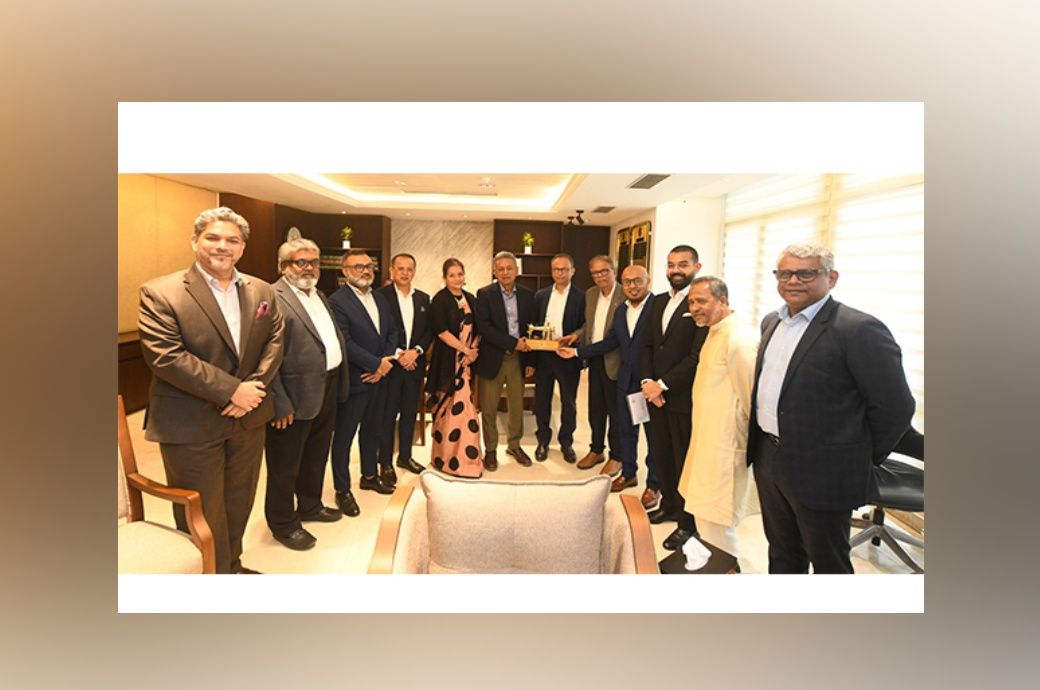
They said bank audit procedures have stalled numerous applications. Around Tk 57 billion in incentives for the textile and apparel sector remain unsettled in fiscal 2025-26, creating acute liquidity pressure and affecting exports.
Bangladesh trade body BGMEA representatives recently met Finance Minister Amir Khasru Mahmud Chowdhury and urged him to release pending cash incentives without waiting for quarterly release schedules and simplify the disbursement process.
They said bank audit procedures have stalled numerous applications.
They also raised concerns over loan rescheduling and working capital.
The authorities were requested to disburse incentives upon application submission instead of waiting for quarterly release schedules, according to a release from the trade body.
BGMEA vice president Mohammad Shihab Uddoja Chowdhury raised concerns over loan rescheduling and working capital. He said banks often reschedule loans to maintain non-performing loan ratios, but fail to provide the working capital factories need to resume operations.
He proposed that banks pair rescheduling with working capital support to create a win-win outcome, allowing factories to operate and repay loans. The finance minister agreed with the proposal.
BGMEA leaders also called for business facilitation and lower operational costs to help Bangladesh remain competitive in the global market. They sought policy support to remove obstacles in customs, ports and other administrative layers and to ensure an investment-friendly environment.
Fibre2Fashion News Desk (DS)

Bangladesh think tank Centre for Policy Dialogue has called for major reforms in business environment, tax collection, trade deals and FDI management, cautioning that the country’s post-election economic transition may be at risk without evidence-based decisions and strong accountability.
A CPD study identified ‘leaking revenue’ as the weakest area across all decision-making indicators.
Source link
The downward movement remained closely tied to crude oil dynamics, which continue to shape industrial cost structures across energy-intensive sectors. Average North Sea Brent crude prices stood at nearly €55 per barrel in January 2026, representing a drop of more than 27 per cent from a year earlier. In comparison, December prices averaged €52.5 per barrel, marking an annual decline of almost 25 per cent, CBS said in a press release.
Dutch manufacturing output prices fell 1.9 per cent YoY in January 2026, extending December’s decline as lower crude oil costs weighed on industrial pricing.
Brent prices dropped over 27 per cent annually, pulling petroleum derivative prices down 15.8 per cent.
However, producer prices rose 0.9 per cent MoM, supported by export and domestic market gains.
Petroleum-derived products registered a sharper contraction in line with weaker crude benchmarks. Prices for petroleum derivatives fell 15.8 per cent YoY in January, following a 12 per cent decrease in December, underscoring persistent softness in refined energy product pricing.
Despite the annual decline, producer prices showed sequential improvement at the start of the year. Overall manufacturing output prices increased 0.9 per cent in January from the previous month, indicating short-term pricing stabilisation across industrial segments.
The monthly uptick was led by export markets, where prices rose 1.2 per cent, while domestic market prices increased 0.6 per cent. The divergence between YoY declines and MoM gains highlights the continued influence of last year’s elevated energy base alongside emerging signs of near-term price recovery.
Fibre2Fashion News Desk (SG)


Apple’s Price-Friendly iPhone 17e Gets a MagSafe Upgrade

IIP sees 4.8% YoY growth in January; manufacturing & electricity support rise – The Times of India

Bangladesh’s BGMEA seeks policy reforms, release of pending incentives

-

 Politics1 week ago
Pakistan carries out precision strikes on seven militant hideouts in Afghanistan
-

 Tech1 week ago
These Cheap Noise-Cancelling Sony Headphones Are Even Cheaper Right Now
-

 Entertainment1 week ago
Viral monkey Punch makes IKEA toy global sensation: Here’s what it costs
-

 Sports1 week ago
Kansas’ Darryn Peterson misses most of 2nd half with cramping
-

 Entertainment1 week ago
Saturday Sessions: Say She She performs "Under the Sun"
-
Sports1 week ago
Mike Eruzione and the ‘Miracle on Ice’ team are looking for some company
-
 Business6 days ago
Households set for lower energy bills amid price cap shake-up
-

 Politics1 week ago
Trump says he will raise US global tariff rate from 10% to 15%, following court ruling