

Business
Innovation over inflation: UK SMEs double down on AI


Against a backdrop of rising costs and ongoing economic uncertainty, new research from Alibaba.com suggests that UK small and medium-sized enterprises (SMEs) are choosing to innovate their way through adversity rather than retreat from it. According to a survey of 1,000 SME decision-makers, nearly half (48%) of UK SMEs are planning to increase their spending on product innovation and R&D in the months ahead.
This appetite for innovation, despite challenging conditions, reflects a widespread belief among business leaders that developing new or improved products is essential for growth and long-term success. Indeed, 86% of respondents said they view product innovation as a key driver of business performance – a sentiment that underscores the resilience and ambition of the UK’s SME sector.
For many SMEs, investing in innovation is not just about staying afloat but staying ahead. Among those planning to increase spending, more than a third (35%) said their focus will be on improving the quality of existing products, while 33% plan to channel investment into responding more effectively to customer needs. Meanwhile, more than a quarter (27%) see innovation as a way to gain a competitive edge over rivals.
This commitment to creativity and improvement is all the more striking given the obstacles SMEs face. Half of those surveyed said that the cost of innovating or financing innovation remains a major hurdle, while almost two-thirds (58%) cited high costs as a key challenge when sourcing new products. Other barriers include keeping up with the fast pace of change (32%), a lack of in-house resources (26%), and a shortage of expertise or knowledge (20%).
Still, the picture isn’t all about constraints. UK SMEs are finding new ways to overcome these barriers, increasingly turning to digital tools and AI to drive efficiency and spark creativity. In fact, nearly two-thirds (59%) said they feel confident using AI tools to support product innovation. In addition, large language models (LLMs) can help buyers understand their procurement needs, build a comparison, perform the analysis, eliminate unsuitable options, and ultimately recommend the optimal solution. Broadly, AI is spelling a new era in the B2B e-commerce market where technology helps smaller businesses punch above their weight and trade on a global scale.
The findings come following the launch of Alibaba.com’s CoCreate Europe, its flagship B2B event. Following several successful editions in Las Vegas, the event made its European debut to great acclaim , drawing together thousands of SMEs, entrepreneurs, manufacturers and investors from across the continent.
The one-day programme was designed to inspire and empower businesses to innovate smarter, offering practical advice on cutting costs, building more resilient supply chains, and leveraging AI to accelerate growth. Through a series of sessions and workshops, attendees gained access to Alibaba.com’s powerful suite of digital sourcing tools, including AI Mode and Accio – intelligent systems that automate the sourcing process and connect buyers with over 200,000 verified suppliers across 76 industry categories and more than 200 million product listings.
AI Mode can automatically compare and filter results and find product listings for SME buyers, saving them time and money. It also goes deeper, extracting data from images, documents, certifications and transaction records to unlock previously ‘unseen’ products. In other words, AI Mode sees what others miss and finds the right match more precisely than others can.
At the event, participants also learned how to make use of Trade Assurance, Alibaba.com’s built-in protection service that helps businesses manage risks and build trust in their supply chains – a critical factor for SMEs looking to expand globally.Combined, these tools enable entrepreneurs to save time, reduce costs, and focus more energy on what really matters: growing their businesses.
One of the highlights of the event was CoCreate Pitch, the world’s largest product-based pitch competition. Some 30 aspiring product innovators from across Europe took to the stage to showcase their most innovative product ideas, spanning sectors from sustainable fashion and smart home tech to health and wellbeing.
Ten winners were selected by a panel of judges, each receiving $20,000 worth of prizes to help bring their ideas to life. The overall grand winner was awarded $200,000 in funding support – part of a global prize pool worth $400,000 – reflecting Alibaba.com’s commitment to fostering innovation and supporting the next generation of product pioneers.
The success of CoCreate Europe reinforces London’s status as a hub for entrepreneurship and innovation, and highlights Alibaba.com’s growing role in supporting SMEs to thrive in an increasingly competitive landscape. By combining global reach with local insight, Alibaba.com continues to act as a bridge between ambitious UK businesses and the suppliers, technologies, and tools they need to scale.
As the research makes clear, UK SMEs are not standing still. They are responding to economic headwinds with creativity, optimism, and a readiness to invest in the future. And with platforms like Alibaba.com providing the infrastructure and support to turn ideas into tangible products, the outlook for innovation across the UK’s SME landscape looks brighter than ever.

Fan spending for Harry Styles’s 12-night run at Wembley Stadium is set to reach £1.1 billion despite ongoing cost-of-living pressures, figures suggest.
Ticket-holders are expected to spend a total of £981 on average attending the Together, Together tour – which is limited to London in the UK – including travelling to the venue, staying overnight, buying merchandise and other costs, according to a survey for Barclays bank.
The figure exceeds the average £848 spent by fans who flocked to Taylor Swift’s Eras Tour, and the average £766 on attending the Oasis Live ’25 shows, although these were both held across four UK locations, leading to lower travel costs.
Styles’ fans anticipate they will spend an average £102 on official tour merchandise, while nine in 10 will participate in a “fan trend” on the day with 63% planning to wear a Harry Styles-themed look.
A fifth (20%) will make sure their outfits are co-ordinated with their friends and 22% hope to create or exchange fan-made items with other fans.
Barclays said the event was set to be a “major cultural moment” as a million ticket-holders travel to London for the 12 dates beginning on June 12.
With just one other European tour location, in Amsterdam, Styles’ Wembley residency will be the most performances by any artist in a single year at the venue, which has a capacity of around 90,000 people for music events.
The survey found those going to the show spent an average of £143.20 on their ticket, with 19% saying this was more than they planned but 66% saying they would have been willing to pay more if needed.
Other expected costs include an average £141.20 on accommodation, £103.10 on transport and £103.10 on food and drinks before the show.
Some 28% of fans say they are planning other activities such as sightseeing and exhibitions while in London.
More than a quarter (27%) of ticket-holders view the concert as a once-in-a-lifetime experience, and 17% said FOMO (fear of missing out) played a part in their purchase.
Almost 74% of those polled said getting tickets to sold-out or in-demand events now felt like a status symbol.
Tom Corbett, managing director of sponsorship and client experience at Barclays, said: “This tour shows just how powerful live entertainment can be, benefiting consumers and businesses alike.
“‘Concert tourism’ is on the rise because of the extent to which people value unique, shared experiences – so much so that they’re willing to invest in them even when cutting back elsewhere, and to travel to see their favourite artists perform.”
Opinium surveyed 2,000 respondents, and an additional 200 ticket-holders, between April 28 and May 1.

A sign sits outside of the Centers for Disease Control and Prevention (CDC) Roybal campus in Atlanta, Georgia, U.S. March 18, 2026.
Megan Varner | Reuters
One American has tested positive for Ebola in the Democratic Republic of Congo in connection to the deadly outbreak in central Africa that global health agencies are racing to contain, the Centers for Disease Control and Prevention said on Monday.
The person was exposed as part of their work in Congo, developed symptoms over the weekend and tested positive late Sunday, Dr. Satish Pillai, the CDC’s Ebola response incident manager, told reporters on a call. The CDC and State Department are working to move that individual and six other Americans exposed to Ebola to Germany for treatment, care and monitoring.
But Pillai emphasized that no cases tied to the outbreak have been confirmed in the U.S., and that the overall risk to the American public and travelers remains low.
Still, the CDC also announced on Monday that for the next 30 days, it will restrict entry into the country for people without a U.S. passport who were in the Democratic Republic of the Congo, South Sudan or Uganda in the last three weeks.
The update came one day after the World Health Organization declared the Ebola epidemic a “public health emergency of international concern.” The outbreak does not meet the criteria of a “pandemic emergency,” but the WHO warned that the high positivity rate and increasing cases and deaths point toward a “potentially much larger outbreak” than what is being detected and reported.
As of Sunday, more than 300 suspected cases and 88 suspected deaths have been reported, primarily in Congo but also in neighboring Uganda, according to the CDC.
The specific virus involved in this outbreak, called Bundibugyo, has no vaccine or treatment. Historically, that virus has death rates ranging from 25% to 50%, the CDC added.
But agency officials told reporters on Monday that work is underway to develop a monoclonal antibody therapy as a potential treatment for this specific strain of Ebola.
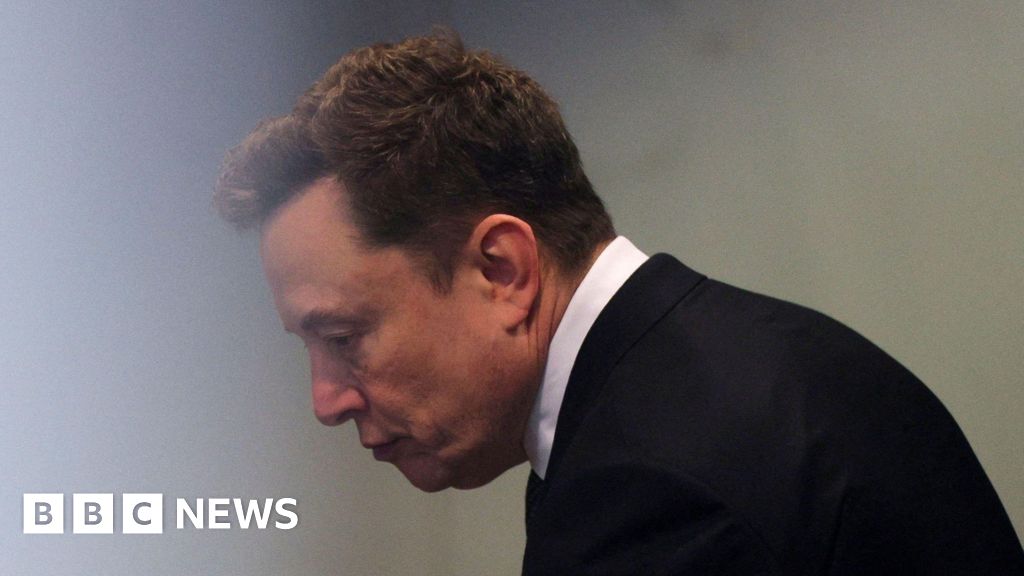
Musk’s loss against OpenAI is the latest in a string of courtroom defeats.
Source link

Fan spending on Harry Styles Wembley gigs set to top £1bn

‘Star Wars’ voice actor was 64

Harry Potter important actress leaves series just before season 2

-

 Entertainment6 days ago
Conan O’Brien hat tricks as Oscar host
-

 Tech1 week ago
Could Contact-Tracing Apps Help With the Hantavirus? Not Really
-

 Fashion5 days ago
Italy’s Zegna Group’s Q1 growth boosted by strong organic performance
-

 Entertainment1 week ago
Martin Short: Facing tragedy with joy
-

 Entertainment1 week ago
Tom Brady gets back at Kevin Hart during Netflix roast
-

 Sports1 week ago
Jacob Fatu unleashes vicious assault on Roman Reigns after World Heavyweight Championship loss at WWE Backlash
-

 Entertainment1 week ago
Martha Stewart: How to make an omelet
-

 Tech1 week ago
Papa Johns Is Getting Into Drone Delivery—but Not for Pizza