

Business
Inside GM’s new world headquarters: Modernized midcentury designs with artifacts, surprises from the American icon


A 1963 Chevrolet K20 pickup truck and a new Chevrolet Silverado EV sit outside General Motors’ new world headquarters on Jan. 6, 2026 in Detroit.
Michael Wayland | CNBC
DETROIT – Outside General Motors‘ new world headquarters, between the 12-story building and the city’s first new skyscraper in more than 30 years, sit two red Chevrolet pickup trucks.
One is a 1963 Chevrolet K20. The other is a new Silverado EV. The trucks, while part of a temporary holiday display, are symbolic of what’s inside the new global offices for the Detroit automaker: its past and present, woven together.
GM is occupying four of six office floors of the building and has filled them with artifacts, design nods and “Easter eggs” tied to the Detroit automaker’s history.
They range from a blueprint of GM’s iconic design dome and an early map of its nearby proving grounds to an interior wallpaper of 300 patented technologies and a decorative wall of cassette tapes with songs featuring the automaker’s brands as well playful references to executive stalwarts such as CEO Mary Barra and President Mark Reuss.
One of the centerpiece objects of GM’s new headquarters is the McCormick Speed Form, an aerodynamic wind-tunnel model developed at the Warren Technical Center.
Courtesy: GM
“Leadership asked when we were helping design the space to bring in some Easter eggs and details to represent who we are at GM, you know, honoring our culture and our history and our innovation,” Rebecca Waldmeir, GM industrial design architecture and experience manager, told CNBC during a tour of the new headquarters.
Other surprises include references to relevant Detroit streets, design influences from GM’s famed design campus in suburban Detroit and artwork and sculptures of its products.
Aside from the aesthetics, GM officials say the new offices will assist with collaboration and are more relevant to how the company expects its employees to work in a post-pandemic world. It will house executive offices and other corporate functions such as marketing, legal and finance.
“A headquarters really should be, at some level, a beacon for the culture of the company,” said David Massaron, GM vice president of infrastructure and corporate citizenship. “When you come in here, it should help people understand who we want to be.”
A wall inside GM’s new Detroit headquarters includes cassette tape cases featuring songs referencing the automaker’s brands and vehicles as well as custom ones featuring GM executives such as CEO Mary Barra and President Mark Reuss.
Michael Wayland | CNBC
From fortress to functionality
The new headquarters marks a significant square-foot reduction for the automaker’s corporate office — from a towering complex called the Renaissance Center along the city’s riverfront to just four floors, roughly 200,000 square feet, in the new building.
GM’s new HQ is less than a mile from the RenCen, as it’s commonly called, which has been a symbol for the city since, ironically, Ford Motor built the complex but decided not to make it its headquarters in the 1970s. GM purchased the building in 1996 as its third headquarters, all of which have been in the Motor City.
The RenCen is Detroit’s fortress, a 5.6-million-square-foot complex complete with a more-than-700-foot center tower surrounded by four 500-foot towers and two smaller adjacent ones.
GM’s new headquarters at the Hudson’s Detroit development in the city’s downtown.
Courtesy: GM
The complex is infamously difficult to get in and out of and to navigate. For much of its existence, it was surrounded by concrete barriers before a redesign around the turn of the millennium.
It has long been something of a physical permutation of GM’s historically siloed culture, which Barra has made a priority to change during her roughly 11-year tenure as CEO.
“The RenCen was designed in a different era, in a pre-Covid era where everybody went to work five days a week, everybody went to their desk,” Massaron said. “Particularly, in a post-pandemic world, you need office space that people want to come to, because we have options.”
GM’s roughly 50,000 U.S. salaried employees are currently required to work in-office Tuesday through Thursday, but the rules are more flexible than before regarding location and remote working.
The Renaissance Center (complex of skyscrapers with the Chrevrolet sign) by the Detroit River.
Roberto Machado Noa | Lightrocket | Getty Images
Most of the company’s new executive offices on the top floor of the building will be open for executives to use as they please, Massaron said. Only four of the offices will be permanently assigned to top GM executives, such as Barra and Reuss, he said.
GM declined to disclose how many employees are expected to regularly work at the new headquarters, saying foot traffic will fluctuate based on priorities and workflows. The company also declined to disclose financial details of its 15-year lease at the new headquarters.
The building complex, known as Hudson’s Detroit, is owned by a real estate company of Rocket Companies chairman and billionaire Dan Gilbert, who has been purchasing and renovating properties in Detroit for more than a decade.
Showroom, pickleball
Aside from the office areas and the executive floor, which all overlook an open atrium, GM also plans to open a semi-public space to display products and host events on the first floor of the building.
Other amenities include social gathering areas and lounges, food and beverage services and a pickleball court and recreation area.
A common area outside of the executive offices of GM’s new headquarters in downtown Detroit.
Michael Wayland | CNBC
GM’s new headquarters, which remains under construction, comes months after Ford christened a new 2.1-million-square-foot global HQ and product design and development center in nearby Dearborn, Michigan.
Ford’s new facility includes offices, design and industrial operations and a host of amenities such as a 160,000-square-foot dining area with eight “kitchen concepts,” multiple courtyards and other upgrades.
The notable difference in the size between GM’s and Ford’s new headquarters comes down to location, headcount and the automakers’ portfolios of offices and operations throughout the region.
A pickleball court and seating area inside the building that includes GM’s new headquarters in Detroit.
Michael Wayland | CNBC
GM, for example, has a vast technology and design center that occupies 710 acres in nearby Warren, Michigan. That campus houses more than 24,000 employees.
Massaron said GM didn’t feel it needed to create “a city within a city” for its new headquarters, because it’s actually “a building within a city.”
Here’s a look inside GM’s new world headquarters:
The entry of the executive floor inside GM’s new global headquarters in Detroit.
Michael Wayland | CNBC
The executive hallway of GM’s new headquarters in Detroit.
Courtesy: GM
One of a dozen or so executive offices inside GM’s new headquarters in downtown Detroit.
Michael Wayland | CNBC
One of a dozen or so executive offices inside GM’s new headquarters in downtown Detroit.
Michael Wayland | CNBC
The interior design draws inspiration from Eero Saarinen’s iconic GM Global Technical Center, incorporating golden
metallic finishes, wood feature walls, warm recessed lighting and a blend of clean linear geometries with subtle
curves.
Courtesy: GM
Patent wall graphics highlight 300 of more than 49,000
patents granted since the company’s founding in 1911.
Courtesy: GM
A wall of cassette tapes celebrates GM’s broad cultural impact, nodding to the more than 78,000 songs that
reference GM brands and vehicles.
Courtesy: GM
A model of the Chevrolet Corvette CX concept hangs on the wall outside the executive boardroom of GM’s new headquarters.
Courtesy: GM
The executive boardroom inside GM’s new headquarters in Detroit.
Courtesy: GM
Inside the common atrium area of GM’s new global headquarters in Detroit.
Michael Wayland | CNBC
A coffee shop and cafe inside the atrium area of GM’s new global headquarters in Detroit.
Michael Wayland | CNBC
A common lounge area near the atrium of the building that houses GM’s new headquarters in Detroit.
Michael Wayland | CNBC
Three-dimensional sound-wave art profiles feature engine and EV tones from notable GM vehicles across
performance, EV and ICE categories, transforming acoustic engineering into sculptural expression.
Courtesy: GM
A statue of GM’s “Cadillac Goddess” sits on a table inside the executive floor of its new headquarters in Detroit.
Michael Wayland | CNBC




Business
RBI’s Rs 25,000-Crore Switch Auction On March 2nd And Its Impact On Bond Markets, Government Debt Strategy | Explained
Last Updated:
RBI Switch Auction On March 2: The Reserve Bank of India will conduct a government securities switch auction worth Rs 25,000 crore on March 2 between 10:30 AM and 11:30 AM




In the latest exercise, all securities, having maturities in FY27, are being replaced with bonds maturing after FY32.
RBI Switch Auction On March 2: The Reserve Bank of India (RBI) will conduct a government securities switch auction worth Rs 25,000 crore on March 2 between 10:30 AM and 11:30 AM, with results to be declared the same day and settlement scheduled for March 4. The move marks the third such operation this month and is aimed at smoothing India’s future debt repayment profile.
What is a switch auction?
A switch auction is a debt management tool through which the government exchanges bonds that mature soon with bonds that mature later. Instead of repaying investors in cash when near-term securities mature, the government offers them longer-dated securities. This effectively postpones repayment obligations without increasing total debt.
In the latest exercise, all securities, having maturities in FY27, are being replaced with bonds maturing after FY32, according to RBI data.
Why is RBI conducting it now?
The key trigger is the heavy redemption pressure expected in FY27, when government securities worth about Rs 5.47 lakh crore are scheduled to mature. By replacing these with bonds maturing after FY32, the authorities are spreading repayment obligations across future years. This reduces refinancing risk and prevents sudden spikes in borrowing needs.
How does it help the government?
India has already budgeted gross market borrowing of Rs 17.2 lakh crore. Large redemptions in a single year would force the government either to borrow more or use fiscal resources for repayment. Switch auctions smooth this maturity profile, making debt servicing more predictable and fiscally manageable.
What has happened so far this month?
Before this latest announcement, the RBI conducted two switch auctions in which securities worth Rs 84,804 crore were bought back and replaced. The repeated use of this tool signals a proactive debt-management strategy rather than a reactive measure.
Why markets watch switch auctions closely
Bond investors track such operations because they affect liquidity, yield curves and supply of long-term securities. Extending maturities can reduce pressure on near-term yields while increasing supply at the long end, influencing pricing across the sovereign curve.
The broader takeaway
The latest switch auction is part of a deliberate strategy to manage India’s rising debt stock more efficiently. By pushing repayments further into the future and avoiding bunching of maturities, policymakers aim to maintain stability in government borrowing costs and ensure smoother fiscal operations in coming years.
 Click here to add News18 as your preferred news source on Google.
Follow News18 on Google. Join the fun, play games on News18. Stay updated with all the latest business news, including market trends, stock updates, tax, IPO, banking finance, real estate, savings and investments. To Get in-depth analysis, expert opinions, and real-time updates. Also Download the News18 App to stay updated.
February 26, 2026, 11:11 IST
Read More
Last Updated:
Vellayan Subbiah, a scion of the Murugappa family, has reached a settlement with other promoter branches to realign ownership
Cholamandalam Investment Finance
Vellayan Subbiah, a scion of the Murugappa family, has reached a settlement with other promoter branches to realign ownership across key group companies, according to a report by Moneycontrol.com, citing people familiar with the matter. The agreement is expected to see Subbiah give up stake exposure linked to Cholamandalam Investment and Finance Company while consolidating his position in Tube Investments of India and CG Power and Industrial Solutions.
The arrangement, finalised after more than two years of negotiations, forms part of a broader plan by the Murugappa Group to separate ownership of the century-old conglomerate among three promoter factions while ensuring business continuity. Under the settlement, Subbiah is expected to relinquish exposure to Cholamandalam Investment — the group’s flagship lending arm — and instead retain and strengthen his alignment with Tube Investments and CG Power, including taking over or retaining stakes tied to those companies within the extended promoter structure, the report said. Emails sent to Subbiah and the Murugappa Group did not receive a response until publication.
The realignment follows prolonged internal discussions over the division of the diversified business empire, which reported revenue of more than $9 billion in FY23, after five generations of joint ownership through the family holding company Ambadi Investments.
Negotiations had earlier faced hurdles due to significant valuation divergences across group companies. As previously reported by The Economic Times on August 19, 2024, the turnaround of businesses overseen by Subbiah — particularly CG Power, Tube Investments and Cholamandalam Finance — had emerged as a sticking point in share-swap discussions among family factions.
The revival of CG Power proved especially pivotal. Since Tube Investments acquired control in 2020, CG Power has deleveraged, restored profitability and benefited from investor interest in domestic manufacturing, railways, power equipment and electronics supply chains. Its stock has surged since the takeover, making it one of the group’s most valuable listed assets. Tube Investments has also diversified beyond its legacy engineering base into green mobility, contract manufacturing and specialised industrial segments, strengthening its market position.
Cholamandalam Investment, meanwhile, has grown into one of India’s most valuable non-bank lenders, with a market capitalisation exceeding Rs 1 lakh crore. The uneven appreciation in these businesses complicated efforts to carve out three equal promoter blocs, with one faction seeking revisions to earlier share-swap assumptions and another resisting reopening agreed terms, people cited by Moneycontrol.com said.
Promoter ownership across Murugappa companies is largely routed through holding vehicles rather than direct individual shareholdings, but the concentration of value highlights why these firms were central to negotiations. The promoter group’s roughly 51–52 percent stake in Cholamandalam Investment is estimated to be worth about Rs 55,000–60,000 crore at current market levels. In Tube Investments, promoter ownership of around 45–46 percent translates into holdings valued at approximately Rs 20,000–22,000 crore. Through Tube Investments’ controlling position in CG Power, the promoter group effectively holds about 58–59 percent of that company, valued at roughly Rs 45,000–50,000 crore.
Beyond these, the family controls about 56–57 percent in Coromandel International, worth around Rs 18,000–20,000 crore; 42–43 percent in Carborundum Universal, valued near Rs 9,000–10,000 crore; and 44–45 percent in EID Parry, worth roughly Rs 3,500–4,000 crore. Tube Investments also indirectly controls about 70 percent of Shanti Gears, valued at approximately Rs 2,500–3,000 crore.
The final arrangement appears to align ownership more closely with operational leadership. Subbiah, a fourth-generation member of the family, is widely credited within the group for steering the revival of CG Power and expanding Tube Investments into new manufacturing and mobility segments, making these businesses natural anchors for his promoter bloc under the new structure.
The Murugappa Group, which comprises nearly 30 companies across fertilisers, engineering, financial services, abrasives, sugar and mobility solutions, operates under a long-standing governance charter that separates ownership from management, the Moneycontrol.com report noted.
Click here to add News18 as your preferred news source on Google.
Follow News18 on Google. Join the fun, play games on News18. Stay updated with all the latest business news, including market trends, stock updates, tax, IPO, banking finance, real estate, savings and investments. To Get in-depth analysis, expert opinions, and real-time updates. Also Download the News18 App to stay updated.
February 26, 2026, 10:51 IST
Read More
Last Updated:
RBI has summoned senior officials of Yes Bank following a major data breach involving the Yes Bank–BookMyForex multi-currency forex card
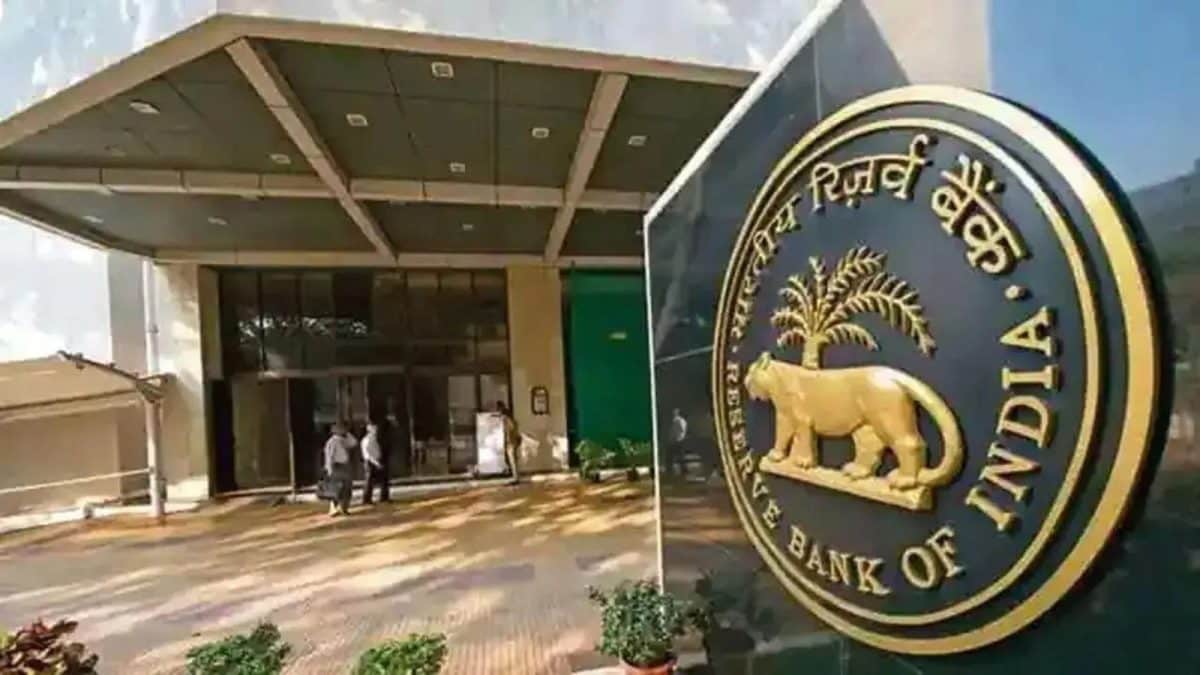
Reserve Bank of India headquarters in Mumbai.
The Reserve Bank of India (RBI) has summoned senior officials of Yes Bank following a major data breach involving the Yes Bank–BookMyForex multi-currency forex card, two people aware of the development told The Economic Times (ET).
According to the report, card details and CVV numbers of several users were allegedly compromised. The central bank has sought a detailed explanation from the bank on how its systems may have been breached and the sequence of events that led to the exposure of sensitive customer data.
“The RBI has sought a comprehensive briefing from Yes Bank’s senior management on the root cause of the breach, the timeline of events, and the adequacy of the bank’s cybersecurity framework,” one of the persons cited by ET said. “The regulator wants clarity on how sensitive card data, including CVV numbers, may have been exposed and what immediate containment measures have been implemented.”
Yes Bank declined to comment on the RBI’s queries but said an internal investigation had identified fraudulent transactions involving 15 merchants in a Latin American country on February 24. Transactions worth Rs 2.54 crore were approved across 5,000 customers, while 688 unauthorised attempts amounting to around Rs 90 lakh were blocked. The bank said it is working with the card network to initiate chargebacks and ensure that affected customers do not face financial losses.
Separately, BookMyForex said it does not store customers’ sensitive card information and that its systems were neither breached nor compromised during the period in question.
The RBI has also sought details on how sensitive card data—particularly CVVs—was stored and protected, whether encryption and prescribed security protocols were followed, and why existing cyber controls failed to prevent the breach. In addition, the regulator is reviewing the timeline of detection and reporting, the robustness of third-party risk management and oversight, the number of customers impacted, and the steps taken to block cards, prevent misuse and mitigate losses. It has also asked for clarity on internal accountability, supervisory lapses and remedial measures to prevent a recurrence, ET reported.
Click here to add News18 as your preferred news source on Google.
Follow News18 on Google. Join the fun, play games on News18. Stay updated with all the latest business news, including market trends, stock updates, tax, IPO, banking finance, real estate, savings and investments. To Get in-depth analysis, expert opinions, and real-time updates. Also Download the News18 App to stay updated.
February 26, 2026, 07:53 IST
Read More


Hormuz risk: The hidden polyester shock to global apparel

Duchess Sophie gives royal fans break from Andrew saga with joyful dance

US’ New Balance unveils International Baseball pack

-

 Entertainment1 week ago
Queen Camilla reveals her sister’s connection to Princess Diana
-

 Tech1 week ago
Rakuten Mobile proposal selected for Jaxa space strategy | Computer Weekly
-

 Politics1 week ago
Ramadan moon sighted in Saudi Arabia, other Gulf countries
-

 Entertainment1 week ago
Robert Duvall, known for his roles in "The Godfather" and "Apocalypse Now," dies at 95
-

 Politics1 week ago
Tarique Rahman Takes Oath as Bangladesh’s Prime Minister Following Decisive BNP Triumph
-
 Business1 week ago
Tax Saving FD: This Simple Investment Can Help You Earn And Save More
-

 Tech1 week ago
Businesses may be caught by government proposals to restrict VPN use | Computer Weekly
-

 Sports1 week ago
Usman Tariq backs Babar and Shaheen ahead of do-or-die Namibia clash