

Sports
Inside the strategy of organizing an NFL locker room

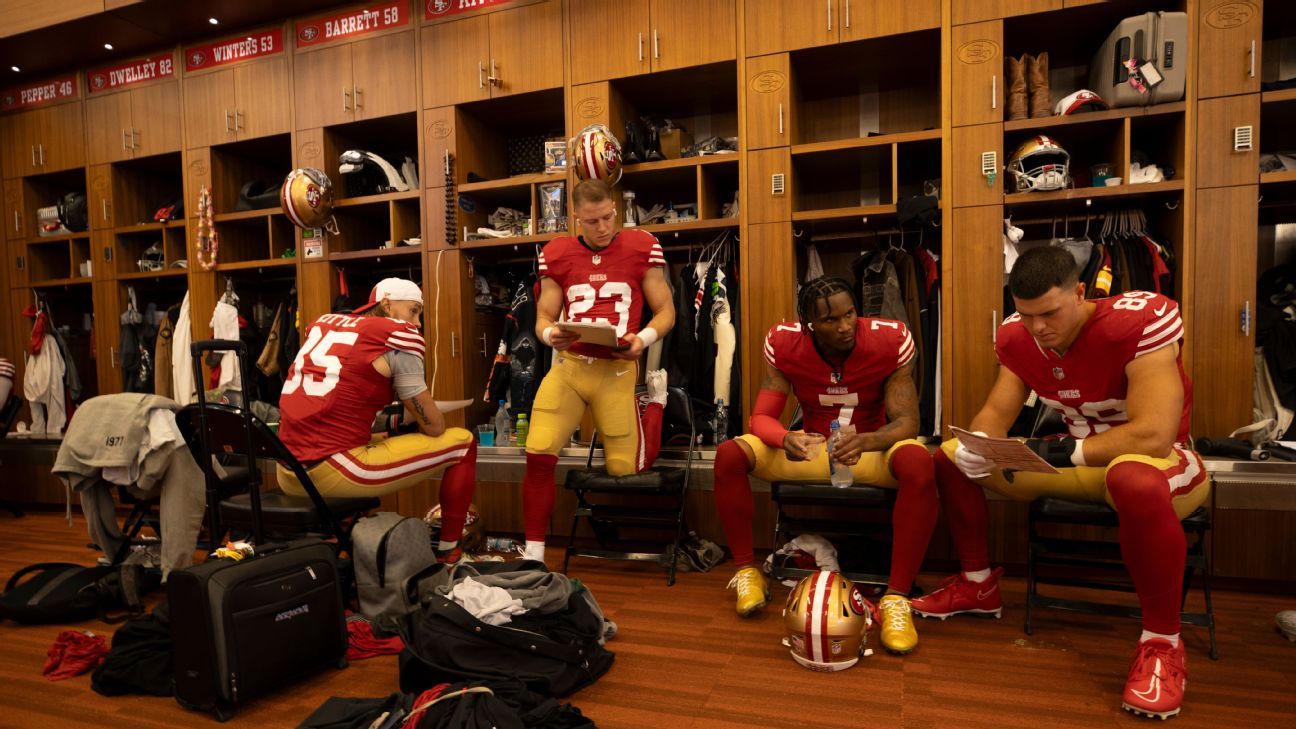
MICHAEL PENIX JR. knew early on. It was last spring during voluntary organized team activities. The rookie quarterback had just gotten his locker assignment at the Atlanta Falcons facility in Flowery Branch, Georgia.
Directly to Penix’s right was veteran safety Jessie Bates III, an All-Pro who takes notes on two different iPads during film study.
Penix was the Falcons’ backup quarterback in 2024 and typically, in practice, would go up against the first-team defense, led by Bates. In one 11-on-11 period last spring, Penix saw Bates break on one of his passes even before the wide receiver.
After practice, while both were changing at their lockers, Penix leaned in and asked Bates what he saw on the play.
“He’s like, ‘I just saw the receiver looking that way, or a certain technique or the way that we were running the routes,’ and just small stuff like that,” Penix said. “Because when he’s back there lurking, he’s able to do whatever he wants. It is scary for a quarterback.”
It was a valuable learning experience for Penix, a welcome-to-the-league moment before he ever took a regular-season snap. Penix continued to pick Bates’ brain throughout the season, and Bates was more than willing to take the promising QB under his wing.
Later, Penix realized that his budding mentor-protégé relationship with Bates was, in part, orchestrated by the coaching staff.
“I feel like [there] might’ve been some thought into putting me next to him as far as whoever makes the locker room assignments,” Penix said. “So, definitely take advantage of that. Always asking him why he felt like he should have drove on a certain ball.”
There are very few things done by NFL coaching staffs without some form of intention. Locker room geography is something organizations consider, especially when it comes to where to place promising young players.
Penix wasn’t the only rookie quarterback adjacent to a brainy veteran safety last year — J.J. McCarthy was next to Harrison Smith in the Minnesota Vikings locker room. Philadelphia Eagles six-time Pro Bowl cornerback Darius Slay requested his locker be next to then-rookie corner Quinyon Mitchell last season. In New England, No. 4 pick Will Campbell, an offensive tackle, is currently being mentored by Patriots locker neighbor Morgan Moses, an 11-year veteran at the same position. The Dallas Cowboys have strategically placed team leaders in the corners of the locker room going back to the Jason Garrett era.
“It happens a lot,” Falcons coach Raheem Morris said of intentional locker assignments. “Some of it’s public, some of it’s not.”
Morris, who has coached in the league on both sides of the ball since 2002, said part of finding the right fit is playing amateur psychologist, which he’s not fully comfortable doing. However, Morris did pair up rookie edge rusher James Pearce Jr. and veteran cornerback A.J. Terrell Jr. in the Falcons locker room this season. Morris was on the Atlanta staff in 2020 when Terrell was a rookie. Pearce has a quiet demeanor off the field like Terrell did then, Morris said, so the coach has paired them up in the locker room, as well.
“I hate to do that, because I’m not qualified,” Morris said of playing psychologist. “But I’m definitely good enough to pair people up.”
PUKA NACUA‘S LOCKER was placed next to that of Los Angeles Rams right tackle Rob Havenstein during Nacua’s record-breaking rookie season in 2023. Havenstein was one of the oldest, most-tenured players on the team and Nacua showed deference to the 6-foot-8 veteran.
“I was next to ‘Big Rob,’ and it wasn’t my duty to bring ‘Big Rob’ towels, but I always did,” Nacua said.
Rams All-Rookie defensive end Braden Fiske ended up near Havenstein the next year in the Rams’ new facility. He found himself rubbing elbows with Super Bowl winners Havenstein, quarterback Matthew Stafford, wide receiver Cooper Kupp and tight end Tyler Higbee.
“Cooper was a big one last year that I would talk to,” Fiske said. “How did he make that jump in Year 2 of his career? What was something that elevated his game? And a lot of that was the diet. That’s a lot of what I implemented into my offseason. I was super fortunate to have those guys in my area of the locker room.”
That area, in fact, has become prime real estate. It even has a nickname. Rams players have dubbed it “The suburbs.”
“We have got a good group of vets over there,” Fiske said. “They’ve done their time. They’re living life lavish.”
Rams coach Sean McVay said he typically lets Brendan Burger, the team’s senior director of equipment, assign lockers, because “he’s got such a good feel.” McVay is not a believer in keeping the offensive players in one place and the defenders elsewhere.
“So much of the days are broken up where it’s offense-defense separate, and to just be able to create that natural interaction and appreciation for each other — not exclusive to just one side of the ball — that’s kind of what goes into it,” McVay said.
As a rookie, Nacua was also near cornerback Ahkello Witherspoon, a veteran he used to go up against daily on the practice field.
“It’s always fun post-practice to come and be like, ‘Alright, what were you thinking right here when I lined up against you and I doubled up at the line of scrimmage and then you jab this way?'” Nacua said. “So having a [defensive back] next to you is something that you don’t really imagine in the locker room, but it’s also really fun because you have some great conversations.”
San Francisco 49ers coach Kyle Shanahan doesn’t have two players from the same position group sitting directly next to each other in any instance unless it’s the practice squad or when the roster is at 90 players.
“I put a lot of thought into it,” Shanahan said. “I like to mix everything up, because you’re always with your position groups, you’re always in rooms with ’em.
“Position groups are always going to be tight. You don’t get too many opportunities to cross over. You’re always competing on the field, sometimes fighting. So I think it’s important to mix everybody up.”
The Falcons were so happy with the Bates-Penix arrangement that they have rookie cornerback Billy Bowman Jr. next to three-time Pro Bowl right guard Chris Lindstrom this season.
“For Penix, it was more like, ‘This is what a pro looks like,'” Morris said. “I know you got [Kirk Cousins in the quarterback] room, but here’s another pro from the different side of the ball that you probably didn’t even know moved this way. And it’s just always things that you can do for people and that they can see to help them be the best version of themselves.”
McCarthy was sandwiched between Smith and wide receiver Justin Jefferson as a rookie last year in Minnesota. And professionalism is what stood out the most.
“Their day-to-day routine is something that is extremely beneficial,” McCarthy said. “Just being able to observe as a young guy is one of the biggest things for any young player coming into this league.
“So, I feel like building relationships with those guys is going to be something that I carry with me for the rest of my career.”
#49ers Trent Williams turned his locker into the VIP section 😂#ProBowlVote Trent Williams pic.twitter.com/2fdMXJqYrq
— 𝙏𝙝𝙚𝙎𝙁𝙉𝙞𝙣𝙚𝙧𝙨 (@TheSFNiners) December 11, 2023
When Moses was a young player with Washington, his locker was near future Hall of Fame tackle Trent Williams‘. It wasn’t directly next to Williams’ — “he had three lockers!” Moses said — but it was close enough to pick up some tips and advice from the three-time first-team All-Pro. Now, Moses is paying it forward with Campbell and the Patriots.
“Not saying I’m at [Williams’] caliber, but the years I’ve been able to play, just being able to sit beside Will in the locker room and be able to talk over looks — we’ll pass the iPad back and forth, bounce questions,” Moses said. “That’s what you like because that brings camaraderie and brotherhood.”
THE COWBOYS HAVE been strategic about locker locations going back to Garrett’s tenure as coach in the 2010s. Wide receiver CeeDee Lamb resides at a locker once held by tight end Jason Witten and guard Zack Martin. Offensive tackle Terence Steele is in a corner spot once held by defensive end DeMarcus Lawrence. Cornerback C.J. Goodwin and defensive tackle Osa Odighizuwa are in corner lockers once occupied by offensive tackle Tyron Smith and linebacker Sean Lee, respectively. Running back Miles Sanders, a free agent signee, is now in the spot near the equipment room that backup quarterback Cooper Rush once held.
New Dallas coach Brian Schottenheimer has added some of his own wrinkles, though, including putting pass rusher Micah Parsons near the middle of the room next to quarterback Dak Prescott‘s locker.
“Two of our best players, put them together,” Schottenheimer said. “There’s also other things we’re doing in there where guys are competing every day in different things that we’ve kind of put in there, but just they can challenge each other in a good way. … There’s a method to the madness.”
In some cases, players who have some leverage because of their standing on the team can make specific locker requests. Famously, Patriots legend Tom Brady requested the new star player he’d be throwing to — wide receiver Randy Moss — be next to him.
Slay petitioned that Mitchell be his neighbor last season, which ended in Mitchell being one of the best rookies in the league as the Eagles won the Super Bowl. Eagles general manager Howie Roseman told Mitchell on draft night: “I want you to live next door to Slay. I want you to sleep next to Slay. That’s your guy.”
“We talk a lot about life, and he just gives me life lessons, and it translates onto the field,” Mitchell said in 2024. “During the games, I’m asking him what he’s seeing and what he thinks is coming up during the next series. I lean on him a lot.”
The Cincinnati Bengals recently shook things up in their locker room, switching the defensive line and offensive line areas. The offensive linemen are now closer to Joe Burrow and the other quarterbacks.
“Everybody walks past me when they come in, when they’re out,” Burrow said. “So, I’m saying hi to everybody. It’s been nice to have [offensive linemen Orlando Brown Jr.] and Ted [Karras] right there. Those are my guys.”
Do locker assignments matter a great deal? Can they make the difference between winning and losing? Some players are skeptical. In a few cases, the dynamic can become toxic. New York Jets wide receivers Keyshawn Johnson and Wayne Chrebet had lockers next to one another in 1997 and they did not get along at all. They wouldn’t even acknowledge each other when both were doing media at the same time. Johnson, in his book, referred to Chrebet as the “team mascot” and later said comparing the two was like comparing “a flashlight to a star.”
“I think when you look that deep into it, you could always find good, bad or however you want to,” Bears defensive tackle Grady Jarrett said. “At the end of the day, I still got to line up and play my defense as called.”
But that won’t stop coaching staffs from at least giving some thought to where players are situated in their locker rooms. The Falcons believe it has paid dividends when it comes to Penix. Bates became a big part of helping position Penix for the role he’s in now: Atlanta’s starting quarterback.
“I can break it down in so much detail,” Penix said of his and Bates’ conversations last year, “but I’ll be talking forever.”
Additional reporting by Todd Archer, Ben Baby, Sarah Barshop, Rich Cimini, Courtney Cronin, Mike DiRocco, John Keim, Tim McManus, Mike Reiss, Kevin Seifert, Nate Taylor, Katherine Terrell and Nick Wagoner.
Video assistant referee causes controversy every week in the Premier League, but how are decisions made and are they correct?
This season, we take a look at the major incidents to examine and explain the process both in terms of VAR protocol and the Laws of the Game.
Andy Davies (@andydaviesref) is a former Select Group referee, with over 12 seasons on the elite list, working across the Premier League and Championship. With extensive experience at the elite level, he has operated within the VAR space in the Premier League and offers a unique insight into the processes, rationale and protocols that are delivered on a Premier League matchday.

Referee: Darren England
VAR: John Brooks
Time: 44th minute
Incident: Possible handball in the box worth a penalty kick
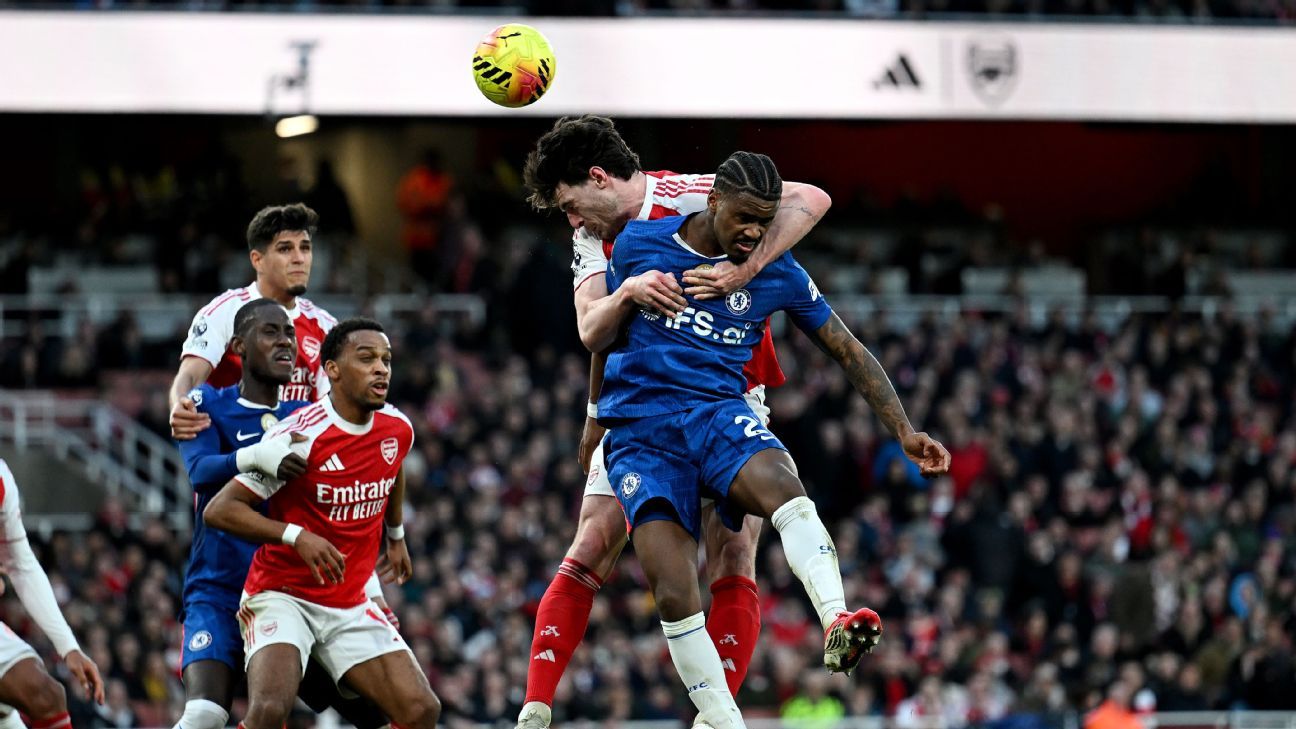
What happened: Chelsea whipped in a corner and Arsenal’s Declan Rice, while challenging to clear the ball, appeared to move his elbow towards and contacted with the ball as it dropped. Referee Darren England was unmoved and waved away any appeals.
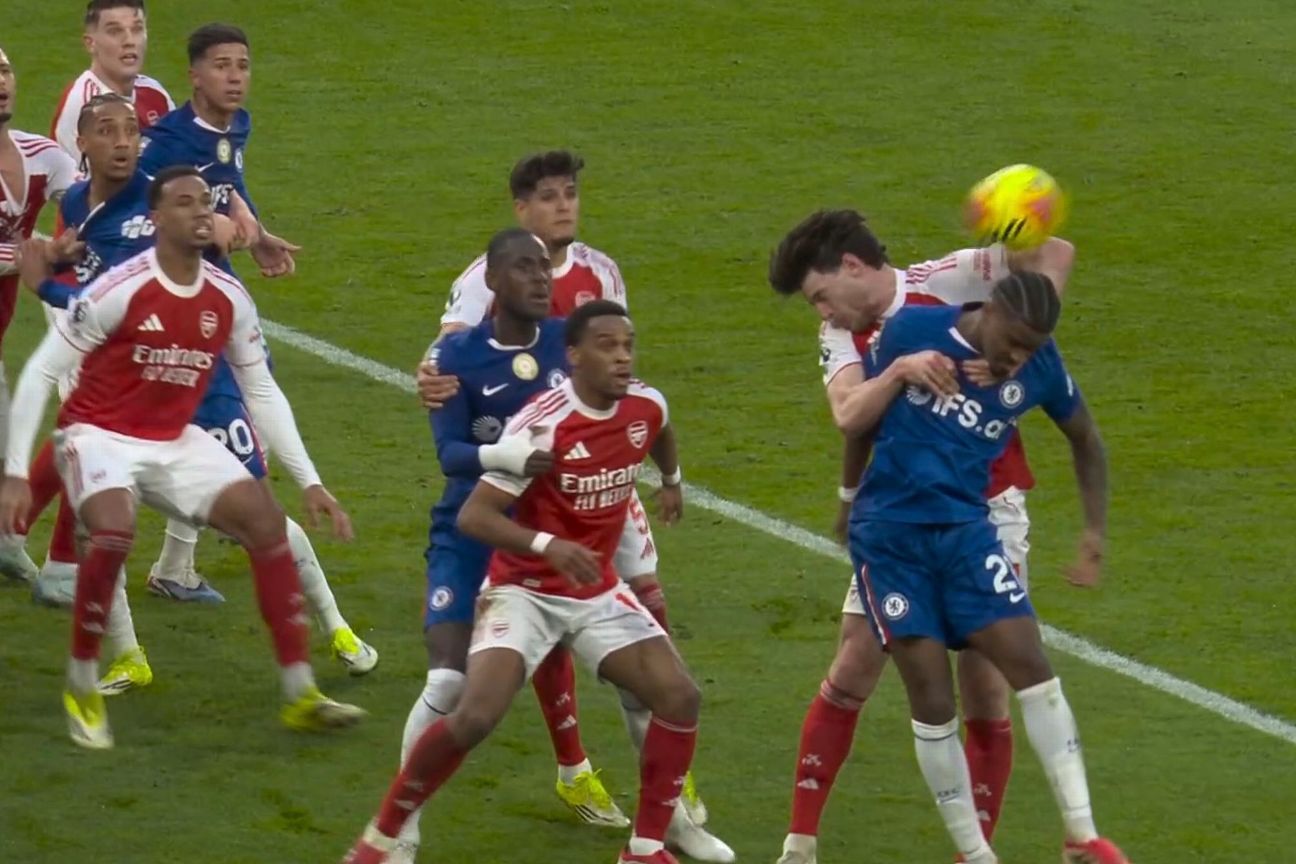
VAR decision: The referee’s call of no penalty was checked and confirmed by VAR, who deemed there was no punishable handball offence with Rice challenging an opponent as the ball hit his arm.
VAR review: As with all VAR reviews, the starting point is the on-field decision and referee live communication. Any VAR intervention is only triggered by clear video evidence that an error has been made.
Referee Darren England had a good view of this incident and would have communicated that Rice’s contact on the ball was within normal physical engagement with his opponent whilst jumping to head the ball, confirming that no clear handball offence had been committed. VAR John Brooks didn’t feel that the video evidence provided any detail that the referee had not described, nor did any act by Rice clearly met the criteria for a handball offence. He cleared the incident as a correct on-field call.
Verdict: The Premier League referees do set a high bar in relation to penalising handballs, which should be recognised.
Watching this live, I would have been surprised if this was awarded as a handball offence given the dynamics of which the contact with the arm occurred. However, a defender who moves their arm in these types of situations is running a risk of being penalised, for sure.
When processing a possible hand ball offence, considerations around what is a reasonable position and movement of arm in relation to the player’s action is important. Rice was jumping for a ball, with his arms naturally high and engaged with his opponent and, whilst there was some movement of the arm, it wasn’t an indisputable act to make himself bigger.
Handball continues to be the most difficult and at times contentious area of law to apply in live play. I believe the Premier League are in a good place currently with these situations, where only the very obvious standout situations are penalised.
Referee: Chris Kavanagh
VAR: Tony Harrington
Time: 52nd minute
Incident: Penalty and possible red card for denying a goal-scoring opportunity (DOGSO)
What happened: Manchester United captain Bruno Fernandes played a brilliant ball into attacker Matheus Cunha, who had turned Palace defender Maxence Lacroix and was heading toward goal. Lacroix — whose fourth-minute goal had given Palace the lead at Old Trafford — grabbed the shoulder of Cunha, who went to ground, and referee Chris Kavanagh quickly pointed to the spot. The VAR confirmed the penalty, but also recommended an on-field review for a possible red card to Lacroix for DOGSO.
VAR decision: After the VAR review, the referee overturned his original decision of no red card to Lacroix. Kavanagh announced to the crowd: “After review, Crystal Palace No. 5 commits a clear holding offense which denies a clear, obvious, goal-scoring opportunity. The final decision is a penalty and red card.”
A HUGE refereeing decision ends with a penalty to Man United and red card for Crystal Palace’s Maxence Lacroix. 👀 pic.twitter.com/k7064Skgu9
— NBC Sports Soccer (@NBCSportsSoccer) March 1, 2026
VAR review: The first check for the VAR was to confirm that a foul had been committed by the Palace defender and that its location was inside the penalty area. The pull was clear, starting outside the area and continuing into the box, meaning that the on-field decision of penalty was cleared. Secondly, the review focused on whether the foul stopped Cunha having a clear opportunity to score a goal. The VAR considerations in this situation would be:
– distance from goal
– direction of play
– attackers’ likelihood of retaining possession of the ball
The key to reviewing this type of incident is pausing the footage at the exact point the foul contact occurs. Sometimes allowing the footage to continue to run gives a false picture that the ball is out of playing distance for the attacker, which can alter a DOGSO judgement outcome.
Harrington felt these circumstances met all the criteria for a DOGSO and recommended an on-field review. Once at the screen, Kavanagh agreed with the VAR’s judgement of the incident and sent Lacroix off.
Fernandes converted the penalty, and eight minutes later, with Palace reduced to 10 men, Benjamin Sesko scored what proved to be the winning goal that sent United up to third in the Premier League table.
Verdict: Correct on-field decision by Kavanagh to award the penalty and good intervention from the VAR to recommend a red card for DOGSO. Once on the wrong side of the defender, Cunha has a clear path toward goal with his next touch likely to be a shot on goal.
The nature of the challenge by Lacroix was the determining factor in what sanction he received for committing the offense. An upper-body holding offense, with no attempt or opportunity to play or win the ball, is still a red card. However, an attempt to challenge for a ball, where there is an opportunity to be successful, would result in a yellow card only. Good decision and process from the referee and VAR.
MANCHESTER, England — Of all the things Ruben Amorim said during his time as Manchester United‘s head coach, the one that annoyed his bosses most was something about Benjamin Sesko.
Asked in November about the 22-year-old striker, signed for £73.7 million from RB Leipzig in the summer, Amorim said it was “a fact” that he had “struggled” to come to terms with the Premier League. The view from above was that the comments weren’t helpful to a young player trying to adapt to a tough league in a new country.
Sesko scored two goals in 17 games for Amorim. But since Amorim’s departure in early January, Sesko has seven goals in eight.
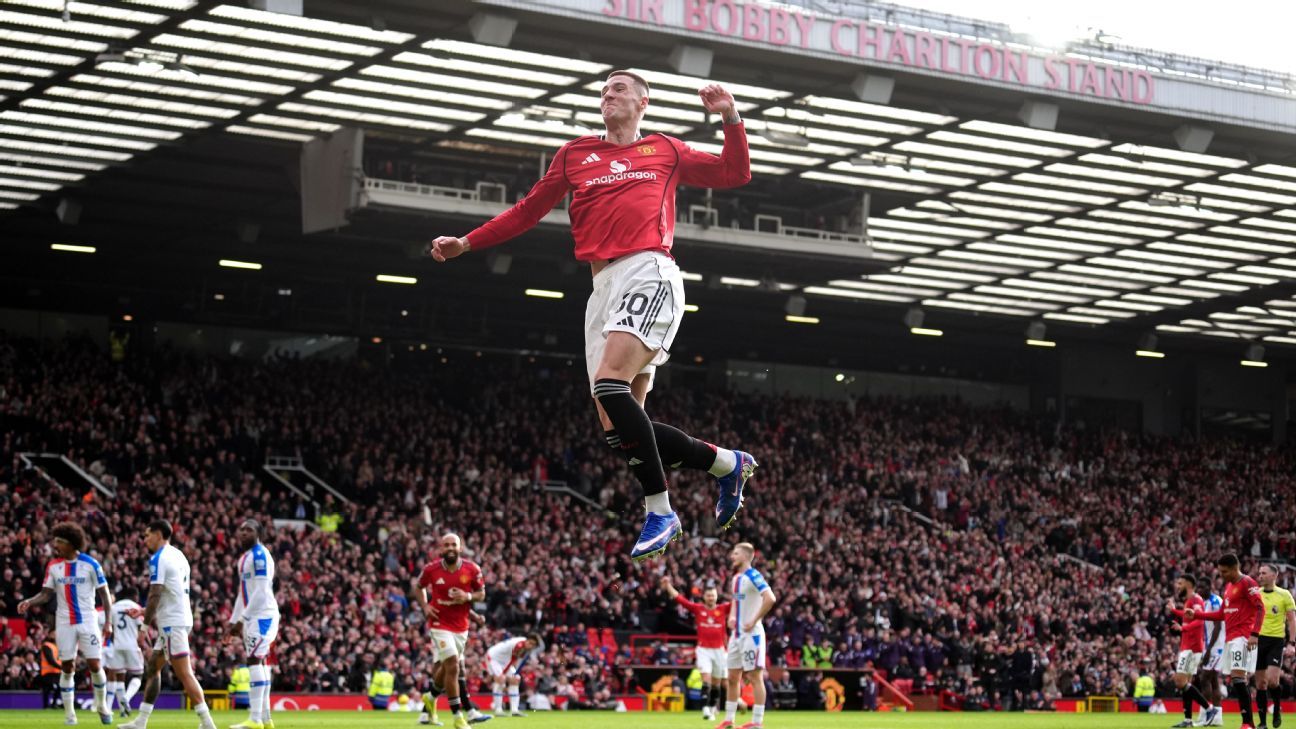
Starting under Michael Carrick for the first time Sunday, Sesko scored for the third game in a row as United came from a goal down to beat Crystal Palace 2-1 and move up to third in the table behind Arsenal and Manchester City.
Struggling? Not anymore.
– VAR review: Was Palace penalty, red-card call correct?
– Amorim assistant: Man United ideas ‘not implemented’
– Did Sydney Sweeney hit Bruno Fernandes’ celebration?
“I’m delighted for Ben,” said Carrick. “We’re working closely with him and connecting with him and building that relationship and trust. A lot is on Ben. He has put the work in. He is a good player and he has got some great strengths and scoring different types of goals.
“He is such a real threat. I am really excited where he can get to. He has got huge potential.”
Sesko is not just scoring goals — he’s scoring important goals. In his past three games, he has a stoppage-time equalizer against West Ham United, the winner against Everton and another winner against Palace.
Since Amorim was sacked, Sesko’s Premier League goals against Burnley, Fulham, West Ham, Everton and Palace have earned the team eight points. Without them, United would be outside the top six. Instead, Carrick’s team is third with 10 games left and on course to qualify for the UEFA Champions League for the first time since 2023.
“He has had a huge impact and he’s making big improvements,” said Carrick. “Part of it is getting used to being here. He is desperate to do well, he works so hard and he is a pleasure to work with. It’s a fantastic goal.”
Sesko’s revival started under Amorim’s initial replacement, Darren Fletcher. After the Slovenia international scored twice in United’s 2-2 draw with Burnley, Fletcher revealed he used the day before the game to show Sesko a video “showing his movement and showing his goals.”
The run of form which started at Turf Moor has continued under Carrick. Fletcher said he told Sesko he “needs to keep believing,” and there has been a similar boost of confidence delivered by Carrick.
Shortly after scoring at Everton, Sesko stopped in the mixed zone to tell reporters that one of the big changes is that “everyone believes in me.” It became an open secret toward the end of Amorim’s reign that he wanted to sign Aston Villa striker Ollie Watkins instead. If Carrick has injected some self-belief into Sesko, the former England midfielder also deserves credit for playing to his strengths.
One of the criticisms of Amorim’s football was that he played with a central striker, but didn’t appear to ask his wide players to put crosses into the box. Sesko started Amorim’s last game in charge — a 1-1 draw at Leeds United on Jan. 4 — and didn’t have a shot on target. Under Carrick, his goals against Fulham, West Ham and Palace all came from crosses whipped in from wide areas.
With long limbs and a gangly style, Sesko can still sometimes look awkward when asked to take part in the buildup. But at 6-foot-5, he’s terrific in the air and sharp in and around the penalty area. His goal against Palace was a bullet header.
First, Bruno Fernandes equalized with a penalty following an incident for which Maxence Lacroix — Palace’s goal scorer in the first half — was sent off for pulling back Matheus Cunha. Then Fernandes popped up on the right and delivered a cross from which Sesko darted ahead of Jaydee Canvot and arrowed his finish past former United goalkeeper Dean Henderson. He went off 10 minutes later to a standing ovation.
“We were a bit off to start with and they started really well,” said Carrick, who has now registered six wins from seven games in charge. “At about 20 minutes it started turning in our favor and we finished the half stronger and then talked to them at halftime about being in that position and showing personality and belief.
“To come back like we did in the second half and to turn the game in our favor is the biggest thing. To put together the run we have and to do it in different ways is encouraging to me.”
United are flying, and so is Sesko. No other Premier League team is unbeaten since Boxing Day, and no player in the league has scored more non-penalty goals in 2026 than Sesko.
Amorim’s reign looks worse with every win under Carrick, while every Sesko goal makes those “struggling” comments look ever more misplaced. United are heading for a Champions League return, and Sesko is proving the doubters wrong.

If you can’t beat them, join them. Liverpool were slow to get on board with the Premier League‘s set-piece revolution, but their willingness to embrace the game’s increasingly agricultural approach has been instrumental in their recent revival, including in Saturday’s 5-2 victory over West Ham United at Anfield.
When Alexis Mac Allister drilled home the hosts’ third goal of the afternoon in front of the Kop, he ensured Liverpool became just the second team in Premier League history to score three goals from corners in the first half of a match, after Manchester United against Leicester City in September 2016. It is the kind of statistic that would have seemed preposterous in the early months of the campaign, when the Reds’ lack of proficiency at both scoring and defending set pieces negatively impacted their fortunes on an almost weekly basis.
Liverpool’s woes in that department were so pronounced that the club opted to part company with set-piece coach Aaron Briggs in December — although manager Arne Slot publicly defended his former colleague when grilled on the matter last week.
“It would be very unfair to Aaron, who was only partly responsible for that, because in the end I’m responsible for everything,” Slot said. “In the end it’s always my responsibility. But we were, in that period of time, so, so, so unlucky.”
– Premier League Power Rankings: Liverpool down in rating of all 20 teams
– Champions League round-of-16 predictions: Osimhen a big threat to Reds
– No one loves late drama like Liverpool. What’s behind their slow starts?
On the evidence of Saturday’s first-half showing, that luck has now started to change. Having been perennial slow starters in the top flight this season, Liverpool raced into an early lead when Ryan Gravenberch recycled possession from a corner and picked out Hugo Ekitike, who finished smartly past Mads Hermansen at the near post.
It was Ekitike’s 11th league goal of the season and his 16th in all competitions, making the France international the first Liverpool player to reach 20 goal contributions this term, with four assists also to his name. West Ham, who had lost just one of their previous six league games ahead of this weekend’s trip to Merseyside, rallied well after the early setback but found themselves on the end of yet more set-piece misery when Virgil van Dijk rose highest to nod Dominik Szoboszlai‘s in-swinging corner into the back if the net.
Liverpool employed the same route to goal again on the stroke of halftime, with Ekitike helping Szoboszlai’s smart delivery into the path of Mac Allister, who finished with aplomb to double his Premier League goal tally for the season.
His strike was Liverpool’s seventh consecutive league goal from a non-penalty set piece — the longest run by any side in the competition’s history. While Slot was right to assert that his team’s drastic uptick in set-piece form should not be pinned on one individual, the contrast in Liverpool’s numbers is stark.
Across their first 20 Premier League matches this season, Liverpool scored just three goals from set pieces — the fewest of any team in the division. Their efficacy from corners on Saturday, however, means they have scored nine set-piece goals in their past eight league games: more than any of their competitors.
“That’s very pleasing because that is the reason we have won,” Slot said in his postmatch news conference. “In my opinion, we have played better when we have lost and conceded from set pieces. But, as I’ve always said, things went back to normal.
“We created quite a lot of chances from set pieces in the first half of the season and almost every set piece we conceded went in, and today you could see exactly the opposite happening. Their first big chance was a set piece that would have gone in, in the first six or seven months, I’m 100% sure. But then it doesn’t and we start scoring from set pieces, things start looking much better and brighter. That’s really pleasing for us, for the team and for the fans as well.”
In a season that has been characterized by late drama, Liverpool deviated from the norm by scoring three goals in the first half of a league game for the first time since the day they clinched the title against Tottenham Hotspur last April. Still, the Reds’ unwelcome habit of making life difficult from themselves once again reared its head in the second half, with Tomás Soucek diverting El Hadji Malick Diouf‘s drilled cross past Alisson Becker just four minutes after the restart.
With nothing to lose, West Ham continued to pose plenty of problems for their hosts before Cody Gakpo‘s deflected effort helped to calm some nerves around Anfield. It was only the Netherlands international’s second goal in the league since his strike in the reverse fixture at the London Stadium in late November, and his impassioned celebration suggested it was a welcome relief to find himself back on the scoresheet.
A late header from Valentín Castellanos and an even later own-goal from Axel Disasi only heightened the erratic nature of Liverpool’s second-half display, and Slot will know more control and composure is required from his team if they are to finish the season in a stronger fashion than they started it.
Nevertheless, Liverpool have now won seven of their past nine games in all competitions and are up to fifth in the Premier League, just three points behind third-placed Aston Villa. They irrefutably remain an imperfect side, and even in securing their joint-biggest top-flight win of the season, they showed there is still plenty of scope for improvement.
But having been late to the set-piece party, Liverpool now look determined to make up for lost time. It might just be the secret weapon they need to make this campaign a successful one.


Shia LaBeouf battles addiction amid public and legal pressure

VAR review: Did Chelsea deserve a penalty in loss to Arsenal?

Man United up to third as Sesko’s hot streak of crucial goals continues

Eye-popping rise in one year: Betting on just gold and silver for long-term wealth creation? Think again! – The Times of India

Pakistan carries out precision strikes on seven militant hideouts in Afghanistan

Kansas’ Darryn Peterson misses most of 2nd half with cramping

-
Business1 week ago
Eye-popping rise in one year: Betting on just gold and silver for long-term wealth creation? Think again! – The Times of India
-
 Politics1 week ago
Pakistan carries out precision strikes on seven militant hideouts in Afghanistan
-
 Sports1 week ago
Kansas’ Darryn Peterson misses most of 2nd half with cramping
-
 Business1 week ago
Equinox chairman says ‘health is the new luxury’ as wellness spending soars
-

 Tech1 week ago
The Supreme Court’s Tariff Ruling Won’t Bring Car Prices Back to Earth
-

 Tech1 week ago
These Cheap Noise-Cancelling Sony Headphones Are Even Cheaper Right Now
-

 Sports1 week ago
How James Milner broke Premier League’s appearances record
-

 Entertainment1 week ago
Viral monkey Punch makes IKEA toy global sensation: Here’s what it costs