

Politics
Internet blackout hits Iran as protests continue

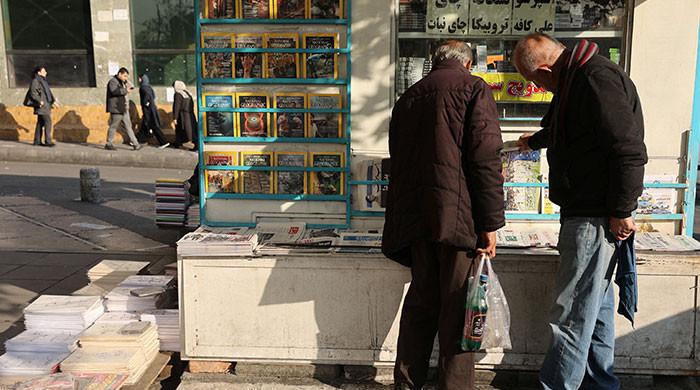
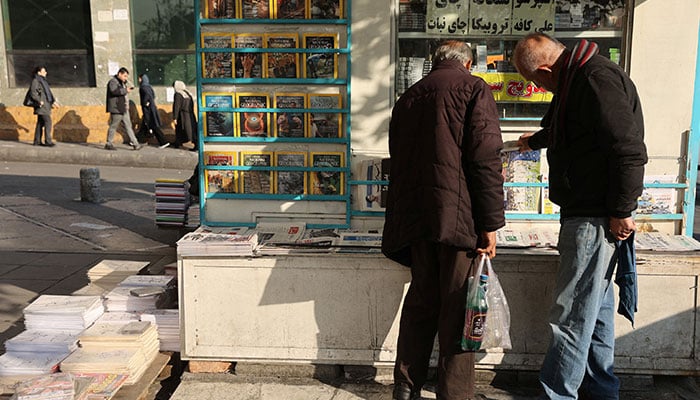
- Protests over economic hardships continue Iran.
- Demonstrators gathered in Tehran, Mashhad, Isfahan.
- State media say situation was calm in most parts of Iran.
DUBAI: People across Iran were left cut off from the outside world on Thursday after a nationwide internet blackout as reported by internet monitoring group NetBlocks.
The outage came as fresh protests over rising prices and economic hardship continued in several cities, with demonstrators once again taking to the streets to voice their anger.
No further information on the internet outage was immediately available.
Witnesses in the capital Tehran and major cities of Mashhad and Isfahan told Reuters that protesters gathered again in the streets on Thursday, chanting slogans against the Islamic Republic’s clerical rulers.
Reza Pahlavi, the exiled son of Iran’s late Shah toppled in the 1979 Islamic Revolution, called in a video post on X on Wednesday for more protests.
Posts on social media, which could not be independently verified by Reuters, said demonstrators chanted pro-Pahlavi slogans in several cities and towns across Iran.
Iranian state media, however, said cities across the country were calm.
The current protests, the biggest wave of dissent in three years, began last month in Tehran’s Grand Bazaar with shopkeepers condemning the rial currency’s free fall.
Unrest has since spread nationwide amid deepening distress over economic privations arising from soaring inflation driven by mismanagement and Western sanctions, and curbs on political and social freedoms.
President Masoud Pezeshkian warned domestic suppliers against hoarding or overpricing goods, state media reported earlier on Thursday.
“People should not feel any shortage in terms of goods’ supply and distribution,” he said, calling upon his government to ensure adequate supply of goods and monitoring of prices across the country.
Tehran remains under international pressure with US President Donald Trump threatening to come to the aid of protesters if security forces fire on them, seven months after Israeli and US forces bombed Iranian nuclear sites.
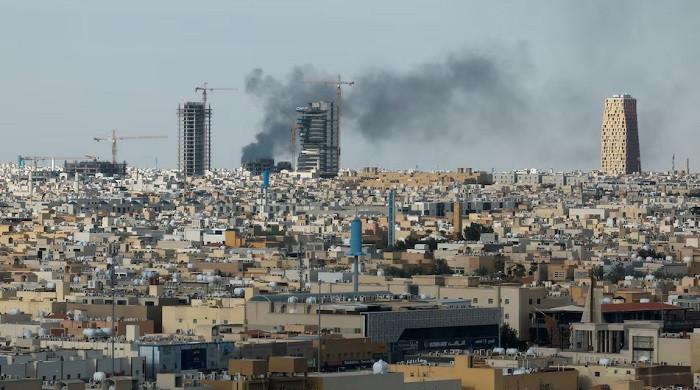
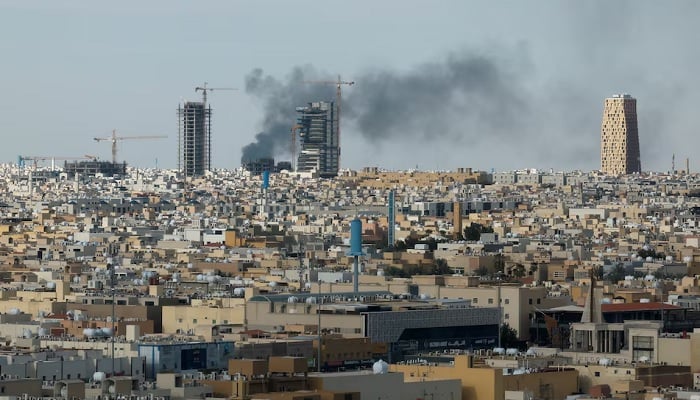
- Iran was warned of possible retaliation, sources say.
- Saudi foreign minister spoke to Iranian counterpart.
- Iran’s president apologises to Gulf states for ‘actions’.
Saudi Arabia has told Tehran that while it favours a diplomatic settlement to Iran’s conflict with the United States, continued attacks on the kingdom and its energy sector could push Riyadh to respond in kind, four sources familiar with the matter told Reuters.
The message was conveyed before a speech on Saturday in which Iranian President Masoud Pezeshkian apologised to neighbouring Gulf states for Tehran’s actions — an apparent attempt to defuse regional anger over Iranian strikes that hit civilian targets.
Two days earlier, Saudi Foreign Minister Prince Faisal bin Farhan spoke to Iranian Foreign Minister Abbas Araqchi and set out Riyadh’s position with clarity, the sources said.
Saudi Arabia is open to any form of mediation aimed at de‑escalation and a negotiated settlement, the sources quoted the minister as saying, underlining that neither Riyadh nor other Gulf states had let the US use their airspace or territory to launch airstrikes on Iran.
But Prince Faisal was also quoted by the sources as saying that if Iranian attacks persisted against Saudi territory or energy infrastructure, Saudi Arabia would be forced to permit US forces to use their bases there for military operations. Riyadh would retaliate if attacks on the kingdom’s critical energy facilities continued, he said.
The sources said the kingdom had remained in regular contact with Tehran through its ambassador since the US and Israeli military campaign against Iran began on February 28, following the collapse of talks on Iran’s nuclear programme.
The Saudi and Iranian foreign ministries did not respond to requests for comment.
Drone, missile attacks on Gulf States
The United Arab Emirates, Kuwait, Qatar, Bahrain and Saudi Arabia have all come under heavy drone and missile fire from Iran over the past week.
Iran’s Supreme Leader, Ayatollah Ali Khamenei, was killed on the first day of the war. Tehran responded by hitting Israel and Gulf Arab states hosting US military installations, and Israel has attacked Lebanon’s Iran-backed Hezbollah armed group.
Araqchi said in an interview on Saturday that he remained in constant contact with his Saudi counterpart and other Saudi officials, adding that Riyadh had assured Tehran it was fully committed to not allowing its territory, waters or airspace to be used for attacks against Iran.
Pezeshkian said Iran’s temporary leadership council had approved suspending attacks on nearby countries – unless an attack on Iran came from those nations.
“I personally apologise to neighbouring countries that were affected by Iran’s actions,” he said.
To what extent Pezeshkian’s remarks signal a change is unclear. There were further reports of strikes directed at Gulf states on Saturday.
Also, in a sign of possible divisions within Iran’s leadership, Khatam al-Anbiya Central Headquarters – the unified combatant command of the Iranian armed forces – said in a statement afterwards that US and Israeli bases and interests across the region would remain targets.
The command said Iran’s armed forces respected the sovereignty and interests of neighbouring states and had not taken action against them so far. But it said US and Israeli military bases and assets on land, at sea and in the air across the region would be treated as primary targets and face “powerful and heavy” strikes by Iran’s forces.
US President Donald Trump said in a social media post that Iran had “apologised and surrendered to its Middle East neighbours, and promised that it will not shoot at them anymore. This promise was only made because of the relentless US and Israeli attack.”
Two Iranian sources confirmed that a call had taken place in which Riyadh warned Tehran to halt attacks on Saudi Arabia and neighbouring Gulf states. Iran, they said, reiterated its position that the strikes were not aimed at Gulf countries themselves but at US interests and military bases hosted on their territory.
One Iranian source said that Tehran had, in response, demanded that US bases in the region be closed and that some Gulf states stop sharing intelligence with Washington that Iran believes is being used to carry out attacks against it.
Another Iranian source said some military commanders were pressing to continue the strikes, accusing the US of using bases in Gulf states and these countries’ airspace to conduct operations against Iran.
Iran had in recent years mended fences with its Gulf neighbours, including former regional arch-rival Saudi Arabia. The diplomatic campaign imploded in the blitz of drones and missiles launched by Iran’s Revolutionary Guards in the past week.
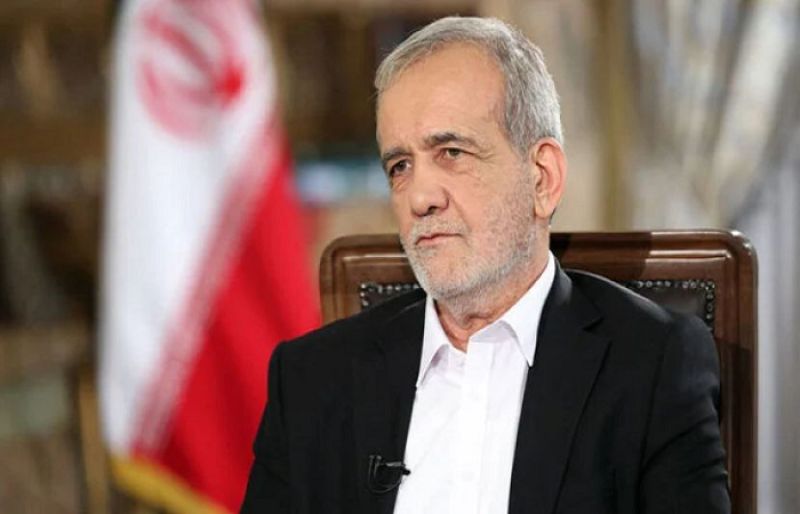

Iranian President Masoud Pezeshkian has issued a significant statement aimed at easing regional tensions, assuring that Iran will not launch missile strikes or take aggressive action against neighbouring countries.
The president said the decision was taken with the approval of the Interim Leadership Council, stressing that Iran’s policy of non-aggression will remain in place as long as no attacks are carried out on Iranian territory.
Commitment to Peace
In a message shared on social media, Pezeshkian said Iran harbours no hostility toward regional countries and expressed regret over the recent tensions affecting neighbouring states.
“We harbor no hostility toward regional countries and apologize for the recent situation with our neighbors,” the president said.
Sovereignty Will Be Protected
While calling for peace, Pezeshkian also emphasized that Iran’s sovereignty and national security would not be compromised.
He added that diplomatic efforts and mediation aimed at ending the ongoing conflict should be led by the countries that initiated the confrontation.
Regional De-escalation Efforts
The statement comes amid rising tensions in the Middle East following military exchanges involving Iran, Israel, and the United States, prompting calls from several countries for de-escalation and dialogue to restore regional stability.
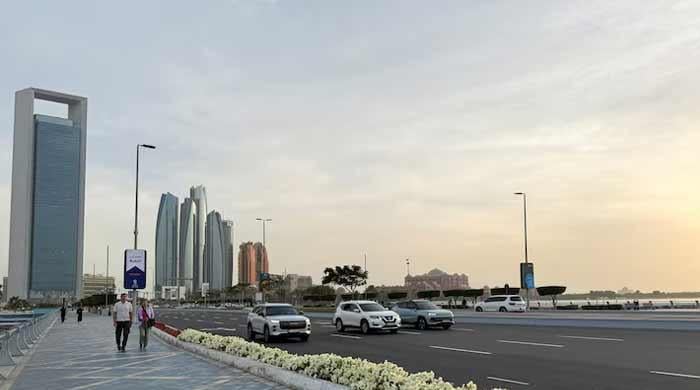
DUBAI: Dubai has announced the implementation of a new public safety law introducing stricter regulations for public spaces and events, with fines ranging from AED500 ($136) to AED1 million ($272,000), authorities said.
Under the legislation, repeat violations within one year could result in fines of up to AED2 million, officials added.
The new law, which takes effect across the emirate on June 1, sets out enhanced safety requirements for public venues and gatherings.
The rules were issued by Dubai’s Ruler, Vice President and Prime Minister of the UAE, Sheikh Mohammed bin Rashid Al Maktoum.
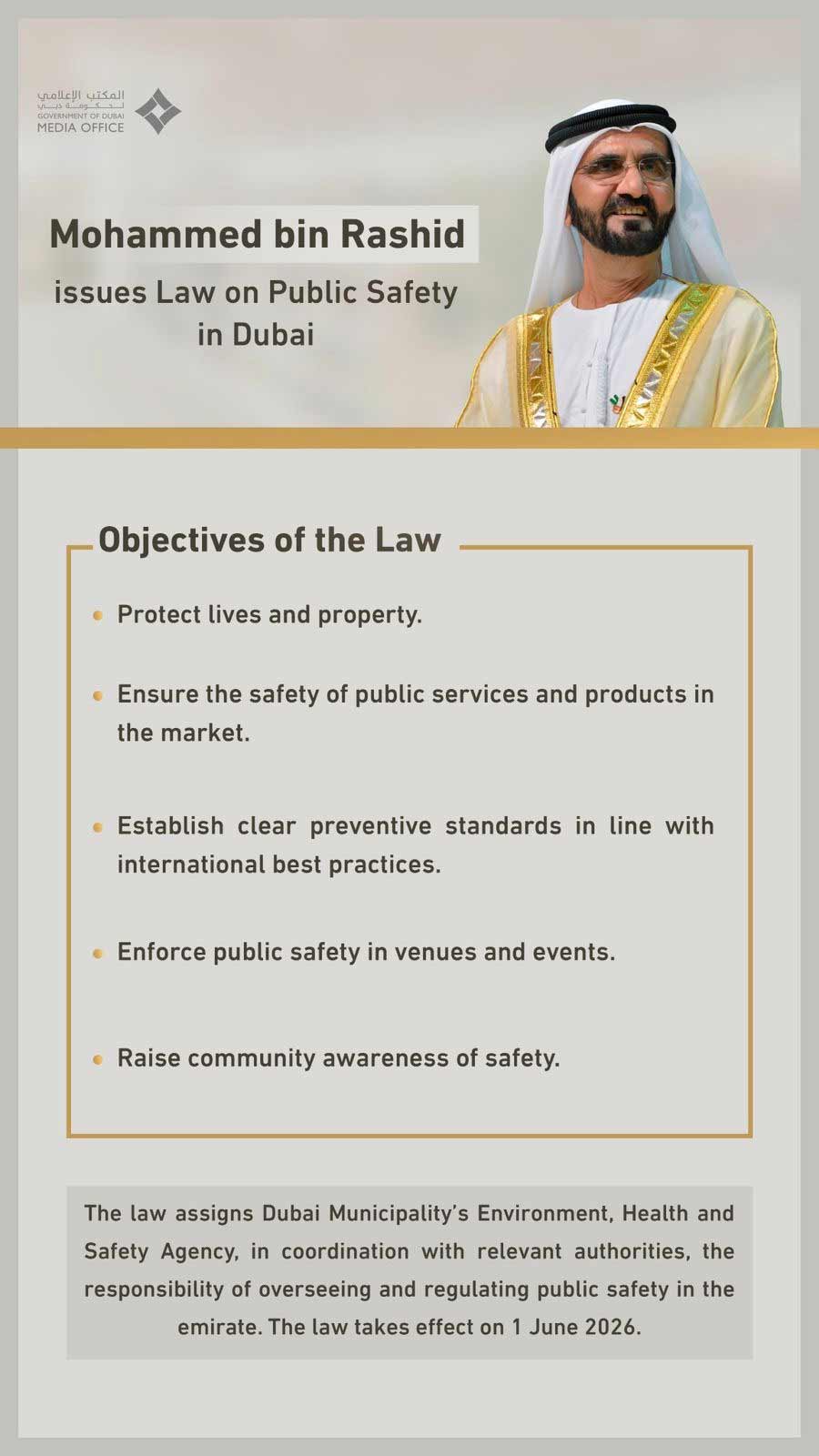
According to the regulations, public venues and events must ensure safe entry and exit routes, adequate lighting, and capacity limits to prevent overcrowding.
Event organisers will be required to provide firefighting equipment, emergency evacuation plans, first aid facilities, and trained security personnel.
Compliance with safety instructions at public venues has been made mandatory.
The law also requires adherence to designated swimming times at beaches and prohibits access to restricted areas.
Possession of explosives or fireworks without a permit is banned, as is the use and transport of hazardous or flammable materials.


Removing NTBs could boost trade with US: Bangladesh commerce minister

Longtime Blackhawks great and broadcaster Troy Murray dies at 63, team says

D.C. United 1-2 Miami (Mar 7, 2026) Game Analysis – ESPN

LPGA legend shares her feelings about US women’s Olympic wins: ‘Gets me really emotional’

India Us Trade Deal: Fresh look at India-US trade deal? May be ‘rebalanced’ if circumstances change, says Piyush Goyal – The Times of India

South Korea’s Misto Holdings completes planned leadership transition

-
 Sports1 week ago
LPGA legend shares her feelings about US women’s Olympic wins: ‘Gets me really emotional’
-
Business1 week ago
India Us Trade Deal: Fresh look at India-US trade deal? May be ‘rebalanced’ if circumstances change, says Piyush Goyal – The Times of India
-
 Fashion1 week ago
South Korea’s Misto Holdings completes planned leadership transition
-

 Entertainment1 week ago
Bobby J. Brown, “The Wire” and “Law & Order: SUV” actor, dies of smoke inhalation after reported fire
-

 Entertainment1 week ago
Pakistan’s semi-final qualification scenario after England defeat New Zealand
-
 Business1 week ago
CNBC To Merge TV And Digital News Operations, Nearly A Dozen Jobs To Be Cut: Report
-

 Fashion1 week ago
Texwin Spinning showcasing premium cotton yarn range at VIATT 2026
-
 Business1 week ago
Greggs to reveal trading amid pressure from cost of living and weight loss drugs