

Tech
Internet shutdowns in Africa on upward trajectory | Computer Weekly


More than 190 internet shutdowns have been recorded in 41 African countries since 2016, the African Digital Rights Network (ADRN) has found, as governments across the continent seek to normalise the use of digital blackouts to suppress dissent, quell protests and influence elections.
According to an analysis of shutdowns in 11 different African countries by the Institute of Development Studies (IDS) and the African Digital Rights Network (ADRN), each internet blackout deprives millions of citizens and businesses of access to information and communication tools that are essential to their social, economic and political life.
The ADRN’s analysis – which investigated shutdown practices in countries including Algeria, Burkina Faso, the Democratic Republic of Congo (DRC), Ethiopia, Nigeria, Senegal and Sudan – noted the tactic is often driven by the authorities’ desire to crack down on peaceful protests and political opposition, allowing the states involved to “reinforce authoritarian control” across their jurisdictions.
In Ethiopia, for example, shutting down the internet has become a “go-to” tactic for the government, which has implemented 30 separate shutdowns since 2016, “designed to curtail political discourse and participation, and to conceal atrocities and human rights violations” carried out during recent armed conflicts.
Similarly, in Sudan, which has experienced 21 shutdowns in the same time, authorities have usually employed various internet blackout tactics during protest and conflict situations.
“Across Africa, governments are normalising the use of internet shutdowns to suppress dissent, quell protests and manipulate electoral outcomes. These blackouts are growing in scale and frequency, with devastating consequences for rights and lives, in an ever-more digitally connected world,” said Felicia Anthonio, an expert on internet shutdowns and co-editor of the analysis, which has been compiled into a book.
“The international community must urgently support civil society efforts against this alarming trend, hold governments accountable, and compel telecom companies to deny unlawful or arbitrary shutdown orders,” added Anthonio.
Tony Roberts, a research fellow at IDS and co-editor of the analysis, said that as the internet increasingly becomes the medium people go to for communication, study and work, “it should worry us that regimes are imposing these digital authoritarian practices with increasing frequency and with impunity”.
In terms of the techniques used by governments to implement internet shutdowns, ADRN said this could include turning off power grids that supply electricity to communications infrastructure, manipulating internet traffic routing to disrupt specific parts of a network, using deep packet inspections (DPI) in ways that enable them to block certain services, distributed denial of service (DDoS) attacks and throttling data flows.
The ADRN added that many of these techniques require close involvement of private companies, which own most of the digital infrastructure that the governments want to target.
“When African leaders impose internet shutdowns, they need private mobile phone companies and telecoms companies to implement the shutdown. Although those private companies have a pecuniary interest in keeping the internet on, and an obligation to protect and promote human rights law, the government’s power interest prevails,” said the analysis.
“This is because it is the government that licenses mobile and internet companies to operate. The state is able to exert ‘power over’ the companies, forcing them to implement internet shutdowns despite it otherwise being in the companies’ self-interest to resist the orders.”
Colonial roots
The research also traced the “colonial roots” of internet shutdowns, drawing links between restrictions historically imposed on “traditional media” by imperial powers to suppress burgeoning liberation movements, and those later imposed by post-colonial governments to repress the emergence of political opposition.
“By providing a history of media shutdowns … authors demonstrate that internet shutdowns are only the latest instance of a long-established political phenomenon of elites to retain power,” said the analysis, adding that of the countries investigated, shutdowns are most often imposed during protests and elections, times when the threat of growing opposition power is more pronounced.
However, it was clear that despite the historical continuities here, internet shutdowns have a much deeper effect on people’s fundamental rights than closing a newspaper or preventing TV broadcasts, as the internet (and social media specifically) allows users to rapidly disseminate information themselves to global audiences at low costs.
“Worried about these developments, especially after the so-called Facebook revolution in Egypt, authoritarian governments became keen to have power over this new channel of online assembly and free expression,” it said.
Despite the ability of governments – in collaboration with the private owners of the digital infrastructure – to disrupt mobile and internet communications when it suits their interests, citizens of the countries have not been passive in the face of it.
Highlighting their “creative agency”, researchers noted how “citizens across Africa are proving themselves able to deploy their own technologies to detect, circumvent, evade and escape internet shutdowns”, and are engaging in various collective actions to challenge them, including “strategic litigations”, advocacy and building up the strength of civil society organisations.
Roberts said: “It’s important to research further in understanding this evolving landscape of resistance, power imbalances, political motivations and authoritarian tendencies to guide future action to mitigate the harms of internet shutdowns and prevent them from reoccurring.”
In October 2021, the ADRN and IDS published a similar comparative study looking at how the governments of Egypt, Kenya, Nigeria, Senegal, South Africa and Sudan are using and investing in new digital technologies to carry out illegal surveillance on citizens.
It argued that existing privacy laws are failing to protect citizens in these countries from illegal digital surveillance, which is being facilitated and enabled by global tech companies, and “carried out with impunity” by the governments involved.
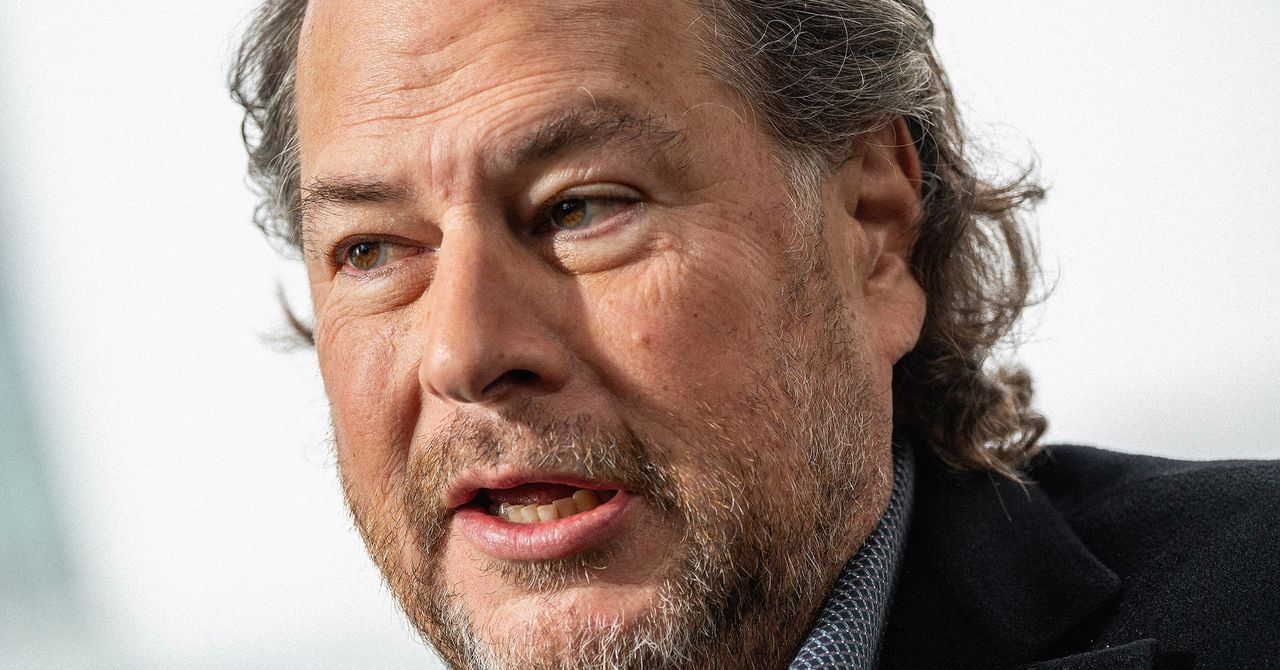
Employees at Salesforce are circulating an internal letter to chief executive Marc Benioff calling on him to denounce recent actions by US Immigration and Customs Enforcement, prohibit the use of Salesforce software by immigration agents, and back federal legislation that would significantly reform the agency.
The letter specifically cites the “recent killings of Renee Good and Alex Pretti in Minneapolis” as catalysts, calling them the “devastating indictment of a system that has discarded human decency.” It’s unclear how many signatories the letter has received so far.
The letter, which has not been reported on previously, is being organized amid Salesforce’s annual leadership kickoff event this week in Las Vegas. During an appearance at the event earlier today, Benioff asked international employees to stand to thank them for attending. He then joked that ICE agents were in the building monitoring them, according to current and former Salesforce employees who spoke to WIRED.
Benioff’s remarks sparked immediate backlash among employees. “Lots of people are furious,” says one source, who asked to remain anonymous for fear of retaliation. Another source tells WIRED that the internal pushback today was significantly more forceful than after Benioff made other controversial comments last fall supporting President Trump’s call to deploy the National Guard to San Francisco to address crime.
Salesforce did not immediately respond to a request for comment from WIRED. Business Insider and 404 Media previously reported on Benioff’s remarks and the reaction to them inside Salesforce.
“We are deeply troubled by leaked documentation revealing that Salesforce has pitched AI technology to U.S. Immigration and Customs Enforcement to help the agency ‘expeditiously’ hire 10,000 new agents and vet tip-line reports,” the letter reads. “Providing ‘Agentforce’ infrastructure to scale a mass deportation agenda that currently detains 66,000 people—73 percent of whom have no criminal record—represents a fundamental betrayal of our commitment to the ethical use of technology.”
The letter argues that Benioff’s voice “carries unique weight in Washington,” pointing to an episode last fall when Trump called off an ICE deployment in San Francisco after what appeared to be outreach from Bay Area tech leaders, including Benioff and Nvidia CEO Jensen Huang. It urges Benioff to use that influence as a “corporate statesman” to issue a public statement condemning what it calls ICE’s unconstitutional conduct and to commit Salesforce to clear “red lines” barring the use of its cloud and AI products for state violence.
Benioff has weighed in on both national and local political issues for years. He supported Democratic presidential candidate Hillary Clinton in 2016 and later became one of the most high-profile backers of Proposition C, a failed San Francisco ballot measure that would have raised taxes to fund programs to address homelessness. In 2020, he donated to the primary campaigns of some Democratic presidential candidates, including Kamala Harris.
But since Trump returned to the White House in January, Benioff has signaled greater support for some Republican leaders. In one interview, he said he strives to stay nonpartisan because he also owns Time magazine. But he also joked that, while he declined to contribute to Trump’s inauguration fund directly, he had “donated” a photo of the president on the magazine’s cover, which named him its 2024 Person of the Year. “He can use the Time magazine cover for free,” Benioff said in the interview with Fortune.
Benioff also faced backlash from Salesforce employees last fall when he suggested the National Guard should be sent to San Francisco to tackle crime ahead of the company’s annual conference in the city. He later apologized for the remarks, explaining they stemmed from genuine concerns about safety. He later reversed his stance and joined Nvidia’s Huang in asking Trump to refrain from sending troops.
3D bioprinting, in which living tissues are printed with cells mixed into soft hydrogels, or “bio-inks,” is widely used in the field of bioengineering for modeling or replacing the tissues in our bodies. The print quality and reproducibility of tissues, however, can face challenges. One of the most significant challenges is created simply by gravity — cells naturally sink to the bottom of the bioink-extruding printer syringe because the cells are heavier than the hydrogel around them.
“This cell settling, which becomes worse during the long print sessions required to print large tissues, leads to clogged nozzles, uneven cell distribution, and inconsistencies between printed tissues,” explains Ritu Raman, the Eugene Bell Career Development Professor of Tissue Engineering and assistant professor of mechanical engineering at MIT. “Existing solutions, such as manually stirring bioinks before loading them into the printer, or using passive mixers, cannot maintain uniformity once printing begins.”
In a study published Feb. 2 in the journal Device, Raman’s team introduces a new approach that aims to solve this core limitation by actively preventing cell sedimentation within bioinks during printing, allowing for more reliable and biologically consistent 3D printed tissues.
“Precise control over the bioink’s physical and biological properties is essential for recreating the structure and function of native tissues,” says Ferdows Afghah, a postdoc in mechanical engineering at MIT and lead author of the study.
“If we can print tissues that more closely mimic those in our bodies, we can use them as models to understand more about human diseases, or to test the safety and efficacy of new therapeutic drugs,” adds Raman. Such models could help researchers move away from techniques like animal testing, which supports recent interest from the U.S. Food and Drug Administration in developing faster, less expensive, and more informative new approaches to establish the safety and efficacy of new treatment paths.
“Eventually, we are working towards regenerative medicine applications such as replacing diseased or injured tissues in our bodies with 3D printed tissues that can help restore healthy function,” says Raman.
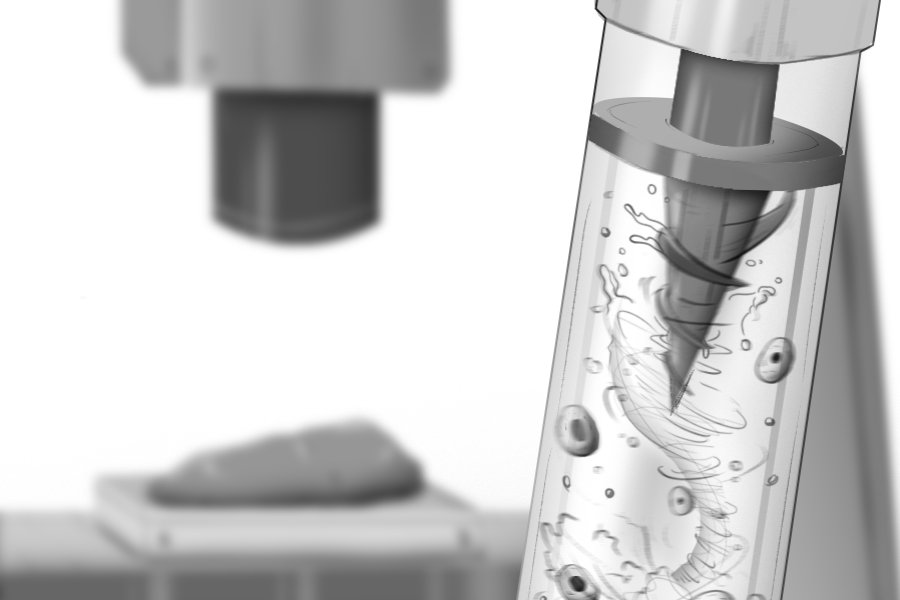
MagMix, a magnetically actuated mixer, is composed of two parts: a small magnetic propeller that fits inside the syringes used by bioprinters to deposit bioinks, layer by layer, into 3D tissues, and a permanent magnet attached to a motor that moves up and down near the syringe, controlling the movement of the propeller inside. Together, this compact system can be mounted onto any standard 3D bioprinter, keeping bioinks uniformly mixed during printing without changing the bioink formulation or interfering with the printer’s normal operation. To test the approach, the team used computer simulations to design the optimal mixing propeller geometry and speed and then validated its performance experimentally.
“Across multiple bioink types, MagMix prevented cell settling for more than 45 minutes of continuous printing, reducing clogging and preserving high cell viability,” says Raman. “Importantly, we showed that mixing speeds could be adjusted to balance effective homogenization for different bioinks while inducing minimal stress on the cells. As a proof-of-concept, we demonstrated that MagMix could be used to 3D print cells that could mature into muscle tissues over the course of several days.”
By maintaining uniform cell distribution throughout long or complex print jobs, MagMix enables the fabrication of high-quality tissues with more consistent biological function. Because the device is compact, low-cost, customizable, and easily integrated into existing 3D printers, it offers a broadly accessible solution for laboratories and industries working toward reproducible engineered tissues for applications in human health including disease modeling, drug screening, and regenerative medicine.
This work was supported, in part, by the Safety, Health, and Environmental Discovery Lab (SHED) at MIT, which provides infrastructure and interdisciplinary expertise to help translate biofabrication innovations from lab-scale demonstrations to scalable, reproducible applications.
“At the SHED, we focus on accelerating the translation of innovative methods into practical tools that researchers can reliably adopt,” says Tolga Durak, the SHED’s founding director. “MagMix is a strong example of how the right combination of technical infrastructure and interdisciplinary support can move biofabrication technologies toward scalable, real-world impact.”
The SHED’s involvement reflects a broader vision of strengthening technology pathways that enhance reproducibility and accessibility across engineering and the life sciences by providing equitable access to advanced equipment and fostering cross-disciplinary collaboration.
“As the field advances toward larger-scale and more standardized systems, integrated labs like SHED are essential for building sustainable capacity,” Durak adds. “Our goal is not only to enable discovery, but to ensure that new technologies can be reliably adopted and sustained over time.”
The team is also interested in non-medical applications of engineered tissues, such as using printed muscles to power safer and more efficient “biohybrid” robots.
The researchers believe this work can improve the reliability and scalability of 3D bioprinting, making the potential impacts on the field of 3D bioprinting and on human health significant. Their paper, “Advancing Bioink Homogeneity in Extrusion 3D Bioprinting with Active In Situ Magnetic Mixing,” is available now from the journal Device.

In figure skating, the quadruple axel is generally considered the most difficult jump. Until 2022, when US skater Ilia Malinin—currently riding high as the “Quad God” at the 2026 Winter Olympics—started doing them, they seemed impossible. Landing one, naturally, can give an athlete a higher score. But for skaters who aren’t generational talents like Malinin, grasping exactly how to pull off a quadruple axel can be tricky. But physics can offer some clues.
In 2024, the journal Sports Biomechanics published a study by Toin University researcher Seiji Hirosawa that brought science a little closer to understanding how quad axels work. One of the biggest factors? Getting high. Like 20 inches off the ground high.
In the current scoring system of figure skating competitions, the jury, which in the case of the Milano Cortina Games consists of two technical specialists and a technical controller, assigns a score to each technical element, namely jumps, spins, and steps. However, the scores for the more difficult jumps, such as triple or quadruple jumps, are higher than those for the other technical elements, so skaters must perform them correctly in order to win competitions.
Generally speaking the axel is the most technically complex of the jumps. There are three main types, each distinguished by their takeoffs: toe, blade, or edge. Most are named after the first person to do them; the axel is named after Norwegian skater Axel Paulsen. It is also the only one that involves a forward start, which leads the athlete to perform a half-turn more than other jumps. A simple axel, therefore, requires one and a half rotations to complete, while a quadruple axel requires four and a half rotations in the air.
To shed light on the specific kinematic strategies used by athletes to perform the quadruple axel jump, Hirosawa’s study focused on footage of two skaters who attempted this jump in competition. Using data from what’s known as the Ice Scope tracking system, researchers analyzed several parameters: vertical height, horizontal distance, and skating speed before takeoff and after landing.
Contrary to previous biomechanical studies, which suggested that jump height does not change significantly, Hirosawa’s study found that increasing jump height is crucial to successfully performing a quadruple axel jump. Both skaters, in fact, aimed to achieve significantly greater vertical heights in their attempts to perform this jump than in the triple axel.
“This suggests a strategic shift toward increasing vertical height to master 4A [quadruple axel] jumps, in contrast to previous biomechanical research that did not emphasize vertical height,” the study concluded.
Increased jump height, Hirosawa adds, provides increased flight time by allowing a large number of rotations around the longitudinal axis of the body. Short version: jump higher, turn more. “The results of this study provide valuable insights into the biomechanics of quadruple and triple axel jumps, update existing theories of figure skating research, and provide insights into training strategies for managing complex jumps,” the study concludes.
Easier said than done—unless you’re Ilia Malinin.


McIlroy: Players Championship ‘amazing’ but 4 majors plenty

Social media ads for prescription-only weight-loss medicines banned

Ariana Grande shares hilarious idea for her biopic

-

 Entertainment5 days ago
How a factory error in China created a viral “crying horse” Lunar New Year trend
-
 Business1 week ago
New York AG issues warning around prediction markets ahead of Super Bowl
-

 Tech1 week ago
How to Watch the 2026 Winter Olympics
-
 Business1 week ago
Post-Budget Session: Bulls Push Sensex Up By Over 900 Points, Nifty Reclaims 25,000
-

 Entertainment1 week ago
The Traitors’ winner Rachel Duffy breaks heart with touching tribute to mum Anne
-

 Fashion1 week ago
Canada could lift GDP 7% by easing internal trade barriers
-
 Business1 week ago
Investors suffer a big blow, Bitcoin price suddenly drops – SUCH TV
-

 Tech1 week ago
The Best Floodlight Security Cameras for Your Home