

Fashion
Intertextile Shanghai 2026 to debut pet boutique zone

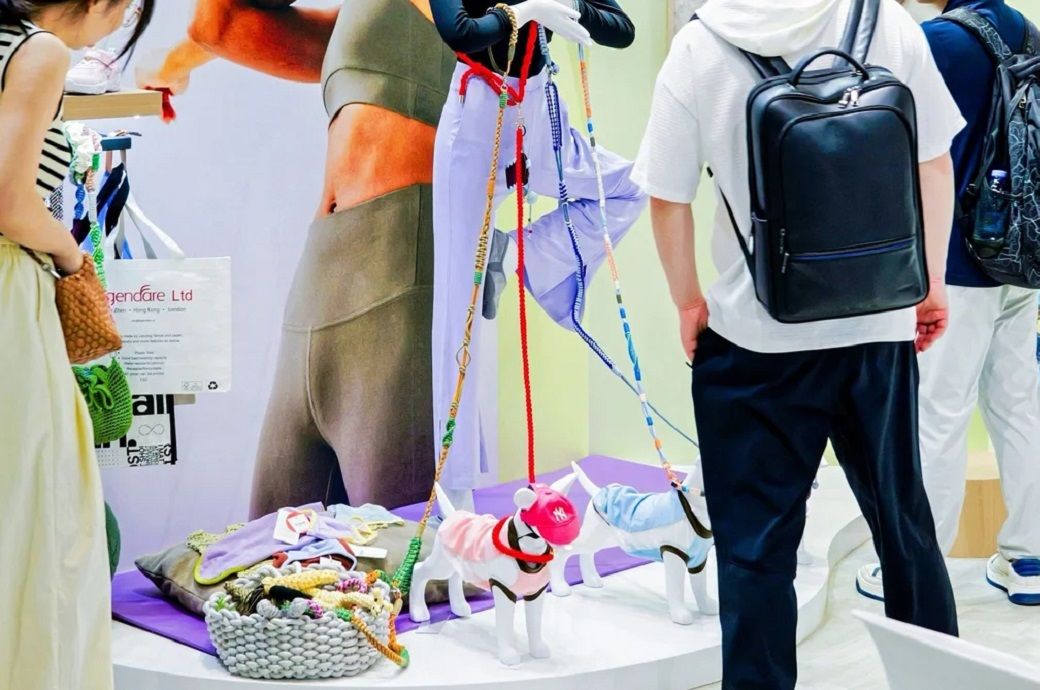
China’s pet economy is booming, especially amongst younger generations, and pet apparel – from designer outfits to functional garments – was a RMB 3.5 billion (over USD 500 million) market in 2024, growing more than 20% annually.To help exhibitors harness this trend, Intertextile Shanghai Apparel Fabrics – Spring Edition 2026 will launch the Pet Boutique, presenting a range of innovative, sustainable materials that prioritise both functionality and comfort for pets. The display area will be adjacent to a larger, restructured Functional Lab, with both that zone and Econogy Hub showcasing textiles that tie ‘eco’ with technical performance, a strong focus in the global market. This spring, over 3,000 exhibitors will unveil the season’s innovations across 190,000 sqm at the National Exhibition and Convention Center in Shanghai.
Intertextile Shanghai Apparel Fabrics – Spring 2026 will introduce a Pet Boutique zone tapping China’s fast-growing pet apparel market, alongside an expanded Functional Lab and larger Econogy Hub highlighting sustainable, performance textiles.
Over 3,000 exhibitors will showcase innovations from March 11–13 at Shanghai’s National Exhibition and Convention Center.
In China, pet ownership is on the rise, as is annual spending per pet, with both factors leading to astronomical growth and a pet market that could be worth RMB 1.15 trillion (over USD 164 billion) by 2028. As such, Intertextile Apparel is set to launch the Pet Boutique display area at its upcoming edition from 11 – 13 March, allowing textile suppliers to feature a range of pet-ready fabrics, accessories and apparel for buyers to explore. Exhibitors with samples on show include Lenzing, showing how renewable wood-based fibres can be used for pet products; Idole, using SOLOTEX to create textiles that blend fashion and function; as well as SilkIPEK Tekstil; Heng Li String and Braid; G.K Infinite; and more.
Younger generations born in the 1990s and 2000s are influencing market trends towards premium pet products, while functional garments, such as those with odour control and cold and wet weather protection, make up more than 60% of China’s pet apparel market – hence the display area’s focus on superior, performance-related exhibitors and its positioning beside Functional Lab.
Functional Lab reimagined in 2026
The product zone will expand in scale by over 30% compared to the previous Spring Edition, reflecting Chinese consumers’ increasing participation in outdoor activities ranging from dog walking to trail running. Within the zone, THE CUBE will feature a new product presentation and display area – mirroring the integrated layout that has proven so effective at Econogy Hub. Key exhibitors who have confirmed their participation at the new-look Functional Lab include:
- 3M China: 3M will draw special attention to its Thinsulate Insulation, encompassing extremely fine microfibres with a high warmth-to-thickness ratio that enables garment design with less bulk and enhanced freedom of movement.
- Hyosung: among other offerings, the world’s largest manufacturer of spandex will feature various CREORA materials, with diverse applications spanning warming, cooling, weight and colour.
Other highlighted exhibitors within the zone include knitted fabric specialists such as Regen-tech Fashion (eco-functional), Henglun Textile (denim), and HiLite Textile (fashion and casualwear).
Innovation front and centre at Econogy Hub
Ideal for humans and their furry companions, sustainable textiles are increasingly being integrated with functional properties like UV resistance, insulation and antibacterial performance. At the fair, Econogy Hub – which has also grown in scale – will give a vital platform to industry players showcasing eco-friendly textiles covering both fashion and function, as well as certification and traceability solutions. Featured exhibitors include:
- Ecocert (Pavilion): the certifier strives to enable production processes that respect the environment, quality and safety, and the Ecocert Pavilion will gather its downstream textile partners showcasing knitted fabrics, cashmere, and more.
- PEELSPHERE: the company converts non-food agricultural waste into 100% bio-based plant fibre leather that combines performance with fashionable aesthetics, as well as providing sustainable fashion service solutions.
- TextileGenesis, a Lectra company: provides a one stop traceability and market compliance solution for the apparel ecosystem, custom-built for premium and sustainable textiles such as wood-based fibres, premium cotton, specialty filaments, silk, wool and cashmere.
Buyers with ‘green’ sourcing requirements can filter eco-focused exhibitors through the Econogy Finder, a directory that draws attention to companies across the fairground whose sustainability has been further verified through the independent Econogy Check. In the apparel textile industry, numerous suppliers are treating sustainable materials as a non-negotiable element. Several will feature as prominent exhibitors at the upcoming fair and on its Econogy Finder, including notable cellulosic fibre producers Asahi Kasei, Eastman, and Grasim Industries, as well as eco-denim suppliers Burlington and Diamond Fabrics, both of which will be showcasing in Econogy Hub for the first time.
For fashion brands and other industry players, the ability to verify sustainability is crucial. When exhibiting at the previous Spring Edition, Ms Sun Rui, Sales Account Manager of Beijing Ecocert Certification Center Co Ltd, said: “Ecocert played a pivotal role at Econogy Hub, where we have gathered our partners to showcase their collections, presented our own certification solutions, and shared our vision for sustainability at Econogy Talks. This has enabled more buyers to recognise that a French certification body is actively advancing sustainability initiatives in China. We connected with apparel brands, garment manufacturers, yarn and fabric suppliers, and others. The zone’s focused display and seminar format provided an exceptional platform for industry exchange, helping both us and our clients better understand policies and development trends.”
The fair is co-organised by Messe Frankfurt (HK) Ltd; the Sub-Council of Textile Industry, CCPIT; and the China Textile Information Centre. It will take place alongside Yarn Expo Spring, Intertextile Shanghai Home Textiles – Spring Edition, CHIC and PH Value at the National Exhibition and Convention Center (Shanghai).
Intertextile Shanghai Apparel Fabrics – Spring Edition will be held from 11 – 13 March 2026.
Other upcoming shows:
Vietnam International Trade Fair for Apparel, Textiles and Textile Technologies
26 – 28 February 2026, Ho Chi Minh City
Intertextile Shenzhen Apparel Fabrics / Yarn Expo Shenzhen
9 – 11 June 2026, Shenzhen (Futian)
Intertextile Shanghai Apparel Fabrics – Autumn Edition / Yarn Expo Autumn
25 – 27 August 2026, Shanghai
Note: The headline, insights, and image of this press release may have been refined by the Fibre2Fashion staff; the rest of the content remains unchanged.
Fibre2Fashion News Desk (HU)










On a year-on-year (YoY) basis, final demand prices climbed 3.4 per cent in the 12 months ended February, matching the largest annual increase recorded in February 2025. Margins for apparel, footwear, and accessories retailing declined by 4.5 per cent, BLS said in a press release.
US producer prices rose 0.7 per cent MoM in February 2026, with annual inflation at 3.4 per cent.
The increase was driven mainly by services, up 0.5 per cent, while goods prices climbed 1.1 per cent, led by energy.
Apparel retail margins fell 4.5 per cent.
The data signals broad-based wholesale inflation, with sustained pressure despite weakness in select consumer-facing segments.
The February rise was driven largely by services, which accounted for more than half of the overall increase. Prices for final demand services advanced 0.5 per cent, marking the third consecutive monthly gain. Within this category, prices for services excluding trade, transportation, and warehousing rose 0.6 per cent, contributing nearly three-fourths of the increase. Trade services and transportation and warehousing services also posted gains of 0.4 per cent and 0.5 per cent, respectively.
Meanwhile, prices for final demand goods rose 1.1 per cent in February, the steepest increase since August 2023. Energy prices also increased by 2.3 per cent, while prices for goods excluding food and energy registered a more modest rise of 0.3 per cent.
Fibre2Fashion News Desk (SG)

During the period, apparel imports declined by *.** per cent to **,***.*** million SME from **,***.*** million SME in ****. Imports of textiles (non-apparel) reached **,***.*** million SME in ****, marking a decline of *.** per cent compared with **,***.*** million SME in ****.
The import volume of cotton products fell by *.** per cent to **,***.*** million SME during the review period, compared with **,***.*** million SME a year earlier. Meanwhile, imports of man-made fibre (MMF) products decreased to **,***.*** million SME in ****, down from **,***.*** million SME in ****.


US wholesale inflation accelerates as producer prices rise 0.7% in Feb
Pentagon eyes $200bn war fund as Iran strikes Gulf oil, gas

North India cotton yarn strengthens on supply shortage

Stock market crash today (March 12, 2026): Nifty50 opens below 23,600; BSE Sensex down over 900 points on continuing US-Iran war – The Times of India

UK’s Topshop unveils Tolu Coker capsule collection

India’s textile recycling market may reach $3.5 bn by 2030: Report

-
Business1 week ago
Stock market crash today (March 12, 2026): Nifty50 opens below 23,600; BSE Sensex down over 900 points on continuing US-Iran war – The Times of India
-
 Fashion1 week ago
UK’s Topshop unveils Tolu Coker capsule collection
-
 Fashion1 week ago
India’s textile recycling market may reach $3.5 bn by 2030: Report
-

 Tech1 week ago
Meta Developed 4 New Chips to Power Its AI and Recommendation Systems
-
 Business1 week ago
8th Pay Commission: How Much Will Central Govt Employees’ Salaries Rise? What We Know So Far
-

 Entertainment1 week ago
Ed Sheeran makes surprising Benny Blanco confession after hygiene uproar
-
 Fashion1 week ago
Is Bangladesh facing price challenges from China in the EU?
-

 Entertainment1 week ago
Gas, food, household prices explained