

Politics
Iran says potential energy, mining and aircraft deals on table in talks with US

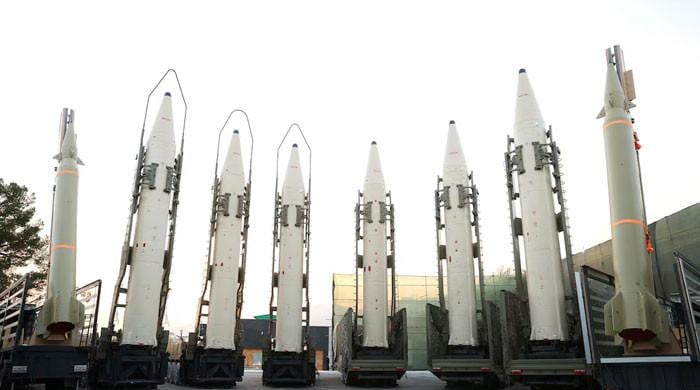
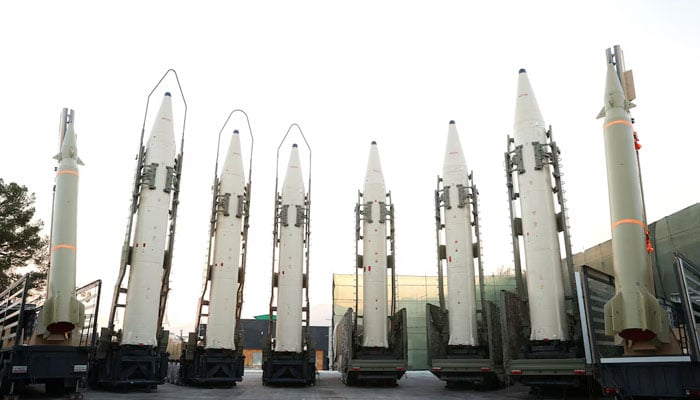
- Iran, US to hold further talks in Geneva on Tuesday.
- Tehran signals flexibility on nuclear programme.
- Iran says deal must deliver economic gains for both sides.
Iran is pursuing a nuclear agreement with the US that delivers economic benefits for both sides, an Iranian diplomat was reported as saying on Sunday, days before a second round of talks between Tehran and Washington.
Iran and the US renewed negotiations earlier this month to tackle their decades-long dispute over Tehran’s nuclear programme and avert a new military confrontation. The US has dispatched a second aircraft carrier to the region and is preparing for the possibility of a sustained military campaign if the talks do not succeed, US officials have told Reuters.
US Secretary of State Marco Rubio, speaking at a news conference in Bratislava, said President Donald Trump had made it clear that he would prefer diplomacy and a negotiated settlement, while making clear that may not happen.
“No one’s ever been able to do a successful deal with Iran but we’re going to try,” Rubio said.
Iran has threatened to strike US bases in the Middle East if it is attacked by US forces but on Sunday took a conciliatory line.
“For the sake of an agreement’s durability, it is essential that the US also benefits in areas with high and quick economic returns,” foreign ministry deputy director for economic diplomacy Hamid Ghanbari said, according to the semi-official Fars news agency.
“Common interests in the oil and gas fields, joint fields, mining investments, and even aircraft purchases are included in the negotiations,” Ghanbari said, arguing that the 2015 nuclear pact with world powers had not secured US economic interests.
In 2018, Trump withdrew the US from the pact that had eased sanctions on Iran in exchange for curbs on its nuclear programme, and re-applied tough economic sanctions on Tehran.
On Friday, a source told Reuters that a US delegation, including envoys Steve Witkoff and Jared Kushner would meet Iranian officials in Geneva on Tuesday, a meeting later confirmed to Reuters by a senior Iranian official on Sunday.
“Steve Witkoff and Jared Kushner will be travelling, I think they are travelling right now, to have important meetings and we’ll see how that turns out,” Rubio said, without providing further details.
While talks leading to the 2015 nuclear pact were multilateral, the current negotiations are confined to Iran and the United States, with Oman acting as mediator.
Iran’s Foreign Minister Abbas Araqchi left Tehran for Geneva to take part in the indirect nuclear talks with the US and meet the head of the UN nuclear watchdog, the IAEA, and others, his ministry said.
Open to compromise
Deputy Foreign Minister Majid Takht-Ravanchi signalled Iran’s readiness to compromise on its nuclear programme in return for sanctions relief, telling the BBC on Sunday that the ball was “in America’s court to prove that they want to do a deal.”
The senior official referred to the Iranian atomic chief’s statement on Monday that the country could agree to dilute its most highly enriched uranium in exchange for the lifting of sanctions as an example of Iran’s flexibility.
However, he reiterated that Tehran would not accept zero uranium enrichment, a key sticking point in past negotiations, with Washington viewing enrichment inside Iran as a potential pathway to nuclear weapons. Iran denies seeking such weapons.
In June, the US joined Israel in a series of air strikes that targeted Iranian nuclear sites.
The US is also stepping up economic pressure on Iran. At a White House meeting earlier this week, Trump and Israeli Prime Minister Benjamin Netanyahu agreed that the US would work to reduce Iran’s oil exports to China, Axios reported on Saturday.
Politics
Senator Ed Markey visits Shahid Khan to thank WorldBoston for efforts toward peace in Middle East
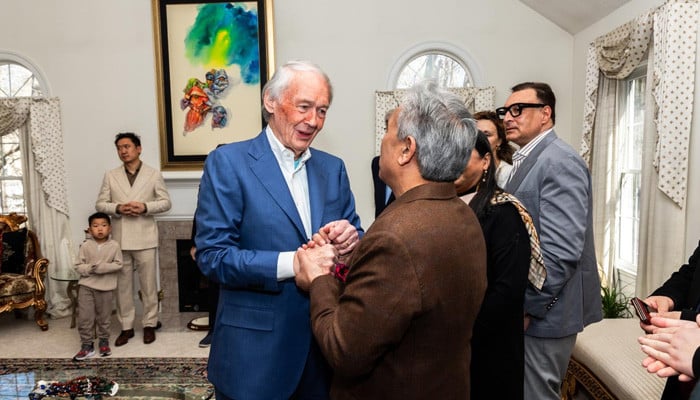
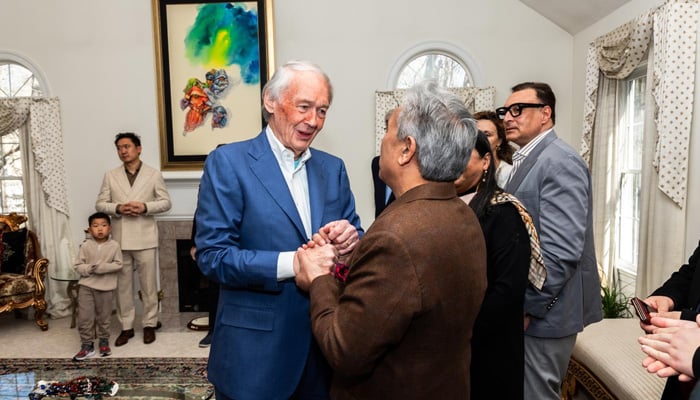
US Senator Edward J Markey visited the residence of Shahid Khan, a member of the Board of Directors of the World Affairs Council of Boston (WorldBoston), on Wednesday to publicly thank the organisation for its sustained work promoting dialogue and peaceful solutions in the Middle East.
The visit brought together leading civic and community figures to acknowledge WorldBoston’s programming, convenings, and outreach that foster cross-cultural understanding and diplomatic engagement.
Participants included Chairman James De Vellis; President Joe Haynes; CEO Sarah Sibley; Mayor Charlies Satistky; community leaders Mehreen and Manzar Khudadad; Peter Teng; Rick Arrowood; Muzammil Nazir; Masood Shaikh; and Jamshed Khan.
“Organisations like WorldBoston play an essential role in building the relationships and mutual understanding needed for durable peace,” said Senator Markey. “I’m grateful to Shahid Khan and WorldBoston’s leadership for their commitment to constructive dialogue and community-based diplomacy.”
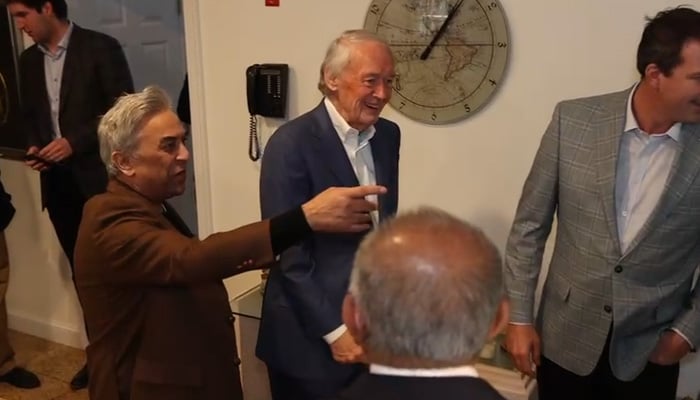
Shahid Khan commented: “We are honoured by Senator Markey’s visit and appreciative of his recognition of WorldBoston’s work. Civic engagement and respectful exchange remain crucial to advancing a just and lasting peace in the region.”
James De Vellis, Chairman of WorldBoston, added: “WorldBoston’s mission is to convene voices from across communities, sectors, and perspectives. Today’s gathering underscores the shared responsibility we have to support dialogue and diplomacy.”
- Hezbollah halts attacks as Israel presses campaign.
- France’s Macron urges Lebanon’s inclusion in ceasefire.
- UN ‘strongly condemns’ Israeli strikes in Lebanon.
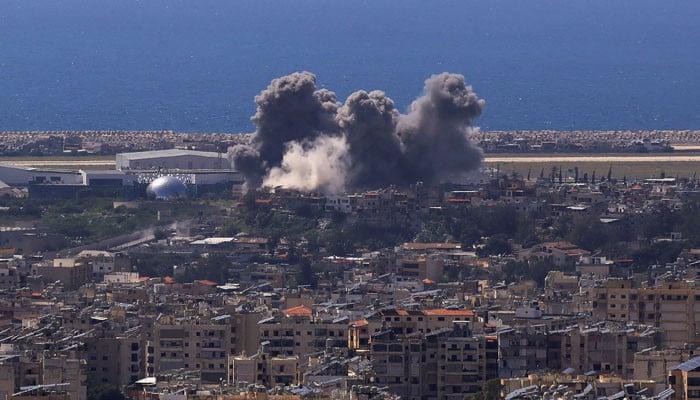
Israel carried out its heaviest strikes on Lebanon since the conflict with Hezbollah broke out last month, even as the Iran-aligned group paused attacks on northern Israel and Israeli troops in Lebanon under a two-week US-Iran ceasefire.
Consecutive explosions shook Beirut, sending smoke billowing across the capital, as Israel’s military said it had launched the largest coordinated strike of the war. More than 100 Hezbollah command centres and military sites were targeted in Beirut, the Bekaa Valley and southern Lebanon, it said.
The strikes killed 89 people – including a dozen medics – and wounded 700 across the country, Lebanon’s health ministry spokesman told Reuters.
In Beirut, Reuters reporters saw people on motorcycles picking up wounded and transporting them to hospitals because there were not enough ambulances to get them in time. A group of firefighters worked to put out flames in a car park after one strike left more than a dozen cars scorched and mangled.
The head of Lebanon’s syndicate of doctors, Elias Chlela, called in a written statement for “all physicians from all specialities” to head to any hospital they could to offer help. One of Beirut’s biggest hospitals said it was in need of donations of all blood types.
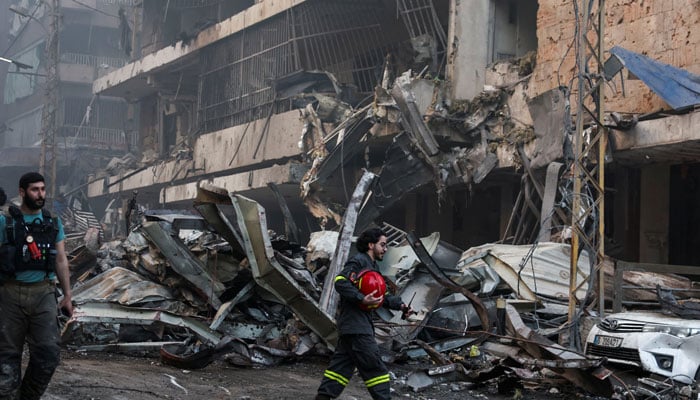
Israeli Prime Minister Benjamin Netanyahu said overnight that the ceasefire suspending the six-week-old US-Israeli war against Iran did not apply to Lebanon, and the Israeli military said operations against Hezbollah there would continue.
That position contradicted comments by Prime Minister Shehbaz Sharif, a key intermediary in the US-Iran ceasefire talks, who had said the truce would include Lebanon.
Lebanon’s state news agency NNA had reported continued Israeli strikes across southern Lebanon earlier in the day, including artillery shelling and a dawn airstrike on a building near a hospital that killed four people. An Israeli strike on the southern city of Sidon killed eight people and wounded 22 others, Lebanon’s health ministry said.
A further strike hit central Beirut in the early evening, NNA reported.
‘A grave violation’
Hezbollah stopped attacking Israeli targets early on Wednesday, three Lebanese sources close to the group told Reuters. The group’s last public statement on its military activity was posted at 1am (2200 GMT Tuesday), saying it had targeted Israeli troops inside Lebanon on Tuesday evening.
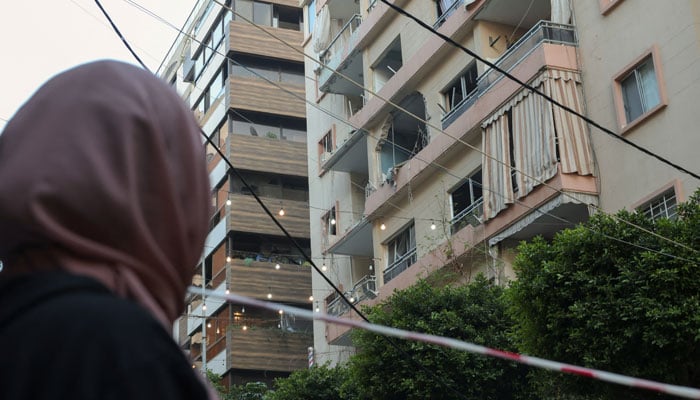
“Hezbollah was informed that it is part of the ceasefire – so we abided by it, but Israel as usual has violated it and committed massacres all across Lebanon,” senior Hezbollah lawmaker Ibrahim al-Moussawi told Reuters.
Another Hezbollah lawmaker, Hassan Fadlallah, told Reuters the Israeli strikes were “a grave violation of the ceasefire” and that there would be “repercussions for the entire agreement” if they continued.
The group is likely to issue a statement outlining its formal position on the ceasefire and on Netanyahu’s assertion that Lebanon is not included, the three Lebanese sources said.
Lebanese President Joseph Aoun, welcoming the US-Iran ceasefire, said Beirut would continue its efforts to ensure that Lebanon was included in any lasting regional peace agreement.
Most of Wednesday’s strikes were in civilian-populated areas, Israel’s military said. Hours before the strike, the military had issued warnings for some areas of southern Beirut and southern Lebanon. No such warning was given for central Beirut, which was also hit.
Following the strikes, Israeli military spokesperson Avichay Adraee claimed on X that Hezbollah had moved out of its stronghold in southern Beirut’s Dahiyeh neighbourhood to mixed areas of the city, including in the north.
Addressing Hezbollah, he said, Israel’s military will “pursue you and act with great force against you wherever you are”.
‘Lebanon can’t take it anymore’
More than 1,500 people have been killed in Israel’s air and ground campaign across Lebanon, including more than 130 children and more than 100 women, since March 2 when Hezbollah started firing rockets at Israel in solidarity with Tehran.
Israel has issued evacuation orders covering around 15% of Lebanese territory since then, mostly in the south and in suburbs south of Beirut. More than 1.2 million people have been displaced, according to Lebanese authorities.
Israel has also pledged to occupy southern Lebanon up to the Litani River as part of a “security zone” it says is intended to protect its northern residents.
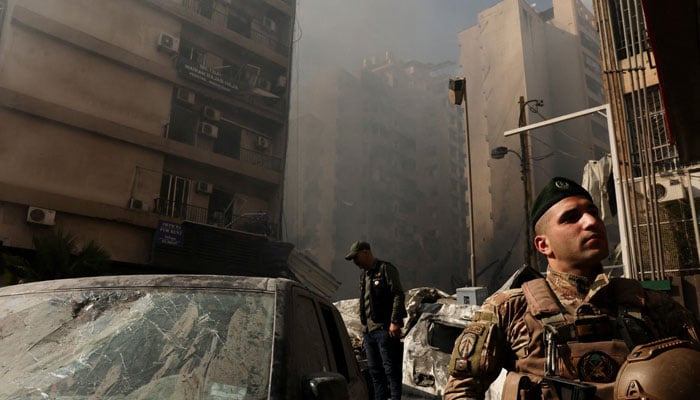
“Hopefully, a ceasefire will be reached,” said Ahmed Harm, a 54-year-old man displaced from Beirut’s southern suburbs. “Lebanon can’t take it anymore. The country is collapsing economically, and everything is collapsing.”
Outside a school sheltering displaced people in Sidon, pillows and blankets were piled onto cars as some families held out hope of returning home soon. On an astroturf football field, one family had packed plastic bags with clothes, pots and pans, towels, sheets and blankets.
“We’re just waiting for the official decision from the top, so we can go back,” said Samar al-Saibany, who was displaced from a village in the south.
Local mayor Mustafa al-Zein said more than 28,000 people were sheltering in the area as of Tuesday night. He cautioned residents against trying to return before an official signal.
“In the south, give someone a signal to return, and he’ll return,” Zein said.
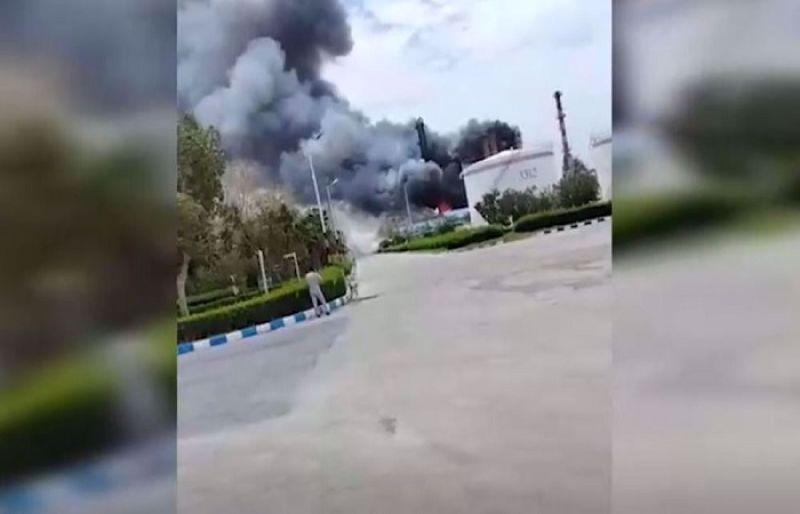
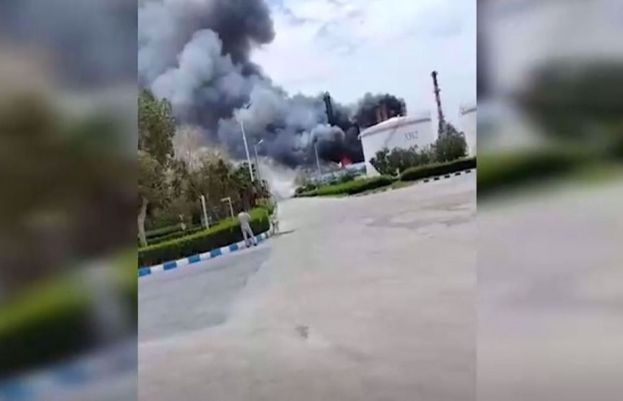
The National Iranian Oil Refining and Distribution Company says an oil refinery located on Iran’s Lavan Island came under attack on Wednesday morning, despite the announcement of a ceasefire between the United States and Iran.
In a statement on Wednesday, the company said the facility of Lavan oil refinery was targeted by “a cowardly attack by enemies” at 10:00 local time.
“Safety and firefighting teams are controlling and extinguishing the fire and securing the facility,” the statement said.
No casualties have so far been reported.
“Fortunately, no casualties have been reported so far due to the timely evacuation of employees,” the company added.
The attack comes despite the announcement of a ceasefire early Wednesday after 41 days of intense fighting between Iran and the US-Israeli coalition.
Israel’s Maariv newspaper admitted that the US-Israeli war against the Islamic Republic has ended in a “decisive victory for Iran,” with both the US and Israel conceding to a “strategic surrender” and retreating from the battlefield.
On Wednesday, the United States and Iran agreed to a two-week ceasefire after Washington received a 10-point proposal from Tehran.
The Israeli newspaper emphasized that Iran has imposed a deal largely of its own design on the US, rejecting Washington’s proposal.
Throughout the war, Iran continued to target Israeli and American assets in occupied Palestine and US military bases and interests in the Persian Gulf, maintaining its resilience even after 41 days of fighting.
Iran’s Supreme National Security Council also declared a “historic and crushing defeat” of the United States and the Israeli regime, saying that Washington was forced to accept the Iranian proposal that includes a permanent ceasefire, the lifting of all sanctions, and the withdrawal of US combat forces from the region.


India’s POY output cut to 60% as rising costs hit producers hard

This AI Button Wearable From Ex-Apple Engineers Looks Like an iPod Shuffle

Tom Holland calls Christopher Nolan ‘The Odyssey’ ‘an absolute masterpiece’

-
Uncategorized7 days ago
[CinePlex360] Please moderate: “Trump signals p
-
 Business7 days ago
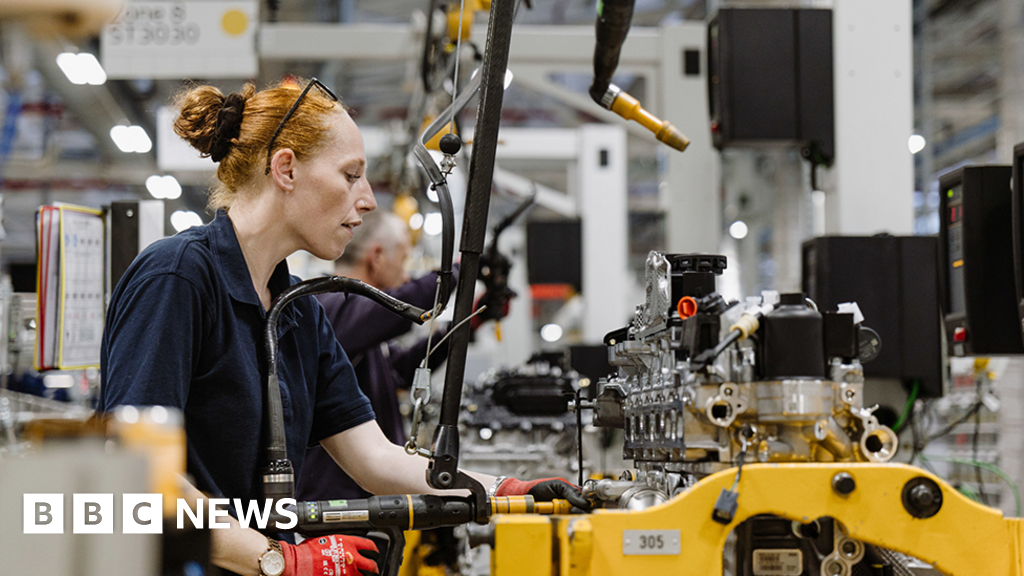
Jaguar Land Rover sees sales recover after cyber attack
-

 Entertainment6 days ago
Joe Jonas shares candid glimpse into parenthood with Sophie Turner
-

 Tech6 days ago
Our Favorite iPad Is $50 Off
-

 Fashion1 week ago
China’s Anta Sports posts record $11.62 bn revenue in 2025
-

 Politics6 days ago
Iran can sustain Strait of Hormuz closure for years, will cut US military logistics: Official
-

 Sports5 days ago
UConn Final Four run could trigger a $50M furniture giveaway for Massachusetts-based Jordan’s Furniture
-
 Business6 days ago
Video: Why Is the Labor Market Stuck?