

Politics
Iran to US: Sanctions and war failed; try diplomacy and respect

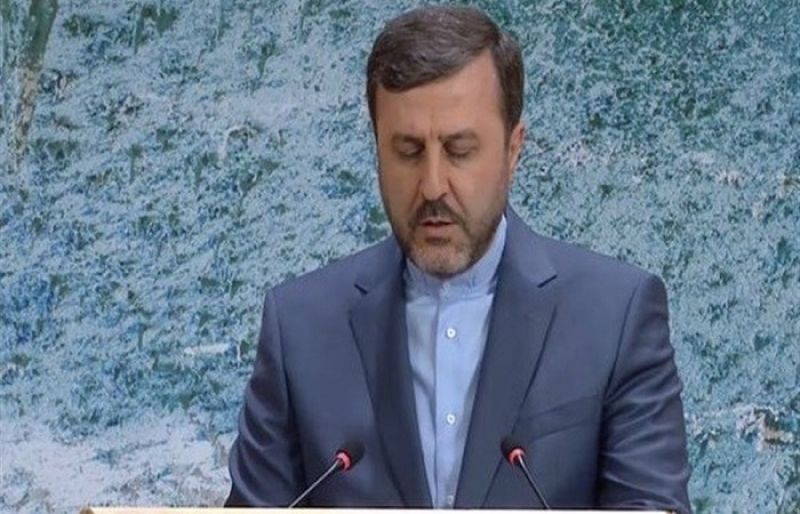

A top Iranian diplomat says the time is ripe for the United States to abandon its “fruitless” sanctions and failed policy of war against Iran, urging genuine respect for diplomacy as the only viable path forward.
“Iran’s enemies may start a war, but they will not be able to determine the end,” Deputy Foreign Minister for Legal and International Affairs Kazem Gharibabadi said in an address to the United Nations Human Rights Council in Geneva, Switzerland, on Monday.
“You have tried sanctions and war in relation to Iran and got nowhere. Now it is time to experience diplomacy and respect,” he said.
He said Iranians do not seek aggression against other countries but will firmly stand against any military or political conspiracy against the Islamic Republic and will defend their homeland.
Gharibabadi said the consequences of war will not be limited only to the parties to the conflict, “but will engulf the region.”
US President Donald Trump has repeatedly threatened military action against Iran since early January, following his public support for foreign-linked riots.
Trump has since ordered a significant military buildup in regional waters near Iran and warned of strikes if Tehran does not accept a deal on US terms.
Iranian officials have reiterated their readiness for a fair agreement on the country’s nuclear program but warned that even a limited attack would trigger a decisive response.
Elsewhere in his address, Gharibabadi said the so-called advocates of human rights supported the United States and the Israeli regime during the 12-day war against Iran in June 2025, which killed more than 1,060 Iranians and injured some 6,000 others.
“They did not even allow the UN Security Council and the Human Rights Council to condemn the aggression.”
Gharibabadi said Iran’s enemies, who suffered a severe defeat in the June war, attempted to set the stage for another military offensive by inciting unrest in the country and turning peaceful economic protests into deadly riots.
The Iranian official condemned the terrorists for committing Daesh-style crimes that resulted in the martyrdom of 2,427 civilians.
Gharibabadi said those who place the least value on human dignity are exploiting human rights as a tool to serve their own interests.
The Iranian deputy foreign minister said the main instigators of the January unrest, notably the United States and Israel, must be held accountable for crimes against humanity.
- Khamenei tells southern neighbours told to choose “right side”.
- Adds Strait of Hormuz management to enter a new phase soon.
- Public urged to stay active despite ceasefire announcement.
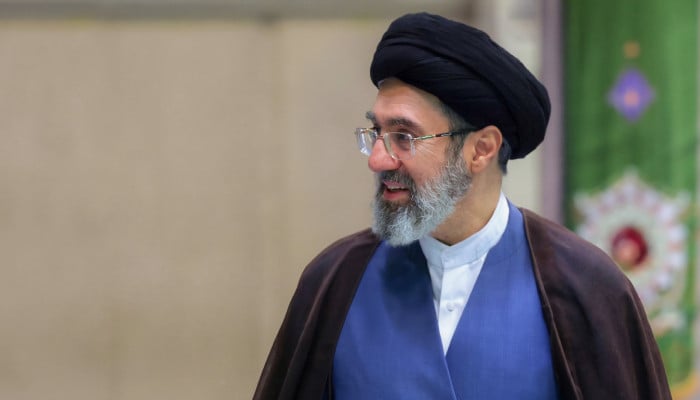
TEHRAN: Iran’s new supreme leader Mojtaba Khamenei said in his latest written message that his nation did not want war with the United States and Israel, but would protect its rights as a nation, state television reported Thursday.
“We did not seek war and we do not want it,” he said in the message read out on state TV, weeks after his father, Ayatollah Ali Khamenei, was martyred on February 28, the first day of the war.
“But we will not renounce our legitimate rights under any circumstances, and in this respect, we consider the entire resistance front as a whole,” he added, in an apparent reference to Lebanon where Israel is fighting with Tehran’s ally Hezbollah.
“All must know that, by Almighty God’s will, we definitely won’t allow the criminal aggressors who attacked our country to go unpunished.”
Iran this week agreed to a fragile two-week ceasefire with the United States that could lead to peace negotiations after threats of annihilation from US President Donald Trump.
The supreme leader also urged the country’s southern neighbours to carefully observe ongoing regional developments, describing them as a “miracle” and calling for a clear and informed stance.
He said that Iran will move the management of the strategic Strait of Hormuz into a new phase.
Khamenei told Iranians that they must “not imagine that taking to the streets is no longer necessary” despite the announcement of the ceasefire.
“Your voices in public squares are undoubtedly influential in the outcome of the negotiations,” he said.
Likely wounded in the strike that martyred his father, Mojtaba Khamenei, has still not been seen in public since his leadership appointment.
He has issued written declarations, most of them read out by presenters on state television.
US President Donald Trump has even speculated that he could be dead, but Iran’s state television said he is recovering from his injuries and posts photos of him, without specifying when they were taken.
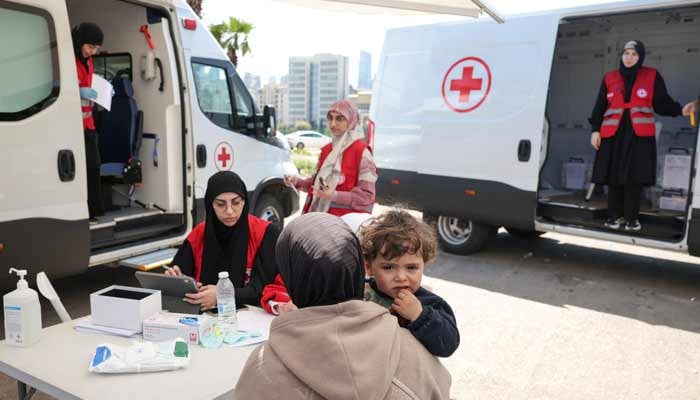
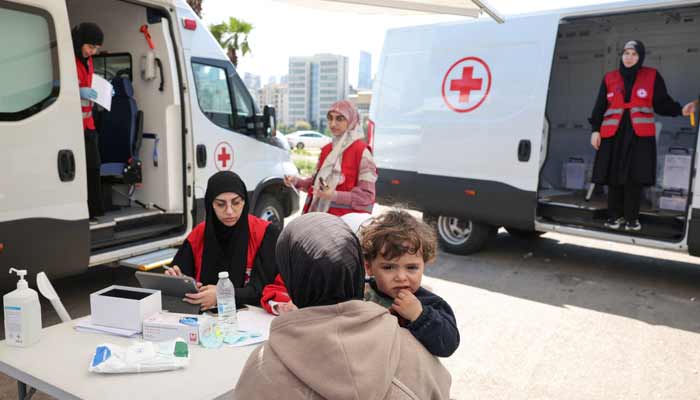
Some of Lebanon’s hospitals could run out of life-saving trauma medical kits within days as supplies near depletion following mass casualties from large-scale Israeli strikes over the past day, the World Health Organisation (WHO) said on Thursday.
The life-saving trauma kits include bandages, antibiotics and anaesthetics to treat patients who sustained war-related injuries, the WHO stated.
“Some of the trauma management supplies were in short (supply) and we may run out in a few days,” Dr Abdinasir Abubakar, the WHO’s representative in Lebanon, told Reuters.
Israel bombed more targets in Lebanon on Thursday after its biggest attacks of the war on its neighbour on Wednesday killed more than 250 people and more than 1,000 were injured.
“If we have another mass casualty, like what happened yesterday, it will be a disaster,” Abubakar said.
“Probably we will lose more lives just because we don’t have enough supplies,” he added.
Shortages of supplies of trauma kits have been driven by a surge in recent casualties — the majority of whom are civilians — with roughly three weeks’ worth of supplies being depleted in one day, Abubakar stated.
Costs surge
Medicines to treat patients with chronic disease, such as insulin for diabetes patients, could also run out within weeks after supply chains were disrupted by the war in the Gulf and the closure of the Strait of Hormuz, Abubakar said.
Delivery costs of medical supplies into Lebanon have surged three times, while the WHO also faces constrained funding, he added.
The WHO said it and the Lebanese Ministry of Health were planning to move supplies between hospitals to avoid total depletion of stocks, but cautioned that the health system is being stretched to its limit.
More than one million people have been displaced across Lebanon since the conflict began on March 2, following joint US-Israeli strikes on Iran in late February, according to the United Nations.
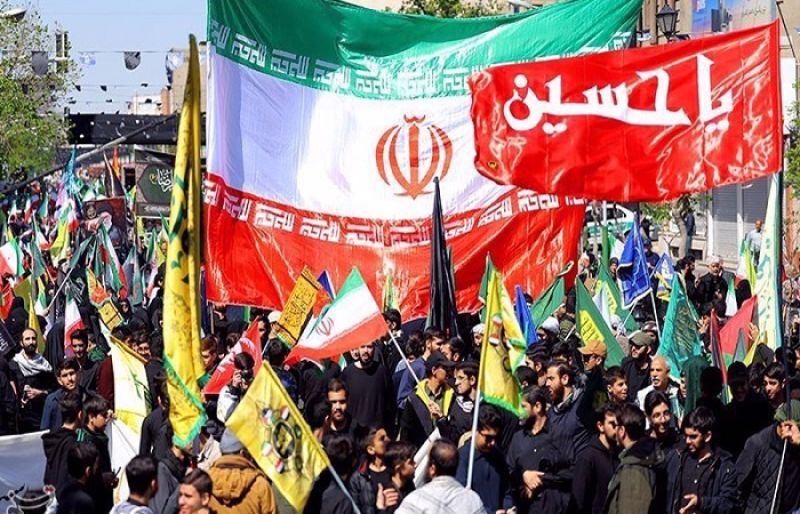
Millions of Iranians have taken to the streets in Tehran and across the country to commemorate the 40th day since the martyrdom of Leader of the Islamic Revolution Ayatollah Seyyed Ali Khamenei, top commanders and school children of Minab.
The mourning procession began on Thursday morning, with participants marching from Jomhouri Square to the location where Ayatollah Khamenei was assassinated in terrorist US-Israeli strikes.
The ceremony, which will end at night, will see mourners chanting slogans, listening to eulogies in memory of the late Leader, and pledging their allegiance to his ideals.
Processions are also being held in hundreds of cities and counties across Iran.
The Leader was assassinated, alongside some of his family members, on February 28, the first day of the illegal aggression launched by the United States and the Israeli regime against Iran. A host of Iran’s top military commanders and advisers were also assassinated, including Major General Abdolrahim Mousavi, Rear Admiral Ali Shamkhani, and Major General Mohammad Pakpour.
The enemies have deliberately targeted Iran’s civilian infrastructure and energy facilities, killing hundreds of people. In one of the deadliest attacks on the first day of the aggression, the US military targeted a primary school in Minab, killing more than 170 civilians, mostly children.
The Iranian armed forces began to swiftly retaliate against the unprovoked military assault by conducting barrages of missile and drone attacks on the Israeli-occupied territories as well as on the US assets in regional countries.
Following 100 waves of Iran’s retaliatory strikes, Iran’s Supreme National Security Council (SNSC) announced on Wednesday that there was an agreement to a Pakistan-brokered two-week ceasefire after the US accepted Iran’s 10-point proposal.
In a statement released on Thursday, the Islamic Revolution Guards Corps (IRGC) said that the martyrdom of Ayatollah Khamenei was as effective as his lifetime presence in the promotion of Islamic Revolution and the Islamic Republic.
It also enumerated the resistance and unity of the Iranian nation and the Islamic establishment, as well as 100 fatal strikes by the Iranian armed forces and the enemies’ humiliating retreats, as parts of the blessings of the Leader’s pure blood during the imposed war.
Ayatollah Khamenei’s thought, discourse, conduct and command in the fields of resistance, independence, progress, justice, unity, fight against oppression, and spirituality form a comprehensive system for governing the country, it added.


Bangladesh garment exports down, March sees steeper drop

South Korea’s apparel imports rise slightly to $1.9 bn in Jan-Feb

Khamenei says Iran does not want war but ‘criminal agressors’ won’t go unpunished

-
 Business1 week ago
Jaguar Land Rover sees sales recover after cyber attack
-
Uncategorized1 week ago
[CinePlex360] Please moderate: “Trump signals p
-

 Entertainment6 days ago
Joe Jonas shares candid glimpse into parenthood with Sophie Turner
-

 Tech6 days ago
Our Favorite iPad Is $50 Off
-

 Sports6 days ago
UConn Final Four run could trigger a $50M furniture giveaway for Massachusetts-based Jordan’s Furniture
-

 Entertainment6 days ago
Blake Lively reacts to harassment claims dismissal against Justin Baldoni
-

 Fashion1 week ago
China’s Anta Sports posts record $11.62 bn revenue in 2025
-
 Business7 days ago
Video: Why Is the Labor Market Stuck?