

Politics
IRGC vows to pursue, kill ‘child-killer’ Netanyahu if he is still alive

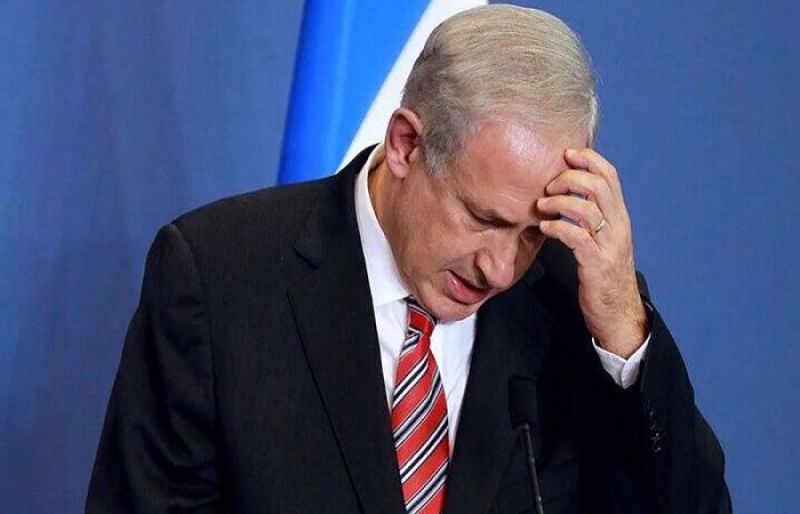

The Islamic Revolution Guards Corps (IRGC) has pledged to continue efforts aimed at chasing and killing Benjamin Netanyahu as speculations rise about the fate of the criminal Israeli prime minister.
The IRGC’s Public Relations Department made the announcement on Sunday, the 16th day of the illegal US-Israeli aggression against Iran, with the latest reports saying Netanyahu has not been seen in public in the past few days, and his last X post is an AI-generated one.
“The unknown fate of the Zionist criminal prime minister and the possibility of his death or his escape, along with his family, from the occupied territories reveal a crisis and the faltering situation of the Zionists,” it said.
“If the child killer is still alive, we will strongly keep chasing and killing him.”
Meanwhile, the IRGC announced that it had targeted positions in occupied lands and three US bases in the region in the 52nd stage of its retaliatory operations.
The attacks, it noted, came in revenge for the blood of workers martyred in US-Israeli strikes on Iran’s industrial towns.
The IRGC further said that continuous ambulance sirens and the confession of the Zionist entities to the increasing number of casualties exposed the impact of the IRGC’s heavy missiles on Tel Aviv’s industrial sectors.
Powerful Iranian missiles and drones also targeted the places of gathering of American forces at the al-Harir base in Erbil, in Iraq’s semi-autonomous Kurdistan Region, as well as at Arifjan and Ali al-Salem military facilities in Kuwait, it added.
The US and Israel launched their unprovoked act of aggression against Iran on February 28 by assassinating the Leader of the Islamic Revolution, Ayatollah Seyyed Ali Khamenei, along with senior military commanders, in flagrant violation of the country’s sovereignty.
The enemies have deliberately targeted Iran’s civilian structure, including schools, hospitals, and sports facilities, killing at least 1,348 Iranian people.
Iran began to swiftly retaliate against the terrorist military assault by launching barrages of missile and drone attacks on the Israeli-occupied territories as well as on the US bases in regional countries.
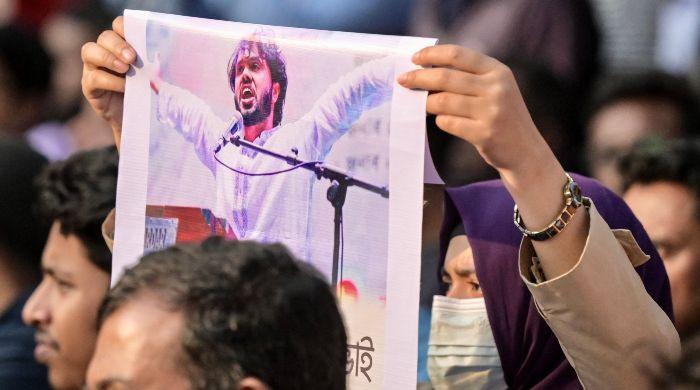
KOLKATA: Indian police said Sunday they had arrested a Bangladeshi man for allegedly helping two fellow nationals, accused of murdering a popular student leader in Dhaka, enter India illegally.
Sharif Osman Hadi, a vocal India critic who took part in Bangladesh’s 2024 mass uprising, was shot by masked assailants in Dhaka on December 12 and later succumbed to his injuries at a hospital in Singapore.
West Bengal police named Faisal Karim Masud and Alamgir Hossain as the prime suspects in the killing and said they allegedly fled Bangladesh through the Haluaghat border with India shortly after Hadi’s attack. India arrested the pair on March 8 and they remain in police custody.
On Sunday, West Bengal’s Special Task Force Superintendent Indrajit Sarkar told AFP that Philip Sangma had been arrested on suspicion of helping Masud and Hossain enter the state of West Bengal through its porous border.
Sangma was “held on Saturday for facilitating the illegal entry of the two prime suspects in the murder of Bangladeshi youth activist (Sharif Osman) Hadi,” Sarkar said, adding that he appeared in a district court on Saturday before being remanded to police custody for a week.
Hadi’s death set off violent protests in Bangladesh, with angry mobs torching several buildings, including two major newspapers deemed to favour India, as well as a prominent cultural institution.
The killing further strained ties between India and Bangladesh that had frayed since former prime minister Sheikh Hasina fled the pro-democracy uprising and sought refuge in India.
India’s foreign ministry has said it rejects “false narratives” about New Delhi’s involvement in Hadi’s killing.
In a sign of a potential thaw, Indian Prime Minister Narendra Modi congratulated the Bangladesh Nationalist Party for winning the first parliamentary elections since Hasina’s exit.
Politics
‘No miscalculation’: US Israel committing war crimes by attacking hospitals, schools: WHO chief


World Health Organization (WHO) director general has denounced the US-Israeli bombings of hospitals and schools as “war crimes” that cannot be justified as “miscalculations.”
In a post published on X on Sunday, Tedros Adhanom Ghebreyesus wrote: “Bombing a hospital or a school is not a ‘miscalculation’.”
“Killing a paramedic is not ‘collateral damage.’ Starving civilian is not ‘negotiating tactic.’ These are war crimes. Call it what it is. Full stop,” he added.
The US and Israeli armed forces began their latest military aggression against Iran on February 28 by attacking 30 targets across Tehran, killing several senior Iranian officials, including the Leader of the Islamic Republic, Ayatollah Sayyed Ali Khamenei.
Since then, Iranian armed forces have decisively retaliated against the strikes by launching barrages of missiles and drones against Israeli-occupied territories as well as on US bases in region.
During their aggression against Iran, the Israeli regime and the US have bombed several schools and hospitals as well as other civilian infrastructure.
In one instance, the US military bombed a school in Minab, Hormozgan Province, killing 168 schoolgirls.
According to the latest figures announced by Iranian health authorities more than 1,300 people have been martyred and over 10,000 wounded in the attacks.
Among those killed are 200 children under the age of 12, including 11 children under five, as well as more than 200 women.
The casualties also include 206 students and teachers, highlighting the heavy toll on the education sector.
Health Ministry data on the injured show that women make up 17 percent of the total wounded.
At least 1,040 of the injured are under the age of 18, including 65 children younger than five.
Damage assessments by the Iranian Red Crescent show widespread destruction of civilian infrastructure.
A total of 19,734 civilian and residential units have been damaged, including 16,191 residential homes.
The attacks have also damaged 77 medical centers and pharmacies, 65 schools and educational centers, and 16 Red Crescent facilities.
Israel has also killed more than 72,000 Palestinians, most of them women and children, in its two-year war on Gaza, where more than 90 percent of homes are estimated to have been damaged or destroyed and healthcare, water, sanitation, and hygiene systems have largely collapsed.
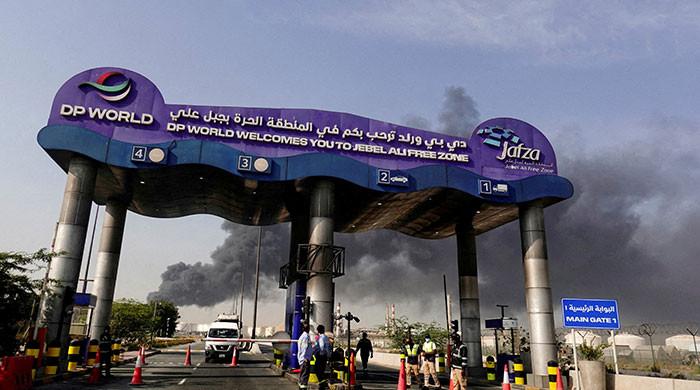
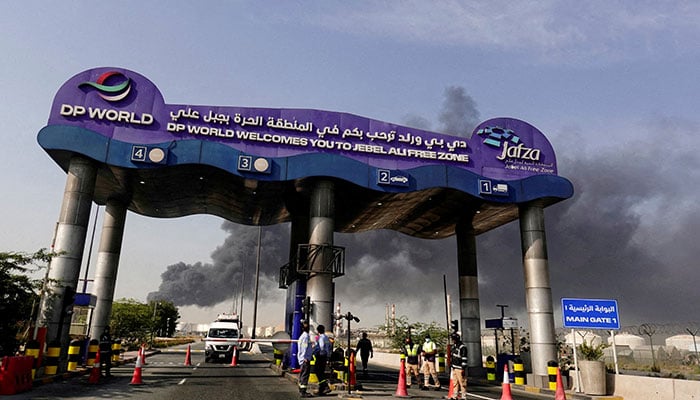
DUBAI: Dubai is scrambling to preserve its image as a safe haven despite Iran’s onslaught, with influencers rallying behind the government’s message as authorities crack down on those sharing fake news.
For decades, the Gulf was seen as an oasis of safety in a tumultuous Middle East, with the United Arab Emirates branding itself the safest country in the world and boasting of its very low crime rates.
But that image has now been shattered.
Iran has fired over 1,800 missiles and drones at the Emirates, more than any other country targeted by Tehran in the conflict, upending its aura of tranquillity despite its air defence intercepting a vast majority of the projectiles.
Kuwaiti-American reality star Ebraheem Alsamadi, known from “Dubai Bling”, said in a video that he would stay in the UAE despite US consular advice, calling it “the safest country in the world, and nothing can change that”.
“This has been my home for the past 16 years and I’m not going to leave it in 16 seconds [….] I will stand by this country as it stood by me,” he added.
Dubai’s Instagram account shared an emotional song to its 5.8 million followers that says “Dubai is safe, will always be safe”.
Safety had long been inseparable from the city’s identity.
“Those in charge of that strategy are now debating how to evolve it in the face of this obvious insecurity, but for now are deferring to their habits,” said Ryan Bohl, a geopolitical analyst at Rane Network.
The UAE is also, he said, “hoping the war will be short enough that people will not associate war with the country. And one of the best ways to do so is to minimise the impact of the conflict on the UAE itself”.
Reputation
Roughly 90% of people living in the UAE are foreigners, a crucial workforce for diversifying the economy away from oil towards tourism and services.
Retaining and attracting foreign talent remains key to that programme.
The tourism sector is acutely susceptible to security issues, but “different tourists from different parts of the world have different risk tolerances,” Bohl said.
To combat further fallout, authorities have doubled down on pushing an image of normality during the war.
In the early days of the war, UAE President Mohamed bin Zayed Al Nahyan walked with his massive entourage through Dubai Mall.
At flagship tourist sites like Dubai Mall and JBR beach, foot traffic has reduced to a trickle as visitors have fled the country.
Emaar, a major real estate developer that runs famous shopping centres including Dubai Mall, has warned shops and restaurants against closing or operating at reduced hours during the war.
“Such actions undermine public order, create unnecessary concern and adversely affect the reputation and economic standing of the United Arab Emirates,” the company said, in a note sent to the shops seen by AFP.
Sharing rumours
Footage of drone strikes and smoke billowing above the city has been shared widely, while fleeing tourists recounted tales of escaping Dubai under fire to international media.
Dubai police warned against “sharing rumours” but also “photographing or sharing security or critical sites”.
Other Gulf countries have taken similar measures, with Qatar arresting more than 300 people.
The UAE attorney general ordered the arrest and urgent trial of a number of people for publishing videos of interceptions or “misleading, fabricated content”.
This week, many companies evacuated Dubai’s financial district as Iran threatened US and Israel-linked economic targets.
It will be key for the UAE, and especially Dubai, which cannot rely on oil for revenue, to showcase that it is still safe for investments.


Biggest questions facing the men’s committee heading into Selection Sunday

Josh Seftel’s Mom on the Oscars – and her son’s nomination

Jake Bongiovi gushes over Millie Bobby Brown as she hosts 1st rescue gala

-

 Politics1 week ago
India let Iran warship dock the day US sank another off Sri Lanka, say officials
-

 Sports1 week ago
Pakistan set for FIH Pro League debut | The Express Tribune
-

 Entertainment1 week ago
Harry Styles kicks off new era with ‘One Night Only’ comeback show
-
 Business1 week ago
Restaurant group changes name after bid to buys pubs across the UK
-
 Business3 days ago
Stock market crash today (March 12, 2026): Nifty50 opens below 23,600; BSE Sensex down over 900 points on continuing US-Iran war – The Times of India
-
 Business1 week ago
Home heating oil: ‘Most of my pension has gone on home heating oil’
-

 Sports1 week ago
Winners and losers of the 2026 NHL trade deadline
-

 Entertainment1 week ago
Kanye ‘Ye’ West trips during trial: ‘Is he asleep?’