

Entertainment
Is Katy Perry pregnant with Justin Trudeau’s baby?

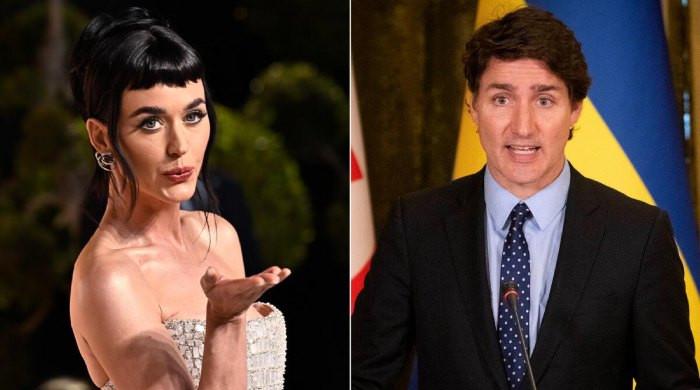
Katy Perry has once again found herself at the centre of rumours, this time over fresh pregnancy chatter linked to her romance with Justin Trudeau.
The speculation rose after recent photos of the pop star sparked questions across social media, with many fans wondering whether a baby announcement could be on the way.
Those close to the singer, however, say the truth is far less dramatic.
The rumours began after Katy Perry was seen out in Montecito, California, with Justin Trudeau.
During an outing at the Coral Casino and Cabana Club, Perry opted for a loose white cover-up rather than her usual figure-hugging style, while a robe draped across her midsection caught the attention of onlookers.
That single detail was enough to send the internet into frenzy, with some claiming she appeared to be hiding a baby bump.
Given that the couple have been linked for less than a year, the theory spread quickly.
But a source close to the pair has firmly dismissed it, telling the Daily Mail: “There have been rumors recently that Katy is pregnant, but she is not.”
The insider added that while public interest in the couple remains high, the claims are simply not true.
A month back, a news outlet reported that the songstress might in considering expanding the family with the politician.
They quoted an insider: “Katy’s ready to go all in right now with [Trudeau]. They’re even talking about having a child together.”
The same insider added that the feeling is mutual, highlighting that Trudeau is just as committed.
“Justin is very clear that he wants to build a life with her and there’s no one he’d rather be with.”
The spy further added that “Katy’s made no secret of wanting at least one other child,” and how “Justin’s the perfect fit” for that.
However, at the time, fans didn’t seem to like the news.
“We literally don’t have time for this, Katy,” one fan wrote on Reddit, while another added humourously, “Leave the child alone Katy.”
“Katy Perry just STOP,” another chimed in, while someone wrote: “Why do we need to know about it?”
Perry and Trudeau’s relationship first surprised fans last July, when whispers got out that the singer and the former Canadian leader were spending time together.
At the time, many assumed it was just a fling, particularly as both had just come out of long-term, high-profile relationships.
Perry had recently ended her nine-year relationship with Orlando Bloom, with whom she shares a five-year-old daughter, Daisy Dove.
Trudeau, meanwhile, announced his separation from Sophie Grégoire Trudeau in 2023 after 18 years of marriage.
The former couple share three children: Xavier, Ella-Grace and Hadrien.
The topic about pair’s romance got fired up after the singer confirmed her split and was later spotted enjoying a cosy dinner with him at Le Violon.
Since then, every public appearance has been closely scrutinised, with fans eager for clues about where the relationship might be heading.
For now, despite the buzz and the viral theories, those close to the couple insist there is no baby news to share.
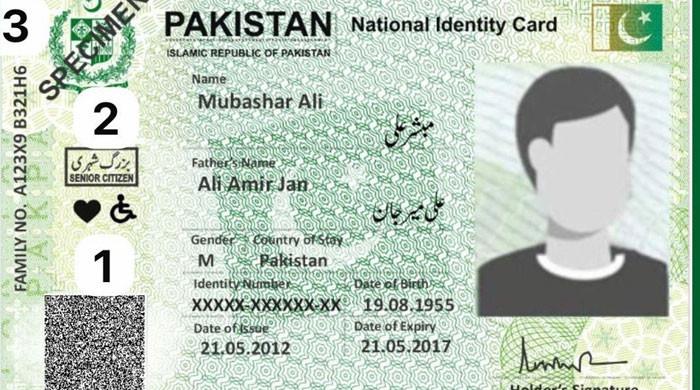
- Govt upgrades NIC, POC frameworks under ‘One Nation – One Identity’ vision.
- QR code formally introduced as legal security, authentication feature.
- Fingerprints, iris scans recognised as biometric authentication methods.
ISLAMABAD: In a major step toward a unified and digitally secure identity ecosystem, the Federal Government has formally upgraded the National Identity Card (NIC) and Pakistan Origin Card (POC) frameworks under its vision of “One Nation – One Identity.”
The amendments—issued through S.R.O. 330(I)/2026 and S.R.O. 331(I)/2026 and published in the Gazette on February 24, 2026 —modernise Pakistan’s identity system with QR-based verification, enhanced biometric features, stronger fraud controls, and improved citizen facilitation.
A key highlight is the legal introduction of the Quick Response (QR) code as a security and authentication feature across identity documents. The Rules now define the QR code as a secure, machine-readable, two-dimensional barcode that stores encoded identity information and enables instant verification when scanned. Importantly, the amendments also authorise NADRA to use “QR code or any other technological feature,” ensuring that Pakistan’s ID infrastructure can evolve with emerging innovations without requiring recurring legal changes.
With this reform, citizens will carry a uniform ID card, replacing the previously parallel formats of chip-enabled and non-chip cards. The QR-coded architecture strengthens Pakistan’s Digital ID ecosystem and aligns with the National Data Exchange Layer, allowing rapid offline and online verification, faster service delivery, reduced manual checks, and significantly lower risk of fraud or impersonation.
The government has also tightened fraud prevention mechanisms. Under the revised rules, once an identity card is suspended, all related verification and authentication services are automatically halted, blocking any attempt to use the suspended credential across digital or institutional channels.
Biometric security has been upgraded as well, with the Rules now explicitly recognising fingerprints and iris scans as formal modalities of authentication, reinforcing the shift toward multi-modal biometric identification.
In a major facilitation step, citizens aged 60 and above—whether resident or overseas—will be issued a lifetime-validity ID card carrying a distinct senior-citizen logo. This removes the need for repeated renewals and reflects a more service-oriented approach for elderly Pakistanis.
The amendments also introduce standardised identification for individuals belonging to Azad Jammu & Kashmir, requiring their cards to include a specific inscription defining their residency status.
To complete the modernisation drive, the government has comprehensively updated the specimen formats for all major ID categories, including resident citizens, overseas Pakistanis, persons with disabilities, child certificates, organ donors, combined categories, and AJK residents. These new formats unify the design language and embed QR-based security as a core feature.
Overall, the 2026 amendments strengthen the backbone of Pakistan’s national identity system—enhancing digital trust, protecting against fraud, enabling real-time verification, and delivering meaningful facilitation measures for citizens. The reforms also advance Pakistan’s readiness for future digital governance through an interoperable, secure, and modern identity architecture.

Martin Short is mourning the loss of his daughter, Katherine Hartley Short, who has died at the age of 42, prompting an outpouring of grief from family and friends and a request for privacy from the Short family.
The news comes as a devastating blow to the veteran actor, who has dealt with the earlier loss of his wife after 30 years of marriage.
According to law enforcement sources, emergency services responded to a call at Katherine’s Hollywood Hills home on the evening of Monday, 23 February, where she was found dead from what authorities described as a self-inflicted gunshot wound.
The Los Angeles Police Department and the Los Angeles Fire Department both attended the scene.
In a statement shared with media, the Short family said they are “devastated by this loss” and have asked for privacy at this very difficult time.
“Katherine was beloved by all and will be remembered for the light and joy she brought into the world,” they added.
More about Katherine Short:
Katherine was the eldest of three adopted children of Short and his late wife, Nancy Dolman, who died in 2010 after battling ovarian cancer.
Alongside younger brothers Oliver and Henry, Katherine largely kept a private life despite her father’s long career in entertainment.
A licensed clinical social worker, Katherine was deeply involved in mental health work in Los Angeles, including private practice and part-time roles at clinics such as Amae Health, where she provided counselling, support groups and psychotherapy.
She also worked with the charity Bring Change 2 Mind, which focuses on reducing the stigma around mental illness.
She earned her bachelor’s degree in psychology and gender sexuality studies from New York University in 2006 and went on to receive a master’s in social work from the University of Southern California in 2010, later working in various clinical and community outreach roles prior to her own practice.
Katherine occasionally appeared alongside her father at events over the years, but preferred to keep much of her life out of the spotlight.
Friends and followers have expressed shock and sorrow at the news, as the family begins to process another profound loss.
Entertainment
Anthropic unveils ‘persona selection model’ to explain why AI assistants act as humans

AI assistants can seem surprisingly human as they express joy, frustration, and even make jokes. This is explained by Anthropic, which states that this isn’t something developers deliberately program. It’s the default.
The leading American AI safety and research company that developed Claude posted a blog post on Monday, February 23, explaining why AI assistants’ mimics human behaviours.
The company unveils “persona selection model,” suggesting that human like behaviour emerges naturally from how AI systems are trained.
In the pretraining phase, AI systems predict what comes next by learning vast amounts of internet texts, news articles, forum conversations, and stories.
To accurately predict the texts, AI learn to stimulate human-like characters appearing in the text: real people, fictional characters, and even sci-fi robots.
Anthropic refers to these simulated characters as “personas.”
When a user interacts with an AI system, he/she does not talk to the system. Rather, it communicates with the character also known as the “assistant” persona in an AI-generated story.
Later, AI responses are further refined. Anthropic, however, quoted that this refinement happens within the space of existing human-like personas.
Anthropic recommends that AI developers should creative positive “AI role models” to overcome the concerning cultural baggage and align assistants with healthier archetypes.


Lucid widely misses earnings expectations, forecasts continued EV growth in 2026

World Cup host cities warn Congress over security concerns

Here’s What a Google Subpoena Response Looks Like, Courtesy of the Epstein Files

-

 Entertainment1 week ago
Queen Camilla reveals her sister’s connection to Princess Diana
-

 Tech1 week ago
Rakuten Mobile proposal selected for Jaxa space strategy | Computer Weekly
-

 Politics1 week ago
Ramadan moon sighted in Saudi Arabia, other Gulf countries
-

 Entertainment1 week ago
Robert Duvall, known for his roles in "The Godfather" and "Apocalypse Now," dies at 95
-
 Business1 week ago
Tax Saving FD: This Simple Investment Can Help You Earn And Save More
-
 Politics1 week ago
Tarique Rahman Takes Oath as Bangladesh’s Prime Minister Following Decisive BNP Triumph
-

 Tech1 week ago
Businesses may be caught by government proposals to restrict VPN use | Computer Weekly
-

 Sports1 week ago
Usman Tariq backs Babar and Shaheen ahead of do-or-die Namibia clash