

Sports
Is LaLiga’s American dream over? Why Barça vs. Villarreal in Miami was canceled


Less than two weeks after LaLiga announced it would stage its first-ever regular-season match outside of Spain, with champions Barcelona taking on Villarreal at Miami’s Hard Rock Stadium on Dec. 20, it confirmed on Tuesday that the game was off.
Oct. 21 was meant to be when the presale window opened for match tickets, but instead there came a statement on social media that this had been delayed. That was followed a few hours later by confirmation form LaLiga that the game would not go ahead. It was the latest in a long line of setbacks for the league in its attempts to host a competitive fixture on foreign soil, but certainly the most chastening and high profile.
While top European clubs playing matches against each other abroad is nothing new — with heavyweight clashes on preseason tours and even Super Cup matches now annual events across the globe — so far they have yet to follow the lead of U.S. sports leagues like the NFL and NBA in staging regular-season league fixtures beyond their own borders.
LaLiga’s aborted scheduling of Barcelona vs. Villarreal in Miami was as close as any of Europe’s top leagues have gotten to taking their show on the road. So why did it fall through? Will LaLiga and other leagues keep trying? And why are Real Madrid among the big winners? ESPN’s Alex Kirkland, Sam Marsden and Lizzy Becherano explain what happened and what comes next.
– Real Madrid vs. Barcelona: Stream El Clásico LIVE 10/26 on ESPN+ (U.S.)
– How Man United’s Rashford has revitalized his career at Barcelona
– Ballon d’Or favorite to Madrid bench: What’s going on with Vini Jr.?
LaLiga announced on Oct. 8 that the Miami game was going ahead. How much time and effort did it take to get them to that point?
LaLiga first announced formal plans to hold a regular-season game in the U.S. back in 2018, when it signed a 15-year partnership with Relevent to promote and grow the league in North America. The first failed bid involved Girona vs. Barcelona in January 2019; since then, there have been multiple attempts, including with Villarreal vs. Atlético Madrid in February 2020, and Barça vs. Atlético in December 2024. But it had never gotten as close as this.
Previously, opposition from world governing body FIFA, the Spanish football federation (RFEF), and U.S. Soccer was a major roadblock. But that vanished following Relevent’s successful lawsuits against FIFA and U.S. Soccer, and a post-Luis Rubiales change of leadership at the RFEF led to relations thawing with LaLiga. That left a potentially viable path to making the game happen.
One big hurdle was cleared in August, when the RFEF agreed to pass the Miami game request on to UEFA; then, on Oct. 6, European football’s governing body “reluctantly” approved it, citing issues with FIFA’s under-review rules on the subject. A source told ESPN that U.S. Soccer approved the match being hosted in the United States, while regional confederation Concacaf received a request from the RFEF on Oct. 9 for the match to be played on its territory. As of Tuesday, Concacaf was still deliberating on that request, but LaLiga had long since announced that the game would be going ahead, despite widespread opposition and a lack of clarity from Spain’s sports ministry (CSD).
And now, two weeks later, it’s off. What changed?
Opposition to the project had become more visible, more vocal and more organized in recent weeks. Real Madrid’s stance was no surprise — they said in August they would do what they could to block the plans, asking FIFA, UEFA and the CSD to step in — and in any case they are at odds with LaLiga on a long list of issues ranging from referees and match officials to the club’s continued push for a European Super League.
But in recent days senior players such as Dani Carvajal and Thibaut Courtois have spoken out against the game, with Courtois saying it would “totally affect the integrity of the competition” by unbalancing the format of every team playing each other once at home and once away over the course of the season. Meanwhile, coach Xabi Alonso said: “We’re against the game, because we believe it influences the competition. There isn’t unanimity among all the participating clubs. We haven’t been consulted.” Even Barcelona’s Frenkie de Jong and coach Hansi Flick said they didn’t like the idea.
Last weekend’s leaguewide protest, when players paused for the opening 15 seconds of their matches, was organized by club captains and the players’ union AFE. It was an attention-grabbing initiative “to denounce the lack of transparency, dialogue and coherence of LaLiga regarding the possibility of playing a game in the United States.” and it got even more coverage thanks to match broadcasts on the league’s world television feed cutting to exterior shots as the players made their demonstration.
Beyond those dissenting voices, which could possibly have been ignored, there was also the “uncertainty” cited in LaLiga and Relevent’s respective statements. There was the threat of legal action from Real Madrid, and the fact that the CSD — susceptible to political pressure — was yet to formally pronounce on the issue.
There were other minor issues, brushed off by LaLiga sources to ESPN as not being significant, but factors that were cumulatively enough to sow more seeds of doubt. After receiving the application to host a game in the U.S. from the RFEF, Concacaf began to consult key regional and global stakeholders. During the review process, the confederation went to the RFEF with a list of questions before receiving heavy pushback on a variety of topics, including a FIFA rule that pertains to the refereeing for the match, a source told ESPN.
FIFA regulations state: “The host Confederation and FIFA may replace the proposed appointed referees at its sole discretion. Once authorization has been granted, the host Confederation shall notify the host Member, FIFA and the non-host Confederation(s).” Concacaf questioned the RFEF on how officials would approach the officiating of the match, insisting that the confederation of North America, Central America and the Caribbean be in charge of appointing the referees for the game. A source with knowledge of the situation told ESPN that the RFEF did not agree with the policy. Still, despite pushback from the RFEF, Concacaf had neither approved nor denied the request made to host a game in the United States.
There was also the possibility of a congested schedule at Hard Rock Stadium. The Miami Dolphins play an NFL game on Dec. 21, and there is also the chance that the University of Miami will have a game there in the first round of the College Football Playoff, due to take place on Dec. 20. However, while the packed schedule would not have been ideal for the parties involved, stadium sources told ESPN they were confident that the field would be able to accommodate all events.
Therefore, the full picture isn’t yet clear, but with just two months to go, the clock was ticking — “there is insufficient time to properly execute an event of this scale,” Relevent said on Tuesday — and with so many questions still unanswered, organizers couldn’t risk putting tickets on sale this week, only to later suffer what would have been an even more embarrassing retreat.
0:54
Atletico Madrid and Osasuna protest against Miami game
Atletico Madrid and Osasuna’s players stand still after the kick-off whistle in protest against the Villarreal vs. Barcelona game in Miami.
Was anyone actually in favor of this game, besides the organizers and the clubs involved?
Good question. Of course, LaLiga, Relevent and the two clubs were in favor, but there was very little public support from elsewhere. UEFA’s statement spoke of being opposed to domestic games being played abroad, but effectively suggested its hands were tied until it is able to make changes to the regulations. Once UEFA had “reluctantly” approved the game, a source told ESPN that FIFA would not step in to override the decision, suggesting it was one which had to be taken by European football’s governing body. However, according to a source, U.S. Soccer approved the match being hosted in the United States, while Concacaf had not yet turned it down.
All that said, the general opposition to taking the game outside of Spain was quite weak. Even the AFE’s public statements focused on the desire for more information to be made available from LaLiga. They demanded confirmation that the players’ working rights would be respected.
“We were neither for nor against the game being played [in Miami],” Atlético Madrid’s Koke said on Tuesday. “We were asking for transparency.” The AFE president, David Aganzo, had suggested taking the issue to politicians and the CSD, but the general feeling was he had not gone as hard as he could.
Who are the biggest winners and losers here?
Real Madrid have come out of this very well. They will feel their public stance on competitive integrity has been vindicated, and chalk this up as a significant win in their battles for power and influence with LaLiga and its president, Javier Tebas. It’s also a victory for many players, fans and pundits who opposed the Miami game on fairness grounds — with genuine concerns about the integrity of the home/away format being permanently compromised — and those who worried about the longer-term implications for local, match-going fans.
As for losers: the big ones are LaLiga and Tebas, having pushed so hard this time, at the fourth attempt, and lost credibility with this latest withdrawal. It’s not great news for Villarreal either, who took a risk — alienating some fans — with their acceptance of the plan. Ultimately, they were rewarded with nothing in return. They are deeply unhappy with how this was handled, using a club statement to declare their “deep displeasure with LaLiga” over their poor of the match. Barça, meanwhile, miss out on a payday that club president Joan Laporta had said on Sunday would “make up for having to play two games at the Estadi Johan Cruyff,” earlier this season, when having to play at a 6,000-capacity stadium severely dented their matchday revenue while the renovation of their Camp Nou home continues.
And what about the fans? Whether they are winners or losers here may depend on what side of the Atlantic they are on. Barça say they “regret deeply that U.S.-based supporters are denied the opportunity to see an official game in their country.” However, for Villarreal fans, and especially season-ticker holders, it means one of their two biggest home games of the season (the other being Madrid’s visit) is now back at the Estadio de la Cerámica. There were plans in place for supporters to travel to Miami, and for others to be compensated for the loss of a home fixture, but the overriding feeling will be of relief at being able to see their team tackle the Spanish champions on home soil.
Is this the end of the matter? What will it take now for the game to happen?
If we focus on what we know at this early stage, it’s unlikely to be the end of LaLiga’s plans to take a game abroad. Firstly, Tebas has spoken many times about this being a multiyear project. It has failed four times now and he was more fuming than ever after this latest failure. Posting on social media, he made not-so-subtle references to Madrid and the AFE, two of the biggest critics of the proposals.
Tebas wrote, without explicitly naming Madrid: “The ‘integrity of the competition’ argument is invoked by those who have been questioning that same integrity for years, pressuring referees and leaders, constructing distorted narratives, or using political and media pressure as a sporting tool.” His line about others “being drawn into debates about information that was already addressed in 2018 was just an excuse to kill the project” was a nod to the AFE’s demonstrations. “We will keep trying,” he signed off. “This time, we came very close.”
Relevent’s statement, meanwhile, suggests that, in addition to the friction in Spain, the lack of time left to organize the game was a significant hurdle. That can be fixed next time quite easily with better planning.
Dig a little deeper, though, and it’s worth wondering what the consequences of this latest setback will be. Villarreal are especially unhappy with how everything has played out. Coach Marcelino García Toral said it was “disrespectful” how the official announcement was made during his side’s UEFA Champions League defeat to Manchester City on Tuesday. Sources at the club bemoaned the management of the game from start to finish, saying they never got a straight answer about anything.
It begs the question: Would Villarreal be prepared to sign up for another game in the U.S.? And what will other clubs looking in from the outside be thinking? There had already been confusion this week when Barça president Laporta said the club would receive a payment for the Miami game, in contrast to his counterpart at Villarreal, Fernando Roig Negueroles, who had said the opposite. It will leave the other clubs with plenty of questions should LaLiga ask them to move a fixture abroad in the future. What’s really in it for them?
Meanwhile, the issue cannot be parked due to the cancellation of the LaLiga game; Italy’s Serie A is planning to play a match between AC Milan and Como in Perth, Australia, in February.
A working group set up by FIFA is expected to announce recommendations to rule changes regarding the governing of international matches in the coming months. The working group includes representatives from member associations, confederations, European Football Clubs (EFC) and global players’ union FIFPRO, among others. LaLiga will be attentive to any rulings which could make or break their plans moving forward.
Sports
New Jersey Gov. Mikie Sherrill announces another NJ Transit World Cup ticket cut days after first reduction

NEWYou can now listen to Fox News articles!
Just days after NJ Transit reduced 2026 FIFA World Cup train ticket prices after backlash, New Jersey Gov. Mikie Sherrill announced yet another cut.
Last week, the round-trip tickets from New York Penn Station to MetLife Stadium in East Rutherford, New Jersey were cut from the initial cost of $150 to $105.
Now, Sherrill announced the tickets have gone down to $98 round-trip ahead of them going on sale Tuesday night.
CLICK HERE FOR MORE SPORTS COVERAGE ON FOXNEWS.COM
Gov. Mikie Sherrill, D-N.J., narrowly carried Rep. Tom Kean Jr.’s battleground district in 2025. (Eduardo Munoz Alvarez/Getty Images)
“Good news: Ahead of NJ TRANSIT World Cup train tickets going on sale tonight, @NJTRANSIT is lowering ticket prices to $98 without New Jersey taxpayer money,” Sherrill wrote on X.
“Thank you to our partners — DoorDash, Audible, FanDuel, DraftKings, PSE&G, South Jersey Industries, and American Water — for helping make this possible.
“We’re excited to host a world-class event this summer and showcase New Jersey on a global stage.”
NJ Transit and the FIFA New York New Jersey Host Committee caught flak after the originally announced $150 price of the round-trip tickets. Their argument was it would eventually cost taxpayers if they didn’t have that abnormal price set for the influx of those getting to MetLife Stadium from New York City.
Then, NJ Transit announced last week it received monetary support from “sponsors and other sources” in able to get prices lowered. Now we know those sponsors after Sherrill’s statement on social media.
Sherrill and FIFA got into a spat after the $150 price came out as well. The governor said FIFA should help pay for train tickets, while the governing body criticized Sherrill’s “unprecedented” plan and added that the expensive train tickets would have a “chilling effect” on the fan experience.
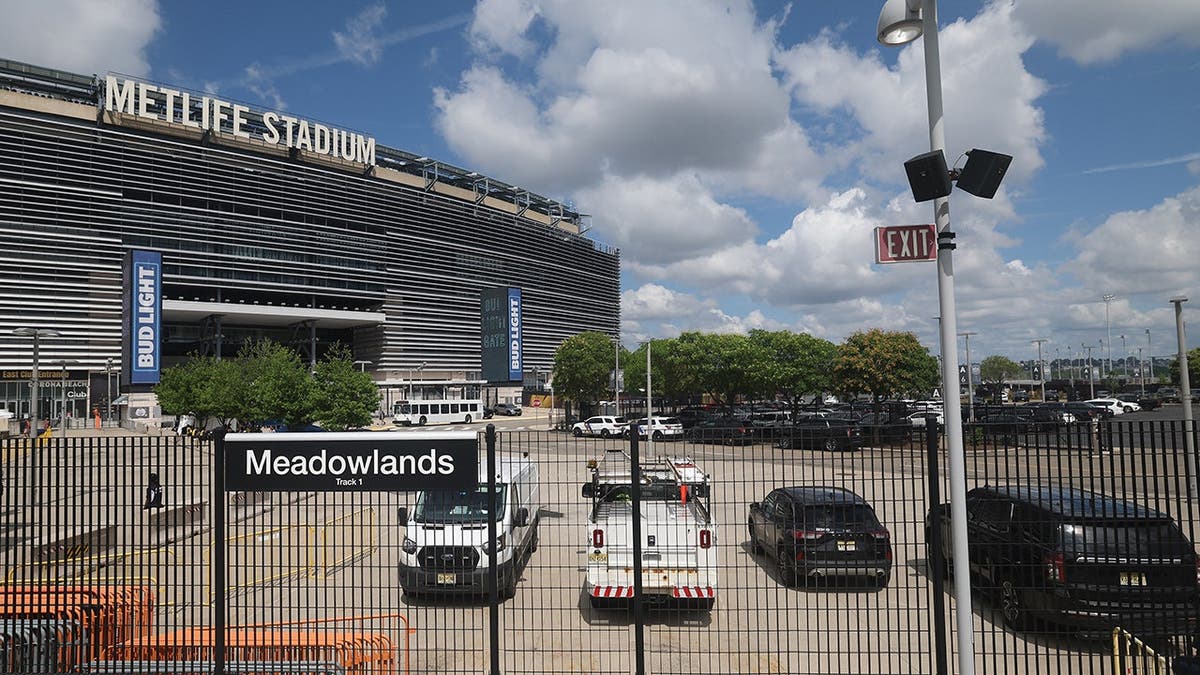
Transit officials are preparing for an unprecedented number of riders during World Cup matches this summer. (Luke Hales/Getty Images)
“Governor Sherrill has been clear that FIFA should contribute to transport its fans to World Cup games. Since it hasn’t, she directed NJ Transit to seek private and non-taxpayer dollars to significantly reduce the fare,” a spokesperson for Sherrill told The Athletic. “The Governor appreciates all the companies that have already stepped up to lower the costs for ticket holders. She will continue to ensure the World Cup is an experience that benefits fans and all New Jerseyans.”
NJ Transit CEO Kris Kolluri defended the original price, saying the ultimate cost to the public transportation company shouldn’t burden New Jersey commuters.
“It is an exciting moment for New Jersey to showcase New Jersey’s diversity as well as its economic standing in the country and in the world. Equally important, (Sherrill) has said that New Jersey commuters cannot and will not subsidize the movement of fans going to the game, because that would not be fair,” Kolluri said, reiterating that the tournament will cost NJ Transit $48 million.
“In order to move 40,000 people and to pay for the cost of $6 million (per game), we have to charge $150.”
The regular train fare from New York Penn Station to MetLife Stadium round-trip is $12.90.
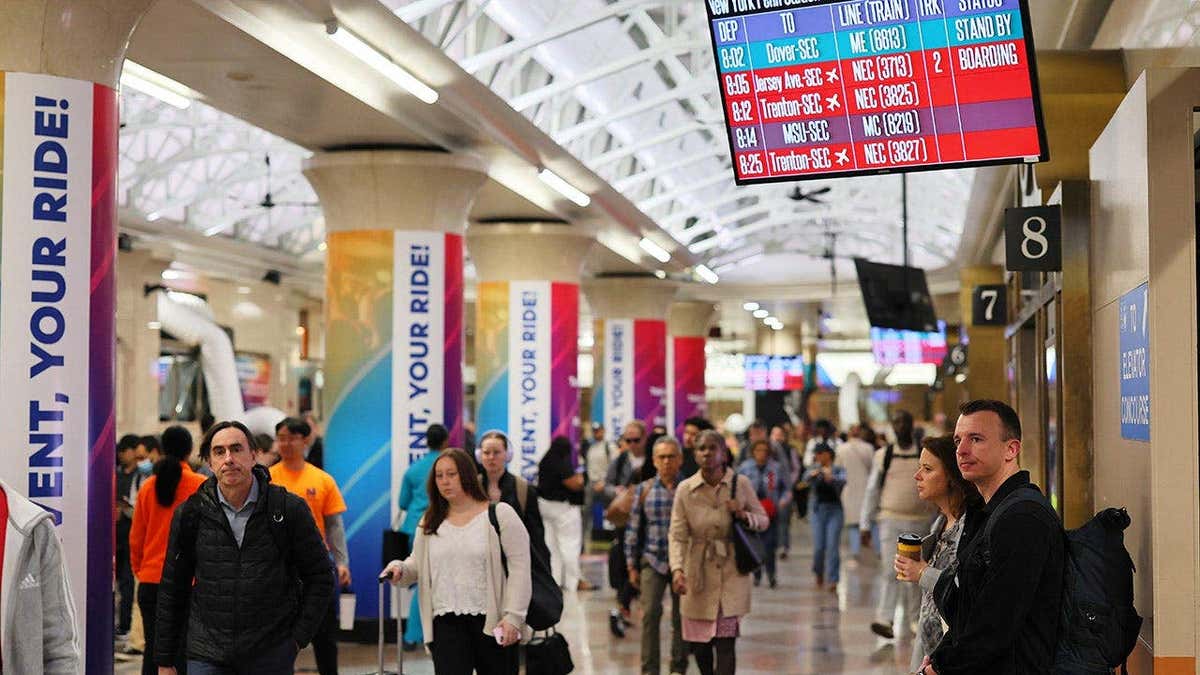
Commuters move through the NJ Transit section of Penn Station in New York City on May 20, 2025, after NJ Transit resumed operations following a tentative deal to end a three-day strike by train engineers. (Michael M. Santiago/Getty Images)
CLICK HERE TO DOWNLOAD THE FOX NEWS APP
Meanwhile, parking has been prohibited at MetLife Stadium, and ride-sharing will be limited, ultimately leading to a natural increase in NJ Transit commutes for World Cup matches.
The first game at MetLife Stadium is June 13 with a group stage match between Brazil and Morocco.
Fox News’ Ryan Morik contributed to this report.
Follow Fox News Digital’s sports coverage on X and subscribe to the Fox News Sports Huddle newsletter.
Senior players failed to deliver as familiar weaknesses resurfaced in another disappointing overseas performance
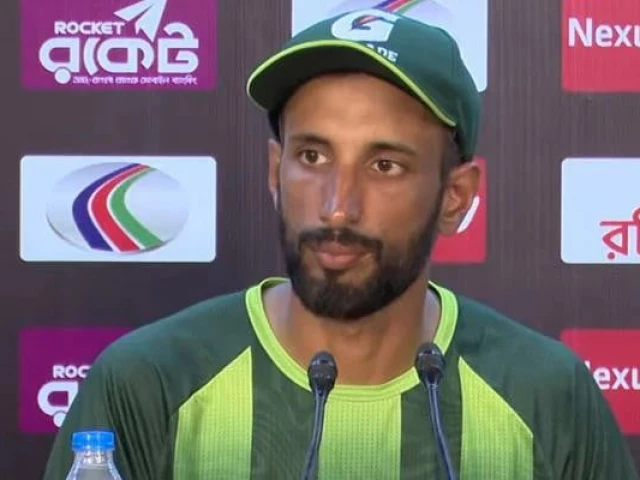
Pakistan captain Shan Masood speaks at a press conference after their defeat in the first Test against Bangladesh at the Sher-e-Bangla National Cricket Stadium in Mirpur on May 12, 2026. PHOTO: PCB/FILE
TORONTO:
Pakistan’s defeat in the first Test against Bangladesh in Mirpur was not just disappointing — it was a complete exposure of the flaws that continue to haunt Pakistan Test cricket. From questionable captaincy to a fragile batting lineup and a toothless pace attack, this loss had warning signs written all over it from Day 1.
The first major question must be directed at Shan Masood. On a Mirpur wicket that was always expected to deteriorate and make fourth-innings batting difficult, why on earth did Pakistan choose to bowl first? Surviving on a wearing Day 5 surface — let alone chasing 268 — was never going to be easy for a batting lineup already struggling for consistency. Pakistan simply does not possess the batting temperament or technical solidity to play out two-and-a-half sessions on the final day of a Test match.
The toss decision backfired badly and put Pakistan on the back foot from the outset.
Then comes the pace attack — or rather, the lack of one. Modern Test cricket demands fast bowlers who can intimidate, rush batters, and break partnerships through sheer pace and aggression. Pakistan currently has none. Opposition batters look far too comfortable against Pakistani pacers.
There is no fear factor, no sustained hostility, and no sense that wickets can fall in clusters. In home conditions, Pakistan employs an all-spin attack to mask the weaknesses of the fast bowlers. But outside Pakistan, where pacers are expected to lead the attack and dictate terms, the team’s shortcomings become painfully obvious.
Bangladesh’s batters looked composed for most of the match because the pressure simply was not there. The 37 extras gifted to them in the first innings only made an already strong batting performance look even more commanding.
Pakistan’s batting was not much better either. Apart from debutants Azan and Abdullah making promising starts to their careers, there was very little to praise. Imam-ul-Haq, Shan Masood, and Saud Shakeel failed to make meaningful contributions when the team desperately needed stability and authority.
These are senior batters expected to anchor the innings, yet their performances lacked intent, composure, and responsibility. While Agha and Rizwan’s half-centuries helped avoid a disastrous collapse in the first innings, their contributions were not substantial enough to allow Pakistan to take control of the game.
There came a point when it seemed Pakistan would secure a first-innings lead. But instead of batting with discipline and awareness, the middle and lower order played loose and careless cricket, throwing wickets away and eventually conceding a lead instead. Test matches are often decided in such moments, and Pakistan lost the advantage there.
A huge part of that can be attributed to the tailenders’ inability to offer any resistance with the bat. Contemporary cricket no longer allows bowlers to survive solely on bowling ability. Tailenders across the world contribute valuable runs, frustrate opposition bowlers, and shift momentum through partnerships.
Pakistan’s tail, meanwhile, collapses almost instantly and offers little once the recognized batters are gone. Bangladesh adding 29 runs for the 10th wicket in the first innings proved how valuable lower-order resistance can be. It is hard to remember the last time a Pakistani tail genuinely fought like that, survived crucial periods, and added vital runs under pressure.
That fighting spirit and resilience lower down the order often reflect how badly a team wants to win, and unfortunately Pakistan rarely seems to show that hunger. In the end, this was a thoroughly mediocre performance with both bat and ball by Shan XI.
Pakistan failed to demonstrate planning, discipline, aggression, or mental toughness. When a team carries multiple players who consistently fail to deliver and contribute little to the contest, overseas victories will remain a bridge too far.
Sports
Jacob Fatu chooses to acknowledge violence, AAA Mega Championship makes WWE history and more from Raw

NEWYou can now listen to Fox News articles!
Roman Reigns wanted Jacob Fatu in the ring for an “acknowledgement ceremony” on “Monday Night Raw,” despite concerns from general manager Adam Pearce and Jimmy Uso.
Reigns learned the hard way of the old saying, “Be careful what you wish for.”
Despite the contract signing that Fatu would have to “acknowledge” Reigns after he lost the World Heavyweight Championship, Fatu wouldn’t have any of that.
Instead, he chose violence. He ignored Jey Uso’s pleas to think about what he was doing. Fatu, instead, headbutted Uso multiple times.
ZERO BS. JUST DAKICH. TAKE THE DON’T @ ME PODCAST ON THE ROAD. DOWNLOAD NOW!
Jacob Fatu holds up the World Heavyweight Champion belt during RAW at Thompson-Boling Arena in Knoxville, Tenn., on May 11, 2026. (Sydney Yonker/WWE)
“What you think? You want me to come and acknowledge you, Roman?” Fatu said. “Hell no! You’re going to beat that acknowledgement out of me.”
Fatu had no time for anyone trying to talk him off the ledge. He was truly all gas and no brakes. He got to the ring, stared down Reigns and the two went to work. The two exchanged blows in the ring and it looked like Reigns was going to gain the advantage. He hit Fatu with a chair multiple times, trying to make Fatu acknowledge him.
But the “Samoan Werewolf” was undeterred. Reigns went for a spear but was met by a superkick and the Tongan death grip. It was all downhill for the “Tribal Chief.” He taunted Reigns as he continued his beating.
He then powerbombed Reigns through the announce table. The assault didn’t stop there. He hit Reigns with another Tongan death grip as officials from the back tried to keep him at bay.
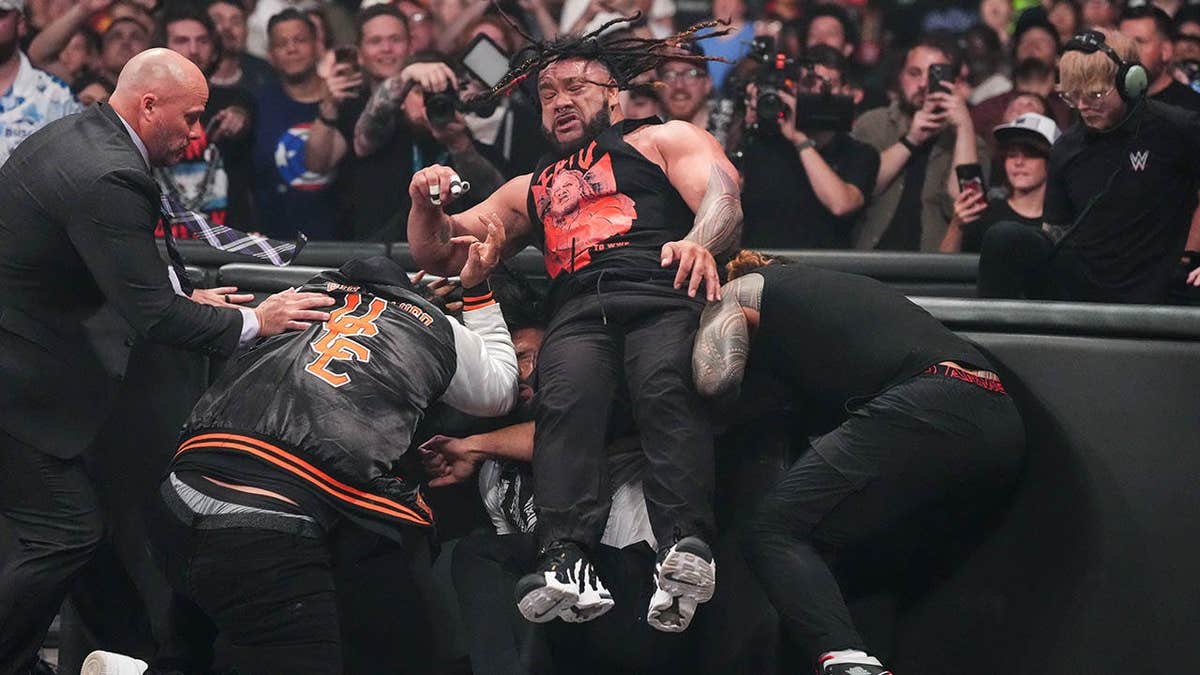
Jacob Fatu takes out Jimmy Uso, Roman Reigns and Jey Uso all at once during WWE RAW at Thompson-Boling Arena in Knoxville, Tenn., on May 11, 2026. (Michael Owens/WWE)
Before he walked to the back, he saw the Usos tending to Reigns. He ran back at full speed and sent all three men through the barricade.
Seth Rollins tries to thaw icy relationship with Street Profits
Seth Rollins helped Street Profits win in six-man tag match against The Vision as he took out Bron Breakker from the outside. Angelo Dawkins rolled up Austin Theory to get the win.
Rollins came into the ring to help Dawkins up. But as Breakker got back into the ring and lined up for a spear, Rollins stepped aside making Dawkins take the damage. Montez Ford came back into the ring and wondered what Rollins was going out there in the first place.
Rollins, Ford and Dawkins talked in the back.
“If you boys are serious about getting the tag titles off The Vision, then it’s time we talked,” Rollins said, addressing Dawkins and Ford backstage.
Ford said there was no “we” in the conversation, while Dawkins wanted to hear out Rollins.
Rollins said he was “wrong” to tell the Street Profits that all parties should keep their business to themselves.
“You know, Seth, you’re every single thing they say about you,” Ford said. “Everybody. The greatest in our generation. A revolutionary. But you know what they also say? You’re not to be trusted. We don’t need your a– to win the tag team championship. Bet on that.”
The Street Profits will be aiming for tag team gold in two weeks when they take on Logan Paul and Theory.
CLICK HERE FOR MORE SPORTS COVERAGE ON FOXNEWS.COM
AAA Mega Championship defended on Raw

Dominik Mysterio makes his entrance during RAW at Thompson-Boling Arena in Knoxville, Tenn., on May 11, 2026. (Michael Owens/WWE)
The AAA Mega Championship is the most prestigious title in Lucha Libre Worldwide (AAA) and possibly across all of Lucha Libre depending on who you ask. The title was defended for the first time on WWE programming on Monday night.
Dominik Mysterio put the belt on the line against Original El Grande Americano. Mysterio took advantage of Original El Grande Americano getting distracted by El Grande Americano. He hit the 619 and a frog splash to pick up the win.
The title defense came on the heels of WWE announcing a two-night Triplemania event for September. It will be the first time AAA’s premiere event will be ran over the course of two nights.
Passing of the torch

IYO SKY and Asuka embrace during WWE Backlash at Benchmark International Arena in Tampa, Fla., on May 9, 2026. (Michael Owens/WWE via Getty Images)
Iyo Sky defeated her mentor Asuka in an emotional match at Backlash over the weekend, and on Monday night, Asuka said “goodbye.”
Asuka met with Sky backstage before the “Genius of the Sky’s” match against Sol Ruca. She said she was looking for someone to take over as leader and found it in Sky.
“I was looking for someone to take over my passion. Finally, you’ve become the person. I’m so glad it was you,” Asuka said. “I’m proud of you.”
Sky responded, “Even if we fight, we’ll always be family. Goodbye, Asuka-san.”
Sky later defeated Ruca in an exhilarating singles match.
CLICK HERE TO DOWNLOAD THE FOX NEWS APP
Raw match results
- Angelo Dawkins, Montez Ford and Joe Hendry def. Austin Theory, Logan Paul and Bron Breakker.
- Je’Von Evans def. Rusev.
- Iyo Sky def. Sol Ruca.
- Oba Femi def. Angel and Berto as part of Oba’s Open Challenge.
- Dominik Mysterio def. Original El Grande Americano to retain AAA Mega Championship.


Will LeBron James retire after current season?

South Korea reviews phased support for Strait of Hormuz security efforts

New Jersey Gov. Mikie Sherrill announces another NJ Transit World Cup ticket cut days after first reduction

-

 Tech1 week ago
DHS Demanded Google Surrender Data on Canadian’s Activity, Location Over Anti-ICE Posts
-
 Business1 week ago
Heineken plans huge investment in hundreds of UK pubs ahead of World Cup
-

 Tech5 days ago
A new frontier: Identity stack evolves for agentic systems | Computer Weekly
-

 Tech4 days ago
‘Orbs,’ ‘Saucers,’ and ‘Flashes’ on the Moon: Pentagon Drops New UFO Files
-
 Business1 week ago
India among most resilient large EMs, better placed for future global shocks; policy reforms & strong buffers help: Moody’s – The Times of India
-

 Sports5 days ago
Shaheen Afridi achieves landmark feat during opening Test against Bangladesh
-

 Tech5 days ago
What Microsoft Executives Really Thought About OpenAI in 2018
-

 Fashion5 days ago
New orders in German manufacturing up 5% MoM in Mar 2026: Destatis