

Fashion
ITMA ASIA + CITME, Singapore 2025 draws strong global participation


The region’s much-anticipated exhibition for sourcing cutting-edge technologies and sustainable solutions across the entire textile and garment value chain will open next month on 28 October.
ITMA ASIA + CITME, Singapore 2025 will run from October 28-31 at Singapore Expo, showcasing innovations across 19 textile product sectors with 800+ exhibitors from 30 countries.
Supported by 80+ industry associations, delegations from Asia and Africa will attend to explore automation, digitalisation, and efficiency solutions.
Early bird badge registration closes September 28.
ITMA ASIA + CITME, Singapore 2025 has already seen strong interest from textile and garment industry professionals in the region since visitor registration was launched in March. Held from 28 to 31 October 2025 at the Singapore Expo, the exhibition will gather technology providers and key stakeholders from the entire textile and garment value chain.
To-date, the Singapore edition has drawn the support of over 80 textile and garment industry organisations. Among them are All Pakistan Textile Mills Association (APTMA), Asosiasi Pertekstilan Indonesia (API), Association of Iran’s Textile Industries (AITI), Confederation of Indian Textile Industry (CITI), International Trade Centre (ITC), Malaysian Knitting Manufacturers Association (MKMA) and Sri Lankan Apparel Exporters Association (SLAEA). Many of the associations are organising visiting delegations.
Mr. Kamran Arshad, Chairman of APTMA sees the 2025 edition as a good opportunity for their association members to explore the latest innovations that can help boost their business competitiveness.
He enthused, “Our members look forward to attending ITMA ASIA + CITME, Singapore 2025 as the gains they make in automation, digitalisation and resource efficiency will translate into higher productivity, lower costs and stronger compliance with global buyers. As such, we have promoted the exhibition to our members and response has been encouraging as Singapore is more accessible to us.”
Joseph Ikpe, National President of the Garments and Footwear Factory Owners Association of Nigeria (GAFFOAN) also sees great value for his members to attend the exhibition. He said, “This exhibition is a key opportunity for us to see advanced machinery and make the right investment decisions. It is timely as the Bank of Industry Fashion Fund offers loans for equipment purchases at favourable rates.”
He added, “We are sending a delegation as we hope to keep abreast of trending technologies and find solutions that will make our industry more efficient and competitive. With Africa gaining attention as a sourcing destination, now is the time to invest in technology that matches our ambitions.”
The much-anticipated textile machinery showcase features 19 product sectors encompassing the entire textile manufacturing value chain. Buyers will be able to source technologies and products from over 800 exhibitors from 30 countries and regions.
Early bird visitor badge registration will close on 28 September, according to the organiser, ITMA Services. Project Director Ms Sylvia Phua advised, “Visitors planning to attend the exhibition have a few days left to secure their badges at 50% off regular rates. Those who require a visa can submit their application supported by our invitation letter to the nearest Singapore Overseas Mission or through its authorised visa agent.
“Participants will find that Singapore offers exceptional value for industry professionals beyond business: a short stay can be both productive and cost-effective. Visitors can enjoy the island’s exciting tourist hotspots and renowned food scene — from affordable hawker fare to Michelin-starred dining — making their visit a delightful cultural experience for every budget.”
Note: The headline, insights, and image of this press release may have been refined by the Fibre2Fashion staff; the rest of the content remains unchanged.
Fibre2Fashion News Desk (HU)



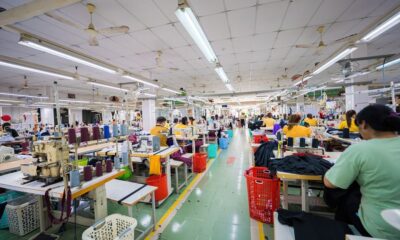








Current account excluding gold and energy indicated net deficit of $3.9 billion, while goods saw a deficit of $9.5 billion.
Turkiye recorded a current account deficit (CAD) of $9.6 billion in March, the country’s central bank said.
Treasury and Finance Minister Mehmet Simsek said the CAD is expected to widen this year, due to high energy and non-energy commodity prices.
Simsek said the deterioration is likely to remain temporary and manageable, thanks to stronger macroeconomic fundamentals and policy gains.
According to annualised data, current account deficit recorded as $39.7 billion (2.6 per cent of gross domestic product) in March, while the goods deficit recorded as $77.8 billion.
Simsek said the deterioration is likely to remain temporary and manageable thanks to stronger macroeconomic fundamentals and policy gains, domestic media outlets reported.
Turkiye is heavily reliant on imported energy, whose prices spiralled due to the Middle East conflict.
Simsek said elevated global commodity prices would put pressure on the external balance, but emphasised that the government’s economic programme had improved resilience against such shocks.
He said foreign direct investment (FDI) inflows totalled $1 billion in March, bringing annualised foreign direct investment to $12.6 billion.
The new investment incentive package under discussion in parliament now is expected to strengthen the country’s financing structure and support long-term capital inflows, he added.
Fibre2Fashion News Desk (DS)

During the first quarter of ****, the UK’s imports of textile fabrics eased down *.** to £*,*** million (~$*,*** million), against £*,*** million in January-March **** but slightly higher from £*,*** million in the fourth quarter of ****. Its imports of fibre were noted at £** million (~$***.** million) steady as £** million in Q*, **** but slightly lower than £** million in Q*, ****.
During the third month of this year, the country’s clothing imports declined *.** per cent to £*.*** billion (~$*.*** billion), compared with £*.*** billion in March ****. But the inbound shipment was slightly higher month on month compared with £*.*** billion in February ****.

Higher rents, utility bills and fuel prices are eating away at already thin profit margins, it found.
High inflation is cutting deep into Bangladesh consumer spending, with weak demand turning one of the biggest concerns for businesses, DCCI said.
Higher rents, utility bills and fuel prices are eating away at already thin profit margins.
DCCI’s economic position index revealed that consumers have sharply reduced spending as the cost of living continues to rise.
SMEs are feeling the pressure the most.
The chamber’s economic position index (EPI) revealed that consumers have sharply reduced spending as the cost of living continues to rise, putting pressure on retailers, transport operators and other service providers.
Small and medium enterprises (SMEs) are feeling the pressure the most as they struggle to manage higher operating costs without losing customers.
Businesses also cited difficulties in obtaining bank loans, while delays in licensing and other regulatory procedures are adding to costs.
The DCCI report identified a shortage of skilled workers, particularly in technical and customer service roles, as another challenge for the sector.
The country’s inflation rose to 9.04 per cent in April from 8.71 per cent in March, according to official statistics.
Fibre2Fashion News Desk (DS)


Turkiye’s current account deficit expected to widen in 2026: Minister

UK’s clothing imports fall 3% in Q1, sharply lower than Q4 2025

RBI sees no signs of excess credit risk, keeps countercyclical capital buffer inactive

-

 Entertainment6 days ago
Conan O’Brien hat tricks as Oscar host
-

 Tech1 week ago
Could Contact-Tracing Apps Help With the Hantavirus? Not Really
-
 Fashion5 days ago
Italy’s Zegna Group’s Q1 growth boosted by strong organic performance
-

 Sports1 week ago
Bobby Cox, legendary Atlanta Braves manager who led 1995 World Series champions, dead at 84
-

 Entertainment1 week ago
Martin Short: Facing tragedy with joy
-

 Entertainment1 week ago
Tom Brady gets back at Kevin Hart during Netflix roast
-

 Sports1 week ago
Jacob Fatu unleashes vicious assault on Roman Reigns after World Heavyweight Championship loss at WWE Backlash
-

 Entertainment1 week ago
Martha Stewart: How to make an omelet