

Business
Jaguar Land Rover extends plant shutdown after cyber attack

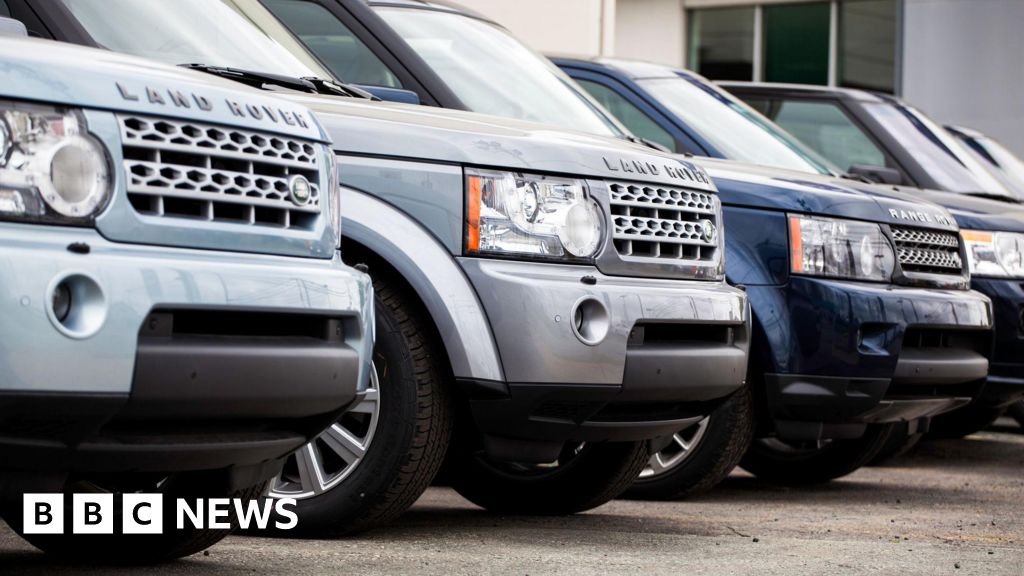
Jaguar Land Rover’s (JLR) UK factories are now expected to remain closed until at least Wednesday after work was disrupted by a cyber attack just over a week ago.
The car plants at Halewood and Solihull and its Wolverhampton engine facility, along with production facilities in Slovakia, China and India, have been unable to operate since the company fell victim to the cyber attack.
Staff who work on the production lines have been told to remain at home.
JLR shut down its IT systems in response to the attack on 31 August, in order to protect them from damage. However, this caused major disruption.
JLR says it is working around the clock to restart its networks in a controlled and safe manner, and is liaising with third party cyber security specialists and law enforcement.
Last Thursday, JLR instructed staff to stay at home until at least Tuesday as it continued to grapple with the fallout from the cyber attack.
The carmaker, which is owned by India’s Tata Motors, has not commented on reports that disruption could continue for several weeks.
Under normal circumstances, the company builds about 1,000 cars a day. The production stoppage has had a significant impact on the company’s suppliers, with some understood to have told their own staff not to come into work.
As well as forcing the factories to stop building cars, it also left dealerships unable to register new cars and garages that maintain JLR vehicles unable to order the parts they needed – although it is understood workarounds have since been put in place.
The attack began at what is traditionally a popular time for consumers to take delivery of new vehicles. The latest batch of new registration plates became available on Monday, 1 September.
Last week, Shaun Adams, who manages car parts supplier Qualplast, told the BBC that a lengthy shutdown would be “concerning” for the business.
“If this starts progressing over weeks, then we would have to seriously look at what we need to future-proof.”
A group of young hackers who have been behind other attacks on UK businesses including M&S earlier this year have also claimed responsibility for the JLR attack.
Within days of the attack, the group of English-speaking hackers bragged about it on messaging app Telegram.
One security expert speculated that screenshots shared by the suggested the criminals gained access to information they should not have.
It is understood the group was trying to extort money from the firm. JLR told the BBC last week it was aware of the claims and was investigating.

Five adverts for supplements claiming to treat symptoms of the menopause, polycystic ovarian syndrome (PCOS) and other women’s hormonal issues have been banned.
Ads for the food supplement brands 222 Balance Me, Lunera, Minerva and Nova Menopause Vitality all claimed that their products could prevent, treat or cure the symptoms of the menopause.
An ad and website for PolyBiotics implied their food supplements could prevent, cure or treat PCOS.
The Advertising Standards Authority (ASA) said it looked especially closely at ads which could take advantage of people’s health worries, emotional concerns, or financial pressures.
The most recent rulings followed an AI-powered sweep of health claims in online ads by the watchdog, which it said had revealed emerging and ongoing issues around misleading claims.
The ASA said “many” of the claims in the ads were “unacceptable” and had not only broken a number of the authority’s rules but risked misleading vulnerable people, or steering those who needed it away from appropriate medical advice.
222 Collective told the ASA it was a new, founder-run small business and still learning about the requirements of advertising regulations.
The firm acknowledged that wording in the ads may have “inadvertently implied that the product could treat or relieve symptoms such as PMS, menopause-related symptoms, anxiety, bloating, heavy bleeding, or mood disorders”.
They had since been working with Trading Standards to ensure they did not make explicit or implied disease or symptom treatment claims.
Lunera said it accepted that its claims would be understood by consumers to attribute a medicinal property to a food supplement and should not have appeared.
PolyBiotics told the ASA it accepted that references to PCOS, ovulation, fertility, cycle regulation, insulin resistance and related symptoms constituted disease treatment or symptom-management claims, which were not permitted for food supplements.
Minerva and Nova did not respond to the ASA’s enquiries.
ASA investigations manager Catherine Drewett said: “When it comes to women’s health, people deserve clear and accurate information.
“Ads making misleading claims about treating symptoms of the menopause, PCOS and other hormonal conditions can cause real harm and today’s rulings hold advertisers to account.
“We’ll continue to monitor this sector closely and we encourage anyone with concerns about an ad they’ve seen to get in touch.”

United Airlines aircraft at Denver International Airport, Aug. 4, 2023.
Antonio Perez | Chicago Tribune | Tribune News Service | Getty Images
LOS ANGELES — United Airlines‘ formula for higher profits: fewer but better seats.
The country’s second-most profitable carrier after Delta Air Lines on Tuesday unveiled new cabin designs, including on some of its smallest planes, that feature more premium seating options and fewer in standard coach.
The differences in airfare for those seats can be vast. For example, a flight between United’s hub at Newark Liberty International Airport in New Jersey and San Francisco in the first week of May is going for $423 in standard coach and $5,556 in the carrier’s top-tier Polaris class on a Boeing 757.
Even with the spike in fuel prices, United’s executives have said in recent weeks that demand remains strong, noting that premium-travel demand has outshined the main cabin.
“The main cabin is also improving, and we’ve seen very strong demand across the board for United in Q1, but premium did lead the way yet again in the quarter, and continues to do so,” Andrew Nocella, United’s chief commercial officer, told reporters last week.
More premium
United plans to introduce a subfleet of narrow-body Airbus A321neo jets dubbed the “Coastliner” for transcontinental flights that will have 20 Polaris seats, which can recline into beds. Each Polaris seat will have aisle access.
Those jets will also have 12 premium economy seats and 36 extra-legroom seats on board, with the rest regular economy. United said it removed three seats from the plane’s standard configuration to install a snack bar at the back of the plane.
Current layouts of the plane don’t have premium economy, but they do have 57 extra-legroom seats and 123 seats in standard economy, along with 20 that are first-class recliners, not the lie-flat Polaris seats.
United said the first Coastliners will begin flying this summer and it will have 40 of them by the start of 2028.
The airline also announced its configuration for its longer-range Airbus A321XLR aircraft, which will replace some older Boeing 757s.
That layout also includes the 20 Polaris suites, 12 premium economy seats and 34 in extra legroom. The plane will debut this summer, and United said it could operate on some of its existing routes to Spain, France, Portugal and Brazil.
United will also add a seven-seat first-class cabin to its Bombardier CRJ-200 jets for a total of 41 seats on board, compared with the current 51-seat layout, which has only one cabin.
Furthermore, the airline is adding a new product to its main cabin that lets customers buy a row of seats that converts to a couch on some of its wide-body aircraft. The so-called “Relax Row” is designed for families but can also be purchased by one person who can then convert the seats into a bed, Nocella said at an event at Los Angeles International Airport. That will debut as early as next year and will be on more than 200 of its 787 Dreamliners and 777s by 2030, United said.
The first class cabin (front) inside a United Airlines Express CRJ-450, a redesigned CRJ-200 regional jet featuring a new cabin design, is displayed during a media event showcasing the airline’s new premium “Elevated” aircraft interior at Los Angeles International Airport (LAX) in Los Angeles, California on March 24, 2026.
Patrick T. Fallon | AFP | Getty Images
Across the industry
The changes are part of an ongoing trend for airlines, which are dedicating more of the scarce real estate on planes to premium seats, as the growth from those higher-end options outpaces sales from regular economy.
Last year, United unveiled an upgraded Polaris suite for long-haul flights on its Boeing 787 Dreamliners that includes the “Polaris Studio,” which is larger than previous models and has 27-inch 4K screens, as well as an ottoman for guests.
United’s chief rival, Delta, has said it expects premium revenue to overtake main cabin sales this year. That carrier said last month that starting in May, the first of seven of its new Airbus A321neo jets will have 44 seats in first class, more than double the 20 it usually has.
The demand has been so high for plush new suites and other premium seats that the supply chain can’t keep up. The bottlenecks have even delayed delivery of aircraft, CNBC has reported.
Delta said the big first-class cabin on the A321neo is a medium-term measure, “intended to be in service for a limited time as Delta awaits delivery of flatbed suites that will ultimately be installed on these aircraft.”
Meanwhile, United has been eyeing lie-flat seats for some of its newer narrow-body jets for years.
CEO Scott Kirby told reporters in August 2018 that the carrier was planning to offer lie-flat seats on new Boeing 737 Max 10 aircraft, though that plane still hasn’t been certified and is years behind schedule.
Other airlines are also adding higher-end seats.
JetBlue Airways, which was a pioneer in offering lie-flat seats and suites on its narrow-body Airbus fleet, plans to offer a less elaborate domestic first-class cabin later this year. Southwest Airlines recently debuted extra-legroom seats on its fleet of Boeing 737s, ending its decades of standard seating throughout its cabin.
Budget carriers Spirit Airlines and Frontier Airlines are also planning to add roomier seats.
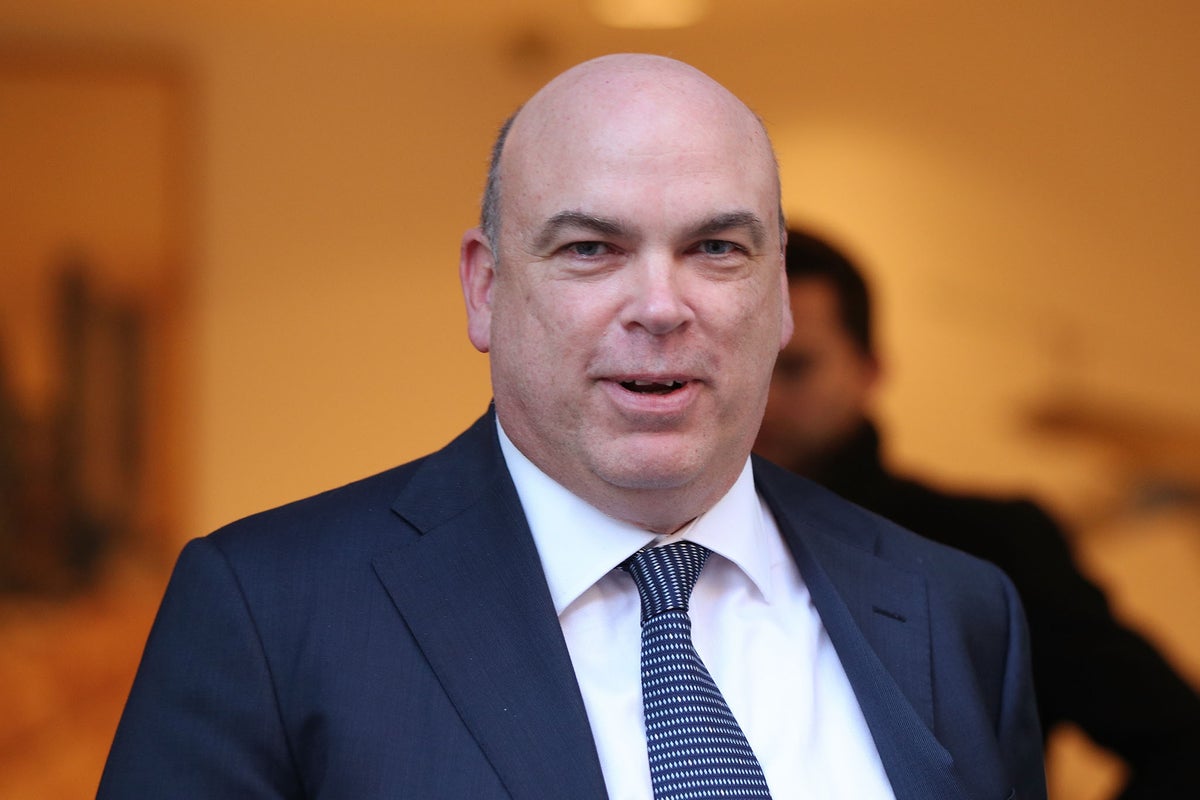
The estate of British technology tycoon Mike Lynch has been denied the right to appeal a High Court ruling that found it liable to pay Hewlett-Packard (HP) following the contentious acquisition of software firm Autonomy.
A High Court judge rejected the estate’s bid to challenge Mr Justice Hildyard’s 2022 decision, which concluded that HP had “substantially won” its more than a billion-dollar fraud claim against Mr Lynch over the 2011 purchase of Autonomy.
The estate had also sought permission to appeal against the judge’s subsequent ruling in July last year, which determined that Hewlett-Packard Enterprise (HPE) suffered losses totalling around £700 million as a result of the deal.
At a hearing in November, barristers for HP, now known as Hewlett-Packard Enterprise, said that Mr Lynch’s estate was liable to pay 1,786,668,553 dollars (£1.35 billion), which includes around 761 million dollars (£578 million) in interest.
In a ruling on Tuesday, Mr Justice Hildyard refused Mr Lynch’s estate permission to appeal against either of his earlier judgments, with a spokesperson for HPE claiming that it had been awarded damages and interest totalling around 1.24 billion dollars (£0.93 billion) from Mr Lynch’s estate.
The estate could still ask the Court of Appeal directly for the go-ahead to challenge the rulings.
HP sued Mr Lynch for around five billion dollars (£3.79 billion) following its purchase of Cambridge-based Autonomy for 11.1 billion dollars (£8.2 billion) in 2011.
The company claimed at a nine-month trial in 2019 – then believed to be the UK’s biggest civil fraud trial – that Mr Lynch inflated Autonomy’s revenues and “committed a deliberate fraud over a sustained period of time”.
It said this forced it to announce an 8.8 billion dollar (£6.5 billion) write-down of the firm’s worth just over a year after the acquisition.
In a ruling in 2022, Mr Justice Hildyard said the American firm had “substantially succeeded” in its claim, but that it was likely to receive “substantially less” than the amount it claimed in damages.
He said that Autonomy, founded by Mr Lynch, had not accurately portrayed its financial position during the purchase, but even if it had, HPE would still have bought the company, but at a reduced price.
Then in 2024, Mr Lynch died aged 59 along with his 18-year-old daughter, Hannah, and five others when his yacht, the Bayesian, sank off the coast of Sicily.
In written submissions for the hearing in November, Patrick Goodall KC, for HPE, said Mr Lynch had “not only perpetrated an enormous fraud, but lied about it at every stage”, and an appeal “aimed at escaping the consequences of that fraud” should not be allowed to be pursued.
Richard Hill KC, in written submissions for Mr Lynch’s estate, said the 761 million dollars (£578 million) in interest sought by the claimants was an “excessive sum … based on a flawed analysis”.
Mr Hill also said Mr Lynch’s estate should be allowed to appeal against the two earlier rulings, claiming that the judge “erred in law” and that there was a “compelling reason for allowing the appeal to be heard”.

Food supplement adverts claiming treatment for menopause banned

Minnesota fire that killed NHL reporter and her three children not believed to be intentional, officials say

‘John Wick’ spinoff in works, to focus on another main character

-

 Tech7 days ago
Justice Department Says Anthropic Can’t Be Trusted With Warfighting Systems
-

 Fashion1 week ago
Trump signs order to combat fraudulent ‘Made in America’ labels
-
 Business1 week ago
Stocks and pound rise as US rate call approaches
-
 Business1 week ago
Stocks To Watch: Tata Motors, IndiGo, Jindal Stainless, GMR Airports, Hindalco, And Others
-
 Business1 week ago
Peloton is launching bikes and treadmills for gyms, accelerating commercial strategy
-
 Business1 week ago
Gas supply crunch a worry for AC makers ahead of peak season – The Times of India
-

 Fashion1 week ago
Lenzing launches TENCEL Lyocell-HV100 at Intertextile Shanghai
-
 Fashion7 days ago
Sales at US apparel, clothing accessories stores up 4% YoY in Jan 2026