

Business
Jaguar Land Rover staff to stay at home after cyber attack

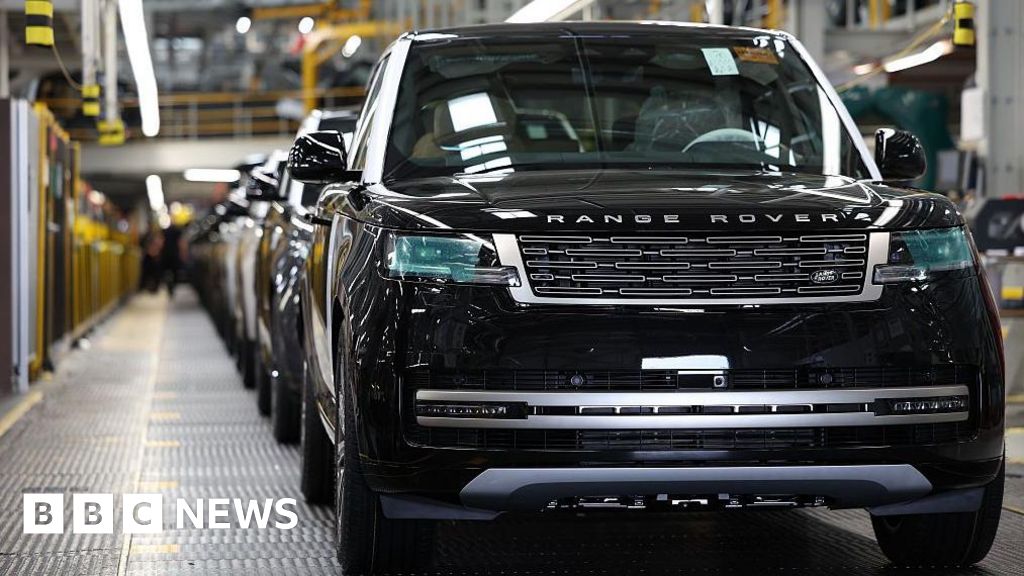
Jaguar Land Rover (JLR) has instructed factory staff to stay at home until at least Tuesday as the company continues to grapple with the fallout from a cyber attack.
The attack at the weekend forced the company to take vital IT systems offline, which has affected car sales and production.
Production remains halted at car factories in Halewood on Merseyside and Solihull in the West Midlands, as well as at its engine manufacturing centre in Wolverhampton.
The situation remains under review and output could remain suspended for longer.
Car sales have also been heavily disrupted, although the BBC understands some transactions have been able to take place.
JLR, which is owned by India’s Tata Motors, shut down its systems on Sunday in order to limit potential damage from the cyber attack.
It is now working to restore them in a controlled manner, but this is understood to be a highly complex process. It is also introducing work-arounds for systems that remain offline.
The attack occurred at what is traditionally a popular time for consumers to take delivery of a new vehicle. The latest batch of new registration plates became available on 1 September.
The disruption extends well beyond JLR’s own production lines, with its network of parts suppliers also forced to restrict their operations. Some have complained of a lack of transparency from the company.
Some repair garages have also warned that existing Jaguar or Land Rover owners may face delays if their cars need new parts.
James Wallis of Nyewood Express, an independent garage in West Sussex that repairs and services Land Rovers, told the BBC’s Today programme that he “can’t look up what I need to repair cars”.
“Essentially the parts list is a giant database of items that relates to every single car,” he said. “And if I can’t find the parts, I can’t buy them. I can’t fix the car.”
He added: “If you need parts which come from just one source and you can’t find them, you can’t order them. The job stops. You cannot repair the car. The car sits idle, and the poor old customer has to wait.”
On Wednesday a hacker group which was also responsible for a highly damaging attack on Marks and Spencer earlier in the year said it had infiltrated JLR’s systems.
The group of young English-speaking hackers – who are thought to be teens calling themselves “Scattered Lapsus$ Hunters” – told the BBC how they allegedly accessed the car maker but have not revealed if they successfully stole private data from JLR or installed malicious software onto the company’s network.
The group posted two images, which showed apparent internal instructions for troubleshooting a car charging issue and internal computer logs.
A security expert said those screenshots suggested the group had access to information they should not have.
JLR says it is investigating the hack, but there is no evidence at this stage any customer data has been stolen.
In 2023, as part of an effort to “accelerate digital transformation across its business”, JLR signed a five-year, £800m deal with corporate stablemate Tata Consultancy Services to provide cybersecurity and a range of other IT services.
The halt in production is a fresh blow to the firm which recently revealed a slump in profits attributed to an increase in costs caused by US tariffs.

The Lucid logo is shown at the Los Angeles Auto show on Nov. 20, 2025.
Mike Blake | Reuters
DETROIT — Lucid Group suspended its vehicle production guidance for the year as its incoming CEO evaluates the all-electric vehicle manufacturer’s business operations, including the potential for lower output of EVs.
The company on Tuesday also said it needs to lower its “elevated inventory” of vehicles, which for automakers has historically meant decreasing or idling vehicle production.
A company spokesman told CNBC that there is currently no plan to idle its sole U.S. plant in Arizona, but incoming CEO Silvio Napoli said he is continuing to evaluate Lucid’s business.
“An essential objective over time is to build a more cost-efficient company, one that progresses in funding its own growth. That means being rigorous in delivering our commitments,” Napoli said Tuesday on Lucid’s quarterly results call with investors. “In simple words, this means making clear choices on where to invest and, just as importantly, where not to.”
Napoli said he plans to review the company’s operations over the next several weeks before updating investors on the company’s guidance when Lucid reports its second-quarter results at an unspecified date.
The company’s prior production guidance was between 25,000 to 27,000 units in 2026. Lucid executives said plans for cost-cutting, autonomous vehicles with Uber and Nuro, and the company’s “path to profitability” outlined in an investor day in March remain intact.
Lucid has produced roughly 3,200 more vehicles than it has sold since 2024, according to its annual production and deliveries. That includes a difference of roughly 2,000 units last year and 2,400 vehicles during the first quarter of 2026.
The pulled guidance occurred as the company reported first-quarter results that were in line with preliminary results released by the company a month ago, but that still significantly missed Wall Street’s expectations.
“We ended the quarter with elevated inventory that we expect to convert to revenue and cash as deliveries normalize, while maintaining alignment between production and sales cadence. Our focus is on disciplined execution — driving structural cost improvements, managing capital efficiently, and improving operating leverage as we scale,” Lucid CFO Taoufiq Boussaid said in a statement.
Here’s how the company performed in the first quarter compared with average estimates compiled by LSEG:
- Loss per share: $3.46 vs. a loss of $2.64 expected
- Revenue: $282.5 million vs. $440.4 million expected
The company’s revenue increased roughly 20% year-over-year but was far lower than the 87.4% jump analysts were expecting, according to LSEG.
The all-electric vehicle maker said a seat supplier issue “significantly affected” deliveries of its crucial Lucid Gravity SUV during the quarter that resulted in a stop-sale of the vehicle due to safety concerns.
Boussaid said the seat issue caused a more than $200 million revenue impairment during the first quarter.
Lucid produced 5,500 vehicles and delivered 3,093 vehicles in the first quarter of 2026.
The automaker, which is heavily backed by Saudi Arabia’s Public Investment Fund, said it has sufficient liquidity through the second half of 2027. It ended the first quarter with approximately $4.7 billion, including a recent capital raise and delayed draw term loan provided by PIF.
Lucid on Tuesday said production of a new vehicle plant in Saudi Arabia continues despite the ongoing war in nearby Iran. The company said it has not experienced any significant interruptions to the facility other than some delays in shipping.
The company also said it is adjusting its production reporting to count vehicles once they complete the company’s “factory gating process,” which includes vehicles that may not be completely built and are sent to operations elsewhere for completion.
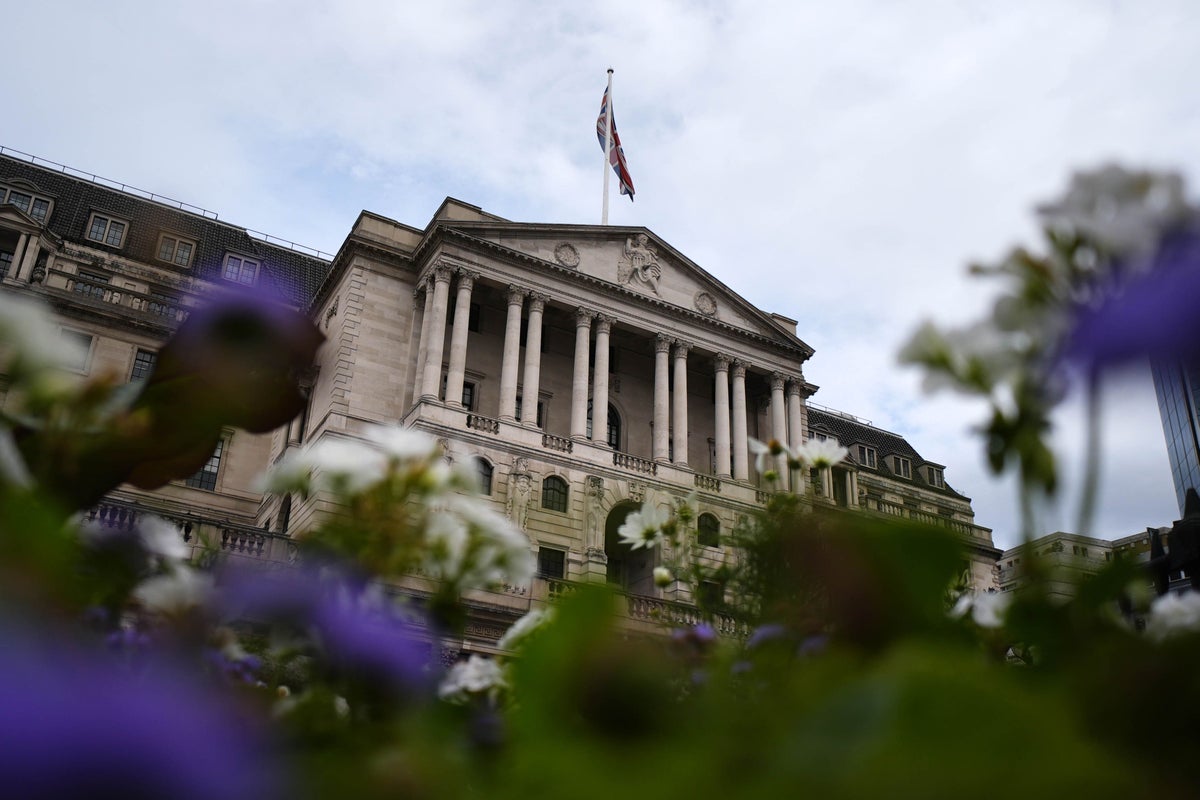
Britain’s long-term borrowing costs have surged to their highest level since 1998, driven by escalating inflation worries and political uncertainty ahead of this week’s local elections.
On Tuesday afternoon, the yield on 30-year UK government bonds, known as gilts, hit a 28-year peak, climbing 0.14 percentage points to 5.798%.
This increase in yield signifies a drop in bond prices, as the two move inversely. Consequently, the government faces higher expenses when seeking to borrow from financial markets.
The yield on 10-year gilts also rose, lifting by 0.15 percentage points to 5.122%, though this remains below recent highs reported last month.
In contrast, US 10-year treasury notes were flat on Tuesday, despite a steady increase over recent weeks.
Gilt yields have grown amid growing predictions that the conflict in Iran will drive higher inflation due to spiking energy costs, which is then likely to cause the Bank of England to increase interest rates.
City traders currently expect the central bank to vote for at least two interest rate hikes in the coming months, despite the Bank maintaining the current rate of 3.75% last week.
The rise in gilt yields means the Government will face higher debt interest costs, providing more strain on the Chancellor’s spending powers.
It comes amid a backdrop of significant pressure on Prime Minister Sir Keir Starmer in the run-up to the UK local elections.
The pound was broadly flat at 1.353 versus the dollar on Tuesday.

The FDA blocked the publication of several studies supporting the safety of vaccines against Covid and shingles in recent months, a Health and Human Services Department spokesperson confirmed on Tuesday.
It’s the latest effort by the Trump administration to challenge safe and effective shots in the U.S. and make them harder to access for some patients. Under Health and Human Services Secretary Robert F. Kennedy Jr., a prominent vaccine skeptic, federal health agencies have softened Covid shot recommendations, cut back research on vaccine development and attempted to overhaul the childhood immunization schedule, among other efforts.
FDA scientists worked with data firms to analyze millions of patient records for the studies, which found side effects of the shots to be rare, the New York Times first reported on Tuesday.
In October, the scientists were directed to withdraw two Covid shot studies that had been accepted for publication in medical journals, the Times reported. In February, top FDA officials did not sign off on submitting study abstracts on Shingrix, a shingles vaccine, to a drug safety conference, the paper added.
The HHS spokesperson told CNBC the recent studies were “withdrawn because the authors drew broad conclusions that were not supported by the underlying data.”
“The FDA acted to protect the integrity of its scientific process and ensure that any work associated with the agency meets its high standards,” they added.
When asked about the shingles vaccine research, the HHS spokesperson said the design of that study “fell outside the agency’s purview.”


‘I Actually Thought He Was Going to Hit Me,’ OpenAI’s Greg Brockman Says of Elon Musk
EV maker Lucid suspends production guidance amid incoming CEO’s business review
Long-term borrowing costs in UK reach 28-year high amid rising inflation

-

 Tech1 week ago
A Brain Implant for Depression Is About to Be Tested in Humans
-

 Tech1 week ago
Almost 90% of women leave tech industry within 10 years | Computer Weekly
-

 Sports1 week ago
Pro wrestling star Steph De Lander reveals how colleague’s advice helped lead her to title triumph at ACW
-
 Business1 week ago
‘I had £20,000 stolen and had to fight a 13-month fraud reporting rule to get it back’
-

 Entertainment1 week ago
Norway joins Type 26 Frigate Programme to boost NATO naval power
-
 Tech1 week ago
Are tech leaders risking a cyber resourcing crisis? | Computer Weekly
-

 Entertainment1 week ago
Melania Trump says ABC should ‘take a stand’ on late-night host Kimmel
-
 Business6 days ago
PSX plunges over 4,800 points | The Express Tribune