Sports
James Harden-Darius Garland trade grades: What’s next for Cavs, Clips?
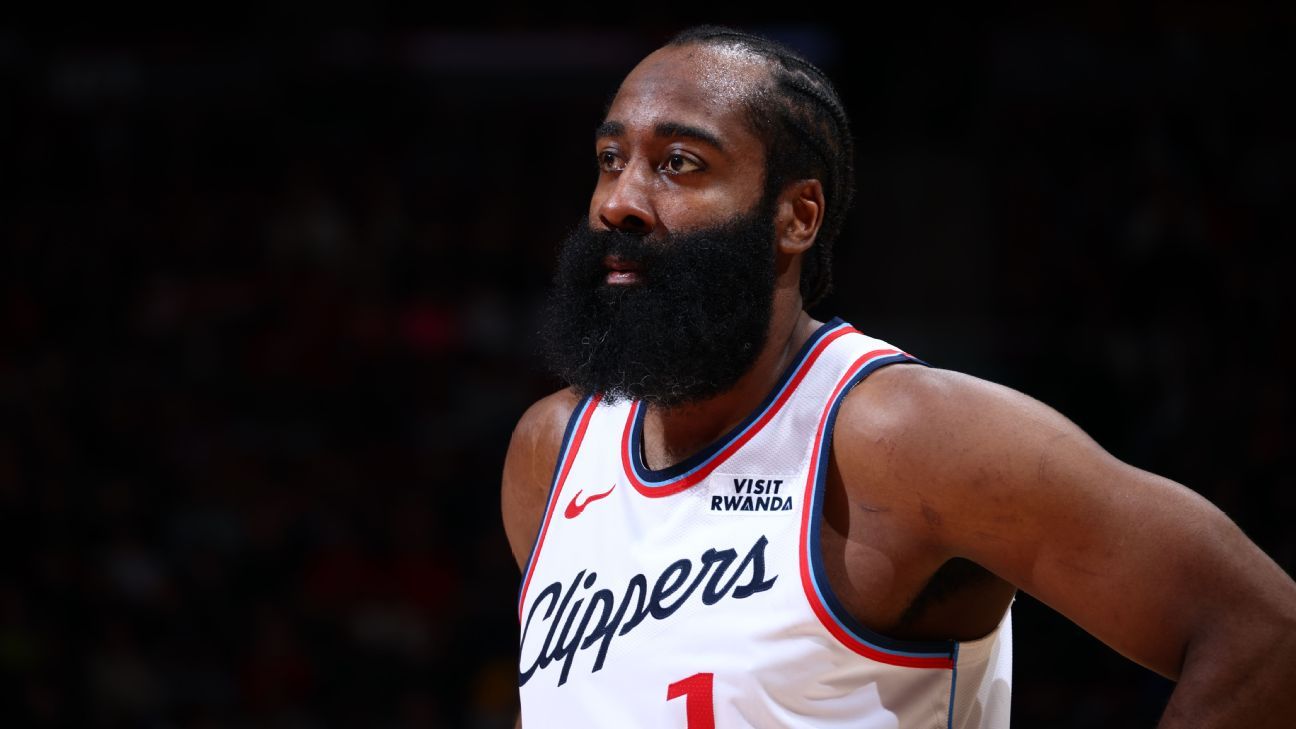
In what might be the biggest deal before Thursday’s NBA trade deadline, the Cleveland Cavaliers and the LA Clippers agreed Tuesday to swap point guards Darius Garland and James Harden in a one-for-one deal that also sends a 2026 second-round pick to the Clips, per ESPN’s Shams Charania.
Both teams are hoping this trade of 2025 All-Stars with nearly identical salaries will produce better results during disappointing campaigns. The Cavaliers are battling for positioning in the middle of the Eastern Conference playoff race after finishing atop the standings a season ago, while the Clippers’ recent hot streak has lifted them only into the play-in tournament after a dreadful start.
Let’s break down the implications of Cleveland and Los Angeles exchanging point guards and what it means for the rest of the 2025-26 season and beyond.

Cleveland Cavaliers get:
G James Harden
LA Clippers get:
G Darius Garland
2026 second-round pick
Grades

![]()
Cleveland Cavaliers: B
What this deal means for the Cavaliers: The more I think about it, the more I like Cleveland adding Harden to jolt a team that ranks eighth in offensive rating this season after leading the league in 2024-25 en route to 64 wins.
Garland’s toe injuries have been a key factor in that decline. He has been dealing with toe issues since April, and offseason surgery hasn’t solved them. Garland suffered a contusion to his troublesome left toe shortly after returning in November, and he is now sidelined by a big toe sprain on the right foot.
When he has been available, Garland is shooting just 36% on 3s, down from 40% a season ago. His usage rate has declined too, while Garland’s steal rate would be the lowest since his rookie season. Those struggles are reflected in team performance. The Cavaliers have been outscored by 3.0 points per 100 possessions with Garland on the court, according to NBA Advanced Stats, which is the worst of any player on the team who has logged more than 500 minutes.
To stay afloat, Cleveland has relied heavily on Donovan Mitchell, who is averaging 33.9 minutes per game and has his highest usage rate since playing for the Utah Jazz. An extended absence for Mitchell could be devastating for the Cavaliers, who are within two games of second place in the East but only three games from falling into the play-in tournament.
Beyond that, Cleveland would ideally like to lighten Mitchell’s load the rest of the way. He dealt with a calf strain and an ankle sprain during last year’s playoffs, shooting just 24.5% from 3-point range in the Cavaliers’ conference semifinals upset against the Indiana Pacers.
Enter Harden, who is still playing at an All-Star level at age 36. He ranks 11th in my wins above replacement player (WARP) metric this season, tops among players who weren’t chosen for the game now that former Clippers teammate Kawhi Leonard was picked Tuesday as an injury replacement. Harden had played 44 of a possible 47 games before sitting out the last two due to personal reasons and is averaging 35.4 minutes per game.
Yes, Harden and Mitchell both like to have the ball in their hands. However, I think Cleveland coach Kenny Atkinson can draw on Harden’s past experiences to keep both players healthy and fresh.
When Harden played with Chris Paul for the Houston Rockets, getting within a game of the 2018 NBA Finals, coach Mike D’Antoni strictly staggered their minutes to keep one on the floor whenever the score was competitive. Harden and Paul played together about 20 minutes per game, giving Harden 15 or so minutes per game as the lone playmaker and Paul around 12.
The current playing time for Harden and Mitchell translates to a similar stagger, so we’re talking about less than half the game they’ll likely be playing together. When that’s the case, I think Brooklyn Nets-era Harden should be the model.
Playing alongside Kevin Durant and Kyrie Irving, Harden finished 28% of the Nets’ plays with a shot, trip to the free throw line or turnover — similar to Garland’s 27% usage rate last season — but averaged 10-plus assists per 36 minutes. Given Mitchell’s history playing off the ball alongside true point guards and the finishing ability of bigs Jarrett Allen and Evan Mobley out of pick-and-rolls, Harden should be able to do the same with the Cavaliers.
Defensively, Harden’s size provides more options for hiding than the undersized backcourt of the 6-foot-1 Garland and the 6-foot-2 Mitchell did. Given Mobley’s defensive versatility, it’s possible Harden could end up checking power forwards at times, taking advantage of his uncanny ability as a post defender.
Certainly, I understand the concern about adding Harden to a team with NBA Finals aspirations given his track record of playoff underperformance. Still, this isn’t breaking up a Cleveland team that was rolling like last year. The most likely outcome for the Cavaliers barring a trade was a loss within the first two rounds of the playoffs, same as the previous three postseasons.
Nobody knows Garland’s health better than Cleveland, and if the Cavaliers were convinced that he wasn’t likely to return to last season’s All-Star level of play regularly, moving on now made sense.
Harden was the best player that Cleveland could likely acquire in a one-for-one swap. The Cavaliers will have to navigate Harden’s player option for 2026-27, but they’ll surely be happy to pay up if they reach the conference finals for the first time since LeBron James‘ departure in 2018.

![]()
LA Clippers: B-
What this deal means for the Clippers: A drastic change of course from their current path, which was built around contending now while keeping cap space available for the star-studded crop of potential 2027 free agents — a group that includes Mitchell.
From that standpoint, trading Harden would have made more sense in December, when the Clippers were as many as 15 games below .500. They subsequently ripped off 16 wins in a 19-game stretch to get back in the play-in spots in the West and suggest they might be capable of a playoff upset.
Nonetheless, I can get the Clippers pulling the plug on their win-now strategy. Projections using ESPN’s Basketball Power Index gave them just a 5% chance of reaching the top six and ducking not only the play-in tournament but also any chance of a first-round matchup against the defending champion Oklahoma City Thunder. The Clippers would have to climb to at least eighth in the standings to have a chance at avoiding the Thunder in the first round, and BPI has that happening less than 40% of the time.
More surprising is the Clippers’ willingness to take on Garland’s contract, which runs through 2027-28 at $44.9 million. Before this trade, starting center Ivica Zubac was the only Clippers player under a guaranteed contract beyond 2027 at a more manageable $21 million.
With Garland and Zubac on the books, the Clippers still have a path to max-level cap space in the summer of 2027 but won’t be able to offer two max players the chance to team up in L.A. without future moves.
It’s certainly possible that Garland is back to playing at a star level by then. We’ve seen him bounce back from a down season before. Garland’s performance to date is eerily similar to 2023-24, when his mouth was wired shut for a month following a jaw fracture. Back then, Cleveland resisted calls to break up the Garland-Mitchell backcourt and he responded with the best season of his career in 2024-25. As the lower-spending team in this trade — an unfamiliar position — the Clippers don’t face the same urgency to win now as the Cavaliers.
If Garland returns to the level he played at last season, this deal could be a huge win for the Clippers. They’re swapping a 36-year-old who was in pursuit of a new contract — surely the reasoning behind the willingness of the Clippers and Harden to work together on finding a trade — for a player who’s more than a decade younger. In the Dunc’d On Daily Duncs newsletter, Dan Feldman couldn’t find a historical analogue where two past All-Stars so different in age were traded primarily for each other.
Getting younger could be especially important if the NBA strips multiple draft picks from the Clippers as punishment for possible salary-cap circumvention relating to the league’s investigation of Leonard’s sponsorship deal with Aspiration. We’ve seen this season how important the energy provided by late second-round picks Jordan Miller and Kobe Sanders has been to the Clippers’ turnaround.
The Clippers’ pursuit of 2027 cap space also ran counter to recent NBA trades. Stars have been more likely to change teams via trade-and-sign extensions than hit free agency since the Clippers signed Leonard in the summer of 2019, ancient history in front office terms. If Giannis Antetokounmpo and other stars find new homes this summer, the Clippers might want to forego hoarding cap space either way.
My biggest concern is ultimately that Garland’s toe problems might prove more difficult to shake than a fluke injury to his jaw. Given his small stature, any decline in Garland’s quickness would be challenging to overcome. Consider the upcoming Clippers medical exam one of the highest-stakes physicals in recent NBA memory.
Sports
Ranking each NHL team’s top prospect: Hagens, Iginla, more
Every NHL franchise has a prospect pool. Some, usually the perennial contenders, have thinner prospect pools because of a lack of draft capital. However, each team usually has one guy about whom the organization and fan base are excited.
Some of those players are polished and NHL-ready, producing at high rates in other leagues, while others are early in their development with a high ceiling. Each represents hope, a possible answer to a roster hole, or, in the best-case scenario, a foundational piece of a Stanley Cup contender.
To be considered a prospect for this list, the player must be under 23 and not an established NHL player. Generally, that means fewer than 50 games in the current season. But in the case of someone like Michael Misa, who has played only 30 games but very clearly has an established roster spot with the Sharks, those players would be ineligible for this list.
Here is a look at the top prospect in each team’s pipeline, what they do well, where they need to grow, and a look at reasonable NHL timelines and expectations.


Roger McQueen, F
2025-26 team: Providence (NCAA)
McQueen is a 6-foot-5, right-shot center with the handling skill of a first-line playmaker, a sniper’s release, and defensive instincts among the best outside the NHL. The toolkit is undeniable and has been tested against tougher competition this season at Providence College.
McQueen attacks with a wonderful skating posture, full-wingspan dekes that bait defenders before beating them, cross-body wristers, and passes through layers to teammates in space. All of this from a player who throws hits on the forecheck and battles with genuine aggression.
After a wonderful freshman season at Providence, McQueen earned Hockey East Rookie of the Year honors with 11 goals and 16 assists, and he continued to demonstrate projectable two-way play. If McQueen stays healthy and continues to develop the way he has in his first college season, he has a real chance to be a star in the NHL.
0:29
Roger Mcqueen finds the back of the net

James Hagens, F
2025-26 team: Boston College (NCAA)
The Bruins have their center of the future in the Boston College sophomore.
He plays at high pace and has a game built on elite processing and edge work. He floats through neutral-zone traffic with effortless crossovers and weight shifts, creating time and space. He’s a dual-threat offensive center, with high-end playmaking and a shot that has taken a real step forward this season, doubling his goal output and winning the Hockey East scoring title.
What separates Hagens from other undersized pivots is the professional detail in his two-way game. He patrols passing lanes, anticipates breakouts and supports the puck in positions that allow for quick-strike offense without cheating the defensive side.
Hagen’s motor, intelligence and ability to drive play project him as a legitimate top-six center in Boston as soon as next season. The B’s signed him to an AHL deal Monday.

Radim Mrtka, D
2025-26 team: Seattle Thunderbirds (WHL)
Mrtka is going to fit perfectly on Buffalo’s talented blue line.
The physical profile alone is rare, standing 6-foot-6, 216 pounds, and being a right-handed shot. But what makes Mrtka special is how well he moves around the ice with that frame. His first step is quick, his pivots are clean and he escapes pressure with poise. Defensively, his reach allows him to funnel attackers wide, kill plays in transition and maneuver with high-end awareness. With the puck, Mrtka is a transporter, joining the rush with purpose and threading passes to the middle of the ice off retrievals.
The offensive ceiling has room to grow, but the defensive floor is already high. Buffalo will have a minutes-eating defender with a combination of size, skating, and high-end defensive capability who will likely be ready for the 2027-28 season. As a righty, Mrtka also helps an imbalanced Buffalo blue line and should allow either Owen Power or Rasmus Dahlin to move back to their natural side.

Zayne Parekh, D
2025-26 team: Calgary Flames/Wranglers (NHL/AHL)
This was a lost season for Parekh, and he would benefit from playing a major role in the AHL, where he can run the power play. His offensive toolkit remains arguably the best among all defensive prospects in the game.
Parekh’s entire game is built on deception, four-way mobility, elite edgework, head fakes, look-offs and a release that catches goalies by surprise. The professional reality has been harder, which isn’t surprising for a 19-year-old defenseman. Parekh has yet to find his offensive game in the NHL while playing sheltered minutes on Calgary’s third pairing, a far cry from the dynamic offensive creator who put up 107 points in the OHL. The offensive instincts have yet to translate, with Parekh giving up more high-danger chances than he creates.
The IIHF World Junior Championship offered a reminder of his capabilities, with five goals and 13 points, shattering the Canadian record for points by a defenseman at the event. The ceiling remains a power-play quarterback and top-four dynamo who can be a game changer. But the Flames cannot afford to keep mismanaging his development the way they did this season.

Bradly Nadeau, F
2025-26 team: Chicago Wolves (AHL)
Nadeau is built to be a scoring winger at the NHL level. His shot is a combination of power, deception and accuracy, combined with a release that goalies have trouble picking up. That shot has seen him average more than half a goal per game in his first two seasons in the AHL with the Chicago Wolves.
Adding to his threatening offensive profile is his high-end awareness. He picks apart defensive structures, scans the ice and exploits passing lanes. His two-way game has taken a massive developmental step forward, and he has become a consistent penalty killer and is trusted in high-leverage situations.
At 5-foot-10, 172 pounds, the physical limitations see him lose board battles and get muscled off 50/50 pucks, and he lacks net-front presence against bigger defenders.
The good news is Carolina doesn’t need him to be a power forward; they need a difference-making goal scorer. If he continues to develop his two-way game and find the open space in the offensive zone, Nadeau projects as a top-six scoring winger — exactly the type of player the Hurricanes need — as soon as the 2026 playoffs.

Anton Frondell, F
2025-26 team: Djurgardens IF (SHL)
Get ready, Chicago!
Frondell is built like a tank and shoots like a sniper. At 6-foot-1, 205 pounds, he is physically mature for his age (he’ll turn 19 in May), leaning on opponents, throwing reverse hits, and winning position at the net front with a physicality that will serve him well in the NHL.
He’s a quality off-puck player, which has only improved with his experience in the SHL, Sweden’s top league. He reads the play, pushes pace to beat defensemen to rebounds and deflections and gets himself to the quiet areas, where he only needs a moment to beat goaltenders. His shot is versatile, blending power, accuracy, a good one-timer from the flank and impressive hand-eye coordination for tip-ins.
Frondell scored 20 goals for Djurgårdens IF in 43 SHL games as an 18-year-old, which is fourth all time for a player at that age. After a dominant performance at the World Juniors, he made significant development strides offensively, scoring 10 goals in his final 18 SHL games and showing improved playmaking ability.
He played mostly on the wing, which is the best spot for him to start in the NHL while his skating develops. Frondell is not particularly explosive or elusive, and adding that will give him more space to make plays. At his floor, he’s a top-six scoring winger and power-play weapon who rides shotgun with Connor Bedard. At his ceiling, he’s a force up the middle of the ice in Chicago’s top six and takes the rebuild to the next level.

Gavin Brindley, F
2025-26 team: Colorado Avalanche (NHL)
Brindley is 5-foot-9 — and plays like he doesn’t know it or doesn’t care.
His motor is relentless, his forechecking eliminates space, and his defensive engagement is the kind that makes coaches trust a 21-year-old in an NHL lineup. The offensive numbers don’t jump off the page, but the impact transcends the scoresheet. Brindley is exceptional at pressuring puck carriers and winning races to loose pucks, and he is reliable in his own end. His skating and agility are strengths because of quick feet and good edge work, and he has the ability to make plays under duress in tight spaces.
He’s unlikely to become a top-six driver, but the tenacity, two-way detail, and compete level project a middle-six, all-situations forward who elevates every line on which he plays. In a league that increasingly values players who do the hard things right, Brindley’s game translates, though he’ll likely be a fourth-line player at least to start.

Sergei Ivanov, G
2025-26 team: SKA St. Petersburg (KHL)
We could’ve picked a number of Blue Jackets prospects here, but it is rare that a 21-year-old goaltender puts up the numbers that Ivanov is registering in the KHL. He has exceptional post-to-post movement, a quick glove hand and an unconventional “just make the save” competitiveness blended with modern technique.
After posting a .911 save percentage with HC Sochi last season, Ivanov moved to SKA St. Petersburg this season and has taken another step. He posted a .927 save percentage and three shutouts across 29 games and was named to the KHL All-Star Game at 21 years old.
Ivanov studies Igor Shesterkin and Sergei Bobrovsky, and if you’re going to emulate goaltenders, there are certainly worse ones than those two.
Blue Jackets GM Don Waddell said the organization believes Ivanov is ready, and he confirmed his intention to come to North America when his KHL contract expires after this season. His size (6-foot) will always invite skepticism, but Ivanov covers ground he has no business reaching via anticipation and sheer will. He has genuine starting potential in the NHL once he adjusts to the North American game.

Emil Hemming, F
2025-26 team: Barrie Colts (OHL)
At 6-foot-1, 200 pounds, Hemming plays a prototypical power forward’s game. He drives the net, absorbs contact, links up with linemates on breakouts and backchecks with purpose rather than going through the motions.
Hemming’s shot is high-end, with the ability to fire off either leg and the ability to shoot through defenders’ triangles off the rush. Dallas gave him a brief AHL look to open the season before reassigning him to Barrie, where the OHL version of Hemming reemerged immediately. He produced 62 points in 45 games, with his shot volume jumping to nearly four shots per game and his playmaking emerging as a secondary weapon.
The Stars’ pipeline is thin due to limited draft capital, which makes Hemming’s development all the more critical. He represents their best chance at a homegrown middle-six forward if the shot translates as expected and the two-way habits keep maturing.

Nate Danielson, F
2025-26 team: Grand Rapids Griffins (AHL)
Danielson is one of the better skaters among center prospects in the NHL pipeline. He possesses a long, smooth stride with good edgework and agility.
His two-way play is the foundation of his game. He competes hard everywhere, supports the play, reads passing lanes and has been effective on both the penalty kill and power play with the Grand Rapids Griffins in the AHL. Danielson is a smart, connective playmaker rather than a dynamic one, and his impact tends to show up in the details of his game.
The offensive ceiling is the biggest question, but his statistical profile projects him to become a middle-six forward whose two-way play sees him play tough matchups. There’s a path to becoming a legitimate second-line center who anchors both ends of the ice and makes the players around him better. He has the skating ability to become an offensive play driver.

Isaac Howard, F
2025-26 team: Bakersfield Condors (AHL)
The Hobey Baker winner parlayed his dominant college career into a trade from Tampa Bay to Edmonton, where the Oilers’ development staff immediately identified what makes him special: the ability to find soft ice in the offensive zone and finish.
Howard has split this season between the NHL (five points in 28 games) and AHL Bakersfield (38 points in 36 games), showing the kind of shoot-first mentality and transitional intelligence that suggest he can be a 30-goal scorer with the Oilers. Howard’s skating helps him get to spots to shoot, especially with his ability to deftly stickhandle at full speed.
The concern is defensive responsibility, but if Howard can show he deserves a role next to Connor McDavid or Leon Draisaitl, he will be buoyed by their play. His puck skills are high-end, his creativity at speed is rare, and his willingness to try things other players wouldn’t attempt makes him a dynamic offensive weapon. The adjustment to NHL pace is ongoing, but he’s exactly the type of winger who should be given time to develop chemistry with one of Edmonton’s elite centers.

Jack Devine, F
2025-26 team: Charlotte Checkers (AHL)
Devine has spent his entire development arc proving that the teams who drafted 220 players ahead of him in 2022 missed something.
At the University of Denver, he was one of the most productive players in college hockey, winning the national scoring title as a senior with 57 points in 44 games, and he helped the Pioneers win two NCAA championships. His ability to adapt to his linemates has translated seamlessly to pro hockey, immediately becoming an impact AHL scorer with the Charlotte Checkers.
He drives play with tenacious playmaking, keeps plays alive and wins battles. He hangs on to pucks between checks, blending effort with above-average skill and has developed into a dual-threat passer and shooter. His motor is relentless, his reads are high-end and his speed has improved to complement his game.
At 5-foot-10, he’s still not viewed as a surefire NHL forward, but his feel for the game and hockey sense are there. It is more likely than not that Devine figures it out and becomes an everyday NHL contributor who outworks opponents and makes a difference in the bottom six.

Carter George, G
2025-26 team: Sault Ste. Marie Greyhounds (OHL)
George is the most intriguing goaltending prospect in the Kings’ pipeline, and that’s saying something for an organization that has three netminders with legitimate NHL futures.
At 6-foot-1, George doesn’t have the imposing frame of a modern goaltender, but his crease movement is quick and poised, his positioning is mature and his puckhandling is as confident as that of any goalie prospect in the game. He reads the play early, tracks through traffic easily and fills the net with an upright stance that maximizes his coverage.
After making his AHL debut with the Ontario Reign last spring — winning both of his starts, including a shutout — George returned to the OHL this season and posted a .908 save percentage across 45 games including four shutouts and 23 wins. George’s anticipation, lateral quickness and ability to launch breakouts with stretch passes project him as a starting-caliber goaltender at the NHL level. He and Hampton Slukynsky could become L.A.’s future tandem in goal.

Charlie Stramel, F
2025-26 team: Michigan State (NCAA)
Stramel is a 6-foot-3, 216-pound center who has finally started looking like the player Minnesota believed it was drafting 21st in 2023.
After a quiet first two college seasons, Stramel broke out as a junior after transferring to Michigan State. He’s physically imposing and plays like it, punishing forecheckers, containing cycles and using his reach to cut off skating lanes and read passing options. The skating stride remains awkward, and his first step lacks explosiveness, but his top-end speed is legitimate and his balance through contact is a real asset at his size.
The offensive development has been the revelation. Soft hands, improved playmaking vision and the confidence to hold on to pucks and attack make him a scoring threat. Stramel’s floor is a reliable bottom-six center who wins battles and defends well. His ceiling, if the offensive game keeps trending, is a second-line, two-way force, something Minnesota really needs.
0:23
Charlie Stramel scores goal

Michael Hage, F
2025-26 team: Michigan (NCAA)
Simply put, Hage is a well-rounded player without a glaring flaw. His sophomore season at Michigan has been spectacular; he’s among the NCAA scoring leaders and firmly in the Hobey Baker conversation.
He’s a dynamic rush attacker who drives the middle and processes the play at lightning-quick pace, allowing him to make give-and-go plays at full speed to leave defenders scrambling. Hage reads defensive coverage, creates passing lanes and delivers pucks in prime scoring areas. A dual threat, his shot fools goaltenders with a toe drag snap that catches them on their heels. He’s creative, intelligent and has no significant weaknesses, and he’s capable of elevating a line.
Hage’s two-way game has matured; he’s a 200-foot player with the strength to win battles against tough competition. His development trajectory suggests he may be ready to play behind Nick Suzuki as a potential second-line center as soon as next season. If Hage signs his entry-level deal this spring, he could step in and play meaningful playoff minutes, too.

Brady Martin, F
2025-26 team: Sault Ste. Marie Greyhounds (OHL)
Martin is a one-of-a-kind blend of manipulative playmaking and bone-crushing physicality, a forward who can fake a pass on his first touch, thread a no-look feed across the slot, and then immediately try to send someone through the boards. His motor is relentless, his hits are punishing and devastatingly timed and his forechecking generates more turnovers than many forwards I can remember.
Nashville saw enough to give him an NHL look out of training camp, and he was impactful for Canada at the World Juniors. Unfortunately, he has struggled since returning from injury in February.
The skating needs to take another step, but the intelligence, physicality and scoring tools are all top-six caliber. If his speed and pace of play improve, Martin becomes a unique power playmaker who elevates when the games matter most. If it doesn’t, he’s still a middle-six player whom teams will hate to play against.

Anton Silayev, D
2025-26 team: Torpedo Nizhny Novgorod (KHL)
Silayev is a physical anomaly. At 6-foot-7, 207 pounds, he’s a mammoth right-shot defenseman with the skating ability to cross the neutral zone in three or four strides; he moves like a player who has no right to be that big and that fluid simultaneously.
His defensive game is built on reach, aggression and an ability to close gaps, making opposing forwards feel like the ice is shrinking. His decisions with the puck are quick and sound. Becoming a shutdown defender who thrives in physical battles and denies space with suffocating range is the floor. The ceiling, if the offensive game develops, is a minutes-munching, top-four presence who can move pucks, kill plays and physically dominate.
Silayev’s KHL contract with Torpedo Nizhny Novgorod runs through May, at which point he’s expected to come to North America and be ready for NHL action next season.

Victor Eklund, F
2025-26 team: Djurgardens IF (SHL)
Eklund is the kind of prospect who people point to and say, “Size does not matter when the skill and motor are that good.”
At 5-foot-11, 170 pounds, he has no business winning board battles against men who outweigh him by 40 pounds, but he does so consistently by attacking their hands, getting underneath and leveraging his body to gain a positioning advantage. His forechecking is elite and is going to be a nightmare for every defenseman he plays against. The skating isn’t a standout tool on its own, but paired with that seemingly bottomless motor, it creates a pace that suffocates defenders and drives transition.
Playing full-time for Djurgårdens IF (the same team as the Blackhawks’ Frondell), he scored 24 points in 43 SHL games as a teenager. He has been on a tear of late and owns a statistical profile that lends very well to an NHL player. He’s not going to be an elite offensive creator in the NHL, but his vision below the goal line, his ability to turn steals off the forecheck into chances and his willingness to do everything the hard way will endear himself to any coach.
Eklund projects as a top-six winger who elevates every line he plays on. The Isles got a real good one 16th overall last summer, and there is a good chance other teams will regret passing on him.

Liam Greentree, F
2025-26 team: Windsor Spitfires (OHL)
Greentree solves problems with the puck on his stick. At 6-foot-3, 215 pounds, he has an NHL-ready frame and uses it to power through checks, protect possession and navigate traffic. He manipulates space off the rush with look-offs and give-and-goes, while forcing defenders and goalies to respect a high-end shot.
Greentree has been on a 14-goal, 25-point tear for the OHL’s Windsor Spitfires since being acquired by the Rangers as the centerpiece of the Artemi Panarin trade. He’s a crafty, powerful forward who racks up points through playmaking and finishing in equal measure.
His skating is the legitimate concern; his first step and acceleration need meaningful improvement to project as more than a middle-six contributor at the NHL level. The offensive intelligence, size and production profile suggest a player who will find ways to score even if the footspeed never becomes a strength. New York got a prospect with middle-six tools and a frame built for playoff hockey.

Carter Yakemchuk, D
2025-26 team: Belleville Senators (AHL)
Yakemchuk’s offensive instincts from the back end are rare, and he’s producing at a high-end rate on the Senators’ AHL squad (Belleville). He jumps into rushes aggressively, gets shots through from the point and has the power to score from range.
At 6-3, right-handed, with a booming point shot and dynamic puck skills, the power-play upside is clearly there. The majority of his growth has been on the defensive side, including improved gap control, better consistency in the corners, and a willingness to play within structure that Ottawa’s development staff has prioritized.
The forward skating is strong, but lateral and backward mobility remain hurdles to full-time NHL play. If the defensive details keep trending upward alongside the offensive firepower, Yakemchuk projects as a middle-pair defenseman who can anchor a power play and change games with his shot. Ottawa is rightfully being patient, and giving Yakemchuk a steady defensive partner when he steps into the NHL will help him.

Porter Martone, F
2025-26 team: Michigan State (NCAA)
Martone is one of the smartest prospects in an NHL pipeline. He constantly scans, anticipates defenders’ movements, manipulates coverage and delivers passes that are translatable to the NHL. His dual-threat shot is a violent power transfer through his entire body, and he also has the deception to rip a no-look short-side wrister that freezes goaltenders.
After moving to Michigan State, Martone performed well against bigger, stronger competition, and his skating continued to improve. Questions remain around pace of play and physical engagement, as he’s currently a soft-skill player in a power forward’s body.
But if his skating and willingness to use his powerful body continue to improve, at 6-3, 208 pounds, Philadelphia has a potential top-line winger and elite power-play weapon. Philadelphia is the perfect place for a power forward to thrive, and Martone has all the tools to be a dominant NHL winger.
0:41
Porter Martone finds the back of the net
Porter Martone scores goal

Will Horcoff, F
2025-26 team: Michigan (NCAA)
Horcoff towers over most everyone on the ice. At 6-5, 200 pounds, the son of longtime NHLer Shawn has an NHL frame, and he has developed offensively during his sophomore season at Michigan.
Horcoff’s defensive play is a real asset. He’s fueled by proactive reads, physical disruption and a backcheck that suffocates puck carriers with his range and positioning. The playmaking has emerged as a legitimate weapon, including one-touch passes, area feeds, deft wall plays and delays for teammates to jump into lanes.
His ability to be a play driver remains a question, largely related to his skating. His edge work needs work, and he can slow the game down too much when he’s hunting the perfect play. If the pace and mobility improve as the body fills out, Horcoff has the hockey sense, defensive detail and skill to become more than a bottom-six center. His ability to become a play driver and support the play will ultimately determine how high he plays in the lineup.

Igor Chernyshov, F
2025-26 team: San Jose Sharks/Barracuda (NHL/AHL)
Chernyshov’s combination of size, skating and skill makes him one of the more intriguing young wingers. At 6-2 with pro-caliber speed and high-end puck handling, he has been a reliable point producer at every level. With the Barracuda, he produced 33 points in 41 AHL games, and when San Jose recalled him, Chernyshov didn’t look out of place, posting 22 points in 31 NHL games while skating alongside Macklin Celebrini and Will Smith.
His playmaking is more refined than the power-forward archetype suggests. He sees the ice well, shows poise with the puck and is creative with his rush play. Chernyshov is a dynamic transition threat with the size, speed and skill to become a top-six winger who can score and facilitate.
San Jose’s rebuild has a centerpiece forward group forming, and Chernyshov looks like a core piece of it.

Jake O’Brien, F
2025-26 team: Brantford Bulldogs (OHL)
Passing is O’Brien’s first, second and third play, which is a major reason he is the owner of the most points in Brantford Bulldogs history. When he can’t find a lane, he creates one by shifting defenders or selling a shot fake before slipping a feed through multiple defenders. He passes through sticks, under skates, behind his own back, and spots teammates at the far post before anyone recognizes the threat.
He’s a forward who is likely to be a quarterback for an NHL power play because of his vision, deceptive releases and cross-slot passing. Back with Brantford this season as captain, O’Brien led the OHL in assists and scored 1.75 points per game, answering questions about whether he can drive a team on his own.
He needs to fill out his frame, but at 6-foot-2 and 177 pounds, the physical runway is enormous, and the playmaking ceiling makes the bet worthwhile. If the skating and strength develop alongside the creativity, Seattle has a top-line, play-driving center. At worst, O’Brien is a play-driving winger in the top six who will pile up the assists.

Justin Carbonneau, F
2025-26 team: Blainville-Boisbriand Armada (QMJHL)
The 6-foot-1 winger can fly while keeping tight control over the puck, slipping it around skates, under sticks and behind defenders. His scoring tools are elite, with an excellent release he can fire from uncomfortable positions, deceptive passing that draws multiple defenders before threading feeds through coverage and the off-puck instincts to time himself into pockets to catch-and-release.
The decision-making remains the primary area of development. When everything clicks, he looks like a first-line play driver; when it doesn’t, the turnovers multiply and his impact vanishes. Those turnovers will hold him back from earning trust at the NHL level right now. However, the tools, self-confidence and adaptability suggest the processing will catch up. Carbonneau’s ceiling is a first-line, dual-threat winger.

Conor Geekie, F
2025-26 team: Syracuse Crunch (AHL)
The younger brother of Boston’s Morgan Geekie, the 21-year-old is the most complete prospect in Tampa Bay’s system — and the foundation for whatever comes after the Golden Years.
At 6-4, his combination of size, reach, hands and offensive IQ is rare. He handles pucks through tight spaces, protects possession and is a dual-threat playmaker and shooter with a release that punishes goalies who cheat to his passing lanes.
Tampa Bay sent him to Syracuse this season with a specific prescription: play as the first-line center, on the top power play and the penalty kill. He has responded with 54 points in 40 AHL games.
The skating remains the primary development requirement. His stride is upright and lacks explosiveness out of turns; at the NHL level, that limits his ability to separate and win races he should win with that frame. But his defensive play is already strong, he tracks well in transition and takes good routes to the puck.
If the skating improves to even league-average level, Geekie has the toolkit of a 60-point, two-way center. If it doesn’t, he’s a bottom-six guy who can contribute offensively.

Ben Danford, D
2025-26 team: Brantford Bulldogs (OHL)
With the graduation of Easton Cowan, Danford reigns as the top Leafs prospect.
For all the talk about the Leafs needing to add some physicality and a mean streak to their lineup, Danford has no shortage of either. He delivers thunderous body checks, is reliable in the defensive zone, wins the majority of his puck battles and plays in key situations. His skating is slightly above average, allowing him to have good gap control and disrupt passes with a well-placed stick.
His offensive capabilities have grown over the past couple of seasons, beating the first layer of pressure and getting shots through. He’s unlikely to be an offensive producer in the NHL, as his strengths are suited to a shutdown role with heavy penalty-killing minutes. Danford makes a good first pass under pressure and has shown more patience.
His decision making and execution with the puck will determine whether he becomes a middle-pairing defender or a bottom-pair player.

Tij Iginla, F
2025-26 team: Kelowna Rockets (WHL)
Iginla is a tour de force and seems destined to become a top-six point producer in the NHL.
Through 47 WHL games this season, he led the league in points per game (1.93) while driving a Kelowna team preparing to host the Memorial Cup.
His shot is his calling card. It is quick and deceptive, and when combined with the ability to create his own time and space, it is a game changer. Iginla’s details are well-rounded. His wall game is high-end, and he wins the vast majority of puck battles. His habits away from the puck are an equal strength, with constant threat identification, an active stick and hard-nosed backchecking.
Simply put, he’s one of the best prospects outside the NHL. The dual-threat offensive ability, the compete level, and the rapidly improving all-around game project a player who can impact an NHL lineup in every situation and make impactful plays in the playoffs.
In Iginla, Utah has the type of player that many in the industry say “you win with.”

Braeden Cootes, F
2025-26 team: Prince Albert Raiders (WHL)
Cootes is a one-man forechecking machine who already looks like an NHL player at age 19. His motor and energy are undeniably elite. His feet never stop moving, and he makes plays while absorbing hits, which separates him from other prospects.
Vancouver believed enough to put him on their opening night roster this season, before sending him back to the WHL to develop. Now with Prince Albert after a midseason trade, Cootes is leading the Raiders in scoring and driving a Memorial Cup contender. His playmaking is above average and his rush game is dynamic. He dangles with his feet moving, attacks the middle and skates through back pressure.
Cootes’ defensive detail is already projectable, which is largely why he got to the NHL look to start the season. Vancouver — perhaps more than any other franchise — is starved for centers, and Cootes’ floor is a high-energy, third-line pivot. The ceiling is a matchup second-line center with 65-point upside. He’d benefit from a full AHL season, where he can further develop both sides of his game and adjust to the speed of professional hockey.

Trevor Connelly, F
2025-26 team: Henderson Silver Knights (AHL)
Connelly is a brilliantly skilled forward with the creativity and pace to score and make plays at the NHL level.
His skating is among the fastest and most agile outside of the NHL, making him a monster in transition. He has the ability to change direction at full speed, leaving defenders flat-footed. Combine that with quick hands, jaw-dropping deception and the ability to make difficult plays look easy, and the offensive toolkit is undeniable.
Connelly made his AHL debut with Henderson this season and quickly showed why Vegas believes in the top-six projection. The development path requires patience as his decision-making consistency needs to improve. When the processing catches up to the raw offensive tools, Connelly has the ceiling of a dynamic, top-six winger who makes everyone around him more dangerous.

Cole Hutson, D
2025-26 team: Boston University (NCAA)
The emergence of Cole Hutson is likely why the Capitals moved off John Carlson at the trade deadline — and the freshly signed 19-year-old scored his first NHL goal into an empty net last week.
His offensive creativity from the blue line is otherworldly and already impactful in the NHL. His edgework is elite; a combination of lateral slides, hesitation moves and the kind of confidence while carrying the puck that lets him walk the line and break defensive coverage.
In his sophomore season at Boston University, Hutson led the Terriers in scoring with 32 points in 35 games and averaged over 25 minutes of ice time per game, earning All-Hockey East first-team honors for a second consecutive season. The offensive toolkit projects him as a power-play quarterback and transition weapon. The defensive game will develop as he plays more in the NHL, including gap control, defending against the cycle and shoulder checking for threats.
Washington didn’t use the No. 43 pick in 2024 on him to be a shutdown defender; the Caps drafted him to be an offensive catalyst. If the defensive details sharpen, the offensive upside makes him a legitimate top-four option with game-breaking ability.
0:47
Cole Hutson lights the lamp
Cole Hutson tallies goal vs. Senators

Brayden Yager, F
2025-26 team: Manitoba Moose (AHL)
Yager is one of the smartest players at the AHL level. His shot is his offensive calling card, whether he’s ripping a wrister or loading up a one-timer; it’s NHL-caliber already.
Yager provides defensive value across all three zones, competes on retrievals, supports the play and does not cheat for offense. In his first professional season with Manitoba, he has earned middle-six center duties and time on both the power play and penalty kill. He is producing at a respectable clip while adjusting to the AHL’s pace and physicality. The hockey sense and puck skills are evident.
The areas for growth are strength and quickness. Yager still has time to develop on both sides of the puck, but the foundation of a middle-six secondary point producer who brings reliable two-way play is there. He is the kind of center Winnipeg can slide onto its third line once the physical tools catch up to the hockey IQ.
Sports
Salah will get the Liverpool farewell, but he leaves a void to fill
All good things must come to an end. Even Mohamed Salah — the epitome of a good thing for Liverpool over the past eight-and-a-half years — cannot go on forever.
On Tuesday, the Egypt international shocked the football world by confirming he will depart Anfield at the end of the current season. But while the timing of Salah’s announcement was unexpected, the past few months have increasingly appeared to be setting the stage for his Liverpool curtain call.
After all, it was less than four months ago that serious doubt was cast over the forward’s immediate future. Following the Reds’ 3-3 draw with Leeds United, he sounded off to reporters, claiming he had been “thrown under the bus” amid the team’s poor run of form.
The situation initially seemed irretrievable — and yet, after being omitted from Liverpool’s travelling party for their subsequent trip to Inter Milan, Salah was later reintegrated into the squad.
It is a testament to his mental fortitude — and to that of head coach Arne Slot — that a civil resolution was able to be reached. Salah had once again become a nearly ever-present for Liverpool after returning from the Africa Cup of Nations in late January, before he was forced to miss the weekend’s clash with Brighton & Hove Albion with a muscle problem.
Had the 33-year-old been ushered out of the back door in the January transfer window, it would have felt like an abrupt and unbecoming end to one of the all-time great Liverpool careers. Now, supporters have the opportunity to give Salah the farewell he deserves.
“I never imagined how deeply this club, this city, these people would become part of my life,” Salah said in an emotional video posted to his social media accounts on Tuesday.
The feeling, it is safe to say, is mutual.
Since joining the club from AS Roma in 2017, the forward has emphatically carved his name into the annals of Anfield history. He is third on the club’s all-time leading goalscorer list, having netted a staggering 255 times in 435 appearances.
Salah has won eight major trophies, including two Premier League titles and the UEFA Champions League in 2019. During his time on Merseyside, he has registered 189 goals and 92 assists in the Premier League — the highest number of goal contributions managed by any player for one club in the competition’s history.
His brilliance is so great that it now seems he cannot step onto the pitch without sending another record tumbling. And yet his impact is such that it cannot and should not simply be distilled into matches played and trophies won.
Over the past nine years, Salah has become a cultural phenomenon. To a generation, he is Liverpool Football Club, with his importance extending far beyond the realms of the sport itself. In 2019, the Egypt international was featured on the cover of TIME Magazine, having been named among the most 100 influential people in the world.
In 2020, he was honoured with a wax statue at London’s Madame Tussauds. In 2021, a study in the American Political Science Review determined Salah’s transfer to Liverpool had led to a 16% reduction in hate crimes in the city, as well as reducing Islamophobic online rhetoric.
There is barely a corner of Merseyside that is not in some way marked by the Liverpool forward, whether that be with an elaborate piece of street art or by the sight of a child with his name emblazoned on the back of their shirt. He has become woven into the tapestry of the region, and his legacy will endure long after he says his Anfield farewells.
From a football perspective, Salah’s impending exit leaves Liverpool with a huge void to fill. The Egyptian has failed to live up to his own impossibly high standards this term — his current tally of 10 goals in 34 games puts him on course for his least productive season in a red shirt — and yet it is still almost impossible to imagine Liverpool without him.
From a financial perspective, the move has both positive and negative repercussions for the club.
Sources have told ESPN Salah will leave on a free transfer, despite him having only signed a new two-year deal last April. While the agreement reached with Liverpool means the club will not be able to recoup a significant transfer fee this summer, his early exit will unburden them from paying his astronomical weekly wages next season, freeing up vital capital to help continue the Reds’ rebuild.
Most poignantly, though, Salah’s departure is perhaps the biggest sign yet that the sun is setting on what was a golden era for the club under previous manager Jürgen Klopp. While he is not the first of Klopp’s most favoured lieutenants to leave Anfield, he is irrefutably the most high-profile, and next season will provide the opportunity for a new face to take over the role of Liverpool’s main man.
Salah, though, is not quite done yet. With Liverpool battling to secure European qualification and through to the quarterfinals of both the Champions League and FA Cup, the season is still very much alive and Reds supporters will hope their long-time talisman is poised to go out on a high.
Should Liverpool defy expectations to clinch a trophy or two in the coming months, it would certainly be an ending fit for an Egyptian King.
Sports
Carabao Cup reality check for Arsenal, Man City; Madrid’s derby win; more
We had one final weekend of European league action before the international break (in which the final spots will be clinched for this summer’s World Cup) and, well, it was a doozy, delivering plenty for us to talk about. Let’s begin with the English Carabao Cup final, where Manchester City outsmarted and outdueled the favorites, Arsenal, to settle the first trophy both sides are battling for. Either way, the game was a reality check for both as they prepare for the home stretch in their Premier League title battle.
Spain‘s LaLiga was highlighted by Sunday’s Madrid derby, which saw five lovely goals and Alvaro Arbeloa’s Real Madrid come out on top 3-2 over Diego Simeone and Atletico Madrid. Barcelona remain top of LaLiga with a four-point lead thanks to their 1-0 win over Rayo Vallecano, but the title race is finely poised.
Elsewhere, we have talking points galore around Chelsea (has Liam Rosenior been set up to fail?), Bayern Munich (who rolled to another big win despite a heavily rotated team … scary), Inter Milan (who dropped points to open Serie A‘s title race a little), Liverpool (who looked dreadful vs. Brighton), Tottenham (who lost their relegation six-pointer) and much, much more.
It’s Monday morning, so what better time for some musings? Let’s get into it.
– City beat Arsenal in Carabao Cup, so is Premier League title race not over?
– Ogden: Tottenham hurtling toward relegation after limp loss to Forest
– Lindop: Where is the real Liverpool? Inconsistency defines their season
Carabao Cup final is a reality check for both Man City and Arsenal
Once the elation for the trophy — pump those brakes because it’s the League Cup, and Pep Guardiola already had four of them in his trophy cabinet — the main value of Sunday afternoon is as a health check for the Premier League run-in and, in Arsenal’s case, the Champions’ League knockouts.
Man City are nine points back, with a game in hand and — crucially — a head-to-head tie at the Etihad on April 19. For them to have a shot at the Premier League, they will almost certainly need to win both.
Arsenal were hugely disappointing at Wembley, far more than the 2-0 scoreline suggests. After the early Kai Havertz and Bukayo Saka chances (credit James Trafford there), their expected goals after the 12th minute was a paltry 0.26 against a back four missing its two best defenders (Rúben Dias, Josko Gvardiol). The trope that this season’s version of the team is less of a footballing side (as in possession, movement, patterns of play, chance creation, where they’re fourth in the league) than a water-tight defending, transitions and set piece side might be a cliché, but it’s accurate.
And so, when you miss your early opportunity to score, when you get just three corner kicks in the whole game (half as many as your average), and when your keeper makes a mistake leading to the opener just past the hour mark, it’s going to be very difficult to turn things around. Particularly when your most gifted player (yes, it’s still Bukayo Saka in my book) has a quiet game and you struggle mightily to impose your football on the game.
1:52
Burley brands Arsenal an ‘absolute disgrace’ for Carabao Cup performance
Craig Burley slams Arsenal for their approach to the Carabao Cup final after a 2-0 defeat to Manchester City.
The absences of Martin Odegaard and Eberechi Eze (and Mikel Merino, frankly) in attacking midfield weigh heavily here — particularly since the stand-in, Havertz, has hardly played in that role for the past two and a half seasons. Jurriën Timber being out doesn’t help either, nor does picking Piero Hincapié over Riccardo Calafiori at left back. But it’s more the ethos and mindset of Arsenal this season that is less creative and technical than before. It’s vindicated by the fact they’re top of the Premier League and still on track for a domestic/European treble, but it comes at the expense of being able to react in situations like these, against opponents like this.
As for City, you can only praise the reaction after the disappointing draw at West Ham and the Champions League defeats to Real Madrid. They were a bit fortunate with both goals, but they were in control throughout and Guardiola’s decision to put his faith in Rayan Cherki (a no-brainer in my view, but lest we forget, he had started just three of seven league and Champions League matches going into the final) was vindicated. Abdukodir Khusanov had Viktor Gyökeres (17 touches in 90-plus minutes, just two of them in the City box, no shots) in his pocket all game long, both fullbacks were impactful and Trafford showed no nerves between the posts. It’s a weird thing to say, but it didn’t matter that Erling Haaland was shut down, barring that one shot.
From here on out, much will depend on how the two managers spin the reaction to the game.
0:59
Should Arteta have started Raya over Kepa vs. Man City?
ESPN FC’s Janusz Michallik reacts to Manchester City beating Arsenal 2-0 in the Carabao Cup final.
Having fiddled with formations and approaches all season long, I think this setup — despite perhaps conceding a little bit in the pressing game — simply works for Guardiola, obviously with the return of Ruben Dias when he’s fit again. With no Champions League football to worry about, it’s pretty much plug-and-play ahead of the head-to-head with Arsenal, and the fact they have two marquee opponents in the immediate buildup (Liverpool in the FA Cup quarterfinals, Chelsea away in the league) is a bonus in terms of maintaining focus.
You assume Arteta will have Odegaard fit again after the break (though we’ve heard this before) but he’s unlikely, given the season he’s had thus far, to be an instant fix. One of the trickiest decisions coaches can be asked to make at this stage of what is (lest we forget) a hugely successful campaign is what, if any, changes to make after a defeat. Do you chalk it up to a bad day? Or do you tweak what has been a winning formula?
There are lessons to be learned, but very little time to implement them. That’s what Arteta will be thinking about over the international break.

Time to praise Alvaro Arbeloa: Brave choices are rewarded
2:22
Marcotti: Arbeloa is getting the best out of Vinícius Júnior
Gab Marcotti and Stewart Robson react to Real Madrid’s 3-2 win over Atletico Madrid in LaLiga.
I’ve been hard on him, mainly because the results weren’t great, the football wasn’t great, he seemed out of his depth and the safety-first-and-wait-for-Vini-or-Kylian-Mbappe-to-do-something approach was maddening. But he gets a tip of the cap for what we saw from Real Madrid in Sunday’s 3-2 derby win.
Make no mistake about it: Real could have dropped points. The Dávid Hancko on Brahim Díaz penalty, converted by Vinícius Júnior, looked harsh and if Julián Álvarez‘s stunning finish had arced a smidgen more to the right, this game could have gone the other way. But when you factor in the goal-line clearances from Giuliano Simeone, Federico Valverde hitting the crossbar and the fact that Vinícius stepped up big time, it’s evident Real Madrid fully deserved the win.
Arbeloa resisted the temptation to chuck Kylian Mbappé straight back in after his 22 minutes against Manchester City; he put his faith in Dani Carvajal and Fran García and, at 11 vs. 11 in the second half, limited Atleti to just one shot on target (Nahuel Molina‘s wonder-strike). Most of all, he’s getting the very best out of a devastating Vinícius, something Xabi Alonso was unable to do.
2:00
Will Real Madrid’s comeback spark a LaLiga title push?
Luis Garcia reacts to Real Madrid’s comeback win over rivals Atletico Madrid in LaLiga.
Real Madrid are still chasing, of course, but to come from behind and be the better side in a game like this, after the City clashes in the UEFA Champions League and without relying on Thibaut Courtois‘ routine miracles (because he’s injured … Andriy Lunin was in goal) is significant.
As for Atleti, they played with freedom more than with vigor, and that’s understandable. Diego Simeone will never admit it, but it’s OK if their minds are focused on the two seasonal trophies they can still win: the Champions League and the Copa del Rey. They’re not getting into the LaLiga title race and their top-four spot is secure. In some ways, that freedom can make them even more dangerous and creative: Witness the Giuliano backheel to set up Ademola Lookman‘s goal, or the improbable howitzer Molina unloaded to briefly make it 2-2.
Liam Rosenior has been left cleaning up someone else’s mess…
1:21
Hislop: Liam Rosenior’s Chelsea future is in danger
Shaka Hislop and Steve Nicol debate Liam Rosenior’s future after Chelsea’s 3-0 loss to Everton in the Premier League.
… and I’m genuinely not sure whether he’s part (a small part) of the problem or part of the solution, because the folks who put this Chelsea team together (co-directors of football, Paul Winstanley and Laurence Stewart) haven’t explained what they’re trying to do or why they felt Rosenior was an upgrade over Enzo Maresca when they appointed him in January.
Saturday’s 3-0 defeat at Everton makes it four on the spin in all competitions. They’re sixth in the Premier League table, one point off the Champions League places because Liverpool lost, but there are four teams separated by three points vying for one slot, and that’s not a comfortable place to be. Rosenior has won 10 of 19 games since his appointment, which looks impressive until you realize that three were against lower-league opposition, one was against Pafos, and two were against sides in the relegation zone. Another was against a Crystal Palace side that hadn’t won in eight league games. What does that leave? Aston Villa away, Brentford at home and an injury-riddled Napoli away.
Spells of pretty football, like they showed against Paris Saint-Germain, don’t make up for the reality that this is a poorly constructed side. Or that neither Filip Jorgensen nor Robert Sánchez look able to do what he wants them to do in goal. Or that the constant churn of center backs is unhelpful. Or that having built a squad based on genuine wingers — presumably that was the recruitment plan, otherwise they wouldn’t have added Estêvão, Jamie Gittens and Alejandro Garnacho in one go — they’ve done a handbrake turn under Rosenior shifting Cole Palmer wide and sticking another central midfielder in there.
He doesn’t help himself with some of his decisions, but make no mistake about it: Rosenior is being asked to clean up someone else’s mess.
Quick hits
2:42
Kane reflects on Bayern Munich’s ‘really good’ win over Union Berlin
Harry Kane reacts to Bayern Munich’s 4-0 win over Union Berlin in the Bundesliga.
10. Bayern Munich go direct and absolutely level 1. FC Union Berlin: The thing about Bayern this season isn’t just that they’re deep, pedigreed and boast this year’s likely Golden Shoe winner in Harry Kane. It’s that they can beat you in many different ways. Saturday’s opponents, Union Berlin, aren’t much to watch, but they’re solidly midtable and can pack the box with the best of them.
Faced with the prospect of a ton of possession at home and plenty of human density separating them from the opposing goal, Bayern boss Vincent Kompany opted for directness rather than patient, intricate passing. The upshot is they won 4-0, hit the woodwork twice and racked up 5.53 expected goals, while limiting Union to one shot on target. All this with five starters out (plus Nicolas Jackson suspended), which is pretty scary.
9. Dro Fernández makes it 100 goals for PSG against Nice: It took them a while to break through because Khvicha Kvaratskhelia‘s shooting boots weren’t quite right, and the penalty that broke the ice towards the end of the first half was a bit generous, but PSG handily outclassed Nice away to go back on top of Ligue 1. The 4-0 win — against an opponent whose last home win was in October and is fighting to avoid relegation — looks gaudier than it was (Nice went down to 10 men early in the second half), but PSG did what they had to do post-Champions League with aplomb.
Along the way, they scored their 100th goal in all competitions, courtesy of substitute Fernandez. The 18-year-old, picked up for a song in January (€8 million due to a release clause and the fact he wouldn’t extend his Barcelona contract) was a La Masia crown jewel, drawing comparisons with Andres Iniesta. Time will tell whether he lives up to the hype or goes down the path of previous La Masia prodigies such as Riqui Puig or Carles Alena, but his departure from Barca still raises questions. However hard a bargain his people were driving, it feels counterintuitive to throw money at Marcus Rashford or Roony Bardghji when this guy was coming through.
8. Are AC Milan learning their lesson?: The narrative around Milan all season long has been that Max Allegri is a genius for getting so much production and toughness out of Luka Modric and Adrien Rabiot. That, and the usual stuff about being tough and uncompromising because they get outplayed but “find a way to win.” Regular readers will know I think that’s a bunch of nonsense. Yeah, Modric and Rabiot have been exceptional; when you play once a week, it’s a lot easier to excel at their age. As for getting outplayed, that’s never a good thing.
There are signs, however, that even Allegri recognizes this, and that’s a good thing. Against Torino on Saturday, they played a wretched first half (0.2 xG at home tell their own story), taking the lead through a long-range Strahinja Pavlovic effort and then conceding on a defensive blunder. Standard operating procedure for Allegri would have been to just continue, keep it tight and hope for something positive to happen. This time, however, he was proactive: He sent on a high-energy winger (21-year-old Zachary Athekame), switched to a back four, got his players to commit to attack and was rewarded with two team goals en route to a 3-2 win. Better late than never, you might say.
7. Redemption for Ramy Bensebaini in Borussia Dortmund‘s comeback: The Algeria defender had made just one start since that game against Atalanta in Europe, when he endured one of the worst nights a professional footballer can endure (and was partly and largely responsible for four conceded goals). On Saturday, he came on at halftime for young Luca Reggiani (who has having the sort of game Bensebaini had in Bergamo), steadied the ship defensively and bagged two penalties as Dortmund scored three times in the last 17 minutes to beat Hamburg SV 3-2.
It was the sort of up-and-down performance to which Dortmund has us accustomed (still, that 4.08 xG in the second half looks gaudy), but the win keeps them well on track for second place. With little left to play for, there’s only so much you can ask of this team. Still, head coach Nico Kovac felt the need to send on the departing Julian Brandt at the end of time added on. It felt pointless; you hope it wasn’t puerile message-sending, and that he at least gets an appearance bonus.
6. It’s the center forward blues as Juventus drop points: Strange but true. Juventus’ squad for the visit of Sassuolo included four center forwards. Summer singings Loïs Openda and Jonathan David as well as holdovers Dusan Vlahovic (out since November) and Arkadiusz Milik (out since June 2024 … yes, you read that right). All four were on the bench, as Luciano Spalletti opted to start a winger like Jérémie Boga up front instead.
That’s sort of a snapshot of where Juve are right now: two free agents-to-be returning after long layoffs (Vlahovic and Milik), and two big signings who don’t have the coach’s trust (Openda and David, who didn’t come on at all). They needed three points at home against a small club that has achieved its version of success this year (midtable) and couldn’t get over the line, because, after scoring early, they stopped being dangerous and paid a price for an individual error on the Sassuolo equalizer. Manuel Locatelli‘s missed penalty did the rest, but the save was poetic justice given what an absurdity of a call it was in the first place. The race for top four is alive, but Spalletti has plenty to figure out over this international break.
1:05
Nicol: Man United should have been awarded 2nd penalty vs. Bournemouth
Steve Nicol and Shaka Hislop disagree over the decision not to award Man United a second penalty against Bournemouth.
5. Manchester United make a formal complaint … but why? I understand why Michael Carrick was so angry (though he used the term “baffled”) after Manchester United’s 2-2 draw at AFC Bournemouth on Friday. Like him, I thought Adrien Truffert‘s pull on Amad Diallo merited a penalty. (Though, unlike him, I’m not sure that was similar to the penalty Harry Maguire conceded later.) The fact that after the no-call, Bournemouth went up the pitch and scored obviously made things worse and had a material impact on the outcome.
I’m not sure what a “formal complaint” to the referees’ association will achieve. They’re not going to re-referee the game, and at best, they’ll suggest that if the penalty had been given, it would not have been overturned. It simply wasn’t — in their view — a “clear and obvious” error. They already know United are unhappy with the decision. If, privately, Howard Webb and his evaluators feel referee Stuart Attwell and VAR Craig Pawson screwed up, they’ll talk to them. Beyond that, there’s not much they can do. So why ratchet up the pressure like this?
4. Battle-weary Inter draw in Florence, shrinking their Serie A lead to six points: Inter’s 1-1 draw on Sunday makes it three straight games without a win in the league, smashing whatever notion we may have had that the humiliation against Bodo/Glimt would have led to an Inter side locked in on the Serie A title. Against Fiorentina, they scored straight away with Pio Esposito (him again) and tried to manage the game, unsuccessfully, as it turned out.
Christian Chivu is getting a lot of criticism this morning, but I’m not ready to go Chicken Little. Getting outhustled by a side that played on Thursday night isn’t a great look, but it’s worth remembering Fiorentina are fighting to avoid relegation and are more talented than the league table suggests. Starting players who are returning from injury like Denzel Dumfries and Hakan Calhanoglu will result in less short-term fitness and intensity, but will, Chivu hopes, pay dividends after the international break. Inter remain on track for the double. It might be good to remind themselves of this.
1:21
What’s behind Liverpool’s drop-off from last season?
Gab Marcotti and Stewart Robson speak after Liverpool’s 2-1 loss to Brighton in the Premier League.
3. Galatasaray was a blip, because Liverpool haven’t turned the corner: That 4-0 hammering in the Champions League evidently had more to do with Galatasaray’s frailty than Arne Slot’s progress. And judging by what we saw in Saturday’s 2-1 defeat at Brighton & Hove Albion, Liverpool are closer to what they were the week before against Tottenham Hotspur, or away to Wolverhampton Wanderers. Which is: not good.
Mohamed Salah was unavailable (but how much of a factor is that really, when he seems to be a favorite scapegoat for the side’s failures this season?) and more importantly, they lost Hugo Ekitike to injury after eight minutes. But that doesn’t explain the ineptitude, particularly in a second half that saw them take just four shots for a combined xG of 0.21. Slot brought up the lunch-time kickoff after a Wednesday night game, but that was at home. Fatigue is an issue, and that’s down to the way this squad was built. Ibrahima Konaté and Virgil van Dijk were poor, sure, and they had three different right backs in the first half alone. But that’s not all on Slot. As we’ve pointed out before, they’re down three defenders after failing to address it in January, and now they’re paying the price. Ten defeats in 31 games is something we hadn’t seen since the Brendan Rodgers era. That they’re still in the hunt for the Champions League has more to do with the shortcomings of others than any real progress this season.
2:51
Were Barcelona lucky to beat Rayo Vallecano?
The ‘ESPN FC’ crew react to Barcelona beating Rayo Vallecano 1-0 in LaLiga.
2. Barcelona look ready for the international break: As in, maybe some time away will help them regain their senses and realize what it takes to win LaLiga. Because Sunday’s 1-0 win over Rayo Vallecano was a compendium of everything that’s wrong with the team and should be a wakeup call to coach Hansi Flick. (No, I’m not holding my breath … are you?)
Rayo played well, but if not for a few huge Joan García stops (vs. Carlos Martín, Unai López and Álvaro García) they would have lost this game. Some of it was down to the usual “high line” hijinks, some of it was down to Rayo looking far sharper (which is odd, because they played Thursday), some of it was down to the fact that a back four that includes Gerard Martín, João Cancelo and Ronald Araújo (though he did score the only goal) will struggle to be watertight.
Complacency? Fatigue? Who knows? But at this stage of the season, Flick shouldn’t be taking things for granted.
0:54
Robson: Tottenham should sack Tudor after loss to Nottingham Forest
Gab Marcotti and Stewart Robson discuss Tottenham’s 3-0 loss to Nottingham Forest in the Premier League.
1. Tottenham back to bad, old ways in relegation battle head-to-head: It was set up so nicely for them. For the previous three halves of football — the second 45 against Liverpool and the home tie against Atletico Madrid in the Champions League — Spurs had actually looked good and (just as important) looked as if they believed they were good. Their fans greeted them as if it was a cup final for the visit of Nottingham Forest.
But once they stepped on the pitch, the usual demons quickly resurfaced. They played with fear and switched off just before the break and at the hour mark, as Forest went 2-0 up (Taiwo Awoniyi would add another later in a 3-0 result). Fans started to leave, confidence dropped, chances were missed. I don’t know if Igor Tudor, who missed the postgame media activities due to a family bereavement, will be back after the international break, but I want to believe that the one and a half games against Liverpool and Atleti at home were more meaningful than Sunday.
-
Fashion1 week agoSales at US apparel, clothing accessories stores up 4% YoY in Jan 2026
-
Business1 week agoPeloton is launching bikes and treadmills for gyms, accelerating commercial strategy
-
Tech1 week agoJustice Department Says Anthropic Can’t Be Trusted With Warfighting Systems
-
Fashion1 week agoTrump signs order to combat fraudulent ‘Made in America’ labels
-
Business1 week agoStocks and pound rise as US rate call approaches
-
Fashion1 week agoLenzing launches TENCEL Lyocell-HV100 at Intertextile Shanghai
-
Entertainment7 days agoVal Kilmer revived 1 year after death through AI
-
Sports1 week agoPCB files complaint over allowing Bangladesh to take review on penultimate ball – SUCH TV