

Business
JLR begins ‘phased restart’ of operations

Michael RaceBusiness reporter, BBC News
 Getty Images
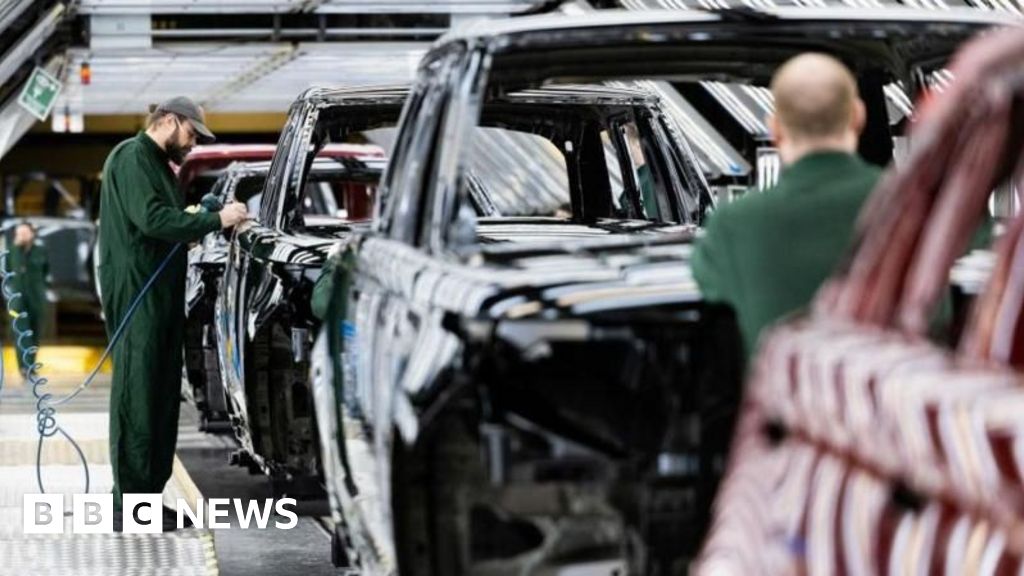
Jaguar Land Rover (JLR) says it has begun a “phased restart” of its operations with parts of its IT system back up and running.
The company said it was “working to clear a backlog of payments” to suppliers as it now had increased its processing capacity for invoicing.
The carmaker’s production lines have been suspended since a cyber attack in August forced the company to shut down its IT networks. Its factories remain closed until next month at the earliest.
The government is considering stepping in to support JLR’s parts suppliers, with concerns growing that some, mostly small businesses, could go bust due to the prolonged shutdown of operations.
JLR said on Thursday that its recovery programme was “firmly under way” and that its global parts logistics centre, which supplies spare parts that service customers’ vehicles, “returning to full operations”.
“The financial system we use to process the wholesales of vehicles has been brought back online and we are able to sell and register vehicles for our clients faster, delivering important cash flow,” the company added.
The carmaker said it recognised that the situation was a “difficult time for all connected with JLR”, with no new cars being built and staff being sent home from work.
The manufacturer, which is owned by India’s Tata Motors, typically builds about 1,000 cars a day at its three factories in Solihull and Wolverhampton in West Midlands, and Halewood in Merseyside.
Workers have been told to stay home since 1 September, with no firm return date.
About 30,000 people are directly employed at the company’s plants with about 100,000 working for firms in the supply chain. Some of these firms supply parts exclusively to JLR, while others sell components to other carmakers as well.
Calls have been made to support suppliers, whose businesses are under threat as a result of the knock-on impact of the cyber attack.
One idea being explored is the government buying the component parts the suppliers build, with the aim of keeping the companies in JLR’s supply chain in business until production lines are up and running again.
However, firms have told the BBC they are sceptical about the success of such a scheme.
The government “simply don’t understand the complexity of what they’re dealing with”, said one supplier.
“We don’t need promises, we need help.”
Unions have called for a Covid-style furlough scheme, but ministers have ruled this out given its likely cost, sources have told the BBC.
While the purchase and stockpiling of car parts by the government is an option on the table, this would present considerable logistical challenges.
JLR’s manufacturing process relies on the right part arriving at the right place, at the right time.
Another option being considered is government-backed loans to suppliers, though this is understood to be unpopular with suppliers.
Business
India opposes China-led IFD pact’s inclusion; flags risks to WTO framework and core principles – The Times of India
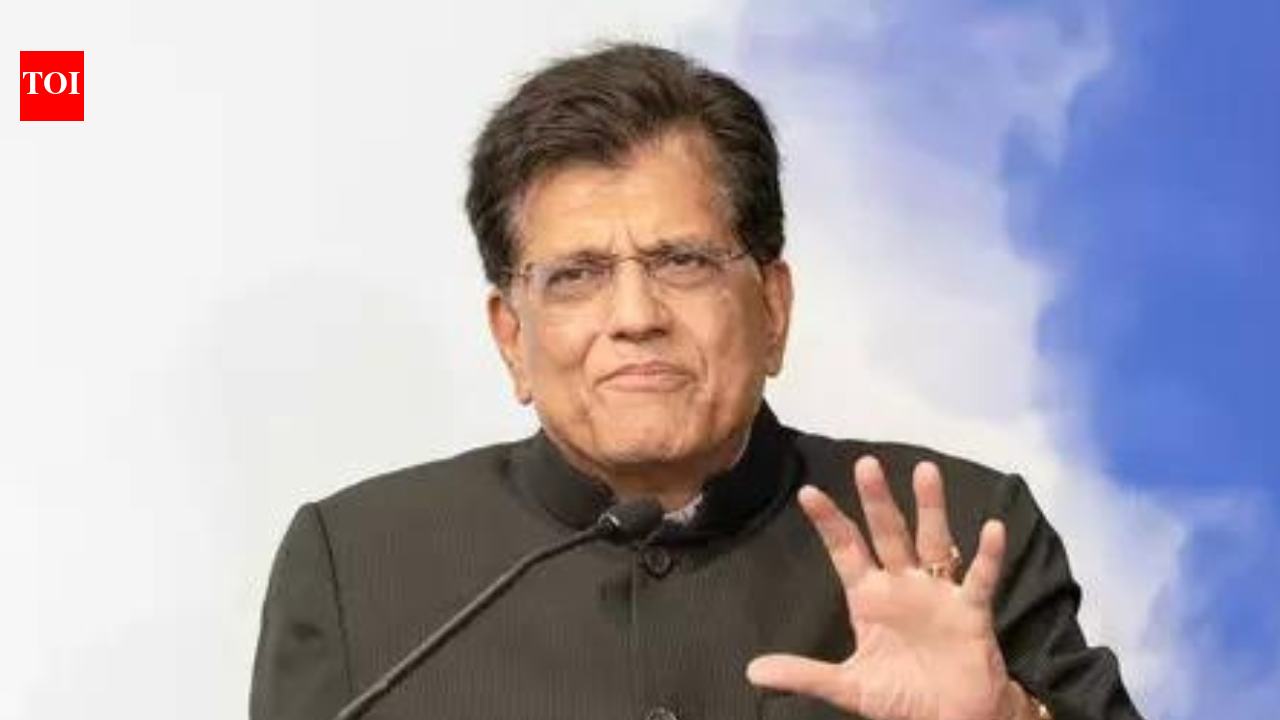
India on Saturday said it has strongly opposed the China-led Investment Facilitation for Development (IFD) Agreement being incorporated into the World Trade Organisation (WTO) framework, flagging concerns over its systemic implications, PTI reported.The issue was raised at the ongoing 14th ministerial conference (MC14) of the WTO in Yaounde, Cameroon, where Commerce and Industry Minister Piyush Goyal said such a move could weaken the institution’s foundational structure.“Incorporation of the IFD agreement risks eroding the functional limits of the WTO and undermining its foundational principles,” Goyal said in a social media post.“At #WTOMC14, drawing inspiration from Mahatma Gandhi ji’s philosophy of Truth prevailing over conformity, India showed the courage to stand alone on the contentious issue of the IFD Agreement and did not agree to its incorporation into the WTO framework as an Annex 4 Agreement,” he said.Annex 4 of the WTO Agreement contains Plurilateral Trade Agreements that are binding only on members that have accepted them, unlike multilateral agreements which apply to all members.Goyal said that as part of WTO reform discussions, members are deliberating on guardrails and legal safeguards for plurilateral agreements before integrating any such outcomes into the framework.“In view of the systemic issue at hand, India showed openness to have good faith, comprehensive discussions and constructive engagement under the WTO Reform Agenda,” he added.India had also opposed the pact during the WTO’s 13th ministerial conference (MC13) in Abu Dhabi.The Investment Facilitation for Development proposal was first mooted in 2017 by China and a group of countries that rely significantly on Chinese investments, including those with sovereign wealth funds. The agreement, if adopted, would be binding only on signatory members.

Vijaypat Singhania, former Raymond chairman, Padma Bhushan awardee and noted aviator, has passed away.He died in Mumbai at the age of 87.His son Gautam Singhania, chairman and managing director of the Raymond Group, announced the death on microblogging platform X.A company spokesperson said Singhania passed away “peacefully” and his last rites will be performed on Sunday, reported PTI.A recipient of the Padma Bhushan, Vijaypat Singhania was known not only for his leadership at Raymond but also for his passion for aviation. He held a world record for achieving the highest altitude in a hot air balloon.He led Raymond as chairman for around two decades until 2000, after which he handed over the reins of the company to Gautam Singhania. He had also transferred his entire 37 per cent stake in the company to his son.Vijaypat Singhania and Gautam Singhania were later involved in legal disputes, which were subsequently resolved.
Business
Middle East crisis: Jubilant FoodWorks reports some Domino’s outlets affected by LPG shortage – The Times of India

Jubilant FoodWorks Ltd (JFL), which operates Domino’s Pizza and Dunkin Donuts in India, has reported constraints in LPG cylinder supplies across parts of its store network due to the ongoing West Asia war, according to ET.In a filing to the BSE, the company said, “Operational impact at this stage is limited and being actively managed. The company is taking several steps to conserve LPG and working overtime to move to alternate energy sources like electricity and piped natural gas (PNG).”It added that it is in continuous touch with oil marketing companies to track developments and respond to the evolving situation. “The company is in constant engagement with oil marketing companies (OMCs) to remain apprised of the latest developments and plan operational responses accordingly, given the rapidly evolving nature of the situation,” the filing said.The company noted that it is closely monitoring the situation as supply disruptions persist.The impact is being felt across the restaurant industry, with several chains facing similar challenges due to LPG shortages.On March 10, the National Restaurant Association of India (NRAI) had advised its five lakh members to consider shorter operating hours, reduce items requiring long cooking times or deep frying, and adopt fuel-saving measures such as using lids while cooking, in view of supply constraints linked to the Gulf war.


Hubert Kós leads Texas men to second straight NCAA swim title

What’s next for teams eliminated from Sweet 16: Recruits, transfer portal, more

‘Strictly Come Dancing’ in chaos as Tess Daly and Claudia Winkleman exit

-
 Business1 week ago
Flipkart group CFO to leave co amid IPO plans – The Times of India
-

 Fashion1 week ago
China’s textile & apparel exports surge 17% to $50 bn in Jan-Feb 2026
-

 Sports1 week ago
Rating Adidas’ 2026 World Cup away shirts: Argentina, Spain, Mexico and more
-

 Sports1 week ago
American Conference Commissioner Tim Pernetti thanks Trump for Army-Navy game executive order
-
Tech1 week ago
The Corsair 4000D RS PC Case Keeps Your System Cool
-

 Tech1 week ago
Gamers Hate Nvidia’s DLSS 5. Developers Aren’t Crazy About It, Either
-
 Business5 days ago
Property Play: Home flippers see smallest profits since the Great Recession, real estate data firm says
-
 Business1 week ago
‘Marriage penalty’ in Washington state’s new millionaire tax stirs debate