

Business
Key economic data and trends that will shape Rachel Reeves’ Budget

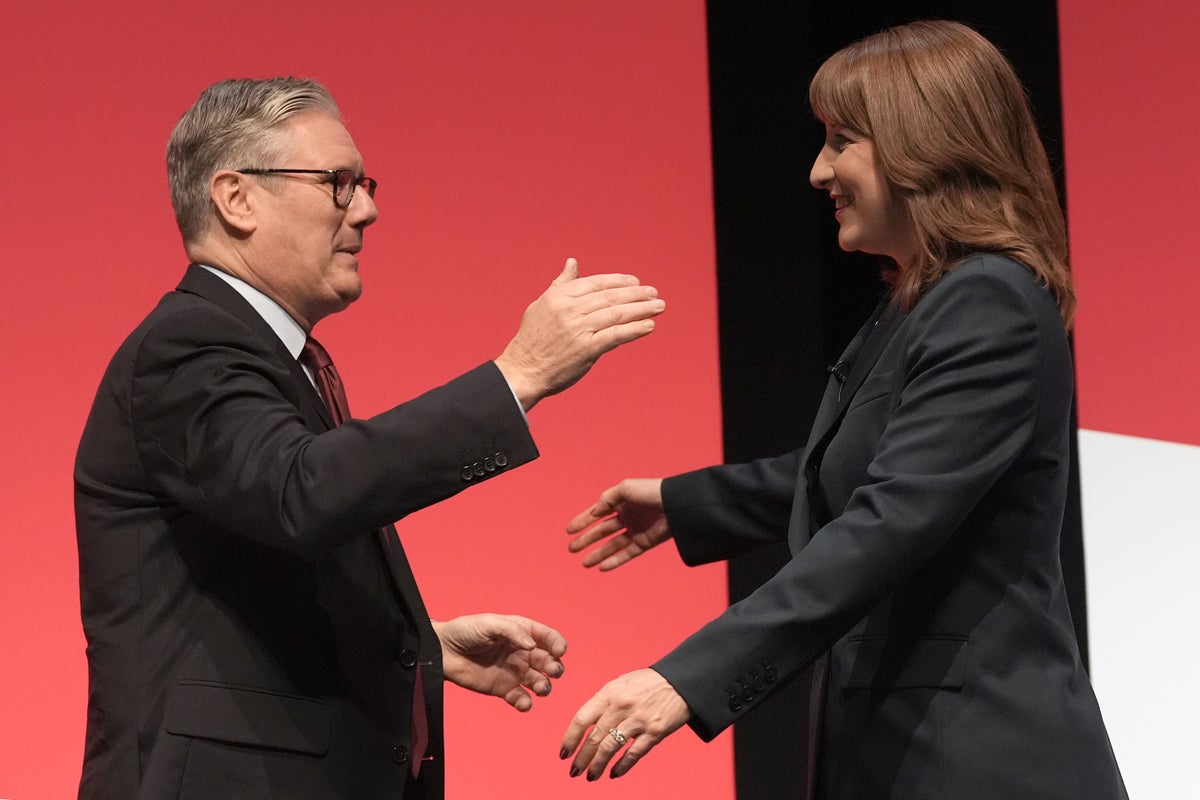
Chancellor Rachel Reeves will deliver her Budget on Wednesday against a backdrop of rising unemployment and higher-than-forecast Government borrowing, but amid signs this year’s spike in inflation may have peaked.
Here, the PA news agency looks at five key economic indicators that are likely to shape both the content and the tone of Ms Reeves’ speech.
– Borrowing
Government borrowing for the current financial year is running at a higher level than forecast and is the highest on record outside the Covid-19 pandemic.
Borrowing stood at £116.8 billion for the seven months from April to October 2025, according to figures published last week by the Office for National Statistics (ONS).
This is £9.9 billion more than the £106.9 billion forecast for this period by the Office for Budget Responsibility (OBR) in March.
It is also the second-highest borrowing figure for April-October since comparable data began in 1993, behind only 2020.
The Government has overshot forecasts this year due to “a combination of lower-than-expected tax receipts and higher-than-expected borrowing by councils and other bodies outside of central government control”, according to the Institute for Fiscal Studies think tank.
It means that when the OBR publishes its new economic forecasts alongside the Budget on Wednesday, total borrowing for the current financial year is likely to be revised up, as it may be for subsequent years.
It is not unusual for a government to borrow in order to spend more than it receives in taxes and other income.
The last time the government spent less than it received was 25 years ago, in 2000/01.
However, borrowing is now running at a comparatively high level and the latest figures are a reminder of how economic forecasts can be subject to a lot of uncertainty.
Should borrowing continue to be higher than expected, Rachel Reeves may need to find additional ways to ensure she has enough “headroom” in her Budget to balance the nation’s finances.
– Economic growth
The OBR’s new forecasts on Wednesday are also likely to include revised estimates for economic growth in the UK.
Growth in 2025 has slowed as the year has gone on.
The size of the economy grew by 0.7% in January-March, by 0.3% in April-June and by just 0.1% in July-September, according to estimates by the ONS.
In addition, the economy is estimated to have contracted by 0.1% in September, driven by a fall in motor manufacturing due partly to the cyber attack on Jaguar Land Rover.
The OBR’s current forecast for growth across the whole of 2025 – published back in March – is 1.0%, rising to 1.9% in 2026.
The UK has recorded annual growth of less than 1% only five times in the past 30 years: in 2008 and 2009 (zero and -4.6% respectively, during the financial crash); 2011 (0.9%), 2020 (-10.0%, during the pandemic) and 2023 (0.3%).
The Chancellor already knows the new GDP forecast for 2025 and this will undoubtedly shape some of the tone of her Budget speech.
Responding earlier this month to the GDP figures for July-September, Ms Reeves said: “We had the fastest-growing economy in the G7 in the first half of the year, but there’s more to do to build an economy that works for working people.
“At my Budget later this month, I will take the fair decisions to build a strong economy that helps us to continue to cut waiting lists, cut the national debt and cut the cost of living.”
– Inflation
The UK’s overall rate of inflation stood at 3.6% last month, down from 3.8% in September, but above the Bank of England’s target of 2%.
It was the first time the rate had fallen month on month since May, suggesting inflation this year may have peaked.
The figure – based on the ONS Consumer Prices Index – is a measure of how much prices have risen on average year on year.
A fall from 3.8% to 3.6% means prices are not rising quite as fast as they were.
Any evidence that the cost of living is easing is good news for the Government and the latest figures will almost certainly be welcomed by Ms Reeves during her speech.
It could also mean the Bank of England is more likely cut interest rates from their current level of 4%, when it makes its next decision in December.
The Bank of England’s own forecasts suggest inflation is on track to fall to the 2% target by 2027.
This would mark a return to relatively low inflation in the UK and the end of a turbulent few years that saw the rate hit 11.1% in autumn 2022.
– Unemployment
Estimates of unemployment in the UK are produced by the ONS but are currently not classed as official statistics.
This is because the figures are based on a survey that has had a low response rate since the pandemic, meaning the data is unreliable and has to be treated with caution.
The trend suggested by the latest figures is that unemployment has risen over the past year, from 4.3% of people aged 16 and over in July-September 2024 to 5.0% in July-September 2025.
This is the highest rate outside the Covid-19 pandemic since 2016.
The OBR’s current forecast for the unemployment rate across 2025 is 4.5% and, given the data from the ONS, it seems likely this figure will be revised upwards on Wednesday.
Rising unemployment is not a backdrop any chancellor would choose for a Budget speech, especially given the confusion over how many people may or may not be out of work.
The unreliability of the unemployment figures has been criticised by many economists and statisticians – including Bank of England governor Andrew Bailey.
Ms Reeves is also facing other signs that point to a weakening jobs market, with the number of people on employee payrolls falling in most of the last 12 months, along with a slowdown in wage growth.
However, the proportion of the workforce classed as economically inactive – who are of working age and not in employment but not currently looking for work – has fallen slightly.
It stood at an estimated 21.0% in July-September 2025, down from 21.6% in the same period a year earlier.
– Retail sales
Lastly, the Chancellor is sure to have noted the latest retail sales figures.
The volume of sales fell 1.1% in October, the first monthly drop since May, according to the ONS.
It follows a strong rise of 0.7% in September, but the fall was larger than economists had forecast and could point to consumers being cautious with their money ahead of the Budget.
There was some feedback from retailers that people were waiting for November’s Black Friday deals, the ONS added.
Rob Wood, chief UK economist at Pantheon Macroeconomics, said: “We expect retail sales volumes growth to remain subdued in November as pre-Budget speculation reaches a fever pitch.
“We still think consumers should return to the high street when the Budget is passed and there is a little more clarity over fiscal policy.”
Some clarity should come on Wednesday, when the Chancellor gets to her feet in the House of Commons to deliver one of the most keenly-awaited Budgets in recent years.

A United Airlines plane approaches the runway at Denver International Airport on March 23, 2026.
Al Drago | Getty Images
United Airlines slashed its 2026 earnings outlook Tuesday as it grapples with a surge in jet fuel prices due to the Iran war, but CEO Scott Kirby said demand remains strong.
United said it could earn between $7 and $11 a share on an adjusted basis this year, down from its previous forecast of between $12 and $14 a share that it released in January, more than a month before the U.S. and Israel attacked Iran.
Wall Street had already been adjusting its expectations for the year because of higher fuel. Analysts polled by LSEG had forecast that United’s adjusted, full-year earnings would be $9.58 a share.
The carrier, like others, is trimming some of its planned flying this year to reduce costs. Lower capacity can drive up airfare, with fewer seats on the market.
For the second quarter, United forecast adjusted earnings of between $1 and $2 a share. Analysts had expected $2.08 a share for the quarter. United estimated its fuel price would average $4.30 a gallon in the second quarter.
The carrier said it expects its revenue to cover between 40% to 50% of the fuel price increase in the second quarter, as much as 80% in the third and between 85% and 100% by the end of the year.
United reiterated that it is tweaking its schedules to adjust to higher fuel, with capacity in the second half of the year expected to be flat to up about 2% on the year. It grew 3.4% in the first quarter.
Here is what United Airlines reported for the quarter that ended March 31 compared with what Wall Street was expecting, based on estimates compiled by LSEG:
- Earnings per share: $1.19 adjusted vs. $1.07 expected
- Revenue: $14.61 billion vs. $14.37 billion expected
Revenue, profit climb
Revenue overall rose more than 10%, to $14.61 billion, up from the $13.21 billion from a year before.
For the first quarter, United’s net income rose 80% to $699 million, or $2.14 cents a share, compared with net income of $387 million, or $1.16 cents a share, a year earlier. Adjusted for one-time items, United posted earnings per share of $1.19 a share.
Unit revenue was up in every reported segment, including for domestic U.S. flights, where it rose 7.9% to $7.9 billion from a year earlier, signaling strong pricing power in the quarter.
Jet fuel in the U.S. was going for $3.51 a gallon on Monday, down from the high on April 2 of $4.78, but far above the $2.39 on Feb. 27, the day before the first attacks on Iran, according to prices assessed by Platts.
Airline executives have said demand has remained robust even while they have increased fares and checked bag fees as they pass along higher fuel prices to customers.
“Bookings are strong,” Kirby told CNBC’s “Squawk Box” on Wednesday.
United and the rest of the industry have become more reliant on travelers who are willing to shell out more for flights and bigger seats, and who are less affected by price increases.
Alaska Airlines pulled its 2026 forecast on Monday because of higher fuel prices. It has raised fares about $25, CEO Ben Minicucci told analysts Tuesday.
Merger ambitions?
Kirby is likely to face questions on the company’s 10:30 a.m. ET earnings call on Wednesday about his ambitions for a merger with another airline.
Kirby floated a potential merger with American Airlines to a Trump administration official earlier this year, according to a person familiar with the matter, but President Donald Trump said he was against the idea.
“I don’t like having them merge,” he told CNBC’s “Squawk Box” on Tuesday morning. He said he would like someone to buy struggling discount carrier Spirit but he also suggested that the federal government could “help that one out.”
American also rejected the idea of a merger with United last week.
When asked about floating the merger, Kirby declined to confirm the meeting to CNBC’s “Squawk Box” on Wednesday but said: “We want to create a truly global airline.”
Kirby reiterated his view that the U.S. is at a deficit in international air travel as customers fly on international competitors, some of which are state owned.
NI Affairs Committee told even if conflict ends immediately it will take time for supply chains to return to normal.
Source link
The president also said the US will continue to blockade Iran’s ports until peace talks progress.
Source link


US CBP to soon launch electronic system for importers to claim refunds

US’ Gap & FIT launch programme to mentor fashion students

Nasa unveils new space telescope to probe mysteries of ‘dark energy’

-

 Fashion6 days ago
France’s LVMH Q1 revenue falls 6%, shows resilience amid Iran war
-

 Entertainment7 days ago
Is Claude down? Here’s why users are seeing errors
-

 Sports1 week ago
PSL 11: Peshawar Zalmi win toss, opt to field first against Quetta Gladiators
-

 Tech1 week ago
The Deepfake Nudes Crisis in Schools Is Much Worse Than You Thought
-

 Tech1 week ago
Bremont Is Sending a Watch to the Moon’s Surface
-

 Tech1 week ago
Human-machine teaming dives underwater
-
 Business1 week ago
BP sees ‘exceptional’ oil trading result as Iran war sends crude costs soaring
-

 Sports1 week ago
Pacers’ Tyrese Haliburton talks shingles battle as he recovers from torn Achilles