

Politics
Khamenei’s martyrdom brings Khomeini’s grandson into focus

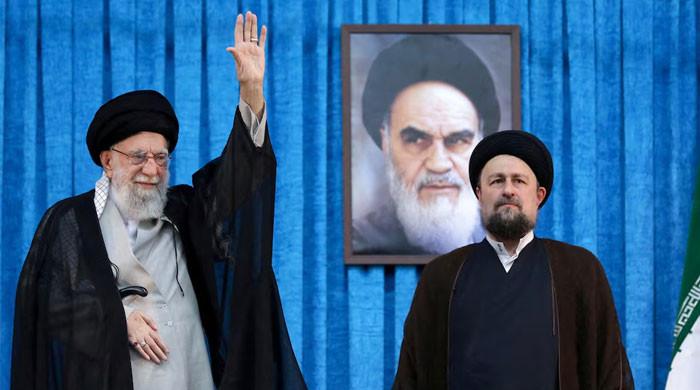
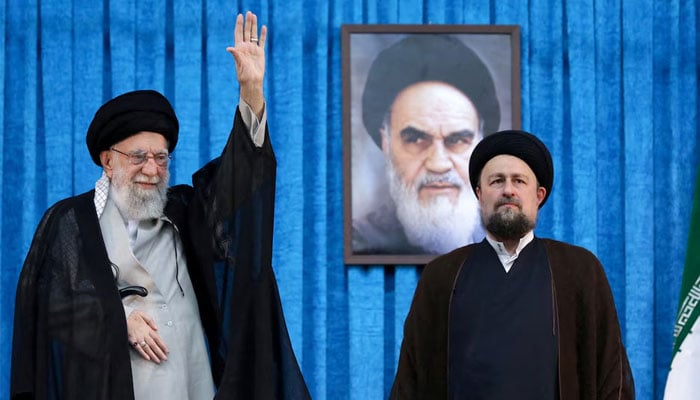
A grandson of Ayatollah Ruhollah Khomeini, the late founder of the Islamic Republic of Iran, is likely to figure prominently in the deliberations of the clerics who will determine who replaces Ayatollah Ali Khamenei as Supreme Leader.
The martyrdom of Khamenei, 86, in a US-Israeli attack has brought new urgency to the question of who will be the next Supreme Leader, a long-simmering issue over which there had been no clarity despite his age.
Hassan Khomeini is the most visible of the late Ayatollah’s 15 grandchildren and is seen as a relative moderate within Iran’s clerical establishment. He enjoys close ties to reformists including former presidents Mohammed Khatami and Hassan Rouhani, who both pursued policies of engagement with the West when in office.
Khomeini, 53, holds a symbolically important role in public life as custodian of his grandfather’s mausoleum in southern Tehran. He has never served in government.
Some politicians inside Iran have seen him as a rival to hardliners who gained sway under Khamenei, notably his son, Mojtaba.
The case for installing a moderate successor to Khamenei gained momentum among some Iranian politicians in the wake of unrest that swept Iran in January as a means of shoring up the Islamic Republic in the face of widening dissent.
Khomeini demanded accountability for Amini’s death
While loyal to the Islamic Republic established after the Shah was toppled in 1979, Khomeini has a track record of urging reform and has occasionally voiced dissent against authorities.
In 2021, he criticised the Guardian Council – the branch of Iran’s theocracy responsible for vetting presidential candidates – after it barred reformists from running.
The council’s move paved the way for the victory of hardliner Ebrahim Raisi, who died in a helicopter crash in 2024.
“You can’t pick someone for me and tell me to vote for them!” Khomeini said at the time.
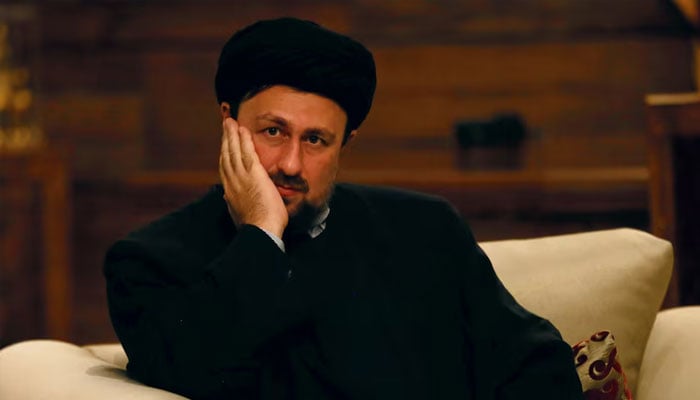
He also demanded accountability after Mahsa Amini, a young Iranian woman, died in 2022 after being taken into custody by morality police, accused of violating conservative dress codes – an incident that ignited countrywide protests.
Authorities “must transparently and precisely account for what has happened to this 22-year-old girl under the pretext of ‘guidance and education’,” he said.
But, reflecting his loyalty to the system, the mid-ranking cleric also criticised protesters who chanted against Khamenei.
During the unrest that swept Iran in December and January — the deadliest since the 1979 revolution — he rallied behind the establishment, accusing rioters of serving Israel, taking part in a pro-government march, and likening some of the violence to the actions of Islamic State.
In a condolence letter, Khomeini said Khamenei would forever “be the hero of the people of Iran and Muslims”, adding: “The noble people of Iran will once again walk the path of the Imam (Khomeini) by overcoming this incident.”
‘Progressive Theologian’
A close friend of Khomeini’s, speaking to Reuters in 2015, described him as a progressive theologian, especially when it comes to music, women’s rights, and social freedom. He follows trends on social media and is interested in Western philosophy as much as Islamic thought.
His wife, Sayyeda Fatima, is the daughter of an Ayatollah, and they have four children.
Some reformists urged him to run for the presidency in 2012, but he declined.
Khomeini supported the Rouhani government that negotiated the 2015 nuclear agreement, which eased sanctions in return for limits on the nuclear programme – until US President Donald Trump tore it up in 2018.
He has spoken openly about economic hardships endured by Iranians during years of sanctions imposed over the nuclear programme.
A decade ago, Khomeini sought to run in an election for the Assembly of Experts, the body responsible for picking the Supreme Leader.
He secured an initial nod of approval for his candidacy from Khamenei, who reportedly gave his blessing while also cautioning Khomeini against doing any harm to his grandfather’s name. But he was later disqualified by the Guardian Council.
Though his religious credentials were cited for the disqualification – Khomeini holds the clerical rank of Hojatoleslam, one notch below Ayatollah – the move was seen as intended to head off a potential challenge by the reformist camp.
In 2008, he was widely regarded as criticising Iran’s powerful Islamic Revolutionary Guards Corps (IRGC) when he said in an interview that those claiming loyalty to his grandfather’s legacy should follow his order that the military must stay out of politics. He nevertheless enjoys close ties to the Guards, an elite force tasked with safeguarding the Islamic Revolution.
During the 12-day air war between Israel and Iran last year, Khomeini wrote to Khamenei praising his leadership and saying Iranian missiles had become a nightmare for Israel and a source of satisfaction for the Iranian nation, according to Jamaran, an Iranian news website dedicated to Khomeini’s memory.
Khomeini has described Israel as the “evil Zionist regime” and “a cancerous tumour” backed by the West, and has said the Muslim world should make itself strong to confront Zionism, according to statements reported by Jamaran.
He is fluent in Arabic and English, according to the biography, and was a keen footballer until the age of 21, when his grandfather insisted he go to the city of Qom to study Islamic theology.
- Study visas blocked for Afghanistan, Cameroon, Myanmar, Sudan.
- Britain will also halt work visas for Afghans.
- UK says legal asylum claims rose 470% between 2021 and 2025.
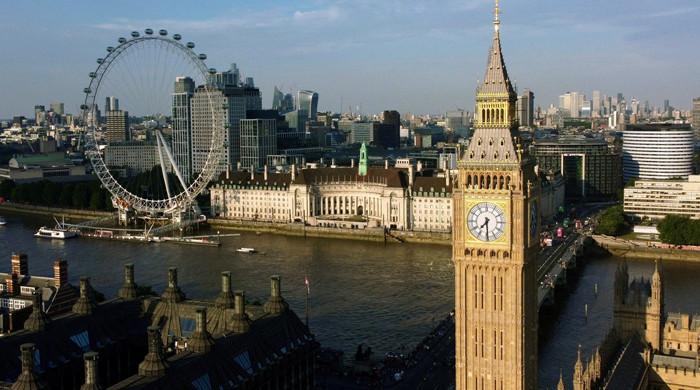
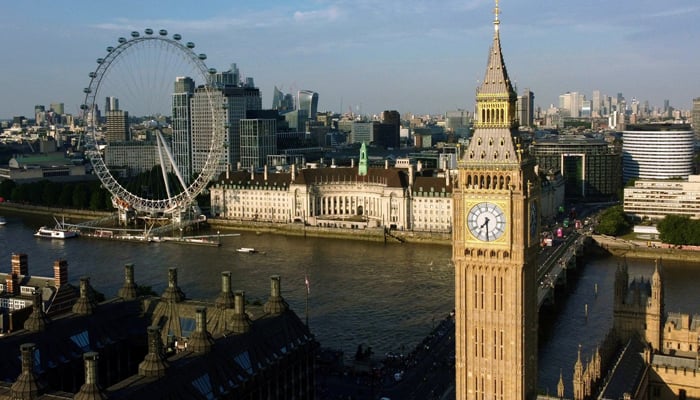
Britain said on Tuesday it would block study visas for nationals from four countries and halt work visas for Afghans, using what it called an “emergency brake” to curb rising asylum claims from people entering through legal routes.
Immigration remains one of Britain’s most politically sensitive issues, and Prime Minister Keir Starmer’s government has sought to show it is tightening the system as the populist Reform UK party gains ground in opinion polls.
The interior ministry, which is set to block study visas for nationals from Afghanistan, Cameroon, Myanmar and Sudan, said asylum applications by students from these countries had jumped more than fivefold between 2021 and 2025.
It also said claims by Afghans on work visas were now outstripping the number of visas issued.
“Britain will always provide refuge to people fleeing war and persecution, but our visa system must not be abused,” interior minister Shabana Mahmood said in a statement.
“That is why I am taking the unprecedented decision to refuse visas for those nationals seeking to exploit our generosity.”
Asylum claims trebling since 2021
According to the government, asylum claims made after entering on legal visas have more than trebled since 2021 and accounted for 39% of the 100,000 people who applied last year.
It said that nearly 16,000 nationals from the four listed countries were currently being supported at public expense, including more than 6,000 in hotels, adding to pressure over the cost of asylum accommodation, which it put at 4 billion pounds ($5.34 billion) a year.
The changes would take effect on March 26, the government said, adding that it intended to create new capped “safe and legal routes” once the asylum system stabilises.
Britain has granted sanctuary to more than 37,000 Afghans through resettlement schemes since 2021 and issued about 190,000 humanitarian visas last year.
It said it had secured cooperation from Angola, Namibia and the Democratic Republic of Congo on returns, after warning in November that their nationals risked losing access to UK visas.
Starmer has previously said that Britain’s asylum rules were more permissive compared with parts of Europe and acted as a “pull factor” for people seeking to reach the country.
His government announced plans in November to make refugee status temporary and speed up removals of people who arrive illegally.
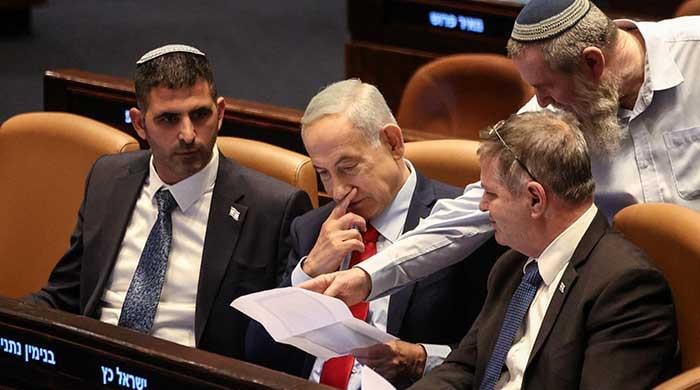
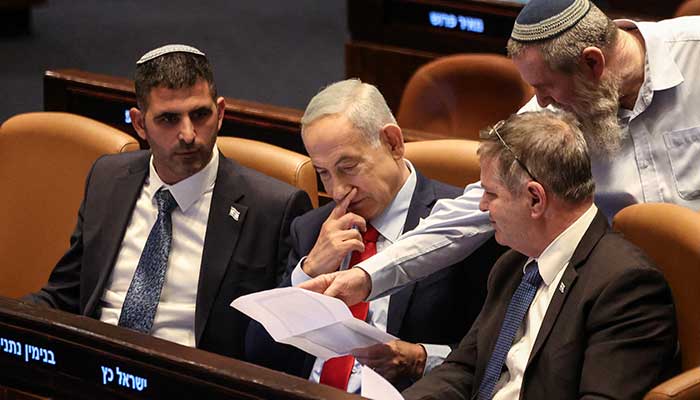
With elections approaching in Israel, the war with Iran has handed Prime Minister Benjamin Netanyahu an opportunity to restore an image deeply scarred by October 7, 2023 Gaza attack, experts say.
But any political dividend would depend on how the conflict unfolds and how long it lasts, they say.
A day after Iran’s supreme leader Ayatollah Ali Khamenei was martyred in a wave of US-Israeli strikes, Netanyahu said that his close ties with Washington had enabled Israel to “do what I have long aspired to do for 40 years: to strike the terrorist regime decisively”.
The Gaza war eroded Netanyahu’s popularity. Critics have accused him of seeking to evade responsibility for the authorities’ failure to prevent the deadliest day in Israel’s history.
At 76, the leader of the right-wing Likud party is Israel’s longest-serving prime minister, with more than 18 cumulative years in office across multiple stints.
Known for his political resilience, Netanyahu has been without a parliamentary majority since the summer, amid a crisis with his ultra-Orthodox religious allies.
He is also standing trial in a long-running corruption case and has sought a presidential pardon, with US President Donald Trump repeatedly pressuring President Isaac Herzog to grant one.
‘Total victory’
Elections must be held by October 27 at the latest.
Netanyahu will call early elections, says Emmanuel Navon, a political analyst at Tel Aviv University.
“It’s obvious. He won’t wait until October given the commemoration of the October 7 anniversary,” Navon said.
“If Netanyahu was at rock bottom after the Gaza attack, he has since gradually turned the tide,” he added.
A Likud party led by Netanyahu would emerge ahead in elections held today, opinion polls suggest.
That would likely see him tasked with forming the next government, though he would still lack a majority with his current allies.
A victory over Iran could change that calculus, experts say.
“This offensive undeniably reinforces the image Netanyahu seeks to cultivate, the one associated with his ‘total victory’ slogan,” independent geopolitical analyst Michael Horowitz told AFP.
“Netanyahu wants to show that this is not a campaign slogan but a reality. It is his national agenda and his electoral strategy,” he added.
‘Iran remains Iran’
Raviv Druker, a prominent journalist on Channel 13 television, argued that Netanyahu “will try to convince people that the victory is total even if that is an illusion,” noting that “Hamas still runs Gaza, and Iran remains Iran even after Saturday’s strike”.
On the popular news website Walla, journalist Ouriel Deskal went further, suggesting Netanyahu may have chosen the timing of the hostilities to automatically delay — under a state of emergency — the March 30 deadline for passing a budget for which he has struggled to secure a majority.
Without a budget, the government would fall on April 1 and elections would be called.
In that scenario, Netanyahu would enter the campaign from a position of weakness.
By contrast “if this war against Iran is a success for Israel, it will be a political victory for Netanyahu,” Navon said.
But should the war drag on, the picture could shift dramatically, Horowitz warned.
“Public tolerance for a long war with heavy casualties, combined with a high cost of living, remains extremely low,” he said.
During the war last June, Iranian missiles killed 30 people in Israel. Since Saturday, 10 people have been killed in Iran’s retaliatory strikes.
“Israel’s victories are primarily attributed to the army and to civilian resilience, which enabled the country to wage the longest war in its history,” Horowitz noted.
“The army’s popularity is rising, not necessarily Netanyahu’s.”
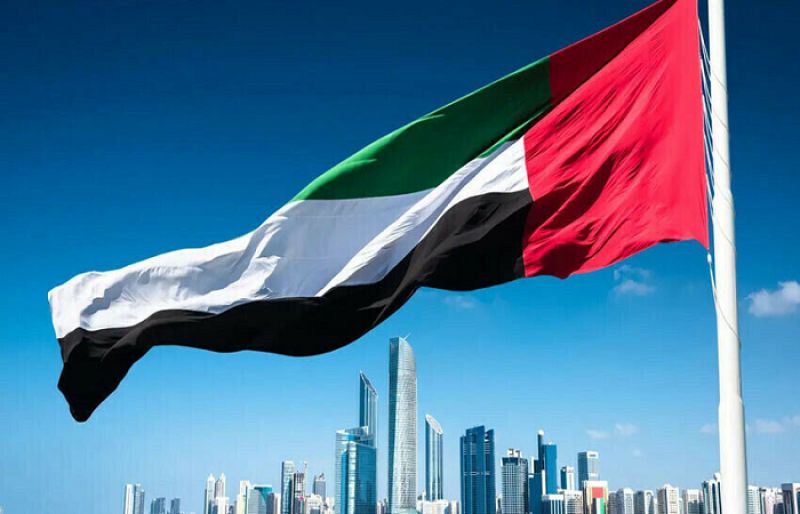

UAE says it will not allow its airspace to be used for attacks against Iran, announces security and economic measures amid regional tensions.The United Arab Emirates has announced it will not allow its airspace or territory to be used for attacks against Iran, as officials outlined security, economic and humanitarian measures during a media briefing in Abu Dhabi.
Reem Al Hashimy, Minister of State for International Co-operation, said the UAE’s position was “clear and measured.”
“The UAE will not permit its airspace or land to be used in any attack against Iran,” she said, adding that the country reserves the right to defend its sovereignty and ensure the safety of citizens, residents and visitors.
She also confirmed that the UAE had closed its embassy in Tehran and withdrawn its ambassador following recent Iranian attacks.
High Combat Readiness
Major General Abdul Nasser Al Humaidi, spokesperson for the Ministry of Defence, said the UAE would not tolerate any compromise of its sovereignty or security.
He explained that sounds heard in recent days were due to missile interceptions and confirmed that armed forces remain at a high level of combat readiness. The UAE, he said, possesses sufficient strategic defence reserves to counter aerial threats for an extended period.
Economic Measures & Supplies
On the economic front, Abdulla bin Touq Al Marri, Minister of Economy and Tourism, said the country holds strategic reserves of essential goods sufficient for four to six months.
“There is no risk of shortages,” he said, adding that authorities are monitoring markets to prevent unjustified price increases and urging residents to avoid panic buying.
He also announced that around 80 flights per day would operate during the current phase to facilitate travel for those wishing to leave.
Daily Life Continues
The National Emergency Crisis and Disaster Management Authority (NCEMA) said daily life across the UAE continues as normal, with essential services fully operational.
The statements come amid heightened regional tensions, as Gulf countries navigate security concerns while seeking to maintain stability at home.


European Commission, Switzerland sign broad package of agreements

Barcelona disappointed, proud as Copa rally vs. Atleti falls short

Liverpool lose 9th of season in ‘same old story,’ Slot says

-

 Politics6 days ago
US arrests ex-Air Force pilot for ‘training’ Chinese military
-

 Politics6 days ago
What are Iran’s ballistic missile capabilities?
-
 Business1 week ago
Households set for lower energy bills amid price cap shake-up
-
 Business5 days ago
Attock Cement’s acquisition approved | The Express Tribune
-

 Fashion5 days ago
Policy easing drives Argentina’s garment import surge in 2025
-

 Sports1 week ago
Top 50 USMNT players of 2026, ranked by club form: USMNT Player Performance Index returns
-

 Sports6 days ago
Sri Lanka’s Shanaka says constant criticism has affected players’ mental health
-
 Business1 week ago
Lucid widely misses earnings expectations, forecasts continued EV growth in 2026