

Business
KSE-100 slips 248 points as late selling wipes out early gains | The Express Tribune


Overall trading volume rose to 1.2billion shares from previous session’s close of 673.4million
A volatile session was observed at the Pakistan Stock Exchange, with the benchmark KSE-100 index losing 248.01 points, or 0.15%, as late-session selling pressure erased earlier gains.
The market opened positively and climbed to an intra-day high of 163,602.16 by mid-day. However, momentum weakened through the afternoon, and consistent selling dragged the index down to 161,481.69. In major news, Pakistan’s Current Account Balance recorded a deficit of $112 million in October 2025 compared to a surplus of $83 million in September 2025.
Sentiment was largely affected due to law-and-order concerns and political uproar following a report published in The Economist alleging involvement of the incarcerated premier’s wife in decision-making during his tenure. At close, the benchmark KSE-100 index ended in red, closing at 161,687. Market performance was largely driven by activity in the fertiliser, cement, banking and power sectors.
KTrade Securities wrote in its market wrap that in a mixed performance on Monday, the benchmark KSE-100 index fell by 248 points, (-0.15%) day-on-day, closing at 161,687, despite touching an intra-day high of 163,602. The session was largely characterised by profit-taking, which capped early gains.
On the performance front, Fauji Fertiliser, Pioneer Cement, K-Electric, Kohinoor Textile, Pakistan Petroleum, and Sui Northern Gas provided upward support to the index, while Lucky Cement, United Bank, Mari Energies, Hub Power, and Maple Leafe Cement were the major laggards, dragging the benchmark lower.
With healthy market participation, the sentiment is expected to remain closely tied to developments on the law-and-order front, the political environment, and key macroeconomic indicators. Investors will be particularly focused on progress towards the upcoming IMF tranche and shifts in the regional geopolitical landscape—factors that could shape the market’s near-term direction, KTrade predicted.
Overall trading volume rose to 1.2billion shares from previous session’s close of 673.4million. The values of traded shares stood at Rs41.3billion. K-Electric was the volume leader with trading in 296.3million shares, rising Rs0.76 to close at Rs5.80.





From the UK, flights have also been cancelled for many Middle East destinations, including all flights to Israel and Bahrain, three-quarters of the day’s scheduled flights to the United Arab Emirates, and more than two-thirds (69%) of flights to Qatar.
Business
IIP sees 4.8% YoY growth in January; manufacturing & electricity support rise – The Times of India

India’s Index of Industrial Production saw a 4.8% increase year-on-year in January 2026, according to the Ministry of Statistics & Programme Implementation. The rise in industrial output was largely driven by a 4.8 per cent expansion in manufacturing and a 5.1 per cent improvement in electricity generation. Mining activity also supported overall growth, registering a 4.3 per cent uptick during the month.Estimates placed IIP at 169.4 for January 2026, compared with 161.6 in January 2025. This follows a stronger reading in December 2025, when industrial production had grown by 7.8 per cent. For January 2026, the sector-specific indices stood at 157.2 for mining, 167.2 for manufacturing and 212.1 for electricity.Within manufacturing, 14 of the 23 industry groups at the NIC two-digit level posted year-on-year gains in January. The strongest contributors were manufacture of basic metals, which rose 13.2 per cent; manufacture of motor vehicles, trailers and semi-trailers, up 10.9 per cent; and manufacture of other non-metallic mineral products, which increased 9.9 per cent. Growth in basic metals was supported by items such as flat products of alloy steel, MS slabs, and hot-rolled coils and sheets of mild steel.The automobile category advanced on the back of higher output of auto components and spare parts, commercial vehicles, and bus and minibus bodies or chassis. In the non-metallic mineral products segment, cement of all types, cement clinkers and stone chips were key contributors.According to use-based classification, output of primary goods grew 3.1 per cent, capital goods rose 4.3 per cent and intermediate goods increased 6 per cent compared with January 2025. Infrastructure and construction goods recorded the sharpest rise at 13.7 per cent, while consumer durables expanded 6.3 per cent. In contrast, consumer non-durables declined by 2.7 per cent. The ministry identified infrastructure and construction goods, intermediate goods and primary goods as the leading drivers of growth under this classification.

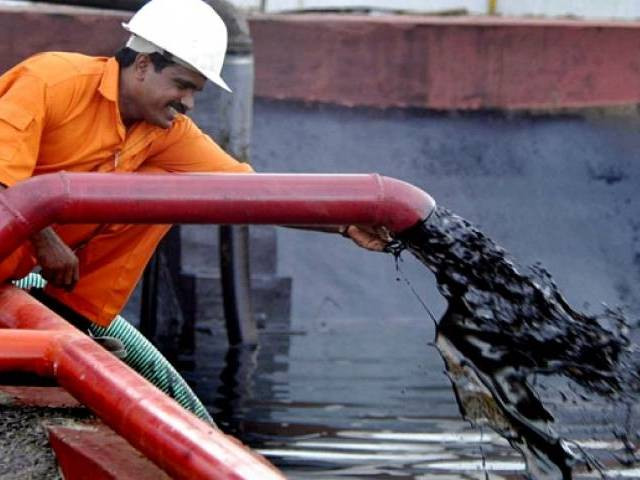
There might also be a more direct impact on food. “Some elements of crude oil are used in fertiliser, and so there could be a cost implication in terms of food prices,” Benjamin Goodwin, partner at banking advisory firm PRISM Strategic Intelligence told the BBC.

Limited flights leave UAE while disruption continues amid Iran strikes

Brad Falchuk describes impactful conversation with Eric Dane for “Famous Last Words”

Apple’s Price-Friendly iPhone 17e Gets a MagSafe Upgrade

-

 Politics1 week ago
Pakistan carries out precision strikes on seven militant hideouts in Afghanistan
-

 Tech1 week ago
These Cheap Noise-Cancelling Sony Headphones Are Even Cheaper Right Now
-

 Sports1 week ago
Kansas’ Darryn Peterson misses most of 2nd half with cramping
-

 Entertainment1 week ago
Viral monkey Punch makes IKEA toy global sensation: Here’s what it costs
-
Sports1 week ago
Mike Eruzione and the ‘Miracle on Ice’ team are looking for some company
-
 Business6 days ago
Households set for lower energy bills amid price cap shake-up
-

 Politics1 week ago
Trump says he will raise US global tariff rate from 10% to 15%, following court ruling
-

 Entertainment1 week ago
Talking minerals and megawatts