

Business
Labour parliamentarians urge UK Government to oppose Rosebank oil field

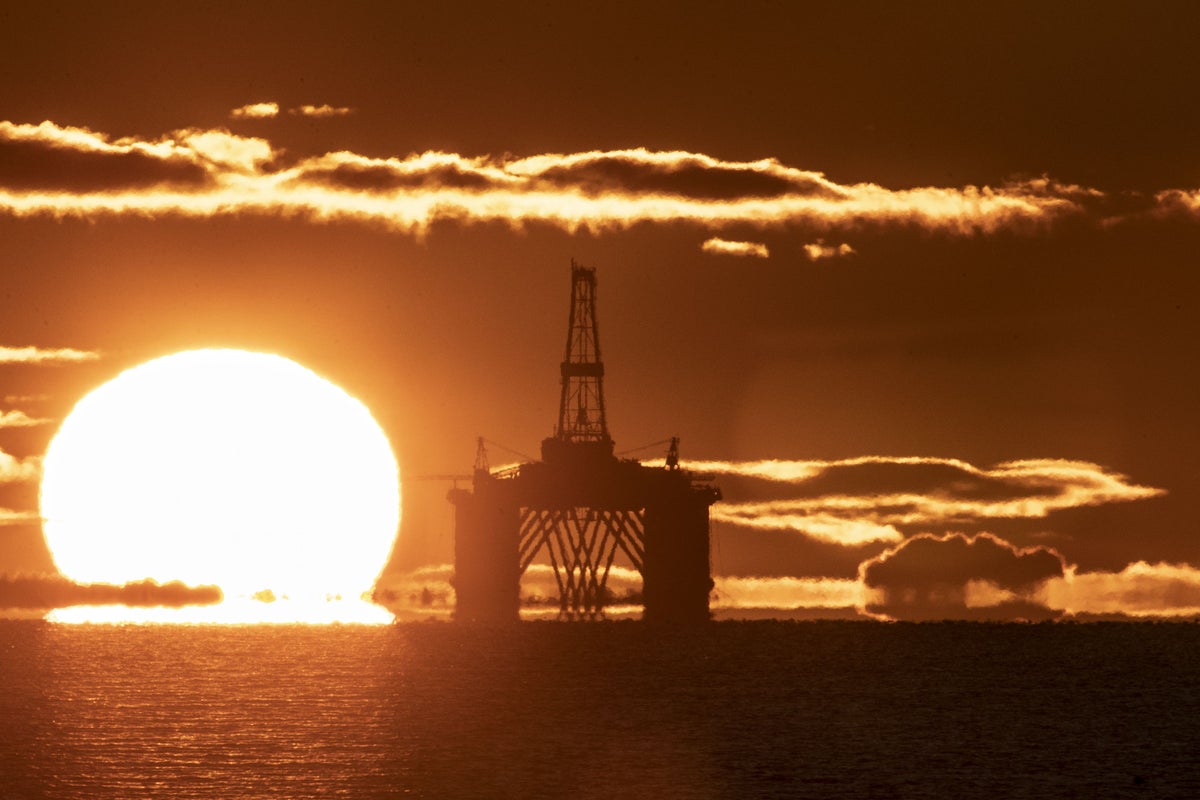
Labour MPs are among a group of more than 60 parliamentarians to have made public their opposition to the planned Rosebank oil field – with one of Sir Keir Starmer’s backbenchers urging the Government to rule against the development and take a stand “against Trump, Reform and their fossil fuel paymasters”.
Clive Lewis is one of more than 50 MPs at Westminster who have signed a pledge from campaign group Uplift to “oppose the Rosebank oil field” and instead “advocate for a properly funded just transition for oil and gas workers and communities”.
Urging the Government to reject the development, Norwich South MP Mr Lewis said: “We must stand our ground against Trump, Reform and their fossil fuel paymasters.
“Approving an enormous new oil field would mean caving in to their anti-climate, anti-renewables agenda that runs completely counter to our values and our long-term interests.”
Scottish Labour MP Chris Murray, another of the Labour MPs to have signed the pledge, said the decision on Rosebank was “an opportunity for the Government to change course”.
It comes as the UK Government continues to consider whether the development of the oil field can go ahead – with Labour now under mounting pressure after the loss of the Gorton and Denton by-election to the Greens on Thursday.
Rosebank, which lies about 80 miles west of Shetland, is the UK’s largest untapped field, containing up to an estimated 300 million barrels of oil.
Drilling there was approved by the Conservative government in 2023 but was then subject to a legal challenge in the wake of a Supreme Court ruling which said the emissions created from burning fossil fuels should be considered when granting permission for new sites.
Now the decision on whether it can proceed lies with Labour ministers – with some 16 Labour MPs having made plain their opposition to the development.
The group includes Mr Lewis, Mr Murray, former Labour shadow chancellor John McDonnell and Scottish Labour’s Brian Leishman.
Former Labour MPs Jeremy Corbyn and Diane Abbott have also signed the pledge, along with a number of Liberal Democrat and Green MPs, SNP MP Chris Law, Plaid Cymru’s Liz Saville Roberts and Paul Maskey of Sinn Fein.
In Scotland a number of Labour MSPs have signed the pledge, along with Green MSPs – including the party’s Scottish co-leader Ross Greer – and former SNP health secretary Michael Matheson.
While previous Scottish first ministers Nicola Sturgeon and Humza Yousaf made plain their opposition to Rosebank, First Minister John Swinney has insisted the Scottish Government takes a “case-by-case approach” to new oil and gas developments, stressing these should only proceed if found to be compatible with climate change targets.
Mr Lewis said opposing Rosebank would “show that a Labour Government will stand by the promises we made to the country”.
He added: “There are only so many times we can afford to make mistakes and then change course.
“With Rosebank, we have an opportunity to get it right the first time.”
Mr Murray, the Labour MP for Edinburgh East and Musselburgh, said many locals in his constituency were “deeply concerned about Rosebank and rightly so”.
He added: “Climate change is one of the reasons I came into politics, and opening new oil and gas fields is simply incompatible with our climate commitments.
“With the North Sea’s oil supply dwindling, Scotland’s energy sector must transition to clean energy, or workers risk being left behind.”
Scottish Labour MSP Mercedes Villalba, who has also signed the pledge, argued that “approving projects like Rosebank will lock us into a toxic dependence on volatile, conflict-ridden fossil fuels”.
This would create “another excuse to delay the urgent investment needed to create secure, well-paid jobs for Scotland’s workers”, she added.
Ms Villalba said: “In an increasingly uncertain world, where climate action is relegated in favour of fossil politics, the UK and Scotland must lead the way on the clean energy transition.”
Wera Hobhouse, Liberal Democrat MP for Bath, said people in her constituency and across the country “are already facing the consequences of an increasingly unstable climate”.
Highlighting the impact of flooding and “skyrocketing food prices”, she said that “climate impacts are now a daily reality”.
Ms Hobhouse said: “Extreme weather is damaging crops, putting pressure on farmers, and destroying our precious natural environment.
“We cannot ignore these warning signs.
“A massive new oil field like Rosebank would only make matters worse.
“The emissions would be enormous, locking us into decades more pollution when we should be cutting carbon and unlocking the benefits of cheap, renewable energy.”
Approving the Rosebank development would “make a mockery of Labour’s environmental promises”, she said.
A UK Government spokesperson said: “Our priority is to deliver a fair, orderly and prosperous transition in the North Sea in line with our climate and legal obligations, which drives our clean energy future of energy security, lower bills, and good long-term jobs.”
Business
Trump administration in advanced talks for a rescue package for Spirit Airlines, source says

A Spirit commercial airliner prepares to land at San Diego International Airport in San Diego, California, U.S., January 18, 2024.
Mike Blake | Reuters
The Trump administration is in advanced talks for a financing package for Spirit Airlines as the carrier is facing the risk of a liquidation, according to a person familiar with the matter.
Spirit had been facing a potentially imminent liquidation, people familiar with the matter told CNBC last week, speaking on the condition of anonymity to discuss matters that had not yet been made public. The Dania Beach, Florida-based carrier in August filed for its second Chapter 11 bankruptcy in less than a year, after it struggled to increase revenue to cover rising costs.
President Donald Trump hinted at potential government aid on Tuesday, telling CNBC’s “Squawk Box“, “Spirit’s in trouble, and I’d love somebody to buy Spirit. It’s 14,000 jobs, and maybe the federal government should help that one out.”
The White House didn’t immediately comment.
“We are hopeful that the government will recognize the needs for emergency funds especially in the current economic environment,” a spokesperson for the Associated of Flight Attendants-CWA, which represents Spirit’s cabin crews, said in a statement. “The last thing our economy needs is tens of thousands more people out of work and the last thing the travelling public needs is fewer choices in air travel.”
The terms of the financing deal weren’t immediately known. The Wall Street Journal earlier reported that the talks were in an advanced stage.
The U.S. airline industry accepted more than $50 billion in taxpayer aid to weather the Covid-19 pandemic, which is still its biggest-ever crisis, but those funds weren’t handed to one specific airline. Some of the aid gave the U.S. government stock warrants for airlines.
Airlines also received a government bailout following the Sept. 11, 2001, terrorist attacks, but that money was also for more than one company. The U.S. in 2008-2009 also bailed out the auto industry during the financial crisis and took stakes in manufacturers.
The Trump administration has taken equity stakes in some companies it deemed critical to national security like Intel and USA RareEarth, though Spirit stands out as it is in bankruptcy.
In February, Spirit said it expected to exit bankruptcy in late spring or early summer, telling a U.S. court that it would shrink and focus its planes on high-demand routes and travel periods. Pilot and flight attendant unions had also made concessions, including going on furlough in recent months, in a bid to help Spirit survive.
But jet fuel prices have nearly doubled in some parts of the U.S. since then, further adding to challenges for Spirit and the rest of the airline industry.
As a low-fare airline that also faces competition from larger carriers with their own no-frills, basic economy offerings, it has grown harder for Spirit to cover expenses. Spirit had introduced extra-legroom seats and other premium options to try to cater to higher-spending customers.

A United Airlines plane approaches the runway at Denver International Airport on March 23, 2026.
Al Drago | Getty Images
United Airlines slashed its 2026 earnings outlook Tuesday as it grapples with a surge in jet fuel prices due to the Iran war, but CEO Scott Kirby said demand remains strong.
United said it could earn between $7 and $11 a share on an adjusted basis this year, down from its previous forecast of between $12 and $14 a share that it released in January, more than a month before the U.S. and Israel attacked Iran.
Wall Street had already been adjusting its expectations for the year because of higher fuel. Analysts polled by LSEG had forecast that United’s adjusted, full-year earnings would be $9.58 a share.
The carrier, like others, is trimming some of its planned flying this year to reduce costs. Lower capacity can drive up airfare, with fewer seats on the market.
For the second quarter, United forecast adjusted earnings of between $1 and $2 a share. Analysts had expected $2.08 a share for the quarter. United estimated its fuel price would average $4.30 a gallon in the second quarter.
The carrier said it expects its revenue to cover between 40% to 50% of the fuel price increase in the second quarter, as much as 80% in the third and between 85% and 100% by the end of the year.
United reiterated that it is tweaking its schedules to adjust to higher fuel, with capacity in the second half of the year expected to be flat to up about 2% on the year. It grew 3.4% in the first quarter.
Here is what United Airlines reported for the quarter that ended March 31 compared with what Wall Street was expecting, based on estimates compiled by LSEG:
- Earnings per share: $1.19 adjusted vs. $1.07 expected
- Revenue: $14.61 billion vs. $14.37 billion expected
Revenue, profit climb
Revenue overall rose more than 10%, to $14.61 billion, up from the $13.21 billion from a year before.
For the first quarter, United’s net income rose 80% to $699 million, or $2.14 cents a share, compared with net income of $387 million, or $1.16 cents a share, a year earlier. Adjusted for one-time items, United posted earnings per share of $1.19 a share.
Unit revenue was up in every reported segment, including for domestic U.S. flights, where it rose 7.9% to $7.9 billion from a year earlier, signaling strong pricing power in the quarter.
Jet fuel in the U.S. was going for $3.51 a gallon on Monday, down from the high on April 2 of $4.78, but far above the $2.39 on Feb. 27, the day before the first attacks on Iran, according to prices assessed by Platts.
Airline executives have said demand has remained robust even while they have increased fares and checked bag fees as they pass along higher fuel prices to customers.
“Bookings are strong,” Kirby told CNBC’s “Squawk Box” on Wednesday.
United and the rest of the industry have become more reliant on travelers who are willing to shell out more for flights and bigger seats, and who are less affected by price increases.
Alaska Airlines pulled its 2026 forecast on Monday because of higher fuel prices. It has raised fares about $25, CEO Ben Minicucci told analysts Tuesday.
Merger ambitions?
Kirby is likely to face questions on the company’s 10:30 a.m. ET earnings call on Wednesday about his ambitions for a merger with another airline.
Kirby floated a potential merger with American Airlines to a Trump administration official earlier this year, according to a person familiar with the matter, but President Donald Trump said he was against the idea.
“I don’t like having them merge,” he told CNBC’s “Squawk Box” on Tuesday morning. He said he would like someone to buy struggling discount carrier Spirit but he also suggested that the federal government could “help that one out.”
American also rejected the idea of a merger with United last week.
When asked about floating the merger, Kirby declined to confirm the meeting to CNBC’s “Squawk Box” on Wednesday but said: “We want to create a truly global airline.”
Kirby reiterated his view that the U.S. is at a deficit in international air travel as customers fly on international competitors, some of which are state owned.
NI Affairs Committee told even if conflict ends immediately it will take time for supply chains to return to normal.
Source link

Trump administration in advanced talks for a rescue package for Spirit Airlines, source says

US CBP to soon launch electronic system for importers to claim refunds

Anne Hathaway shares major news about ‘Princess Diaries 3’

-

 Fashion6 days ago
France’s LVMH Q1 revenue falls 6%, shows resilience amid Iran war
-

 Entertainment7 days ago
Is Claude down? Here’s why users are seeing errors
-

 Sports1 week ago
PSL 11: Peshawar Zalmi win toss, opt to field first against Quetta Gladiators
-

 Tech1 week ago
The Deepfake Nudes Crisis in Schools Is Much Worse Than You Thought
-

 Tech1 week ago
Human-machine teaming dives underwater
-

 Tech1 week ago
Bremont Is Sending a Watch to the Moon’s Surface
-
 Business1 week ago
BP sees ‘exceptional’ oil trading result as Iran war sends crude costs soaring
-

 Fashion1 week ago
What no one is saying about the 2026 apparel slowdown