

Politics
Leader, president, parliament speaker, judiciary chief honor martyred IRGC Navy commander

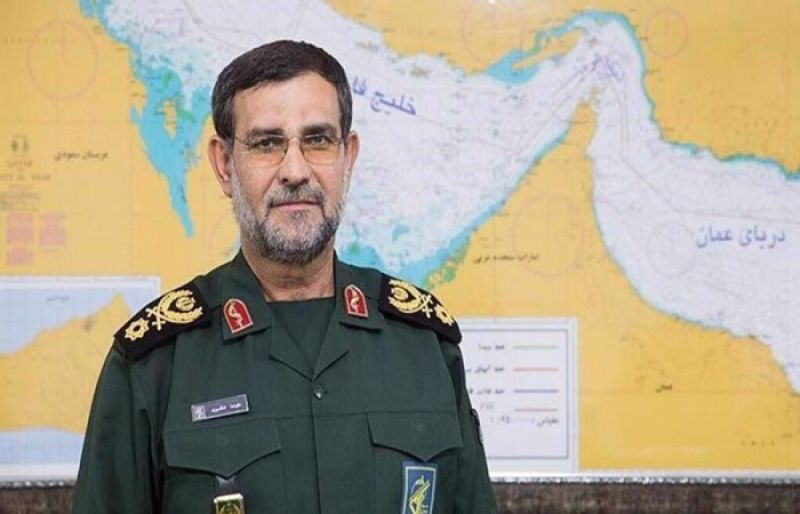
Top Iranian officials have condoled the martyrdom of Rear Admiral Alireza Tangsiri, commander of the Islamic Revolution Guards Corps (IRGC) Navy, praising his role in strengthening Iran’s maritime power and resistance.
In a statement released on Monday, the IRGC announced the martyrdom of the IRGC Navy commander following injuries sustained in the US-Israeli aggression against Iran.
The statement added that Tangsiri was wounded after operations that “inflicted heavy damage on enemy facilities and infrastructure and led to the downing of a US fighter jet.”
In his message of condolence, Leader of the Islamic Revolution, Ayatollah Seyyed Mojtaba Khamenei, hailed Rear Admiral Tangsiri as a “courageous and valiant” commander who was honored with martyrdom after years of struggle.
Citing a Quranic verse that those slain in the path of God are alive and sustained by their Lord, the Leader said his martyrdom during the ongoing Israeli-American war of aggression against the Islamic Republic of Iran stands as “a great source of pride.”
Ayatollah Mojtaba Khamenei said the sacrifice would serve as an enduring inspiration for the people of Bushehr, the youth of southern Iran, and the country’s armed forces, who have long safeguarded Iran’s independence and maritime borders, particularly in the Persian Gulf.
The Leader also expressed confidence that Iran’s path of maritime strength and resistance would continue with greater power and determination.
In a separate statement, President Masoud Pezeshkian hailed the martyred IRGC Navy commander, describing his martyrdom as “a great honor for the true men of Iran.”
In his message, the president said the “banner of dignity, resistance, and independence” is raised ever higher with the sacrifice of Iran’s brave fighters.
He praised Rear Admiral Tangsiri’s role in elevating the power, prestige, and authority of the IRGC Navy in the Persian Gulf, noting that his leadership had transformed it into a formidable force capable of standing “as a mighty barrier against aggressors and the greedy.”
Pezeshkian said the martyred commander’s effectiveness had made him “a thorn in the side of ruthless enemies,” who viewed his elimination as a major objective.
He stressed that martyrdom represents a profound honor and extended condolences to the Leader, the commander’s comrades in the IRGC and the army, and the Iranian nation.
Iranian Parliament Speaker Mohammad Bagher Ghalibaf, in a statement, described Rear Admiral Alireza Tangsiri as a shining example of courage, steadfastness, and loyalty to the Leader of the Islamic Revolution.
He noted that the martyred IRGC Navy commander’s resolve “was never shaken even in the face of the formidable assault of American warships, striking such a powerful blow to the tools of arrogance that they withdrew and docked at the farthest coasts.”
The parliament speaker further warned that “if the enemy thinks that eliminating the brave will erase courage, they may test their luck – and will face the crushing response of the successors of this honored martyr.”
Iran’s judiciary chief Gholamhossein Mohseni Ejei, in a statement, paid tribute to Rear Admiral Tangsiri, describing him as a “valiant and selfless commander of Islam” and one of the renowned heroes of the “Ramadan War,” who “turned the day of the American-Zionist aggressors into night.”
He said the IRGC Navy commander, after years of sincere struggle, attained the “great victory of martyrdom” and “the noblest form of death.”
Ejei highlighted Tangsiri’s lineage, linking him to historic resistance figures of southern Iran such as Rais Ali Delvari, and said he had dealt heavy blows to enemy forces while strengthening Iran’s defensive shield, particularly along its southern shores.
According to the judiciary chief, these efforts had effectively erased the enemy’s ambitions of a ground invasion from their strategic calculations.
He also expressed confidence that the martyred commander’s comrades in the IRGC Navy would continue his path with greater strength, neutralizing enemy aggression and acting with the same resolve in offensive operations.
Foreign Minister Abbas Araghchi hailed the martyrdom of Tangsiri as the culmination of years of dedicated service in defending the security and independence of the Islamic Republic.
Araghchi described the martyred commander as a tireless and devoted commander who led the frontlines of Iran’s dignity and military power.
“Rear Admiral Tangsiri, hailing from the brave lineage of Tangestan, elevated the strength of the IRGC Navy in the azure waters of the Persian Gulf with unparalleled prudence,” he said, “ensuring that in critical moments, it would stand as a mighty barrier against aggressors.”
He emphasized that the path of such warriors would continue with unwavering resolve, and that their sacrifice would ensure the continued honor, sovereignty, and independence of Iran.
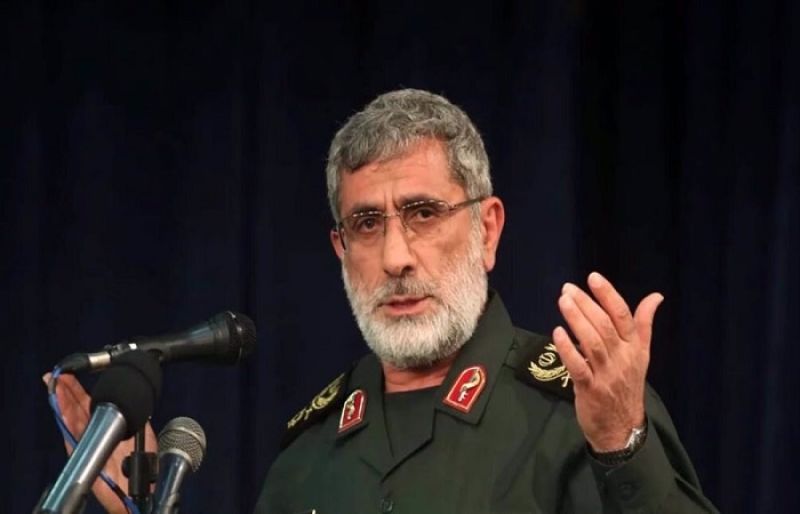

A top commander of the Islamic Revolution Guards Corps (IRGC) says the Israeli regime must come to terms with new realities in West Asia, which include the growing dominance of the resistance forces in the region.
Brigadier General Esmail Qa’ani, who leads the IRGC’s Quds Force, said on Monday that increasing attacks on the Israeli regime by the Lebanese resistance group Hezbollah and Yemen’s Ansarullah movement have put an end to Israeli prime minister Benjamin Netanyahu’s dreams to expand the regime’s “security belt.”
Hezbollah has been launching attacks on Israel since the early days of the US-Israeli aggression on Iran in late February.
Ansarullah said over the weekend that it had joined the fight by carrying out missile attacks on areas in the south of the Israeli-occupied territories.
“Netanyahu would have liked to see the security belt project expand in the region, but the smart and brave fire conducted by our Hezbollah brothers in the north and the Ansarullah in the south have exposed the regime’s false promises to its settlers,” Qa’ani said in a post on social media.
The general said that the coordinated attacks by Iran, Hezbollah, and Ansarullah on targets in the Israeli-occupied territories are exactly what was once sought by martyred commanders of the resistance.
“There is only a one united war room for the resistance front. Get used to the new order of the region,” he said in the Farsi-language post.
Experts say Hezbollah’s fight in support of Iran has put a huge strain on the Israeli regime at a time when it is grappling with barrages of missiles and drones fired from Iran.
They say Ansarullah’s contribution, especially if it expands to the Red Sea and the Gulf of Aden to restrict shipping in those waterways, would lead to a further rise in international energy and commodity prices.
Iran has already imposed restrictions on transit through the Strait of Hormuz, causing a major disruption to the flow of energy to Asia and the rest of the world.
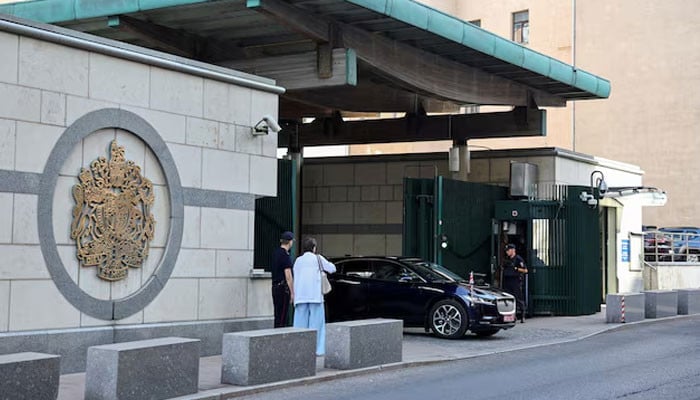
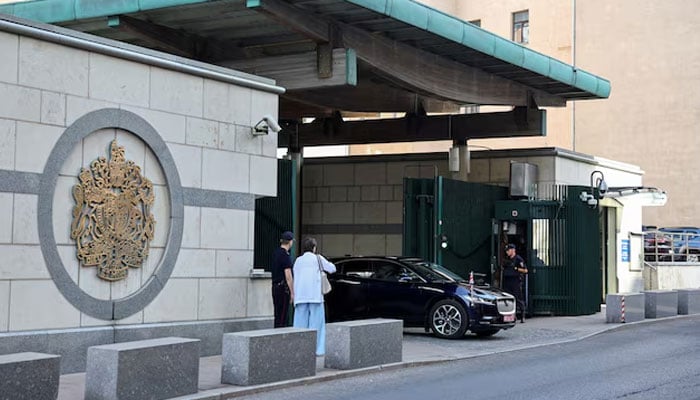
Russia on Monday kicked out a British diplomat over allegations he was working as a spy — charges rejected by London as “complete nonsense”.
Moscow and London have each expelled multiple embassy staff over the last decade, trading accusations of espionage.
Expulsions from one side have typically been followed by a tit-for-tat response from the other.
The diplomat, named as 29-year-old embassy secretary Albertus Gerhardus Janse Van Rensburg, was expelled for engaging in “subversive intelligence activities that threaten Russia’s security”, Russia’s FSB security service said.
“A decision was made to strip Janse Van Rensburg of his accreditation, and he was ordered to leave Russia within two weeks,” it added.
The Russian foreign ministry said it had summoned Britain’s charge d’affaires over the incident and warned the United Kingdom not to retaliate.
Britain accused Russia of waging an “aggressive and coordinated campaign of harassment”.
“The accusations made today by Russia against our diplomats are complete nonsense,” a foreign ministry spokesperson said, adding Russia was “pumping out malicious and completely baseless accusations about their work”.
Relations between London and Moscow, currently at a low point over the Ukraine war, have been strained by spying allegations for decades.
In 2006, former FSB officer and Russian defector Alexander Litvinenko was killed in London, poisoned by polonium in what British investigators said was a hit by the Russian secret service.
In 2018, the UK said Russian double agent Sergei Skripal was poisoned with a Novichok nerve agent in the British cathedral city of Salisbury.
One member of the public was killed after handling the delivery device, a discarded perfume bottle, triggering the largest Western expulsion in decades of Russian diplomats alleged to be spies.
As Israel continued to press its offensive against Iran-backed Hezbollah in southern Lebanon, the UN Force in Lebanon said a peacekeeper had been killed on Sunday and another critically injured by a projectile that hit a UNIFIL position.
UNIFIL said they did not know the origin of the projectile but were investigating.
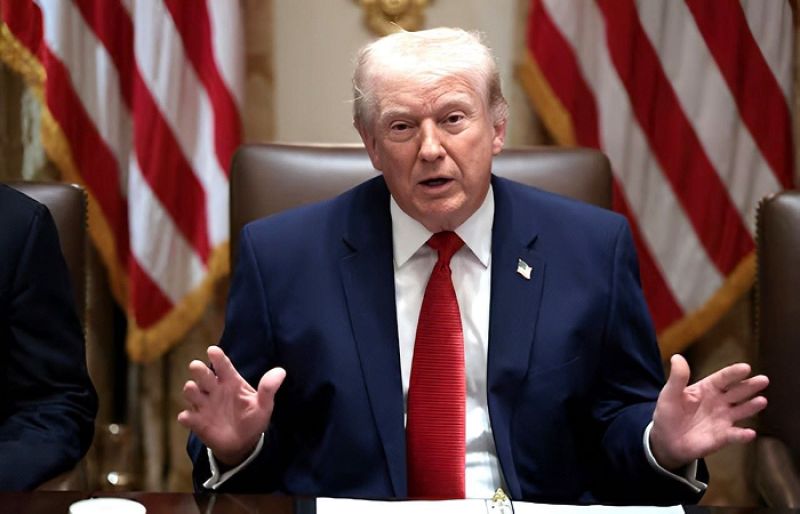
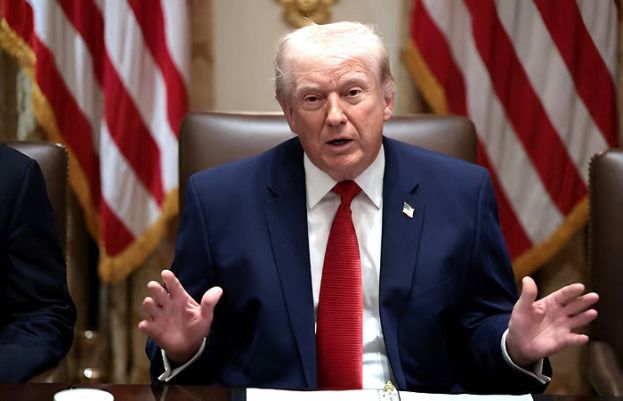
Trump, citing the number of Iranian leaders who have been killed in the month-long US-Israeli war against Iran, said regime change has already been achieved and the new leadership is “much more reasonable”.
“We’ve had regime change,” he told reporters aboard Air Force One. “We’re dealing with different people than anybody’s dealt with before. It’s a whole different group of people. So I would consider that regime change.”
Asked whether there could be a deal with Iran this coming week, Trump said: “I do see a deal in Iran. Could be soon.”
Trump said that Iran has accepted “most” of a 15-point proposal put forward by Washington to end the ongoing conflict, with the framework conveyed through Pakistan in indirect negotiations.
Trump indicated that Tehran had largely agreed to the demands. “They gave us most of the points. Why wouldn’t they?” he said, adding that the US may still push for “a couple of other things” as discussions progress.
In Pakistan, the government is looking to capitalise on its links with Tehran and the Gulf states, as well as a budding rapport with Trump, to broker peace talks.
“Pakistan is very happy that both Iran and the US have expressed their confidence in Pakistan to facilitate the talks,” Foreign Minister Ishaq Dar said.
But the speaker of Iran’s parliament has accused Washington of using diplomacy as a smoke screen.
“The enemy publicly sends messages of negotiation and dialogue while secretly planning a ground attack,” Speaker Mohammad Bagher Ghalibaf said in a statement carried by the official IRNA news agency.
“Our men are waiting for the arrival of the American soldiers on the ground to set them on fire and punish their regional allies once and for all,” he added.
Strikes on Kuwait, Saudi Arabia
Weeks of unrelenting strikes have taken a heavy toll on ordinary people in Iran.
“I miss a peaceful night’s sleep,” an artist in Tehran told AFP, saying night-time strikes were “so intense it felt like all of Tehran was shaking”.
The war has escalated into a regional conflagration as Tehran retaliates with attacks on Gulf states and virtually seals the critical Strait of Hormuz oil shipping lane, sending energy markets into a tailspin and threatening the world economy.
An Iranian strike on a power station and water desalination in Kuwait killed one Indian worker and damaged a building at the site, the Gulf state’s electricity ministry said Monday.
Saudi Arabia’s defence ministry said its forces detected and intercepted five ballistic missiles.
Iran’s energy ministry reported power outages in the capital on Sunday, its surrounding region and Alborz province “following attacks on electricity industry facilities.”
Trump has previously threatened to strike Iranian power stations if Tehran does not negotiate, before repeatedly extending a deadline to do so.
Iran says it has closed the Strait of Hormuz, which previously accounted for a quarter of the world’s seaborne oil trade and a fifth of liquefied natural gas shipments, to vessels from hostile nations.
The war has sent oil prices soaring, with benchmark US oil contract, West Texas Intermediate, once again surpassing $100 a barrel early Monday, while Brent climbed above $115.
Israel boosts defence spending
Israel’s parliament passed its 2026 budget early Monday, including about $10 billion in new military spending, bringing the country’s total defence budget to about $45 billion.
Israel renews strikes on Iran
The Israeli military said late Sunday that it had launched new strikes on targets across Iran’s capital Tehran.
Pakistan talks
Pakistan said on Sunday that it was ready to broker and host “meaningful talks” between the United States and Iran to bring an end to their war, outlining growing support for its peace efforts, including from the United Nations and China.
Foreign ministers from Pakistan, Saudi Arabia, Egypt and Turkey met in Islamabad.
Ambassador refuses
Iran’s ambassador will not leave Lebanon despite being declared persona non grata and ordered to quit the country by Sunday, an Iranian diplomatic source has told AFP.
Lebanon’s foreign ministry accused him of making statements “interfering in Lebanon’s internal politics”.
University hit
A university in Iran’s central city of Isfahan said it was hit by US-Israeli airstrikes for the second time since the war erupted.
Kuwait attack
Kuwait’s defence ministry said 10 service members were injured in an attack on a military camp, as Iran continues targeting positions in the region.
Lebanon toll rises
Lebanon’s health ministry said Israeli strikes had killed 1,238 people in the country since the start of the latest war with Hezbollah on March 2.
Israeli expansion
Israel’s Prime Minister Benjamin Netanyahu said he had ordered his military to “further expand” a security zone in Lebanon.
30 days offline
Iran’s nationwide internet blackout has now lasted 30 days, leaving millions cut off from information and communication since the war began.
Iran missile unit
The Israeli military said it had attacked a key production facility in Tehran used by Iran’s defence ministry to manufacture components for ballistic missiles.
Israeli industrial zone hit
Iran’s Revolutionary Guards said they had struck an industrial complex in southern Israel with ballistic missiles.
AFP footage from the ground showed the charred shell of a warehouse billowing thick clouds of white, grey and black smoke, while fire engines trained powerful jets of water on the blaze.
The Israeli military said the impact in the zone could be from “missile shrapnel”.
Aircraft carrier threat
Iran’s navy chief Shahram Irani said the USS Abraham Lincoln aircraft carrier would be targeted by the Islamic republic if it comes within range.
Journalists’ funeral
Lebanon held a funeral for three journalists killed by an Israeli strike the previous day in the south of the country.
The Israeli military said it carried out the attack to assassinate Ali Shoeib, a veteran correspondent for Hezbollah’s Al Manar TV, whom it accused, without providing evidence, of working as a Hezbollah operative.
Qatari TV office hit
Qatari news channel Al Araby said an Israeli missile hit a building housing its office in Tehran, causing damage and, according to the Iranian Red Crescent, wounding 10 people.


Who Is Scott Mills? BBC Radio 2 host fired over ‘personal conduct’
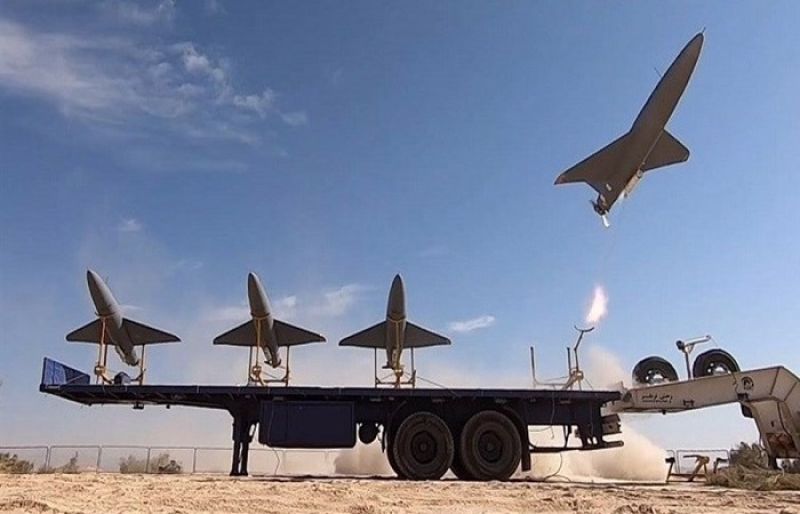
Iran Army drones strike US radar stations, site for troops deployment in UAE – SUCH TV

Extended Interview: Stars of "Cats: The Jellicle Ball"

-

 Politics6 days ago
Afghanistan announces release of detained US citizen
-

 Sports6 days ago
Broadcast industry CEO says consolidation is ‘essential’ to compete for NFL soaring media rights prices
-

 Entertainment6 days ago
UN warns migratory freshwater fish numbers are spiralling
-

 Sports1 week ago
Men’s March Madness live tracker: Updates on Saturday’s games
-
 Business6 days ago
Property Play: Home flippers see smallest profits since the Great Recession, real estate data firm says
-

 Tech6 days ago
Can a Home Appliance Fix the Problem of Soft-Plastic Waste?
-

 Sports1 week ago
Arne Slot: Liverpool’s defeat to Brighton ‘hurts a lot’
-

 Fashion6 days ago
ICE cotton slips on weaker crude, profit booking