

Entertainment
Legal experts question viability of Trump’s $5 billion defamation lawsuit against BBC

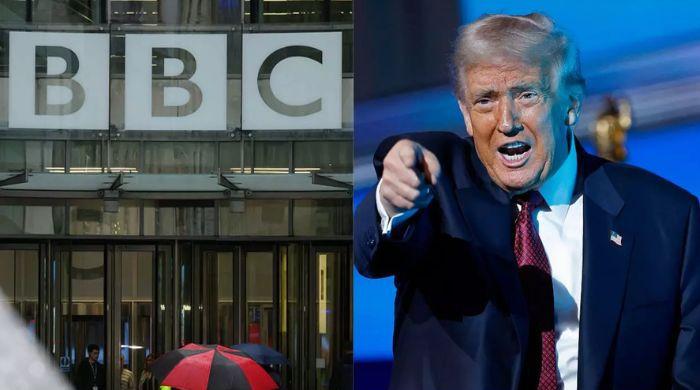
U.S. President Donald Trump vows to sue the British Broadcasting Corporation (BBC) for “anywhere between $1bn and $5bn” over a misleading edited clip in a Panorama documentary faces a steep uphill battle in court, with legal analysts pointing to a series of formidable jurisdiction and legal obstacles.
“We have to do it, they’ve even admitted that they cheated, Not that they couldn’t have done that. They cheated. They changed the words coming out of my mouth,” President Trump told reporters on board Air Force One.
BBC have also issued a formal apology last week for an edit in October 2024 documentary which spliced two parts of President’s January 6, 2021, speech.
With the edited version, there was a “mistaken impression” that he directly called for a violent action.
While the apology prompted the resignation of the corporation’s top two executives, the news agency has refused to pay financial compensation and has cited that it “strongly disagreed there is a basis for defamation claim” as reported by Sky News.
Despite BBC’s contrition , legal experts suggest a successful lawsuit is a long shot.
Legal hurdles in the UK
The most straightforward path to file a defamation case would be in the United Kingdom, since the program was originally broadcast here. But, this avenue appears to be closed.
The one-year limitation period for a defamation claim in the UK has almost certainly expired, as the program aired in October 2024. But even if it hadn’t, President Trump would face a difficult task proving serious harm to his reputation, a key requirement under UK law.
It is anticipated that BBC’s defense would be that the edit was an error in judgment, not malice, and that Trump was re-elected as president shortly after the documentary was aired, and didn’t suffer tangible reputational damage in the UK as a result.
Legal hurdles in U.S.
The other way is to bring the case to a U.S. court, potentially in Trump’s home state of Florida, which introduces a different set of challenges, majorly concerning jurisdiction and the high bar for public figures to prove defamation.
The major problem Trump will face is that the BBC’s Panorama program was not broadcasted on any American television and was geographically restricted on the BBC’s iPlayer platform.
To sue in Florida, Trump’s legal team would have to convince the court the BBC purposefully directed its content at a Florida audience, which seems a difficult argument to make.
If a court accepts a jurisdiction, the U.S. President would then have to meet the “actual malice” standard established by the U.S. Supreme Court in New York Times Co. v. Sullivan.
Since BBC has already stated that the edit was “unintentional” in its formal apology writing in retraction, “We accept that our edit unintentionally created this impression that we were showing a single continuous section of the speech, rather than excerpts from different points in the speech, and this this gave the mistake impression that President Trump had made a direct call for violent action.”
This statement directly contradicts the “actual malice” standard.
A political quagmire for UK Prime Minister
The situation also created a diplomatic and political dilemma for UK Prime minister Keir Starmer.
Trump told reporters that he plans to have a telephonic conversation with Starmer over the weekend.
Since BBC is a public corporation, funded by a license fee and legally independent of government, Starmer intervenes to dissuade Trump from the lawsuit, can accused him of compromising the BBC’s editorial independence.
If he remains silent, he leaves a cherished British institution facing a potentially costly and protracted legal battle with a sitting U.S. president, a fight that could ultimately be funded by British taxpayers.
In a separate interview on Saturday, November 15, recorded before his comments on Air Force One, Trump declared the lawsuit an “obligation,” adding, “If you don’t do it, you don’t stop it from happening again with other people.
However, the legal path to a multi-billion dollar payout appears with complications that may make the threat of a lawsuit more potent than its eventual filing.

Lamar Odom offered his own perspective on the events surrounding his 2015 overdose, and it doesn’t fully align with Khloé Kardashian’s account.
In Netflix’s Untold: The Death & Life of Lamar Odom, Kardashian was portrayed as a central figure in his recovery.
She was shown to have stayed by his side throughout his four-month hospital stay.
But in a new appearance on Today with Jenna & Sheinelle, the former NBA star downplayed the idea that she “saved” him.
“She stood by your side, she saved your life,” Jenna Bush Hager said.
“In some ways,” Odom replied. “God saved my life. My lord saved my life, honestly… Yeah, she took care of me, but God took care of me the most. What I came back from is like a medical miracle.”
The documentary also featured Kardashian’s claim that Odom’s father, Joe, urged doctors to remove him from life support until she intervened.
She alleged Joe agreed to back down after she gave him $100 and a pair of Nikes.
The 46-year-old rejected that version.
“You know, I was knocked out and asleep at that time,” he said.
“If you know Joe Odom, I don’t think that’s something he would ever come out of his mouth. He was my biggest fan. I don’t know where that got mistranslated.”
After leaving the hospital, Kardashian rented Odom a home near hers in Calabasas and arranged for a caretaker and chef.
But when she discovered him smoking crack, she admitted she “just punched him in the face” before cutting ties.
“I just put my life on hold to f—ing take care of you,” Kardashian said in the documentary.
“He was playing me so I can continue this lifestyle for him.”
The two didn’t reconnect until nearly a decade later, during a 2025 episode of The Kardashians, when Odom visited her home to collect keepsakes.
“It was awkward, and it wasn’t really good for me,” he admitted. “But once you’re family, you’re always family, so she ain’t going nowhere.”
Though he acknowledges the bond they once shared, Odom made it clear their relationship will never be romantic again.
“I will always have love for her, but being in love, no,” he said.
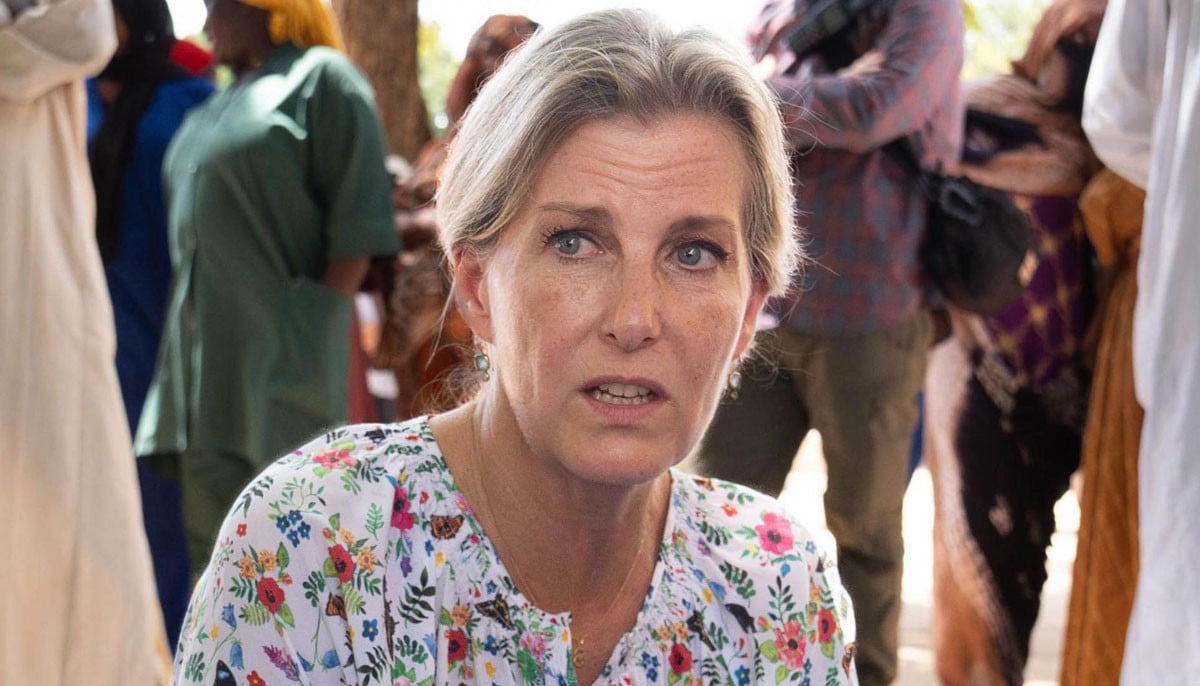
Andrew Mountbatten-Windsor’s ‘dirty’ secrets took toll on Duchess Sophie’s mental health despite the royal family’s stern action against the former Prince.
The ‘disgraced’ member of the firm and his inappropriate ties with the convicted sex offender Jeffrey Epstein shook the world, including those who support women’s rights.
Sophie is also one of those activists. She, as a working member of the firm, supports such initiatives, helping women facing abuse, especially in conflict areas of the world.
Now, a royal expert has shed light on the Duchess of Edinburgh’s possible reaction after knowing Andrew’s years-long connection with Epstein.
As per the Mirror, Jennie Bond first pointed out the “close bond” once shared by the late Queen’s sons, Andrew and Edward.
The Duke of Edinburgh was even the first royal to visit Andrew to urge him to speed up his move to Marsh Farm.
“As the two youngest sons of the late Queen – both of them a decade or more younger than their siblings – Edward and Andrew probably have the closest bond,” she shared.
It must be hard for Edward to “witness” his brother’s disgraceful downfall, but he is loyal to his wife, who always raised her voice for sexually abused women.
Jennie said, “How utterly depressing it must be for Sophie to learn about the long-standing and close friendship between her brother-in-law and a convicted paedophile.”
- NAB reforms to ensure transparent leadership selection.
- Anti-corruption plan targets top high-risk departments.
- Banks to access officials’ asset data.
Pakistan has assured the International Monetary Fund (IMF) of implementing key anti-corruption reforms, including public disclosure of civil servants’ asset declarations and granting greater operational autonomy to the National Accountability Bureau (NAB) under agreed structural benchmarks by January 2027, The News reported.
To provide independence and operational autonomy to the leading anti-corruption agency, NAB’s institutional independence will be ensured through a transparent selection process for senior management and the publication of operating rules and statistics, under the new structural benchmark set for end-January 2027.
The government has given a written commitment to the IMF that it will review and improve the appointment process for the NAB chairman.
Under the guidance of the Anti-Corruption and AML/CFT Committee, proposed amendments to the NAB Ordinance will be developed and laid before Parliament to: (i) adopt pre-determined qualification criteria (eg, years of experience, integrity standards); (ii) establish a merit-based, open and competitive selection process; and (iii) designate a multi-sectoral stakeholder commission (with representatives from the government, opposition, judiciary, civil service, academia and civil society) to conduct an open, rules-based, rigorous and transparent recruitment.
“The government will also publish NAB’s standard operating procedures and rules, as well as annual statistics regarding the investigation, prosecution and conviction of corruption offences on NAB’s website,” the government assured the IMF.
Pakistan and the IMF have agreed on the completion of the third review under the $7 billion Extended Fund Facility (EFF) programme. Under this agreement, Islamabad will strengthen institutional capacities and take further measures to fight corruption to support inclusive growth and a level playing field for businesses and investments.
The publication of asset declarations of high-level federal civil servants will be accomplished by the end of December 2026. The Establishment Division has revised the Civil Servant (Conduct) Rules requiring: (i) centralised digital submission and collection of asset declarations; (ii) risk-based verification; and (iii) disclosure of declarations with limited restrictions on confidential personal information.
The Establishment Division is set to revise the declaration form to specify restrictions on confidential personal information by the end of May 2026, and in coordination with the FBR, will develop a framework for risk-based verifications.
The FBR will develop a digital platform for the submission of asset declarations by the end of June 2026 to facilitate the implementation of the reform.
To grant access to asset declarations for Anti-Money Laundering (AML) and Counter-Financing of Terrorism (CFT) purposes, the SBP, FBR and FMU will continue to support banks’ access to asset declarations of high-level federal public officials (BPS 17-22).
The FBR has issued a notification to expand banks’ access to cover asset declarations of any officer of the federal or provincial governments or autonomous bodies, corporations and companies owned by such governments. To enhance banks’ awareness, by June 2026, the government will publish access statistics on the FBR’s website.
Tasked by the Anti-Corruption and AML/CFT Committee — constituted by the Prime Minister of Pakistan and chaired by the Minister for Law and Justice — the National Accountability Bureau (NAB) has been designated to lead the development of an action plan to mitigate corruption vulnerabilities in the top ten government departments identified with the highest corruption risks. This plan is to be completed by the end of October 2026 as a Structural Benchmark.
To guide the development of the plan, in consultation with and agreement of IMF staff, the Anti-Corruption and AML/CFT Committee will, by end-June 2026, develop and publish a methodology for assessing and prioritising agency-level corruption risks, along with protocols for conducting risk assessments, reporting and reviewing results of the analysis, and defining the plan to reduce corruption risks in identified agencies.
The methodology should lay out the assessment criteria, making use of relevant information held by agencies and ministries across government, including NAB, the Auditor General, the Competition Commission, the FBR and the FIA. It should consider: (i) the value of money at risk due to corruption vulnerabilities related to the agency’s functions and budget; (ii) typologies of corruption in the assessed agency; (iii) the existence of structural weaknesses that give rise to corruption vulnerabilities; and (iv) information on the frequency of corruption, including past and ongoing corruption cases.
The government has apprised the IMF that it has established three committees to monitor progress under the recently published Economic Governance Reform (EGR) plan, which implements the priority recommendations of the GCD report. Progress reports will be prepared on a six-month basis to track implementation and will be published on the website of the Ministry of Finance.
The government is going to organise a policy dialogue in April 2026 to discuss institutional and structural implementation issues, design of performance indicators, common challenges and cross-cutting issues, public monitoring, reporting and capacity development. The government will invite development partners, civil society organisations and other stakeholders to participate in this process.
Based on these discussions and in close consultation with key stakeholders, the government will develop and publish outcome-based updates on progress in its semi-annual report. These updates will serve as a backdrop to a second policy dialogue in July 2026, which will take stock of the six-month implementation of the EGR plan.
The government will continue enhancing the capacities of Provincial Anti-Corruption Establishments (PACEs) to conduct financial investigations related to corruption at the provincial level. In line with the AML Act and the National Fiscal Pact, the relevant federal notification process initiated by the Financial Monitoring Unit (FMU) will be issued by the end of December 2026, designating the PACEs to investigate money laundering related to corruption offences within their jurisdiction, and to request and receive financial intelligence from the FMU as an investigating agency.

Minnesota United shut down rumours James Rodriguez has rare muscle-wasting condition

Iran war upends spring housing market. Here’s what real estate agents are seeing

Lamar Odom shocking response to Khloé Kardashian account of his overdose

-
Uncategorized1 week ago
[CinePlex360] Please moderate: “Further tariff
-

 Tech4 days ago
Our Favorite iPad Is $50 Off
-
Uncategorized5 days ago
[CinePlex360] Please moderate: “Trump signals p
-

 Entertainment4 days ago
Joe Jonas shares candid glimpse into parenthood with Sophie Turner
-

 Fashion6 days ago
China’s Anta Sports posts record $11.62 bn revenue in 2025
-
 Business6 days ago
UPI transactions hit record Rs 29.53 lakh crore in March; volumes cross 22.6 billion – The Times of India
-
 Politics1 week ago
Trump considers asking Arab allies to help to pay for Iran war
-

 Politics4 days ago
Iran can sustain Strait of Hormuz closure for years, will cut US military logistics: Official