

Politics
Legality of US capture of Venezuela’s Maduro in focus at United Nations



- US veto power prevents accountability at UN Security Council.
- US cites self-defence under UN Charter Article 51.
- Legal experts argue US operation violated international law.
UNITED NATIONS: The legality of the US capture of Venezuelan President Nicolas Maduro will be under the spotlight at the United Nations on Monday, but Washington is unlikely to face strong criticism from allies over its military operation in the Latin American state.
The 15-member UN Security Council will meet on Monday after US Special Forces seized Maduro in an operation on Saturday that knocked out power in parts of Caracas and struck military installations. Venezuelan authorities also said it was deadly. Maduro is now in detention in New York awaiting a court appearance on Monday on drug charges.
Russia, China and other Venezuelan allies have accused the United States of violating international law, but US allies – many of whom opposed Maduro – have been less vocal about any concerns over the use of military force.
“Judging by the reactions from European leaders to date, I suspect that US allies will equivocate exquisitely in the Security Council,” said Richard Gowan, director of global issues and institutions at the International Crisis Group, a think-tank.
UN Secretary-General Antonio Guterres views the US operation as setting “a dangerous precedent,” his spokesperson said on Saturday. Many legal experts also say the US action was illegal, although Washington will be able to block any attempts by the UN Security Council to hold it accountable.
Washington cites self-defence
In the wake of the US operation, European states have largely called for international law to be respected without specifically calling out Washington, though French Foreign Minister Jean-Noel Barrot said the US had violated “the principle of not resorting to force, that underpins international law.”
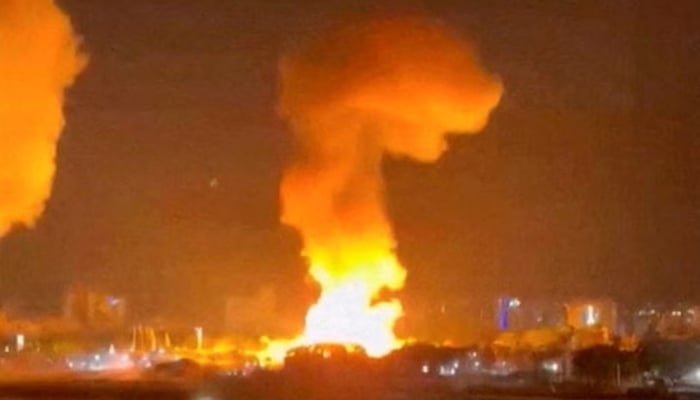
The UN Charter states that members “shall refrain in their international relations from the threat or use of force against the territorial integrity or political independence of any state.” There are currently 193 members of the United Nations.
US Ambassador to the UN Mike Waltz on Sunday cited Article 51 of the UN Charter, which says that nothing “shall impair the inherent right of individual or collective self-defence if an armed attack occurs against a member of the United Nations.”
“In this case, you have a drug kingpin, an illegitimate leader indicted in the United States, coordinating with the likes of China, Russia, Iran, terrorist groups like Hezbollah, pumping drugs, thugs, and weapons into the United States of America, threatening to invade its neighbours,” he told Fox News.
However, legal experts say the US operation was illegal because it lacked UN Security Council authorisation, did not have Venezuelan consent, and does not constitute self-defence against an armed attack.
“The action violated international law,” said Tom Dannenbaum, a professor at Stanford Law School. “Serious legal objections to Maduro’s regime do not eliminate the need for a legal basis to use military force in Venezuela.”
US veto shields Washington
But Washington cannot be held accountable for any violation by the UN Security Council, which is charged with maintaining international peace and security. The US wields a veto – along with Russia, China, Britain and France – so can block action.
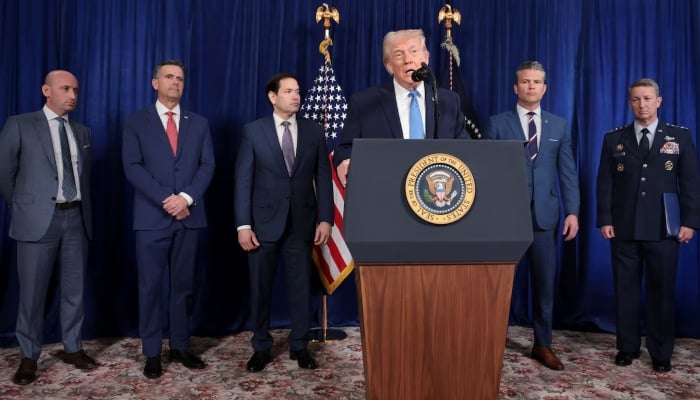
Maduro was indicted in 2020 on US charges including narco-terrorism conspiracy. He has always denied any criminal involvement.
“Even if Maduro were to be responsible for the smuggling of some drugs into the US, such smuggling of drugs does not constitute an armed attack and does not authorise the US to use force in self-defence,” said Milena Sterio, a professor at Cleveland State University College of Law.
She also said Washington “cannot exercise extra-territorial jurisdiction to arrest individuals anywhere it pleases.”
Adil Haque, a professor at Rutgers Law School, also said the US capture of Maduro “was an illegal infringement of the inviolability and immunity of a sitting Head of State, who may lack democratic legitimacy but was clearly effectively discharging his official functions on behalf of his State.”
Cuba says 32 of its citizens killed in Maduro extraction
The Cuban government said on Sunday that 32 of its citizens were killed during the US raid on Venezuela to extract Maduro for prosecution in the United States.
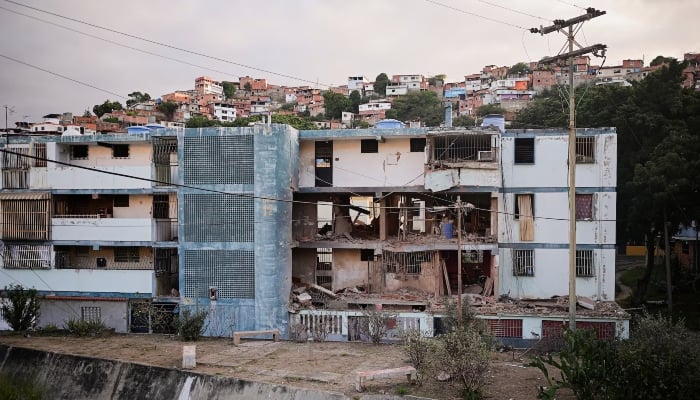
Havana said there would be two days of mourning on January 5 and 6 in honour of those killed and said funeral arrangements would be announced.
The Cuban government statement gave few details, but said all the dead were members of the Cuban armed forces and intelligence agencies.
“True to their responsibilities concerning security and defence, our compatriots fulfilled their duty with dignity and heroism and fell, after fierce resistance, in direct combat against the attackers or as a result of bombings on the facilities,” the statement said.
Cuba has provided some security for Maduro since he came to power. It was not clear how many Cubans were guarding the Venezuelan president when they died and how many may have perished elsewhere.
Maduro, 63, and his wife Cilia Flores were seized by US forces in the Venezuela capital Caracas on Saturday and flown to the United States. Maduro is being held in a New York detention center awaiting a Monday court appearance on drug charges.
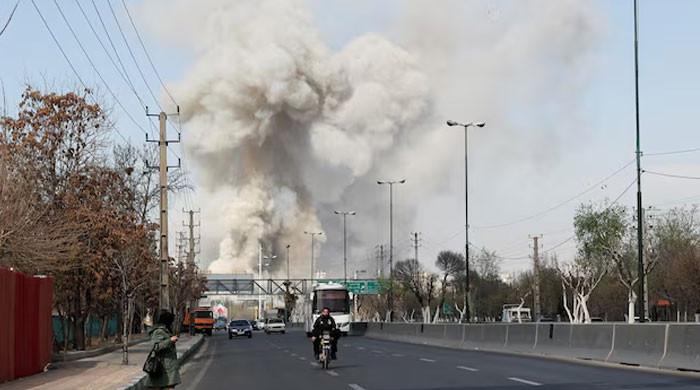
- Focus on bunkers storing ballistic missiles, equipment.
- One underground site struck overnight, says military.
- Analysts differ on Iran’s remaining stockpile.
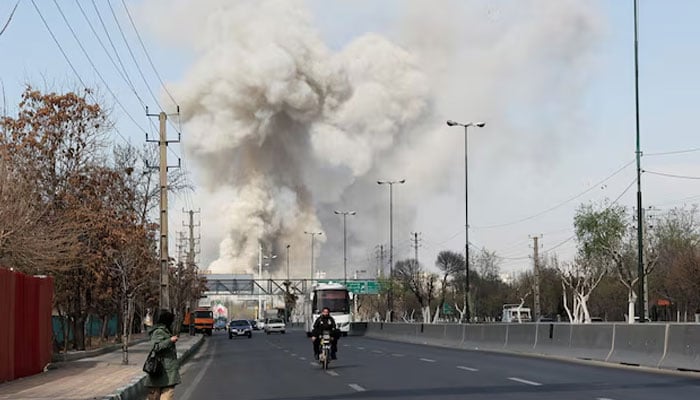
Israel’s war in Iran is entering a second phase that will see its fighter jets attacking ballistic missile sites buried deep underground, two sources familiar with Israel’s military campaign said.
The joint air assault with the US in Iran is nearing the end of its first week after opening salvos killed the country’s leaders and set off a regional war with Iranian attacks in Israel, the Gulf and Iraq, and Israeli attacks in Lebanon.
Israel’s military says it has hit hundreds of Iranian missile launchers above ground that could target Israeli cities. The second phase will include bunkers storing ballistic missiles and equipment, said the sources, who spoke on condition of anonymity because of the sensitivity of the subject.
One said Israel aimed to neutralise Iran’s ability to launch aerial attacks at Israel by the end of the war, which was also focused on taking out the Islamic Republic’s leadership.
A military spokesperson did not immediately respond to a request for comment on its attack plans. The military has previously asserted that it and the US military took control of much of Iran’s airspace in the opening days of the attacks.
In a statement on Thursday, the military said that, overnight, the Air Force struck “an underground infrastructure site used by the Iranian regime to store ballistic missiles and storage sites for missiles intended for use against aircraft.”
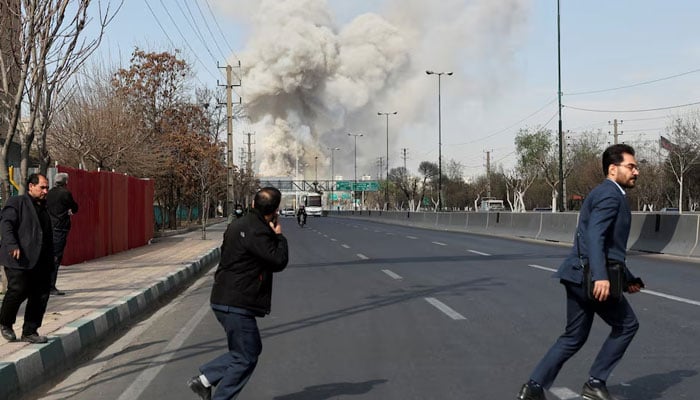
The military has not previously announced attacks on underground missile facilities, according to a review of its public statements since the start of the joint US-Israeli attacks on Saturday.
Estimates of Iran’s missile stockpile vary widely, from roughly 2,500 before the war, according to Israel’s military, to around 6,000 according to other analysts. The extent of what remains could prove critical to how the war develops. Tehran has continued to carry out missile attacks on Israel and across the region.
Douglas Barrie of the UK-based International Institute for Strategic Studies said on Wednesday that the think tank assesses Iran still possesses some land-attack cruise missiles, precision-guided weapons that fly low to evade radar detection.
Israel’s Air Force fighter jets have carried out near-constant sorties since Saturday, accelerating further in pace after Lebanon’s Hezbollah fired rockets at Israel, drawing heavy Israeli airstrikes as far north as Beirut.
In some cases, the same Israeli warplanes have struck both Iran and Lebanon in a single operation: bombing targets in Tehran or western Iran on the way out, and striking Hezbollah sites on the way back, one of the sources familiar with the plans and an Israeli security source said.
Israeli and US officials say ballistic missile and drone launches from Iran have declined since Saturday, a decrease that they attribute in part to US and Israeli strikes on Iranian launch sites and related military infrastructure.
The Israeli military has said that the decrease could also reflect an effort by Tehran to preserve its missile stocks as it prepares for a drawn-out war of attrition.
Eran Lerman, a former Israeli deputy national security adviser, said the hope from the initial week of strikes was that Iran’s ruling system would “begin to disintegrate earlier, more quickly”.
“But this has yet to happen and as long as it doesn’t, the system needs to be further and further degraded,” Lerman said.
- China defence budget to rise 7%, lowest rate since 2021.
- China pledges development of ‘advanced combat capabilities’.
- Premier reiterates goal of “reunification” with Taiwan.
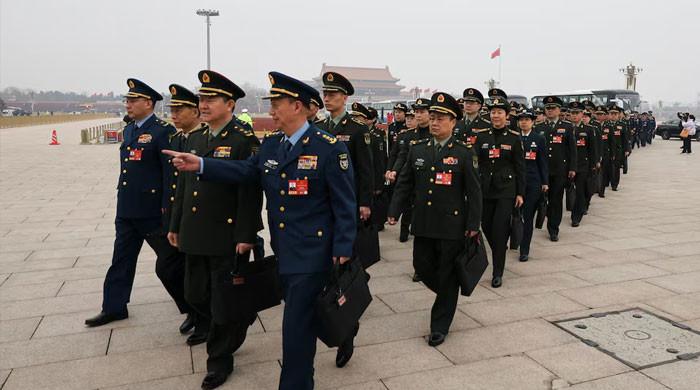
China will boost defence spending by 7% in 2026, it said on Thursday, the lowest rate in five years but still outpacing wider economic growth targets and the rest of Asia at a time of growing regional tension, including over Taiwan.
Security analysts and regional military attaches are watching China’s budget closely as it scrambles to modernise the military by 2035, while stepping up deployments across East Asia and purging the top brass to tackle graft.
China will improve combat readiness and accelerate the development of “advanced combat capabilities”, Premier Li Qiang said at the opening of parliament’s annual meeting, at which he unveiled a broader GDP growth forecast of 4.5% to 5%.
“All these steps will boost our strategic capacity to safeguard China’s sovereignty, security, and development interests,” Li said in his work report, adding that President Xi Jinping held ultimate command responsibility.
The figure of 7%, which follows three years of annual rises of 7.2% and is the lowest since 6.8% in 2021, is part of a spending campaign in which China’s military has developed new advanced missiles, ships, submarines and surveillance methods.
This year’s increase showed Beijing was keeping to a long-held principle of balancing economic growth with national defence goals, said James Char of the S. Rajaratnam School of International Studies in Singapore.
“Essentially, the People’s Liberation Army budget has been growing at a fairly consistent rate as a percentage of GDP … roughly the rate of GDP growth plus inflation,” added Char, a China defence scholar.
It comes amid the highest-profile purge of upper military ranks in decades, with the two most senior generals ensnared in disciplinary investigations.
Zhang Youxia, a veteran military ally of Xi, was placed under investigation in January, while another, He Weidong, was expelled in October last year.
The purge leaves just two members of the usual seven on the supreme Central Military Commission, Xi himself as its chair, and a newly promoted vice chairman, Zhang Shengmin.
The corruption crackdown showed “Beijing will keep a tighter watch on military spending,” said Wen-Ti Sung, a security analyst based in Taiwan, although it was clear all levels of government were getting more frugal.
The government remains committed to the ruling Communist Party’s “absolute leadership over the armed forces”, Li added.
“Guided by the principle of ensuring political loyalty in the military, we will continue to improve military political conduct and make major strides towards the centenary goals of the People’s Liberation Army.”
Some regional analysts believe the founding anniversary, which falls next year will bring further increases in military drills and deployments around Taiwan, the democratically-governed island that Beijing views as its territory.
‘Reunification with Taiwan’
China would “resolutely fight against separatist forces aimed at ‘Taiwan independence’ and oppose external interference”, Li vowed, virtually reprising comments of last year.
That would “promote the peaceful development of cross-Strait relations and advance the cause of national reunification”, he added.
Taiwan says only the island’s people can decide their future. Its government said it did not see any major policy changes towards Taiwan in Li’s comments, but was concerned about China’s defence spending.
“Even under conditions of an unstable economy and weak private consumption, they are still willing to allocate a very large budget to military spending,” said Liang Wen-chieh, a spokesperson of the Mainland Affairs Council in Taipei.
“And of course, that poses a threat to Taiwan,” the spokesperson told reporters.
International environment
Li toned down a warning about the international environment from a year ago, calling it “complex and challenging” rather than “increasingly complex and severe” in comments that had cited “changes unseen in a century”.
In Tokyo, Japan’s Chief Cabinet Secretary Minoru Kihara said China was not sufficiently transparent about its continued high level of defence spending and stronger capabilities.
Despite China’s efforts to change the status quo in the East and South China Seas by “force or coercion”, Japan would keep up efforts to build constructive, stable ties with it, Kihara told a press briefing.
While the graft crackdown left gaps in the PLA’s command structure and dented short-term readiness, it was expected to keep improving capabilities and broaden modernisation, the International Institute of Strategic Studies said.
Growth in Chinese military spending was consistently outpacing the rest of Asia amid a global surge in defence budgets, the London-based IISS said in a report last month.
China’s share of Asia’s total military expenditure grew to almost 44% in 2025, up from an average of 37% between 2010 and 2020, it added.
China gives no breakdown of defence spending, though its budget of 1.91 trillion yuan ($277 billion) is just about a quarter of a $1-trillion defence bill US President Donald Trump signed into law in December.
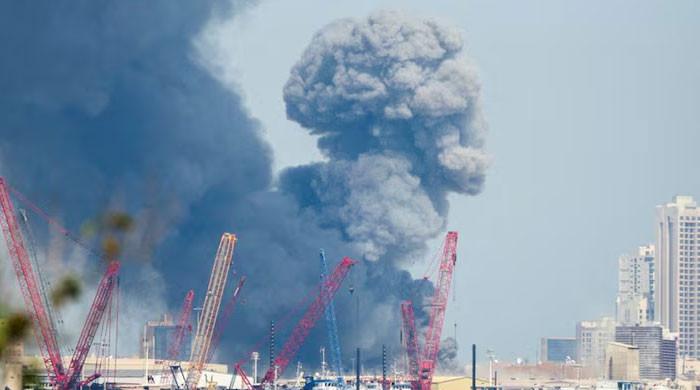
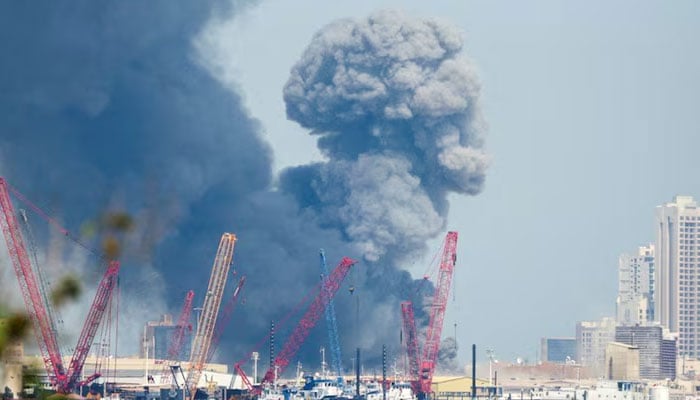
Members of the Reuters Gulf team, like so many of our neighbours in the region, have huddled in stairwells and windowless bathrooms, listening to volleys of missiles being intercepted above our homes while trying to soothe frightened kids and field messages of concern from abroad.
We have become newly alert to where a window might blow in, how to track down difficult-to-find supplies of basics like chicken or bananas and how every rumble, even a neighbour closing a cupboard, can send the heart racing.
Across a region whose newly treacherous airspace is closed and where the only viable escape route is a long cross-desert drive through territory under Iranian attack, we’re all weighing the same impossible questions: stay or go, and how?
Federico Maccioni, a member of Reuters’ finance team in Dubai, said that for the first time, he perceived a hint of doubt about what lies ahead for the city. Still, Rachna Uppal, the news agency’s Abu Dhabi-based chief economics correspondent, said she was struck by how normal life continued, with people shopping, attending dental appointments, and even jetskiing.
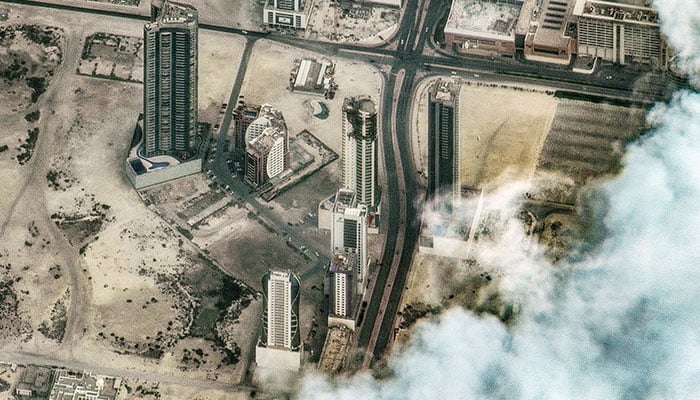
Meanwhile, as reporters, they’re stretched across the Gulf to make sense of it all. This week in Gulf Currents, Iran’s drones are proving relentless, punching through Gulf defences and striking airports, hotels and data centres.
Tourism is buckling, business hubs are paralysed, and decades of Gulf state-building are suddenly in doubt. This briefing unpacks the economic shock, the strategic stakes and what this war may change forever.
Gulf fundamentals
For decades, the Gulf’s rise rested on two core assumptions, i.e. its cities offered a safe haven in an unstable region and that vast wealth from uninterrupted energy exports would keep flowing. This week’s events have shaken both pillars at once, perhaps irreversibly.
First to falter was the idea of the Gulf as a sanctuary insulated from the region’s violence. Dubai, the flagship embodiment of that promise, was built on the premise that turmoil stopped at its borders. But days of Iranian missile and drone strikes on airports, ports and luxury landmarks punctured that carefully constructed brand.
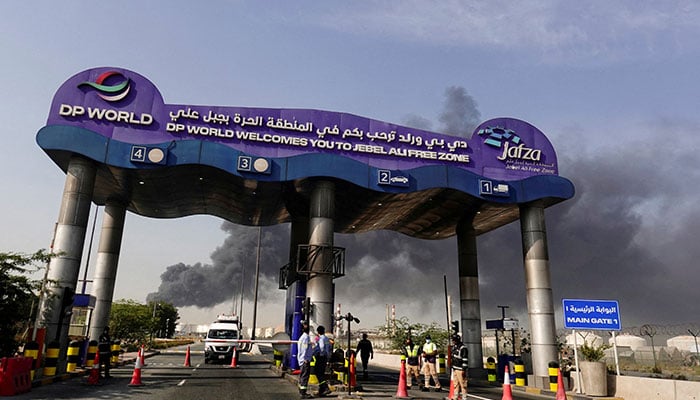
UAE President Sheikh Mohammed bin Zayed tried to project business-as-usual as he strolled through Dubai Mall on Monday evening, yet outside, flights were grounded, financial markets shut, and jumpy residents queued for supplies, all while deep thuds rolled through the skyscrapers as air defences intercepted barrage after barrage.
The psychological blow raises doubt about whether cities like Dubai, Abu Dhabi, and Riyadh — the success of which has been built on confidence, mobility, and positive perceptions — can maintain premium appeal when they suddenly prove vulnerable to regional turmoil.
Economic fragility, repercussions
The second rupture is economic, and deeper still.
The closure of the Strait of Hormuz and the shutdown of QatarEnergy’s vast LNG operations, supplier of a fifth of global LNG and long proud of never missing a shipment, have unleashed a supply shock once considered inconceivable.
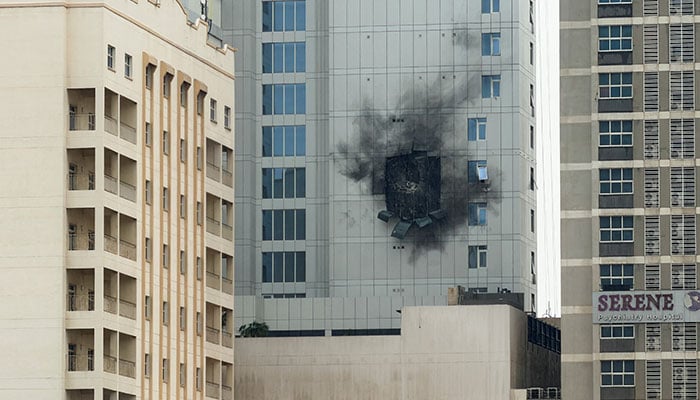
Iraq has slashed production; Saudi Arabia is rerouting crude; hundreds of tankers sit idle near the port of Fujairah, which is still burning after an attack, without safe passage. Prices for oil, gas and related commodities have surged.
The Gulf’s ability to bankroll diversification, mega-investments and a generous social contract depends on secure energy exports. That assumption is suddenly fragile.
Some of this damage cannot be undone.
What future holds?
This war has unlocked a larger unknown: what will relations between the Arab Gulf and Iran look like after this?
After years of tentative détente, Gulf Arab states had begun recalibrating ties with Iran, acknowledging geography and mutual interest. That fragile trust has now been ruptured.
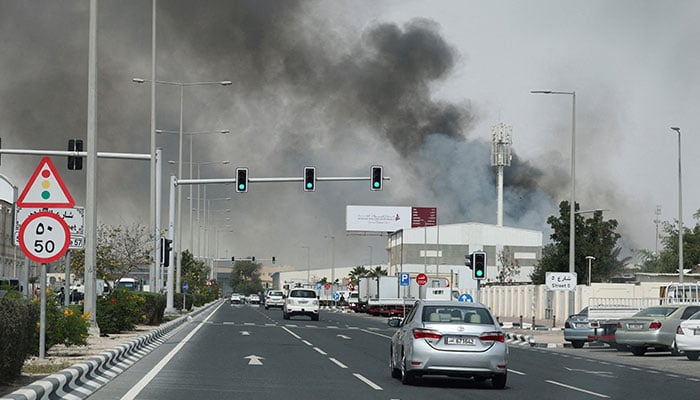
The scale of Iran’s attacks has erased the political space Gulf leaders had carved out for dialogue. Having been attacked directly, Gulf capitals must now confront a harder question: even if the fighting stops, can trust in Iran as a neighbour ever be rebuilt, or has the relationship entered a long, hostile freeze?
The implications are profound. The Gulf’s economic model, energy security, and regional diplomacy, long treated as constants, have all been destabilised. Even if the fighting stops soon, the era of hedging with Iran is perhaps over. And a more guarded, security-driven Gulf lies ahead.


US mortgage rates rise to 6% after three-week slide as oil-driven bond yields climb – The Times of India

The new economics of fashion: Trust, longevity and price discipline

California school hired a coach, but police say he moonlighted as a pimp

What are Iran’s ballistic missile capabilities?
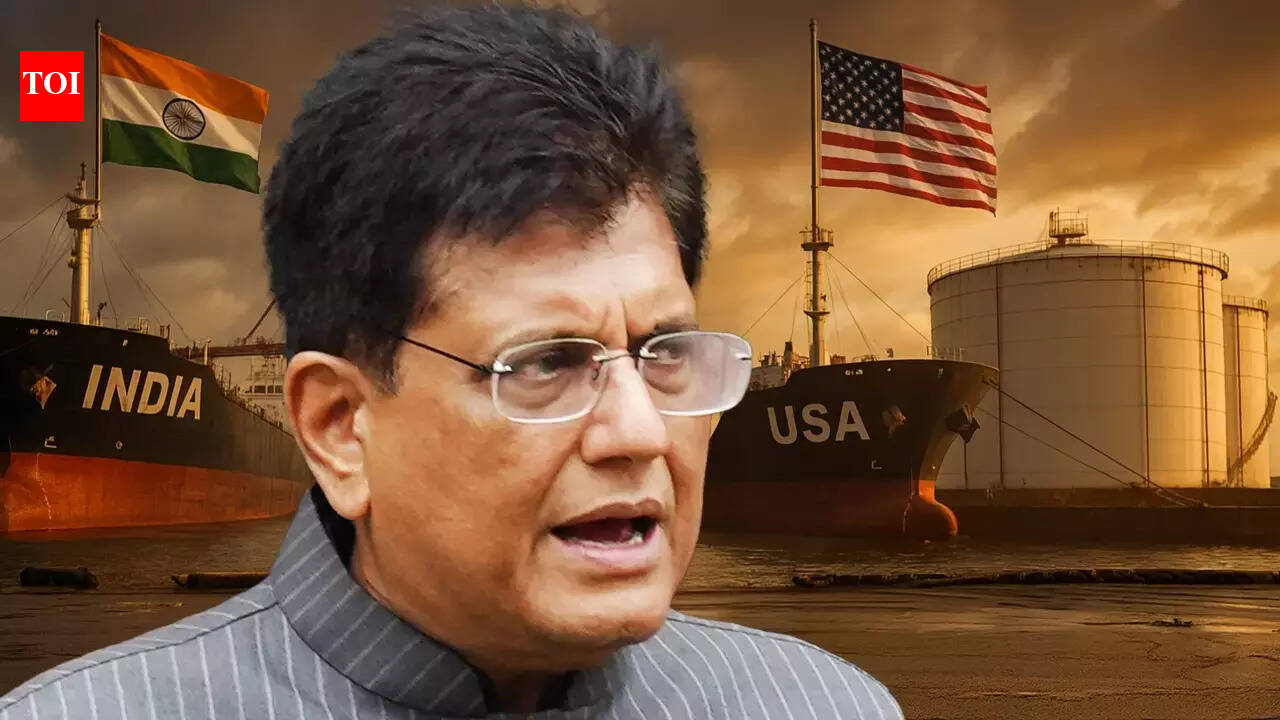
India Us Trade Deal: Fresh look at India-US trade deal? May be ‘rebalanced’ if circumstances change, says Piyush Goyal – The Times of India

US arrests ex-Air Force pilot for ‘training’ Chinese military

-
 Politics1 week ago
What are Iran’s ballistic missile capabilities?
-
Business6 days ago
India Us Trade Deal: Fresh look at India-US trade deal? May be ‘rebalanced’ if circumstances change, says Piyush Goyal – The Times of India
-
 Politics1 week ago
US arrests ex-Air Force pilot for ‘training’ Chinese military
-
 Business7 days ago
Attock Cement’s acquisition approved | The Express Tribune
-
 Business1 week ago
Households set for lower energy bills amid price cap shake-up
-

 Fashion7 days ago
Policy easing drives Argentina’s garment import surge in 2025
-

 Sports6 days ago
LPGA legend shares her feelings about US women’s Olympic wins: ‘Gets me really emotional’
-

 Fashion7 days ago
Texwin Spinning showcasing premium cotton yarn range at VIATT 2026