

Politics
Louvre to get anti-ramming barriers by year end: minister



France’s culture minister said on Friday anti-ramming devices would be set up around the Louvre by year’s end, after a high-profile heist at the famed museum reignited debate over its security.
The announcement comes after four thieves parked a truck with a moving lift under one of its windows during opening hours on October 19, then used cutting gear to break into a first-floor gallery and steal jewellery worth an estimated $102 million.
Culture Minister Rachida Dati, speaking after reading an initial report on the museum’s security systems, said on Friday that urgent measures were needed to address the situation.
“For more than 20 years, there has been a chronic underestimation of intrusion and theft risks” at the Louvre, Dati told broadcaster TF1. “We can’t continue like this.”
The report cited inadequate security equipment and “completely obsolete” intrusion-response protocols, she added.
Last week, the Louvre’s director Laurence des Cars said security cameras did not adequately cover the thieves’ point of entry, the only camera installed facing away from the balcony by which they entered.
Dati said the museum’s internal security systems worked on the day of the theft, but also warned of “major security flaws” outside the building.
To address some of the shortcomings, “anti-ramming” and “anti-intrusion” devices were to be installed “before the end of the year”, she said, without elaborating.
Des Cars said last week that the first of several “anti-ramming” barriers was being installed outside the museum.
French police have so far arrested seven people over the robbery, and two of them so far have been charged with theft and criminal conspiracy. But the stolen loot remains missing.
Among the missing pieces are an emerald-and-diamond necklace that Napoleon I gave his wife, Empress Marie-Louise, and a diadem that once belonged to the Empress Eugenie, which is dotted with nearly 2,000 diamonds.
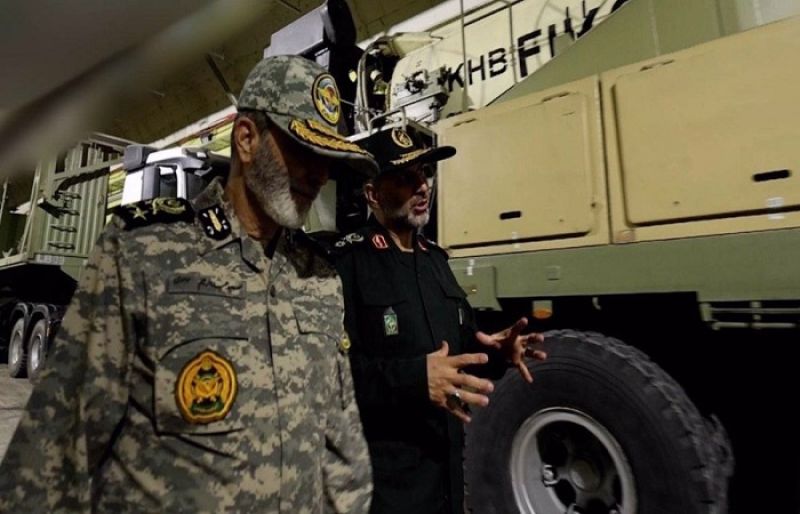

Iran’s top military official says the country has strengthened its deterrence by upgrading domestically manufactured ballistic missiles.
Chief of Staff of the Iranian Armed Forces Major General Abdolrahim Mousavi made the remarks on Wednesday during a visit to an Islamic Revolution Guards Corps (IRGC) missile town.
“By upgrading its ballistic missiles in all technical dimensions, Iran has been able to strengthen its deterrence power,” he said during the visit, accompanied by Brigadier General Majid Mousavi, commander of the IRGC Aerospace Force.
Mousavi also expressed Iran’s readiness to confront any act of aggression by its enemies.
“Following the 12-day war, we have changed our military doctrine from defensive to offensive by adopting the policy of asymmetric warfare and [boosting readiness for a] crushing response to the enemies,” the top general said.
He was referring to the illegal US-Israeli aggression against Iran that killed at least 1,064 people last June.
Israel launched the unprovoked war on June 13 while Iran was engaged in nuclear talks with the US, which also joined the aggression by striking Iranian nuclear sites.
In response, Iranian armed forces targeted strategic sites across the occupied territories and at Al-Udeid, the largest US military installation in West Asia.
Iran has since moved to enhance both its defensive and offensive capabilities.
The region is once again bracing for another potential military confrontation after the United States deployed air and naval forces to the region and threatened to attack the Islamic Republic.
Iranian officials have warned that any US attack would prompt an immediate response and could ignite a regional war.
Tensions have eased slightly as regional countries launched a flurry of diplomatic efforts to prevent war. Iranian and US diplomats are now set to meet in Oman on Friday for a new round of talks on Tehran’s nuclear program.
Earlier this week, General Mousavi warned that any miscalculation by the Islamic Republic’s enemies would trigger a “rapid” and “decisive” response.
Iranian Armed Forces are prepared to respond forcefully to threats, he added. “We think only of victory. We have no fear of the enemy’s superficial might, and we are fully ready for confrontation and to deliver a retaliatory slap.”
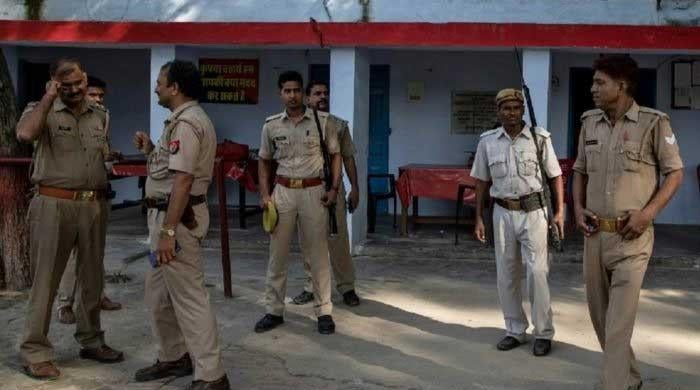
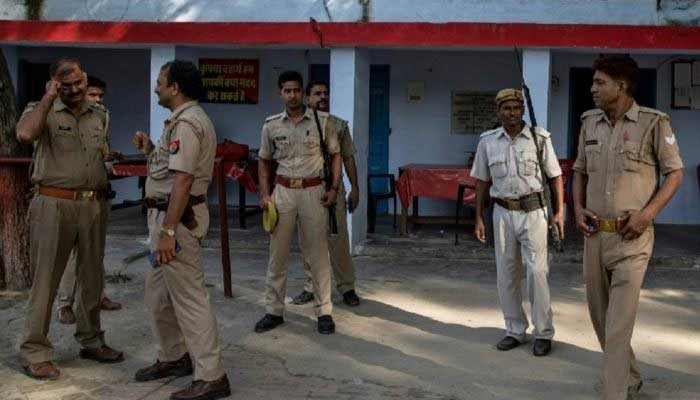
NEW DEHI: Indian police said on Thursday an investigation had been launched into the suspected suicide of three young sisters over concerns that they were heavily “influenced” by games and movies online that they were later denied access to.
Local media reported the sisters, aged 12, 14 and 16 had jumped from their home on Wednesday in the city of Ghaziabad on the outskirts of the country’s capital.
Concern among experts and regulators has grown in recent years that too much screen time and addictive algorithms are harming child development, sparking authorities, including in India, to push for social media bans for children and teens.
“(An) investigation is underway based on the suicide note and their phones,” Nimish Patil, a senior police official, told AFP on Thursday.
Police in India routinely investigate the factors leading up to suspected suicides.
The sisters had been “denied access” to K-Pop music and Korean games and movies that they had previously played and watched online.
“They were influenced by Korean culture: K-pop music, games and movies,” Patil said.
He added that the family also appeared to be under financial distress.
Their father had recently taken away their devices and barred them from watching Korean dramas and playing online games, the Indian Express newspaper reported. AFP could not immediately reach family members for comment.
Korean culture has surged in popularity, especially among young people, in India over the past decades, beginning with rapper Psy’s 2012 hit “Gangnam Style” and expanding through K-Pop and streaming platforms packed with Korean dramas.
The case has sparked debate in India with intense media coverage highlighting concerns about young people’s skyrocketing online exposure deepening mental health vulnerabilities.
Two Indian states recently said they were preparing the ground for banning children from using social media.
Internationally, governments have been exploring social media restrictions for children and teenageers, led by Australia, which banned the networks for under-16s in December.
French lawmakers in the country’s lower house last month passed a bill that if confirmed by its Senate will ban social media use by under-15s and bar mobile phones from high schools.
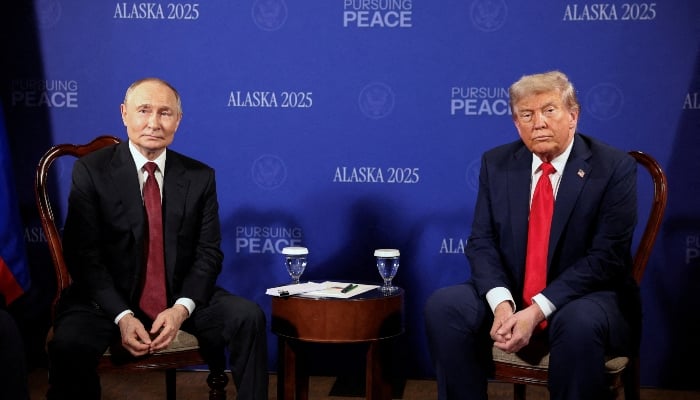
- Lapse of New Start treaty ends half-century of nuclear restraint.
- Russia criticises US for not agreeing to extend warhead limits.
- Moscow says neither side is bound any more by treaty provisions.
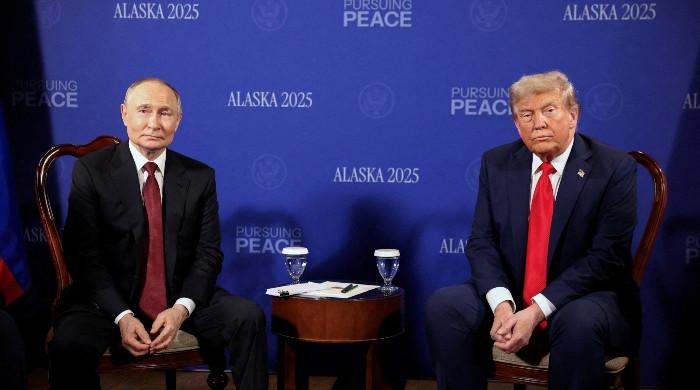
MOSCOW: Russia and the United States are no longer bound by any limits on the size of their strategic nuclear arsenals after their last arms control treaty expired on Thursday with no agreement between them on what should come next.
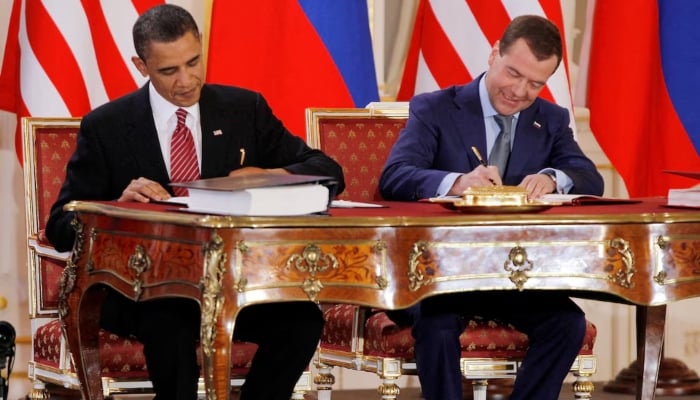
The New Start treaty, which set limits on each side’s missiles, launchers and strategic warheads, was the last in a series of nuclear agreements stretching back more than half a century to the depths of the Cold War.
Security experts say its expiry risks ushering in a new arms race that will also be fuelled by China’s rapid nuclear build-up.
Russian President Vladimir Putin had proposed that Moscow and Washington agree to adhere to the treaty’s key provisions for one more year, but US President Donald Trump did not make any formal response.
Trump says he wants a better deal that will also bring in China. But Beijing refuses to negotiate with the other two countries because it has only a fraction of their warhead numbers – an estimated 600, compared to around 4,000 each for Russia and the US
In a statement late on Wednesday, hours before New Start lapsed, Russia criticised what it called the “mistaken and regrettable” US approach.
It said Moscow’s assumption now was that the treaty no longer applied, and both sides were free to choose their next steps.
Russia “remains prepared to take decisive military-technical countermeasures to mitigate potential additional threats to national security”.
But it will act responsibly and is open to diplomacy to seek a “comprehensive stabilisation of the strategic situation,” the statement said, striking a balance between assertiveness and restraint.
Trump made no statement as the treaty expired. The White House said this week that Trump would decide the way forward on nuclear arms control, which he would “clarify on his own timeline”.
UN chief says nuclear risk is highest in decades
Strategic nuclear weapons are the long-range systems that each side would use to strike the other’s capital, military and industrial centres in the event of a nuclear war.
They differ from so-called tactical nuclear weapons that have a lower yield and are designed for limited strikes or battlefield use.
In the absence of a treaty framework that provides stability and predictability, analysts say each side will find it harder to read the other’s intentions. That could lead to a spiral in which each feels the need to keep on adding weapons, based on worst-case assumptions about what the other is planning.
Within a couple of years, each could deploy hundreds more warheads beyond the New Start limit of 1,550, experts say.
“Transparency and predictability are among the more intangible benefits of arms control and underpin deterrence and strategic stability,” said Karim Haggag, director of the Stockholm International Peace Research Institute.
“Without them, relations between nuclear weapon states are likely to be more crisis prone – especially with artificial intelligence and other new technologies adding complexity and unpredictability to escalation dynamics and a worrying lack of diplomatic and military communication channels between the USA and both China and Russia.”
UN Secretary-General Antonio Guterres said the dissolution of decades of achievement in arms control “could not come at a worse time – the risk of a nuclear weapon being used is the highest in decades.”
He urged Russia and the US to resume negotiations without delay to agree “a successor framework that restores verifiable limits, reduces risks, and strengthens our common security”.


Jaguar Land Rover losses deepen after crippling cyber attack

Kansas’ Peterson finishes game, hits 2 late 3s to beat Texas Tech

Gordon Brothers acquires UK’s LK Bennett brand & global IP

-

 Entertainment1 week ago
Claire Danes reveals how she reacted to pregnancy at 44
-

 Sports1 week ago
College football’s top 100 games of the 2025 season
-

 Politics1 week ago
Trump vows to ‘de-escalate’ after Minneapolis shootings
-

 Sports1 week ago
Tammy Abraham joins Aston Villa 1 day after Besiktas transfer
-
 Business1 week ago
PSX witnesses 6,000-point on Middle East tensions | The Express Tribune
-

 Entertainment1 week ago
K-Pop star Rosé to appear in special podcast before Grammy’s
-

 Tech1 week ago
The Surface Laptop Is $400 Off
-
 Business1 week ago
GM expects to top Ford in U.S. vehicle production as it faces up to $4 billion in tariff costs