

Business
Lower electricity prices? CERC reviews power trading fee to ease cost; sector gears up for market coupling – The Times of India


Electricity buyers may see lower costs as the Central Electricity Regulatory Commission (CERC) reviews transaction fees charged by power trading exchanges. The review is taking place alongside the regulator’s push to introduce market coupling, a long-awaited reform aimed at improving efficiency in price discovery, increasing liquidity and bringing uniformity to electricity prices across trading platforms. Over time, the combined effect of these changes is expected to reduce the overall cost of power procurement. Market coupling was approved by CERC in July this year after more than two years of discussions and is proposed to be rolled out in stages, starting with the day-ahead market (DAM) from January 2026. Once implemented, buy and sell bids from all power exchanges will be pooled together to determine a single market-clearing price, replacing the existing system under which prices differ across exchanges. An official said that the regulator has finalised a staff paper titled ‘Review of Transaction Fee charged by the Power Exchanges’ in December 2025. According to the official, who spoke to PTI on the condition of anonymity, CERC is assessing whether the current transaction fee cap of 2 paise per unit is still appropriate at a time when traded volumes have risen sharply and the market is transitioning towards a unified price discovery mechanism. Among the options being discussed is a fixed transaction fee of 1.5 paise per unit for most trading segments. Under the present framework, power exchanges generally charge close to the permitted ceiling. Another proposal under consideration is a lower fee of 1.25 paise per unit for term-ahead market (TAM) contracts, reflecting their longer tenure and comparatively lower operational intensity. India’s exchange-based power market has seen rapid growth over the past decade. Electricity traded through exchanges has increased more than 16 times since 2009-10, with total traded volumes exceeding 120 billion units in 2023-24. While the day-ahead market previously accounted for nearly all exchange-based trading, real-time, intra-day and term-ahead segments now make up an increasing share. Industry experts believe market coupling will help reduce price disparities across exchanges, improve the use of generation capacity and allow buyers to access power at more efficient rates. “Since bids are aggregated across all exchanges, prices are expected to converge and soften to some extent, benefiting distribution companies and large consumers and eventually end-users,” one expert told PTI.At present, Indian Energy Exchange dominates the segment, accounting for nearly 90% of exchange-based power trading volumes, with Power Exchange India Ltd (PXIL) and Hindustan Power Exchange Ltd (HPX) accounting for the rest. Under the approved framework, all three exchanges will act as Market Coupling Operators on a rotational basis, while Grid-India will serve as a backup and audit operator to safeguard system integrity. Officials pointed out that transaction fee structures will gain added significance once exchanges cease competing on price discovery. With transaction fees contributing more than 95% of revenues for established exchanges, any revision is expected to have a meaningful impact on the sector. The official said discussions on transaction fees are still at an early stage, and any changes will be finalised after stakeholder consultations, keeping in mind the broader objective of improving efficiency, transparency and affordability in India’s power markets.
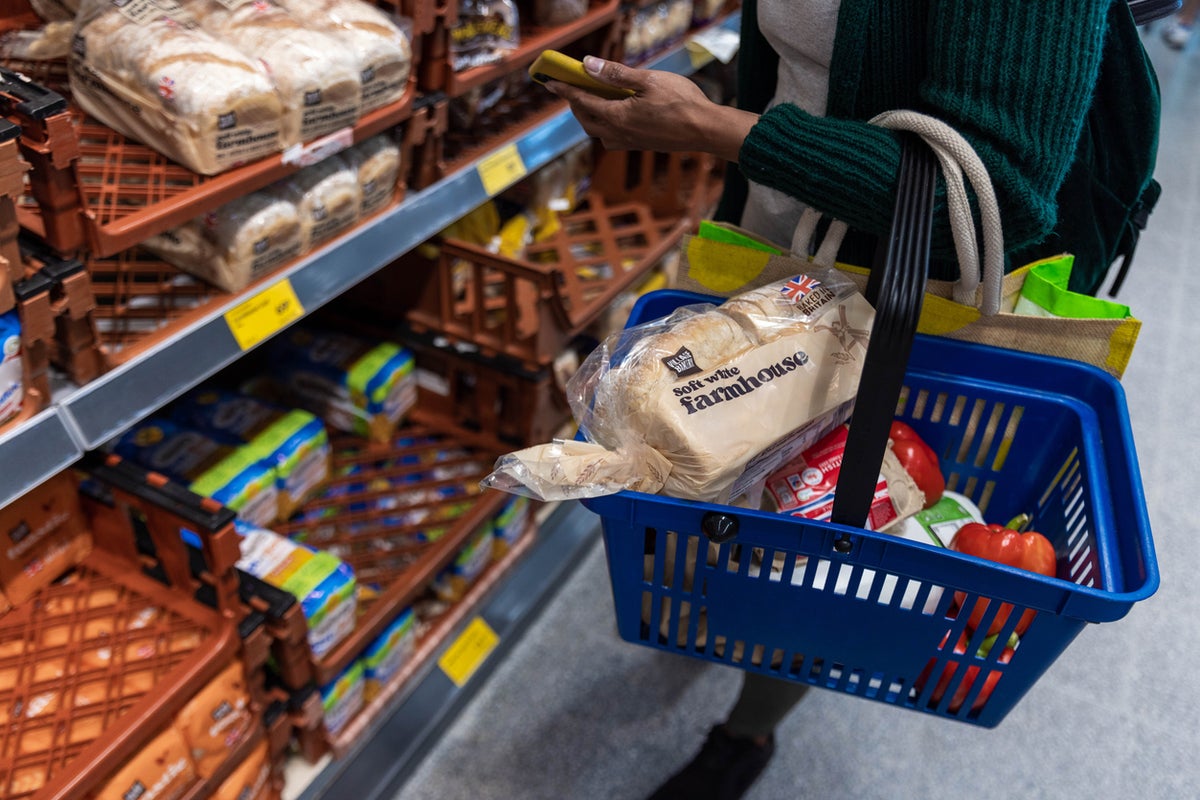
Food bills are set to soar as much as 10 per cent this year as a direct consequence of the Iran war, a key industry body has warned.
The Food and Drink Federation (FDF), which represents 12,000 food and drink manufacturers, has hiked its inflation forecast for the year from 3.2 per cent to between nine and 10 per cent.
During the 2022 cost of living crisis, food inflation rose at a rate of 10.9 per cent, figures from the Food and Drink Federation (FDF) show, while the following year was even worse at 14.6 per cent.
Since then, it had dropped back to 2.7 per cent (2024) and 4.2 per cent (2025), but while this year had originally been forecast to deliver food inflation of 3.2 per cent, the latest assessment is that it will instead see a huge rise in the second half of 2026.
The FDF said the current situation is “unprecedented and hard to predict”, but it’s “clear that food inflation is going to rise in the months ahead”.
How much that adds to the average bill depends on the size and frequency of a consumer’s usual grocery habits, but on average, bills could rise by around £588, according to some estimates.
Consumer rights and review site Which? frequently assesses UK supermarkets for cost, and at the start of 2026, an average basket of 89 shopping products cost £161.56 at Aldi and up to £217.02 at Waitrose.
Assuming food inflation lands at the mid-point of the FDF forecast, 9.5 per cent, and that all products and supermarkets applied that uplift equally, that would move the costs of those shops up to £176.91 and £237.64 respectively.
Research from confused.com suggested the average UK household spent £119 each week on food shopping, which is £6,188 each year; a 9.5 per cent uplift to that equates to an extra £588 annually, or a total of just over £130 per week and £6,775 annually.
Chancellor Rachel Reeves is due to meet with some supermarket chiefs on Wednesday, including Sainsbury’s and Tesco, over discussions to assess the upcoming impact of price rises on the cost of living. The Treasury has described it as a “fact-finding” conversation.
Last month, Asda boss Allan Leighton called on Labour to do more to help businesses after creating “a lot of constraints” for them.
For food manufacturers, there is both a concern now and another yet to come in terms of energy cost rises.
Diesel – used in farm machinery – is up by 80 per cent since the start of the war, while fertiliser costs could increase further, as well as supply being constrained. The FDF also points to lost sales due to cancelled shipments to the Middle East, with UK firms regularly exporting cheese, cereals, chocolate and more to the region.
Dr Liliana Danila, chief economist at The Food and Drink Federation, said: “The food and drink sector is already feeling the force of this geopolitical shock. As one of the UK’s energy-intensive industries, manufacturers are facing mounting energy bills, rising transport and packaging costs and disruption across key supply chains.
“These pressures are hitting simultaneously and are a significant challenge for businesses to absorb.
“The current situation is unprecedented and hard to predict; however, given the scale and speed of these cost increases, and despite companies’ best efforts not to pass price increases on, it’s clear that food inflation is going to rise in the months ahead.”
The FDF says its upgraded inflation figures were based on “assumptions that the Strait of Hormuz opens to cargo traffic within the next two to three weeks”, as has been suggested by Donald Trump this week, and that most commodities, including oil, gas and fertiliser production, return to normal within a year.
In the past few months, the FDF has repeatedly called for the government to offer support to businesses in the sector from rising energy bills in the same way as it does to those in some other manufacturing areas.

GST collections: India’s net Goods and Services Tax (GST) collections increased to Rs 1.78 lakh crore in March 2026, marking a rise of 8.2% compared to the previous month, according to official figures released on Wednesday.Gross GST revenue for March stood at Rs 2 lakh crore, which is an 8.8% increase over the same month last year.Abhishek Jain, Indirect Tax Head & Partner, KPMG says, “GST collections continue to show steady 9% annual growth, supported by strong import activity this month and consistent compliance. While export refunds have eased this month but remain healthy overall for the year”Refunds during the month totalled Rs 0.22 lakh crore, up 13.8% on a year-on-year basis, which resulted in net GST collections of Rs 1.78 lakh crore.Domestic GST revenue reached Rs 1.46 lakh crore, registering a growth of 5.9%, while revenue from imports was recorded at Rs 0.54 lakh crore, rising sharply by 17.8% during the period.Post-settlement GST figures across states presented a varied trend. While industrially advanced states recorded strong growth, several others reported a decline.Maharashtra contributed the highest amount to the overall collections at Rs 0.13 lakh crore on a pre-settlement basis, followed by Karnataka and Gujarat.Among states showing an increase in post-settlement SGST collections were Himachal Pradesh, Punjab, Uttarakhand, Haryana, Rajasthan, Uttar Pradesh, Bihar, Gujarat, Maharashtra, Karnataka, Kerala, Tamil Nadu, Telangana and Andhra Pradesh, among others.On the other hand, states such as Jammu and Kashmir, Chandigarh, Delhi, Arunachal Pradesh, Meghalaya, Assam, West Bengal, Jharkhand, Odisha, Chhattisgarh and Madhya Pradesh, among others, registered a decline in post-settlement SGST revenues.

A wave of bullishness swept the Pakistan Stock Exchange on Wednesday, pushing the 100 Index up by more than 5,000 points to reach 153,700.
The surge reflects increased investor confidence and strong trading activity across major sectors.


Brandy Norwood reveals truth about Wanya Morris relationship in new memoir
Food prices to rise by almost 10% due to Iran war, warns key industry body

Should the USMNT be concerned about Pulisic’s goal drought?

-

 Politics1 week ago
Afghanistan announces release of detained US citizen
-

 Tech1 week ago
Can a Home Appliance Fix the Problem of Soft-Plastic Waste?
-

 Sports1 week ago
Broadcast industry CEO says consolidation is ‘essential’ to compete for NFL soaring media rights prices
-
 Business1 week ago
Property Play: Home flippers see smallest profits since the Great Recession, real estate data firm says
-

 Entertainment1 week ago
UN warns migratory freshwater fish numbers are spiralling
-
 Business1 week ago
Gold prices soar in Pakistan – SUCH TV
-

 Fashion1 week ago
ICE cotton slips on weaker crude, profit booking
-
 Business1 week ago
More women are entering wealth management, but few are in advisory roles, study finds