

Business
Lower electricity prices? CERC reviews power trading fee to ease cost; sector gears up for market coupling – The Times of India

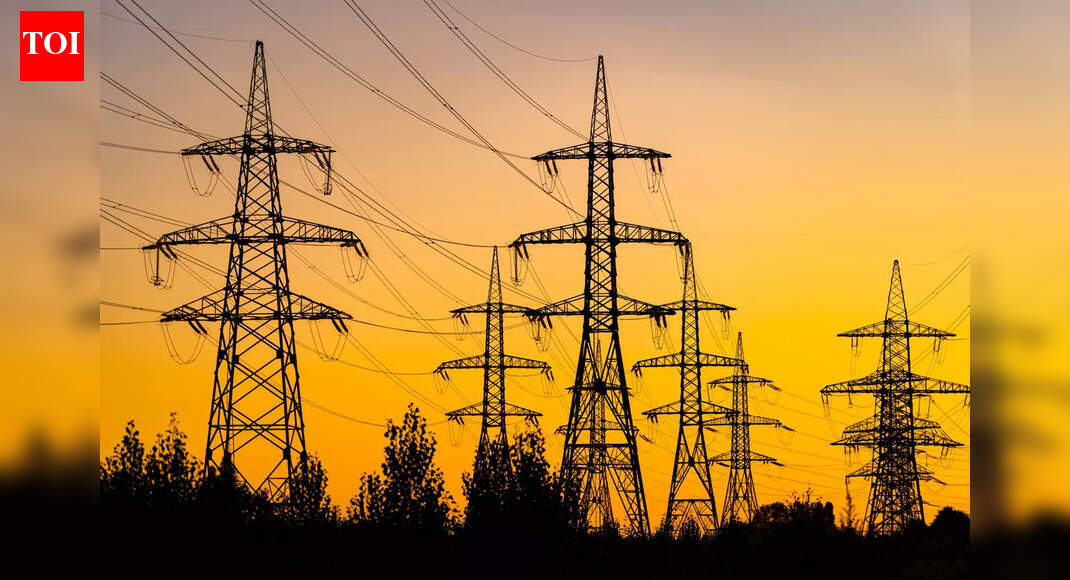
Electricity buyers may see lower costs as the Central Electricity Regulatory Commission (CERC) reviews transaction fees charged by power trading exchanges. The review is taking place alongside the regulator’s push to introduce market coupling, a long-awaited reform aimed at improving efficiency in price discovery, increasing liquidity and bringing uniformity to electricity prices across trading platforms. Over time, the combined effect of these changes is expected to reduce the overall cost of power procurement. Market coupling was approved by CERC in July this year after more than two years of discussions and is proposed to be rolled out in stages, starting with the day-ahead market (DAM) from January 2026. Once implemented, buy and sell bids from all power exchanges will be pooled together to determine a single market-clearing price, replacing the existing system under which prices differ across exchanges. An official said that the regulator has finalised a staff paper titled ‘Review of Transaction Fee charged by the Power Exchanges’ in December 2025. According to the official, who spoke to PTI on the condition of anonymity, CERC is assessing whether the current transaction fee cap of 2 paise per unit is still appropriate at a time when traded volumes have risen sharply and the market is transitioning towards a unified price discovery mechanism. Among the options being discussed is a fixed transaction fee of 1.5 paise per unit for most trading segments. Under the present framework, power exchanges generally charge close to the permitted ceiling. Another proposal under consideration is a lower fee of 1.25 paise per unit for term-ahead market (TAM) contracts, reflecting their longer tenure and comparatively lower operational intensity. India’s exchange-based power market has seen rapid growth over the past decade. Electricity traded through exchanges has increased more than 16 times since 2009-10, with total traded volumes exceeding 120 billion units in 2023-24. While the day-ahead market previously accounted for nearly all exchange-based trading, real-time, intra-day and term-ahead segments now make up an increasing share. Industry experts believe market coupling will help reduce price disparities across exchanges, improve the use of generation capacity and allow buyers to access power at more efficient rates. “Since bids are aggregated across all exchanges, prices are expected to converge and soften to some extent, benefiting distribution companies and large consumers and eventually end-users,” one expert told PTI.At present, Indian Energy Exchange dominates the segment, accounting for nearly 90% of exchange-based power trading volumes, with Power Exchange India Ltd (PXIL) and Hindustan Power Exchange Ltd (HPX) accounting for the rest. Under the approved framework, all three exchanges will act as Market Coupling Operators on a rotational basis, while Grid-India will serve as a backup and audit operator to safeguard system integrity. Officials pointed out that transaction fee structures will gain added significance once exchanges cease competing on price discovery. With transaction fees contributing more than 95% of revenues for established exchanges, any revision is expected to have a meaningful impact on the sector. The official said discussions on transaction fees are still at an early stage, and any changes will be finalised after stakeholder consultations, keeping in mind the broader objective of improving efficiency, transparency and affordability in India’s power markets.

Following the recent surge in petrol and diesel prices, the government has announced another increase in the price of kerosene, further adding to the financial burden on consumers.
According to an official notification, the price of kerosene has been increased by Rs 34.8 per liter. With this latest adjustment, the new price of kerosene has reached Rs 467.48 per liter.
The notification states that the revised price has come into effect from today. Prior to this increase, kerosene was being sold at Rs 433.40 per liter.
The continued rise in fuel prices, including kerosene, is expected to significantly impact low-income households, particularly in rural areas where kerosene is widely used for cooking and lighting.

Many readers have experienced the ordeal of cancelling a subscription.
Source link

United Airlines
Bloomberg | Bloomberg | Getty Images
United Airlines hiked its checked bag fee by $10 on Thursday, becoming the second U.S. carrier in less than a week to raise the fee as the industry grapples with this year’s surge in fuel costs, airlines’ biggest expense after labor.
United’s new fee will be $45 to check a first bag on most domestic itineraries if the traveler pays ahead of time and $50 if they pay within 24 hours of their flight.
“United is raising first and second checked bag fees by $10 for customers traveling in the U.S., Mexico and Canada and Latin America beginning with tickets purchased Friday, April 3,” the carrier said.
United last raised checked bag fees in 2024 and, like other carriers, is trying to cover the recent surge in jet fuel costs.
Fuel prices for Chicago, Houston, Los Angeles and New York averaged $4.56 a gallon on Wednesday, up more than 82% since the U.S. and Israel attacked Iran on Feb.28, according to data from Argus published by industry group Airlines for America.
JetBlue Airways on Monday hiked its checked bag fees at least $4 per bag — and up to $9 per bag, depending on when a customer’s travel is booked — CNBC first reported.
Competitors often follow suit with such fee increases. There are loopholes, however. Airline credit cards often give customers a free checked bag when they’re on domestic itineraries in coach and it usually comes as a perk with elite frequent flyer status. Also, first-class seats generally include a free checked bag.
“United Chase credit card holders, MileagePlus Premier members, active military members and customers traveling in premium cabins can still check a bag for free, and customers in most markets will still enjoy a $5 discount if they prepay for their bags online 24 hours before their flight,” United said.
Higher fuel is showing up at gas stations and other sectors, too. Amazon is adding a 3.5% “fuel and logistics-related surcharge” to fees it collects from third-party sellers who use its fulfillment services, CNBC reported earlier Thursday.
— CNBC’s Annie Palmer contributed to this article.


Transfer rumors, news: Four Premier League clubs want Rogers

US manufacturing performance improves in March 2026

Meghan Markle responds as Prince Harry ‘flirty’ side exposed

-

 Fashion1 week ago
Ho Chi Minh City bizs adjust production plans, seek new supply chains
-

 Entertainment7 days ago
Lee Sang-bo dies at 45: Funeral details revealed
-

 Sports7 days ago
Illinois defense gets tough, ousts Houston to reach Elite Eight
-
 Fashion6 days ago
EU apparel imports slump 15.48% YoY in Jan; Bangladesh hardest hit
-

 Fashion1 week ago
India’s Gen Z to drive half of fashion market by 2030: Reedseer
-

 Sports5 days ago
2026 NCAA men’s hockey tournament: Schedule, results
-
 Business7 days ago
How do you spot a fake online review?
-

 Fashion7 days ago
China rolls out tariff cuts on Congo imports from April 1