

Business
Man arrested in connection with cyber-attack on airports

Imran Rahman-JonesTechnology reporter and
Joe TidyCyber correspondent, BBC World Service
 Getty Images
A person has been arrested in connection with a cyber-attack which has caused days of disruption at several European airports including Heathrow.
The National Crime Agency (NCA) said a man in his forties was arrested in West Sussex “as part of an investigation into a cyber incident impacting Collins Aerospace”.
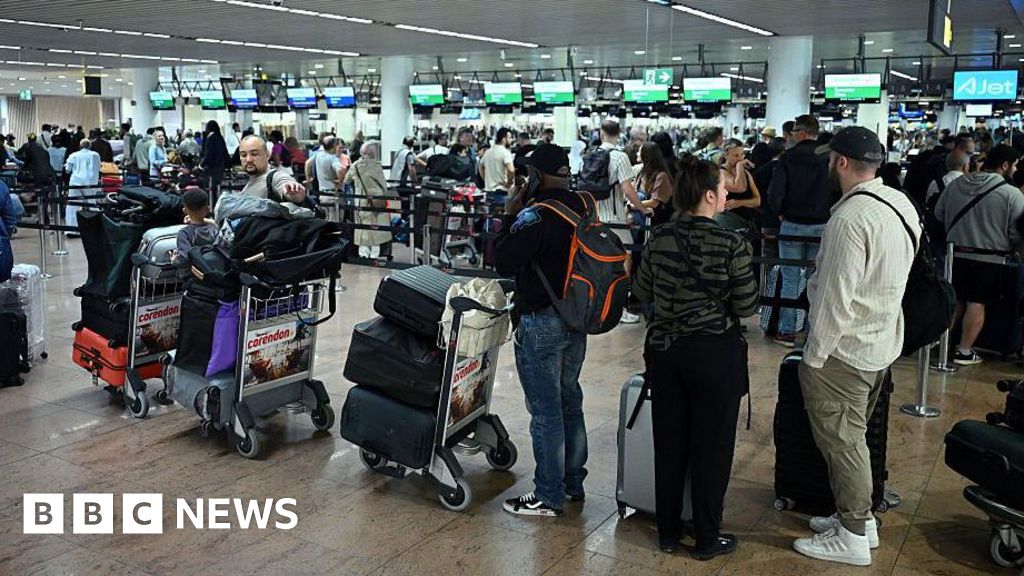
There have been hundreds of flight delays after Collins Aerospace baggage and check-in software used by several airlines failed, with some boarding passengers using pen and paper.
“Although this arrest is a positive step, the investigation into this incident is in its early stages and remains ongoing,” said Paul Foster, head of the NCA’s national cyber crime unit.
The man was arrested on Tuesday evening on suspicion of Computer Misuse Act offences and has been released on bail.
The BBC has seen an internal memo sent to airport staff at Heathrow about the difficulties software provider Collins Aerospace is having bringing their check-in software back online.
The US company appears to be rebuilding the system again after trying to relaunch it on Monday.
Collins Aerospace’s parent company RTX Corporation told the BBC it appreciated the NCA’s “ongoing assistance in this matter”.
The US firm has not put a timeline on when it will be ready and is urging ground handlers and airlines to plan for at least another week of using manual workarounds.
At Heathrow, extra staff have been deployed in terminals to help passengers and check-in operators but flights are still experiencing delays.
On Monday, the EU’s cyber-security agency said ransomware had been deployed in the attack.
Ransomware is often used to seriously disrupt victims’ systems and a ransom is demanded in cryptocurrency to reverse the damage.
These types of attacks are an issue for organisations around the country, with organised cyber-crime gangs earning hundreds of millions of pounds from ransoms every year.
Days of disruption
The attack against US software maker Collins Aerospace was discovered on Friday night and resulted in disruption across many European airports, including in Brussels, Dublin and Berlin.
Flights were cancelled and delayed throughout the weekend, with some airports still experiencing effects of the delays into this week.
“The vast majority of flights at Heathrow are operating as normal, but we encourage passengers to check the status of their flight before travelling to the airport,” Heathrow Airport said in a statement on its website.
Berlin Airport said on Wednesday morning “check-in and boarding are still largely manual”, which would result in “longer processing times, delays, and cancellations by airlines”.
While Brussels Airport advised passengers to check in online before arriving at the airport.
Cyber-attacks in the aviation sector have increased by 600% over the past year, according to a report by French aerospace company Thales.


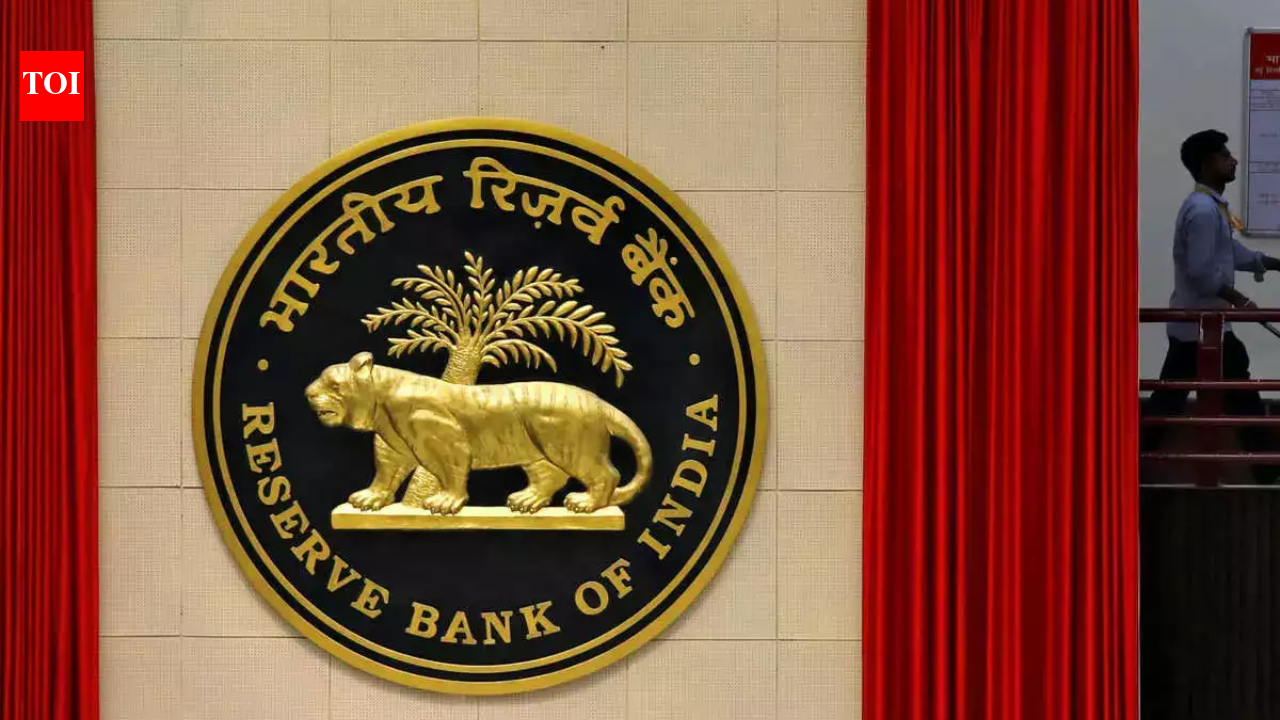
The Reserve Bank of India (RBI) on Monday decided against activating the countercyclical capital buffer (CCyB), indicating that current financial and credit conditions do not warrant an additional capital requirement for banks, PTI reported.The central bank said the decision followed a review and empirical assessment of indicators used under the CCyB framework.“Based on review and empirical analysis of CCyB indicators, it has been decided that it is not necessary to activate CCyB at this point in time,” RBI said in a statement.Under the RBI (Commercial Banks – Prudential Norms on Capital Adequacy) Directions, 2025, the CCyB framework is activated when financial conditions indicate rising systemic risks linked to excessive credit growth.The framework primarily relies on the credit-to-GDP gap as a key indicator, along with supplementary metrics.According to the RBI, the CCyB mechanism is intended to serve two broad objectives.Firstly, it requires a bank to build up a buffer of capital in good times, which may be used to maintain the flow of credit to the real sector in difficult times.Secondly, it achieves the broader macro-prudential goal of restricting the banking sector from indiscriminate lending in the periods of excess credit growth that have often been associated with the building up of system-wide risk.The framework was introduced globally after the 2008 financial crisis as part of measures proposed by the Group of Central Bank Governors and Heads of Supervision (GHOS) under the Basel framework to strengthen financial system resilience.

The company has announced plans to build seven new models in Europe including a small electric hatchback.
Source link

“Today’s policymaking is constrained by a more volatile external environment with more frequent and overlapping shocks, a rising public interest bill, in part reflecting market concerns with countries’ elevated debt, and the long-standing challenge of weak productivity growth,” he said.


Turkiye’s current account deficit expected to widen in 2026: Minister

UK’s clothing imports fall 3% in Q1, sharply lower than Q4 2025
RBI sees no signs of excess credit risk, keeps countercyclical capital buffer inactive

-

 Entertainment6 days ago
Conan O’Brien hat tricks as Oscar host
-

 Tech1 week ago
Could Contact-Tracing Apps Help With the Hantavirus? Not Really
-

 Fashion5 days ago
Italy’s Zegna Group’s Q1 growth boosted by strong organic performance
-

 Sports1 week ago
Bobby Cox, legendary Atlanta Braves manager who led 1995 World Series champions, dead at 84
-

 Entertainment1 week ago
Martin Short: Facing tragedy with joy
-

 Entertainment1 week ago
Tom Brady gets back at Kevin Hart during Netflix roast
-

 Sports1 week ago
Jacob Fatu unleashes vicious assault on Roman Reigns after World Heavyweight Championship loss at WWE Backlash
-

 Entertainment1 week ago
Martha Stewart: How to make an omelet