

Fashion
Market Access Support to lift India’s textile exports drive: CITI

“Coming on the back of the signing of the India-Oman trade pact and the conclusion of the FTA negotiations with New Zealand earlier in December, it’s one of the best news to end what has otherwise been a very challenging year for the textile and apparel sector,” CITI chairman Ashwin Chandran said.
CITI has welcomed the Market Access Support intervention under the Export Promotion Mission, saying it will help textile and apparel exporters expand into new markets.
CITI chairman Ashwin Chandran said the move complements recent trade pacts and diversification efforts, supporting export growth, job creation, and resilience despite 50 per cent US tariffs and global headwinds.
“With the trade deals already signed by India and those on the anvil opening new opportunities, the Market Access Support intervention will provide a fillip to textile and apparel exporters to expand their presence in more countries, which, by extension, will also have a positive ripple effect on the creation of more jobs and livelihood opportunities here,” the CITI chairman added.
Under the Market Access Support Intervention, structured financial and institutional support will be provided for activities including Buyer-Seller Meets (BSMs), participation in international trade fairs and exhibitions, Mega Reverse Buyer-Seller Meets (RBSMs) organised in India, and trade delegations to priority and emerging export markets.
In July, India signed the Comprehensive Economic and Trade Agreement with the United Kingdom. Talks are also ongoing on an FTA with the European Union, besides a Bilateral Trade Agreement with the United States.
The CITI chairman said the trade data for November 2025 has demonstrated the resilience of the Indian exporting community to hold its ground despite global headwinds. “November 2025 proved that the diversification strategy has started yielding results. The full benefits of the diversification strategy will be evident once all the measures under the Export Promotion Mission are rolled out,” he added.
India’s textile and apparel sector has been hit hard by the 50 per cent US tariff, effective August 27, 2025. The US is the single-largest market for India’s textile and apparel sector, contributing almost 28 per cent to the total revenue of India’s textile and apparel exporters. India’s textile and apparel exports to the US stood at nearly $11 billion in 2024-25.
India has set itself a target of creating a $350 billion textile and apparel industry by 2030, including achieving $100 billion of exports by that period.
Fibre2Fashion News Desk (KD)













Wholesale revenue dropped 12.8 per cent on a currency-adjusted basis to €4.9 billion, while direct-to-consumer (DTC) sales increased 3.4 per cent, lifting the DTC share to 32.4 per cent from 28.9 per cent.
Regionally, sales fell 6.9 per cent in Europe, Middle East and Africa (EMEA), 7.4 per cent in Asia-Pacific and 10 per cent in the Americas, with North America driving much of the decline.
Puma has reported sales of €7.3 billion (~$8.61 billion) in FY25, with currency-adjusted revenue down 8.1 per cent amid strategic reset actions.
Wholesale declined while DTC share increased.
Margins contracted and EBIT turned negative, leading to a net loss.
Q4 saw sharper declines across regions and categories.
Puma expects further sales softness and negative EBIT in FY26.
By product segment, footwear sales decreased 7.1 per cent, apparel declined 9.7 per cent and accessories fell 8.5 per cent, although selective growth was observed in running, training and premium sport style lines, Puma said in a press release.
Profitability weakened significantly during the year. Gross margin contracted 260 basis points to 45.0 per cent, impacted by promotional activity, inventory reserves, unfavourable mix and currency effects. Adjusted EBIT turned negative at €165.6 million, while reported EBIT declined to -€357.2 million after €191.6 million in one-off costs related mainly to the cost efficiency programme and goodwill impairments.
Loss from continuing operations widened to -€643.6 million, translating to earnings per share of -€4.37 versus €1.88 in the prior year.
From a balance sheet perspective, inventories rose 2.3 per cent to €2.06 billion as inventory takebacks from wholesale partners supported distribution clean-up. Working capital increased 20.2 per cent, while trade receivables and payables declined sharply in line with reduced sales and purchasing activity. Puma ended the year with additional financing capacity, including €1,202.2 million in unutilised credit lines.
Fourth quarter (Q4) performance reflected the peak impact of the strategic reset. Currency-adjusted sales declined 20.7 per cent to €1,564.9 million, with reported revenue down 27.2 per cent due to currency headwinds. The decline was driven by deliberate reductions in wholesale exposure, inventory clearance actions and lower promotional intensity.
Wholesale sales fell 27.7 per cent in Q4, while DTC revenue decreased 8.0 per cent, although DTC share increased to 41.1 per cent from 35.5 per cent. Regionally, sales dropped 12.6 per cent in Asia-Pacific, 22.2 per cent in the Americas and 24.3 per cent in EMEA.
Across product divisions, footwear sales declined 25.4 per cent, apparel fell 13.7 per cent and accessories dropped 18.2 per cent, with selective resilience in training and performance running categories.
Profitability deteriorated sharply. Gross margin declined to 40.2 per cent from 47.7 per cent due to promotions, inventory provisions and currency effects. Adjusted EBIT fell to -€228.8 million, while reported EBIT reached -€307.7 million following one-off costs linked to restructuring and impairment charges. The quarter ended with a loss from continuing operations of -€335 million.
Arthur Hoeld, CEO of Puma, said: “2025 was a reset year for us. We want to establish Puma as a top 3 sports brand globally, return to above-industry growth and generate healthy profits in the medium term. It is crucial to make the Puma brand less commercial and ensure we once again excite our consumers with attractive products, compelling storytelling and distribution in the right channels. I am satisfied with the progress we have made so far. We cleaned up most of our distribution by reducing promotions in our own channels and cutting our exposure to those wholesale channels that damage our brand’s desirability. To better position our product icons and our performance offering and tell more engaging product stories, we created the right structures inside our company. We also addressed operational inefficiencies and further optimised our cost base.”
Looking ahead, Puma expects currency-adjusted sales in fiscal 2026 to decline in the low- to mid-single-digit percentage range, with EBIT projected between -€50 million and -€150 million. Capital expenditure of around €200 million is planned as the company continues investments in brand repositioning and digital capabilities, added the release.
Fibre2Fashion News Desk (SG)
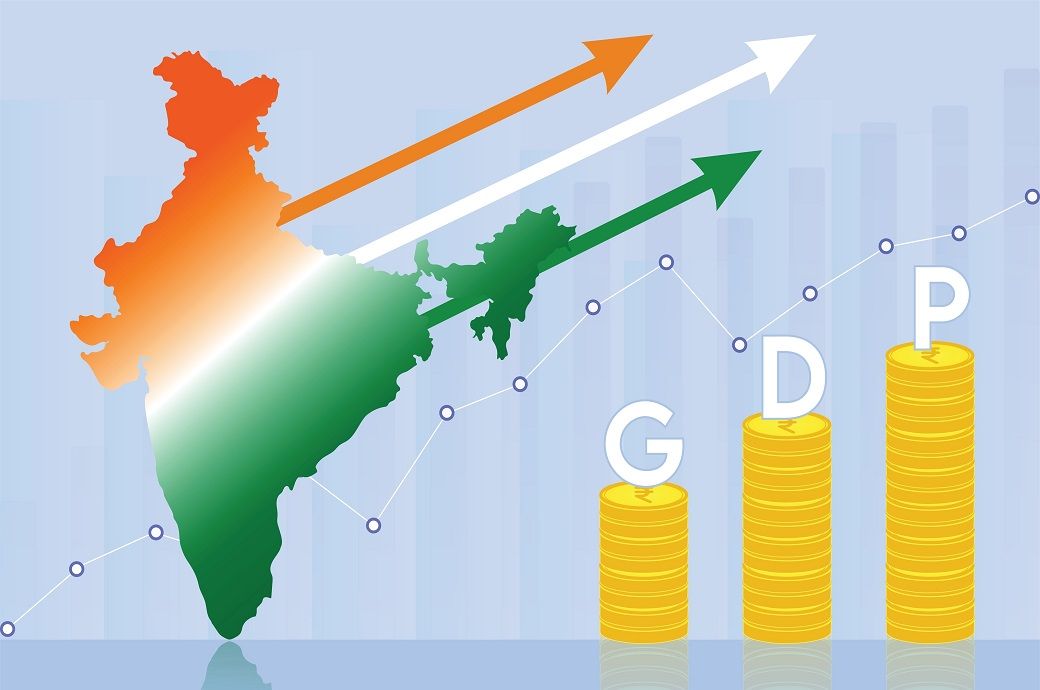
Nominal GDP, or GDP at current prices, is estimated to grow at 8.6 per cent to reach ₹345.47 trillion in FY26 against ₹318.07 trillion in 2024-25.
India’s real GDP is estimated to grow at 7.6 per cent to ₹322.58 trillion (~$3.54 billion) in FY26 compared to the first revised GDP estimate of ₹299.89 trillion for FY25 (7.1 per cent growth).
It released the new series of annual and quarterly national accounts estimates with FY23 base.
Real GVA is projected to grow at 7.7 per cent to reach ₹294.40 trillion in FY26 against ₹273.36 trillion in FY25.
Real gross value added (GVA) is projected to grow at 7.7 per cent to reach ₹294.40 trillion in FY26 against ₹273.36 trillion in FY25 (a 7.3-per cent growth rate).
Nominal GVA is estimated to grow at 8.7 per cent to hit ₹313.61 trillion during FY26, against ₹288.54 lakh crore in 2024-25.
Robust economic performance in FY26 is primarily on account of robust real growth observed in the second quarter (8.4 per cent) and third quarter (7.8 per cent).
The manufacturing sector has been the major driver of resilient performance of the economy the consecutive three fiscals after rebasing, a release from the ministry said.
Both private final consumption expenditure and grossed fixed capital formation exhibited more than 7-per cent growth rate in FY26.
Fibre2Fashion News Desk (DS)


2026 NFL combine buzz: Intel on free agency, trades, QBs

Neil Sedaka: An appreciation – CBS News

Khamenei dead, Middle East on edge: What will be the implications of Trump’s ‘Epic fury’ on stock markets, gold & oil? – The Times of India

-
 Business1 week ago
US Top Court Blocks Trump’s Tariff Orders: Does It Mean Zero Duties For Indian Goods?
-

 Fashion1 week ago
ICE cotton ticks higher on crude oil rally
-

 Entertainment1 week ago
The White Lotus” creator Mike White reflects on his time on “Survivor
-
 Business1 week ago
Eye-popping rise in one year: Betting on just gold and silver for long-term wealth creation? Think again! – The Times of India
-

 Politics1 week ago
Pakistan carries out precision strikes on seven militant hideouts in Afghanistan
-

 Sports1 week ago
Brett Favre blasts NFL for no longer appealing to ‘true’ fans: ‘There’s been a slight shift’
-

 Entertainment1 week ago
Viral monkey Punch makes IKEA toy global sensation: Here’s what it costs
-

 Sports1 week ago
Kansas’ Darryn Peterson misses most of 2nd half with cramping