

Business
Maruti Suzuki targets mini-car surge: Alto and S-Presso prices cut 11-13%; 2-wheeler buyers lured by festive finance – The Times of India


Maruti Suzuki India is intensifying efforts to boost sales of its entry-level cars, aiming to achieve record volumes for the Alto and S-Presso in the ongoing fiscal 2026. The company is relying on aggressive price reductions, festive finance schemes, and a focused push to attract two-wheeler riders into the four-wheeler segment.According to sources familiar with the matter told ET, Maruti has set a target to sell between 220,000 and 250,000 mini cars this fiscal year. The previous record for the segment was around 247,000 units in FY20.The renewed focus on small cars is part of Maruti’s broader strategy to arrest declining market share, which has been under pressure due to a slump in small-car sales alongside rising SUV demand. In FY25, the overall passenger vehicle market grew only 2% in cumulative wholesale dispatches, while Maruti’s market share fell to 40.9%, the lowest since FY13 when it stood at 39%. The company had commanded over 51% market share in FY19 and FY20.Maruti’s optimism is reinforced by a GST rate cut on small cars, which has effectively lowered prices by 11-13%. The company has also introduced a festive Rs 1,999 EMI scheme for entry-level models, launched during Navratri and extending through Diwali, to appeal to two-wheeler owners.
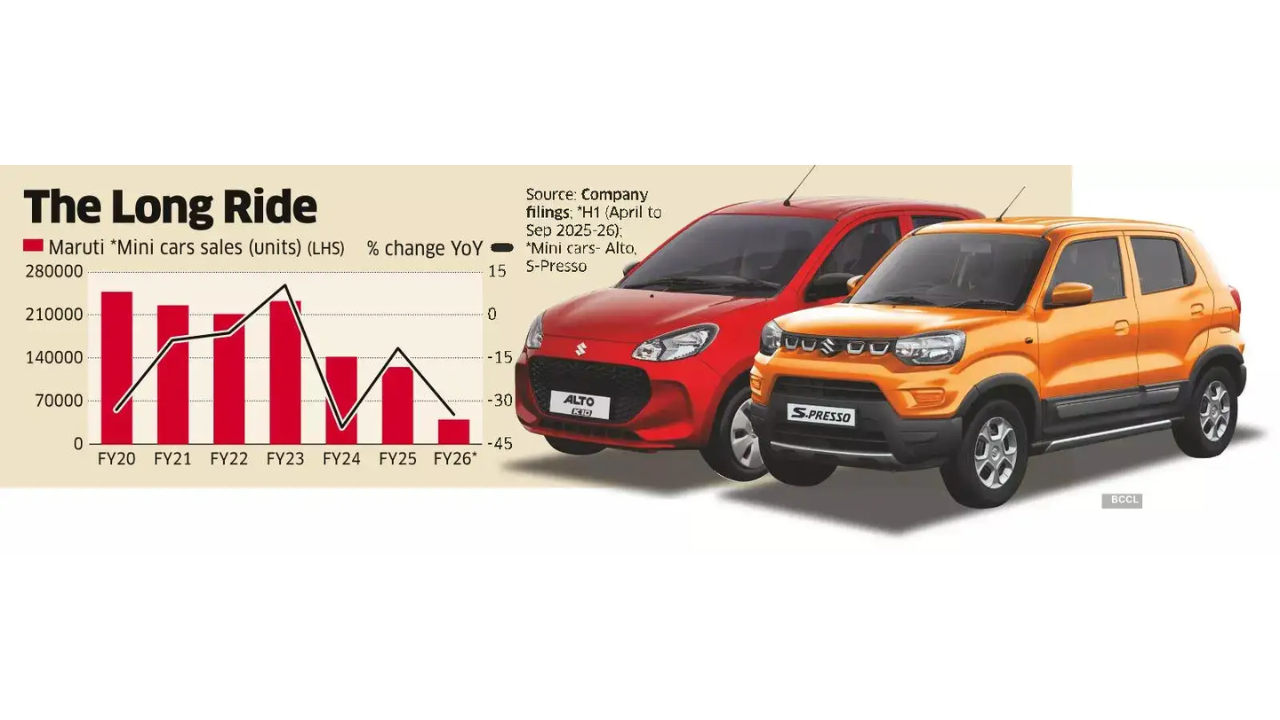
Dealers reported a surge in showroom footfalls and enquiries, particularly from rural and small-town buyers, though actual conversions remain limited. “The offer is very attractive and has brought new buyers into showrooms. We expect a major pickup during Dhanteras and Diwali,” said a Maruti dealer in western India.Partho Banerjee, Senior Executive Officer (Sales and Marketing) at Maruti Suzuki, said the entry-level segment is showing early signs of revival. “The response to the Rs 1,999 EMI offer has been very positive. Many two-wheeler customers who earlier did not consider buying a car are now visiting our showrooms. We are literally seeing helmets on discussion tables – that’s a very good indicator,” he told ET.Banerjee added that overall festive-period booking momentum has been strong. “Just to give you a perspective, the Alto bookings in October (till date) were up around 60% compared to the same month last year.” He noted that bookings for cars in the 18% GST bracket, including small cars, have risen sharply, though it is still early to quantify their full impact on overall sales.Industry observers, however, expressed caution over Maruti’s ambitious targets. “It’s a very tall target. Over the last five years, the car buyer has become a lot more aspirational. Even a first-time buyer is not keen on an entry-level model and prefers a second-hand premium hatchback like a Baleno,” said an industry executive, requesting anonymity.Analysts believe that while the push on affordability may come at the cost of average selling price and near-term margins – potentially around 100 basis points – it could expand market share and improve operating leverage if consumer response remains positive. Kapil Singh of Nomura Research noted that the initiative may strengthen Maruti’s base.According to Puneet Gupta, Director, S&P Global Mobility, the GST reduction could reignite demand in the mini-car segment. “Expect a wave of innovation in financing, product offerings, and ownership schemes aimed at reviving this category,” he said. With only 36 cars per 1,000 people, India’s vehicle ownership remains among the lowest globally, and this push could serve as a catalyst for two-wheeler users to transition to four-wheelers.Maruti has reduced prices across its lineup by 2-21%, with the steepest cuts on the Alto, S-Presso, and Celerio (13-22%). Larger models, including the Brezza, Grand Vitara, and Invicto, have seen reductions of 2-8%.Banerjee emphasised that Maruti is committed to maintaining a balanced presence across all segments. “As a market leader, we must have a play across all segments – hatchbacks, SUVs, MPVs, CNG, hybrids, and EVs. That’s what leadership means,” he said.





Food delivery giant Just Eat, funeral firm Dignity and motor platform Autotrader are among five firms under investigation by the UK’s competition watchdog as part of its crackdown on fake and misleading online reviews.
The Competition and Markets Authority (CMA) said it had launched probes against the companies – also including customer review and feedback firm Feefo and Pasta Evangelists – to see whether consumer laws have been broken.
Since April last year, companies have been banned from certain tactics around online reviews under law, such as fake posts, paid-for reviews that are not clearly marked as incentivised, as well as for hiding negative feedback.
Sarah Cardell, chief executive of the CMA, said: “Fake reviews strike at the heart of consumer trust – with many of us worrying about misleading content when looking at reviews online.
“With household budgets under pressure, people need to know they’re getting genuine information – not reviews or star ratings that have been manipulated to push them towards the wrong choice.
“We’ve given businesses the time to get things right. Now we’re deploying our new powers to tackle some of the most harmful practices head on.”
The CMA said it was looking into whether Just Eat’s ratings system had inflated some restaurant and grocer star ratings, giving a misleading picture of quality.
For Autotrader and Feefo, the CMA is investigating whether a number of one-star reviews – moderated by Feefo, which handles reviews for the new and used car site – were hidden on the platform and did not count towards the star ratings.
Dignity is under investigation by the CMA into whether it asked staff to write positive reviews about the firm’s crematoria services.
And artisan fresh pasta chain Pasta Evangelists is being probed over allegations it offered customers discounts for leaving five-star reviews on delivery apps without this being disclosed.
If the CMA finds the firms have broken the law, it can order them to change their practices and fine them up to 10% of their annual global sales.
An Autotrader spokesperson said: “We endeavour always to operate as a responsible and compliant business and will co-operate fully with the CMA’s investigation.”
It comes after the CMA recently secured commitments from Google and Amazon to beef up their systems to identify and remove fake reviews.
Amazon last June agreed to put in place “robust processes” to quickly detect and remove fake reviews alongside sanctions for rogue sellers and businesses after an investigation by the CMA to curb the customer hazard.
The tech giant said it would sanction businesses that boost their star ratings via bogus reviews or catalogue abuse, including bans from selling on the website, while users could also be banned for posting fake reviews.
Consumer group Which? welcomed the investigations and said the CMA must “get tough” on firms found to be breaking the law with reviews.
Sue Davies, head of consumer rights policy at Which?, said: “Investigations are a welcome first step, but enforcement will be key – the regulator must be prepared to get tough, use its powers and issue serious fines if these companies aren’t playing by the rules.”
The CMA said it swept more than 100 review publishers as part of the clampdown and sent advisory letters to 54 firms to improve their compliance with the law, with 90% having made changes in response and 75% telling the watchdog they better understood the rules.
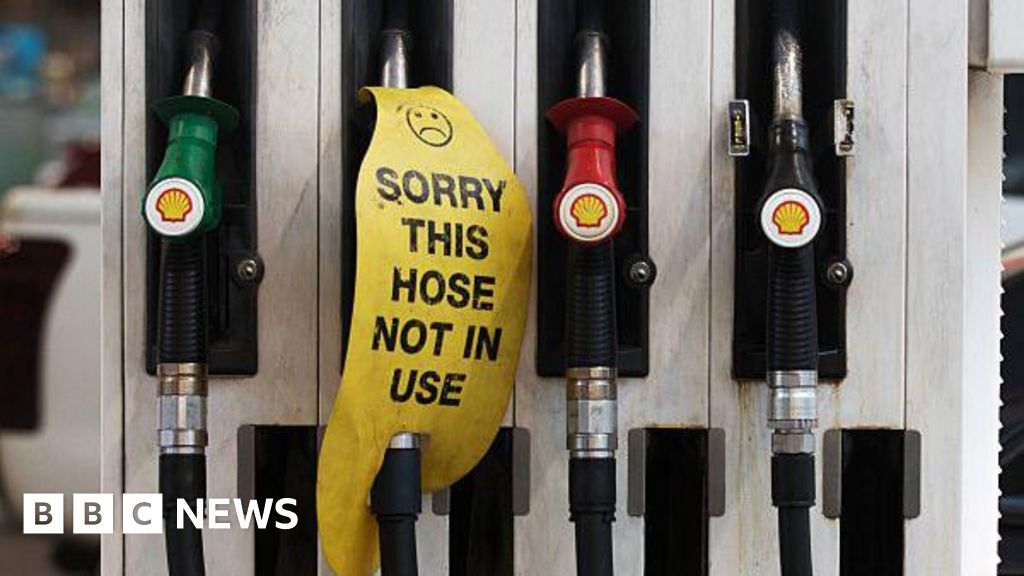
Anthony Albanese says nation’s supply remains “secure” amid reports of panic buying and shortages.
Source link

A woman has been awarded $6m in a verdict that could have implications for hundreds of other cases in the US.
Source link


Transfer rumors, news: Could Foden leave Man City this summer?

Germany’s ifo index drops to 86.4 in March as uncertainty weighs on
Just Eat and Autotrader among five firms under investigation over online reviews

-

 Fashion1 week ago
Sales at US apparel, clothing accessories stores up 4% YoY in Jan 2026
-

 Entertainment1 week ago
Val Kilmer revived 1 year after death through AI
-
 Fashion1 week ago
US’ G-III Apparel’s FY26 sales fall 7% to $2.96 bn
-
 Business1 week ago
Brits cashing in jewellery as gold price hits record high
-

 Sports1 week ago
March Madness 2026 – How to watch in SA, start time, schedule, TV channel for NCAA championship basketball tournament
-

 Fashion6 days ago
China’s textile & apparel exports surge 17% to $50 bn in Jan-Feb 2026
-
 Business1 week ago
Video: The Effects of High Oil Prices
-
 Business6 days ago
Flipkart group CFO to leave co amid IPO plans – The Times of India