

Politics
Medicine Nobel to trio who identified immune system’s ‘security guards’



A US-Japanese trio on Monday won the Nobel Prize in Medicine for research into how the immune system is kept in check by identifying its “security guards”, the Nobel jury said.
The discoveries by Mary E. Brunkow and Fred Ramsdell of the United States and Japan’s Shimon Sakaguchi have been decisive for understanding how the immune system functions and why we do not all develop serious autoimmune diseases.
Sakaguchi, a professor at the Immunology Frontier Research Centre in Osaka, told Swedish broadcaster Sveriges Radio: “It’s an honour for me. I’m looking forward to visiting Stockholm in December” to receive the award in person.
The Nobel committee was however unable to reach the two US-based laureates to break the news to them in person.
“If you hear this, call me,” the head of the Nobel Assembly, Thomas Perlmann, joked at the press conference announcing the winners.
The three won the prize for research that identified the immune system’s “security guards”, called regulatory T-cells.
Their work concerns “peripheral immune tolerance” that prevents the immune system from harming the body, and has led to a new field of research and the development of potential medical treatments now being evaluated in clinical trials.
“The hope is to be able to treat or cure autoimmune diseases, provide more effective cancer treatments and prevent serious complications after stem cell transplants,” the jury said.
Protecting the body
Sakaguchi made the first key discovery in 1995.
At the time, many researchers were convinced that immune tolerance only developed due to potentially harmful immune cells being eliminated in the thymus, through a process called “central tolerance”.
Sakaguchi, 74, showed that the immune system is more complex and discovered a previously unknown class of immune cells, which protect the body from autoimmune diseases.
Brunkow, born in 1961 and a senior project manager at the Institute for Systems Biology in Seattle, and Ramsdell, a 64-year-old senior advisor at Sonoma Biotherapeutics in San Francisco, made the other key discovery in 2001, when they were able to explain why certain mice were particularly vulnerable to autoimmune diseases.
“They had discovered that mice have a mutation in a gene that they named Foxp3,” the jury said.
“They also showed that mutations in the human equivalent of this gene cause a serious autoimmune disease, IPEX.”
Two years later, Sakaguchi was able to link these discoveries.
The trio will receive their prize—a diploma, a gold medal and $1.2 million split three ways— at a formal ceremony in Stockholm on December 10.
Researchers from major US institutions typically dominate the Nobel science prizes, due largely to the US’ longstanding investment in basic science and academic freedoms.
But that could change down the line following massive US budget cuts to science programmes announced by President Donald Trump.
Since January, the US National Institutes of Health (NIH) has terminated 2,100 research grants totalling around $9.5 billion and $2.6 billion in contracts, according to an independent database called Grant Watch.
Trump eyeing Peace Prize
Thomas Perlmann, secretary general of the committee that awards the Nobel Prize for Medicine, told AFP it was “no coincidence that the US has by far the most Nobel laureates”.
“But there is now a creeping sense of uncertainty about the US’ willingness to maintain their leading position in research,” he said.
Trump has meanwhile made no secret of the fact that he wants to win a Nobel himself— the Peace Prize.
Nobel experts have however said his “America First” policies and divisive style give him little chance.
“It’s completely unthinkable,” Oeivind Stenersen, a historian who has conducted research and co-written a book on the prize, told AFP.
“(Trump) is in many ways the opposite of the ideals that the Nobel Prize represents,” he said, citing “multilateral cooperation” as an example.
Trump “follows his own path, unilaterally,” Stenersen added.
Sudan’s networks of volunteers Emergency Response Rooms (ERR) helping people survive war and famine— are seen as a possible contender this year, as are media watchdogs the Committee to Protect Journalists, Reporters Without Borders, and Yulia Navalnaya, the widow of Kremlin critic Alexei Navalny.
- Trump says Iran cancelled mass hangings of protesters.
- Thanks Tehran, calls move ‘greatly respected’.
- Claims more than 800 executions were scheduled.
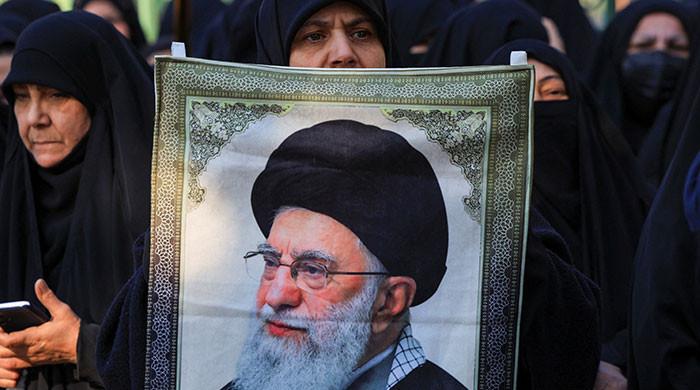
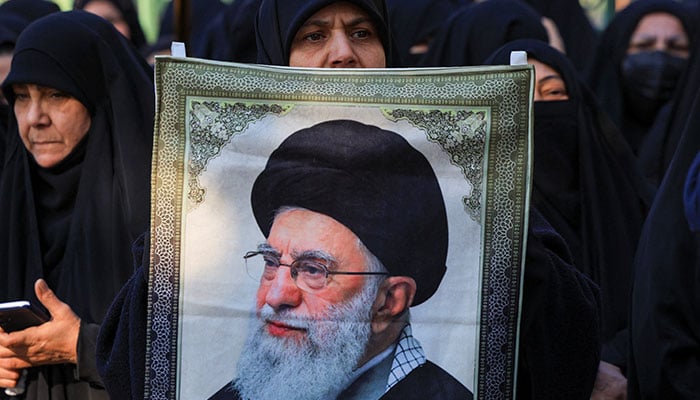
DUBAI: US President Donald Trump has thanked Iran’s leaders for cancelling what he said were hundreds of planned executions of protesters after a crackdown.
Taking to his social media platform, he said the mass hangings had been called off and praised Tehran for the move, as deadly unrest across the country appears to be easing after a harsh crackdown.
US President Donald Trump, whose repeated threats to act had included a vow to “take very strong action” if Iran executed protesters, said Tehran’s leaders had called off mass hangings.
“I greatly respect the fact that all scheduled hangings, which were to take place yesterday (Over 800 of them), have been cancelled by the leadership of Iran. Thank you!” he posted on social media.
Iran has not publicly announced plans for such executions or said it had cancelled them.
The protests erupted on December 28 over economic hardship and swelled into widespread demonstrations calling for the end of present rule, culminating in mass violence at the end of last week. According to opposition groups and an Iranian official, more than 2,000 people were killed in the worst domestic unrest since Iran’s 1979 Islamic Revolution.
But several residents of Tehran reached by Reuters said the capital had now been comparatively quiet for four days. Drones were flying over the city, but there had been no sign of major protests on Thursday or Friday. Another resident in a northern city on the Caspian Sea said the streets there also appeared calm. The residents declined to be identified for their safety.
Prospect of US attack retreats
The prospect of a US attack has retreated since Wednesday, when Trump said he had been told killings in Iran were easing. But more US military assets were expected to arrive in the region, showing the continued tensions.
US allies, including Saudi Arabia and Qatar, conducted intense diplomacy with Washington this week to prevent a US strike, warning of repercussions for the wider region that would ultimately impact the United States, a Gulf official said.
Israel’s intelligence chief David Barnea was also in the US on Friday for talks on Iran, according to a source familiar with the matter, and an Israeli military official said the country’s forces were on “peak readiness”.
As an internet blackout eased this week, more accounts of the violence have trickled out.
One woman in Tehran told Reuters by phone that her daughter was killed a week ago after joining a demonstration near their home.
“She was 15 years old. She was not a terrorist, not a rioter. Basij forces followed her as she was trying to return home,” she said, referring to a branch of the security forces often used to quell unrest.
The US is expected to send additional offensive and defensive capabilities to the region, but the exact make-up of those forces and the timing of their arrival was still unclear, a US official said, speaking on condition of anonymity.
The US military’s Central Command declined to comment, saying it does not discuss ship movements.
Pahlavi calls for increased pressure
Reza Pahlavi, the US-based son of Iran’s last shah who has gained increasing prominence as an opposition figure, on Friday urged the international community to ramp up pressure on Tehran to help protesters overthrow the present setup.
“The Iranian people are taking decisive action on the ground. It is now time for the international community to join them fully,” said Pahlavi, whose level of support inside Iran is hard to gauge.
Trump this week appeared to downplay the idea of US backing for Pahlavi, voicing uncertainty that the exiled royal heir who has courted support among Western countries could muster significant backing inside Iran. Pahlavi met US envoy Steve Witkoff last weekend, Axios reported.
Iranian-Kurdish rights group Hengaw said that there had been no protest gatherings since Sunday, but “the security environment remains highly restrictive”.
“Our independent sources confirm a heavy military and security presence in cities and towns where protests previously took place, as well as in several locations that did not experience major demonstrations,” Norway-based Hengaw said in comments to Reuters.
Reports of sporadic unrest
There were, however, still indications of unrest in some areas. Hengaw reported that a female nurse was killed by direct gunfire from government forces during protests in Karaj, west of Tehran. Reuters was not able to independently verify the report.
The state-affiliated Tasnim news outlet reported that rioters had set fire to a local education office in Falavarjan County, in central Isfahan Province, on Thursday.
An elderly resident of a town in Iran’s north-western region, where many Kurdish Iranians live and which has been the focus for many of the biggest flare-ups, said sporadic protests had continued, though not as intensely.
Describing violence earlier in the protests, she said: “I have not seen scenes like that before.”
Video circulating online, which Reuters was able to verify as having been recorded in a forensic medical centre in Tehran, showed dozens of bodies lying on floors and stretchers, most in bags but some uncovered. Reuters could not verify the date of the video.
The state-owned Press TV cited Iran’s police chief as saying calm had been restored across the country.
A death toll reported by US-based rights group HRANA has increased little since Wednesday, now at 2,677 people, including 2,478 protesters and 163 people identified as affiliated with the government.
Reuters has not been able to independently verify the HRANA death toll. An Iranian official told the news agency earlier this week that about 2,000 people had been killed.
The casualty numbers dwarf the death toll from previous bouts of unrest that have been suppressed by the state, including in 2009 and 2022.
- US lawmakers visit Denmark to back Copenhagen and Greenland.
- Denmark strongly rejects Trump’s takeover idea.
- Lawmakers say most Americans do not support plan.
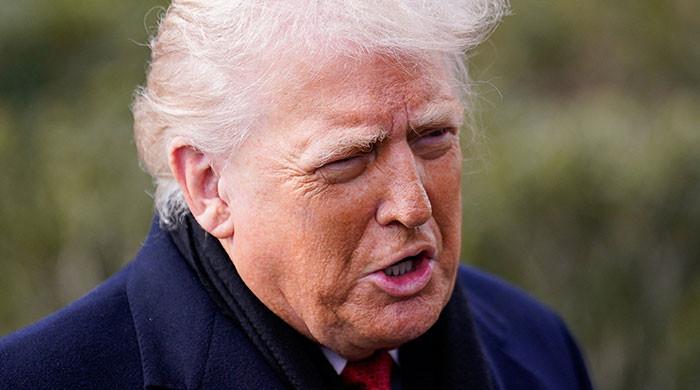
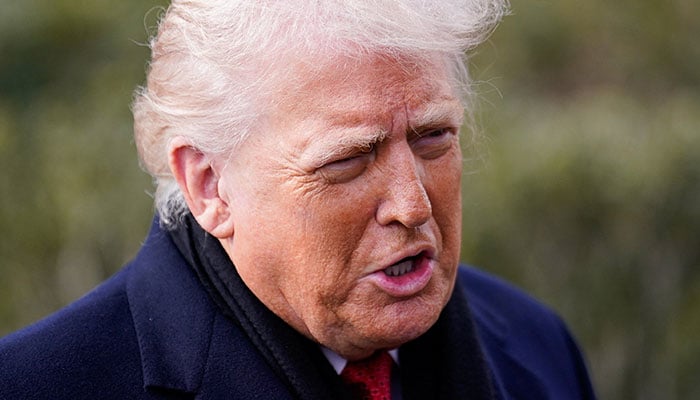
COPENHAGEN: US President Donald Trump on Friday warned that he could slap tariffs on countries that do not support his Greenland takeover plans, as US Congress members visited Copenhagen to give their backing for Denmark and its autonomous Arctic island.
The bipartisan delegation, on a two-day trip to the Danish capital, said the US president’s long-held territorial ambitions – strongly rejected by Denmark – were not shared by the American people.
Europeans have also been showing their backing for Greenland, in a military reconnaissance mission that a Danish general said Washington was invited to and which was linked to what Russia does after the war in Ukraine.
Trump, again insisting the United States needed mineral-rich Greenland for its “national security”, warned that he “may put a tariff” on countries that oppose that stance.
The 11 visiting US lawmakers held talks with Danish Prime Minister Mette Frederiksen and her Greenlandic counterpart Jens-Frederik Nielsen, as well as Denmark’s foreign and defence ministers, parliamentarians and business leaders.
Republican Senator Lisa Murkowski said there was “good dialogue” and stressed it was important to “nurture” ties between the United States, Denmark and Greenland.
“The vast majority” of Americans do not agree that it is a good idea for the United States to acquire Greenland, she told reporters.
“Greenland needs to be viewed as our ally, not as an asset,” she added.
One idiot
The visit follows a meeting in Washington on Wednesday at which Danish representatives said Copenhagen and Washington were in “fundamental disagreement” over Greenland’s future.
Democratic Senator Chris Coons said the purpose of the Congress members’ visit was to “listen respectfully to our friends, our trusted allies and partners here in Denmark and from Greenland”.
The lawmakers were then to return to the United States “and share those perspectives so that we can lower the temperature and have a more constructive dialogue about the best path forward”, he said.
In Greenland’s capital, Nuuk, residents welcomed the show of support.
“Congress would never approve of a military action in Greenland. It’s just one idiot speaking,” a 39-year-old union representative told AFP.
“If he (Trump) does it, he’ll get impeached or kicked out. If people in Congress want to save their own democracy, they have to step up,” said the union rep, speaking on condition of anonymity.
Demonstrations
Trump has repeatedly criticised Denmark – a NATO ally – for, in his view, not doing enough to ensure Greenland’s security.
The US president has pursued that argument, despite strategically located Greenland – as part of Denmark – being covered by NATO’s security umbrella.
The head of Denmark’s Joint Arctic Command, Major General Soren Andersen, said the United States were invited to the military mission, which he said was “about Russia”.
“When the war in Ukraine is over, hopefully with a good result for Ukraine, it is our expectation that Russia will move the resources they have been using in Ukraine to other theatres, including in the Arctic,” he told AFP.
“So, in order to prepare for that, we simply have to step up, train, and that is what we are doing up here.”
But Andersen said he had not seen any Russian or Chinese combat ships in the area in the two and a half years he has been commander.
Military personnel were more visible in Nuuk on Friday, an AFP journalist said, days after Denmark said it was beefing up its defence on the island.
The White House has said Trump’s aim to take over Greenland would not be affected by the European military presence, which French armed forces minister Alice Rufo said was a sign that the continent was prepared to defend sovereignty.
Britain, Finland, France, Germany, the Netherlands, Norway and Sweden have announced the deployment of small numbers of military personnel to prepare for future exercises in the Arctic.
Large demonstrations are planned across Denmark and Greenland on Saturday to protest against Trump’s plan.
Thousands of people have taken to social networks to say they intend to take part in the protests organised by Greenlandic associations in Nuuk and Copenhagen, Aarhus, Aalborg and Odense.
- Reza Pahlavi, son of Iran’s late shah, says govt will fall.
- Netblocks says internet blackout lasted over 180 hours.
- Tasnim reports rioters torched education office in Isfahan.
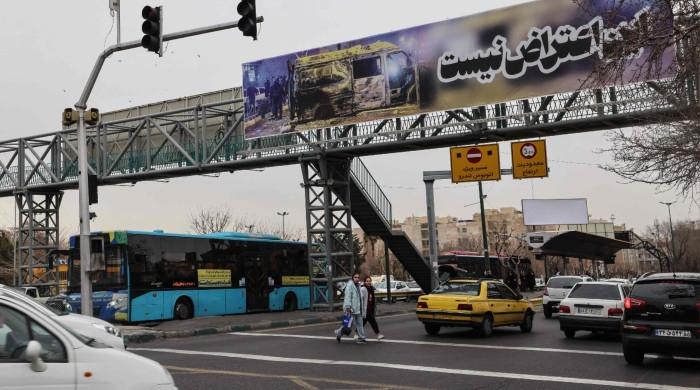
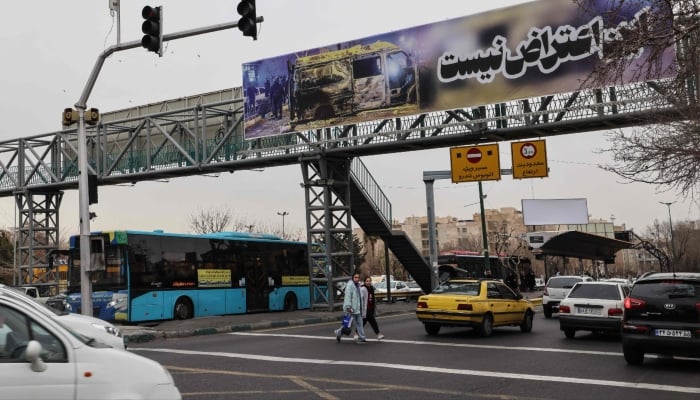
Tensions in Iran have subsided after three weeks of protests under an internet blackout, monitors said on Friday, a week after the start of the largest demonstrations in years challenging the country’s rulers.
The son of Iran’s late shah, however, said he was confident the government would fall and called for intervention, though the threat of new military action by the United States against Iran has appeared to have receded for the time being.
Protests sparked by economic grievances started with a shutdown in the Tehran bazaar on December 28 but turned into a mass movement demanding the removal of the system that has ruled Iran since the 1979 revolution.
People started pouring into the streets in big cities from January 8, but authorities immediately enforced a shutdown of the internet that has lasted over a week.
Reza Pahlavi, the son of Iran’s late shah, told a news conference in Washington that the government “will fall — not if, but when.”
“I will return to Iran,” he said.
Monitor Netblocks said that the “total internet blackout” in Iran had now lasted over 180 hours, longer than a similar measure that was imposed during the 2019 protests.
Amnesty International said this was being backed up by the use of heavily armed patrols and checkpoints to counter nationwide protests, with security forces visible in the streets.
‘Give Iran a chance’
Trump, who backed and joined Israel’s 12-day war against Iran in June, had not ruled out new military action against Tehran and made clear he was keeping a close eye on if any protesters were executed.
But a senior Saudi official told AFP on Thursday that Saudi Arabia, Qatar and Oman led “a long, frantic, diplomatic last-minute effort to convince President Trump to give Iran a chance to show good intention”.
While Washington appeared to have stepped back, the White House said on Thursday that “all options remain on the table for the president”.
Attention had focused on the fate of a single protester, Erfan Soltani, a 26-year-old who rights activists and Washington said was set to be executed as early as Wednesday.
The Iranian judiciary, however, said Soltani had not been sentenced to death, and his charges meant he did not risk capital punishment.
Rights groups have estimated that up to 20,000 people have been arrested. Security officials cited by the Tasnim news agency on Friday said around 3,000 people were arrested.
‘All Iranians united’
The US Treasury on Thursday announced new sanctions targeting Iranian officials including Ali Larijani, secretary of Iran’s Supreme Council for National Security.
Russian President Vladimir Putin, meanwhile, held telephone talks with Iranian President Masoud Pezeshkian in what the Kremlin described as “efforts to facilitate de-escalation”.
At the UN Security Council in New York, Iranian-American journalist Masih Alinejad, invited to address the body by Washington, said “all Iranians are united” against the government in Iran.
Iran’s representative at the meeting Gholamhossein Darzi accused Washington of “exploitation of peaceful protests for geopolitical purposes.”
There were, however, indications of unrest in some areas.
The state-affiliated Tasnim news outlet reported that rioters set fire to a local education office in Falavarjan County, in central Isfahan Province, on Thursday.
An elderly resident of a town in Iran’s northwestern region, where many Kurdish Iranians live and which has been the focus for many of the biggest flare-ups, said sporadic protests had continued, though not as intensely.
Describing violence earlier in the protests, she said: “I have not seen scenes like that before.”
The state-owned Press TV cited Iran’s police chief as saying calm had been restored across the country.
Tasnim news also reported what it described as the arrest of a large number of leaders of recent riots in the western province of Kermanshah, and the arrest of five people accused of vandalising a gas station and a base belonging to the Basij in the southeastern city of Kerman.


FTC seeks info from 20 universities about agents, federal law

Thinking Machines Cofounder’s Office Relationship Preceded His Termination
When ‘Mites on Ice’ becomes fights on ice, team blames 8-year-olds

-

 Tech4 days ago
New Proposed Legislation Would Let Self-Driving Cars Operate in New York State
-

 Sports6 days ago
Clock is ticking for Frank at Spurs, with dwindling evidence he deserves extra time
-
Sports1 week ago
Commanders go young, promote David Blough to be offensive coordinator
-

 Fashion6 days ago
South India cotton yarn gains but market unease over US tariff fears
-

 Entertainment3 days ago
X (formerly Twitter) recovers after brief global outage affects thousands
-
 Fashion6 days ago
China’s central bank conducts $157-bn outright reverse repo operation
-

 Sports6 days ago
US figure skating power couple makes history with record breaking seventh national championship
-
 Business1 week ago
SoftBank reduces Ola Electric stake to 13.5% from 15.6% – The Times of India