

Politics
Men shot by hundreds, disappeared after ‘Sudanese city falls to paramilitaries’

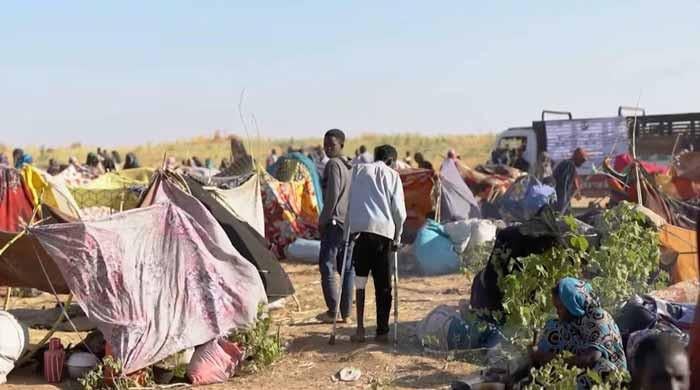
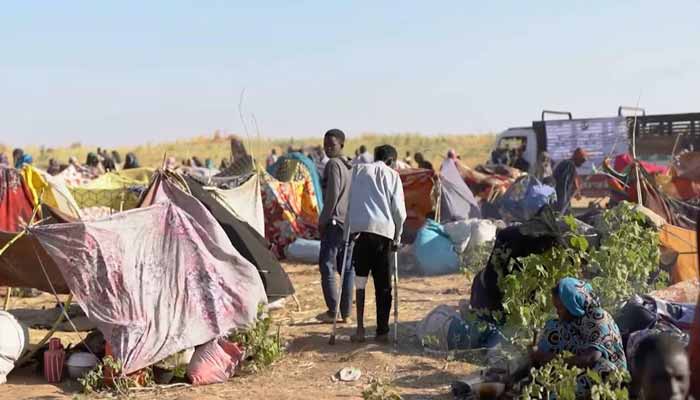
- Witness describes summary killings near reservoir.
- Rapid Support Forces deny summary executions.
- Capture of al-Fashir entrenches division of Sudan.
Fighters riding camels rounded up a couple of hundred men near the Sudanese city of al-Fashir at the weekend and brought them to a reservoir, shouting racial slurs before starting to shoot, according to a man who said he was among them.
One of the captors recognised him from his school days and let him flee, the man, Alkheir Ismail, said in a video interview conducted by a local journalist in the nearby town of Tawila in the country’s western Darfur region.
“He told them, ‘Don’t kill him,'” Ismail said. “Even after they killed everyone else — my friends and everyone else.”
He said he had been bringing food to relatives still in the city when it was captured by the Rapid Support Forces on Sunday — and, like the other detainees, was unarmed. Reuters could not immediately verify his account.
Ismail was one of four such witnesses and six aid workers interviewed by Reuters who also said people fleeing al-Fashir had been gathered in nearby villages and men separated from women and removed. In an earlier account, one of the witnesses said gunshots then rang out.
Activists and analysts have long warned of revenge killings based on ethnicity by the paramilitary Rapid Support Forces (RSF) if they seized al-Fashir — the last stronghold of the Sudanese military in Darfur.
The UN human rights office shared other accounts on Friday, estimating hundreds of civilians and unarmed fighters may have been executed. Such killings are considered war crimes.
The RSF, whose victory in al-Fashir marks a milestone in Sudan’s two-and-a-half-year civil war, has denied such abuses – saying the accounts have been manufactured by its enemies and making counter-accusations against them.
RSF says men removed for interrogation
Reuters has verified at least three videos posted on social media showing men in RSF uniforms shooting unarmed captives and a dozen more showing clusters of bodies after apparent shootings.
A high-level RSF commander called the accounts “media exaggeration” by the army and its allied fighters “to cover up for their defeat and loss of al-Fashir”.
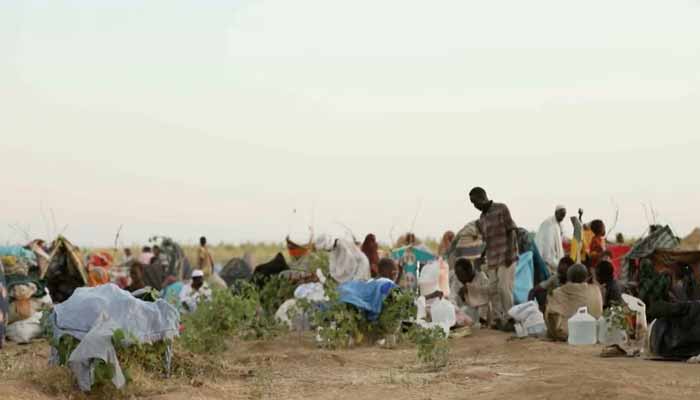
The RSF’s leadership had ordered investigations into any violations by RSF individuals and several had been arrested, he said, adding that the RSF had helped people leave the city and called on aid organisations to assist those who remained.
He said soldiers and fighters pretending to be civilians had been taken away for interrogation. “There were no killings as has been claimed,” the commander told Reuters in response to a request for comment.
Several eyewitnesses told global medical charity Medecins Sans Frontieres (Doctors Without Borders) that a group of 500 civilians and soldiers from the Sudanese Armed Forces and allied groups tried to flee on October 26, but most were killed or captured by the RSF and its allies.
“Survivors report individuals being separated by gender, age, or perceived ethnic identity, and many who remain held for ransom, with sums ranging from 5 million to 30 million Sudanese pounds ($8,000 to $50,000),” MSF said in a statement on Friday.
The RSF’s capture of al-Fashir entrenches the geographical division of a country already reduced by the independence of South Sudan in 2011 after decades of civil war.
In a speech on Wednesday night, RSF head Mohamed Hamdan Dagalo called on his fighters to protect civilians and said violations will be prosecuted. He appeared to acknowledge reports of detentions by ordering the release of detainees.
Alex de Waal, a genocide expert and specialist on Darfur, said the reported RSF acts in al-Fashir looked “very similar to what they did in Geneina and elsewhere,” referring to another Darfur city the RSF took during the latest war’s early stages as well as the early 2000s conflict.
‘We can’t say they are alive’
Mary Brace, a protection adviser at Nonviolent Peaceforce, an NGO working in Tawila, said those arriving “are women, children, and older men generally,” adding that trucks organised by the RSF have taken some people from Garney to Tawila while others have been taken elsewhere.
The RSF on Thursday posted a video it said showed the provision of food and medical aid to people displaced in Garney. Aid workers said the force may also be trying to keep people in towns it controls to attract foreign aid.
Some 260,000 people were still in al-Fashir around the time of the attack, but only 62,000 have been counted elsewhere, and only several thousand of them in Tawila, which is controlled by a neutral force.
In another of the testimonies obtained and verified by Reuters, Tahani Hassan, a former hospital cleaner, said she fled to Tawila early on Sunday after her brother-in-law and uncle were killed by stray bullets.
On the way, she and her family were apprehended by three men in RSF uniforms who searched them, beat them and insulted them, she said.
“They hit us hard. They threw our clothes on the ground. Even I, as a woman, was searched,” she said, adding that their food and water were also spilled on the ground.
They eventually made it to Garney, where the fighters separated women and children from the men, most of whom they did not see again, including her brother and a second brother-in-law.
“We can’t say they are alive, because of how they treated us,” Hassan said. “If they don’t kill you, the hunger will kill you, the thirst will kill you.”


WASHINGTON: The New York City Health Department on Wednesday said it has joined the World Health Organisation’s global outbreak response network following President Donald Trump’s withdrawal of the US from the UN health agency.
Why’s important
Following the Republican president’s decision to pull the US out of the WHO, some Democratic leaders have made their regions join the WHO’s Global Outbreak Alert and Response Network (GOARN) in defiance of Trump. New York City Mayor Zohran Mamdani has been critical of the president’s policies.
California Governor Gavin Newsom and Illinois Governor JB Pritzker, both Democrats, have also said their states will join the WHO’s global outbreak response network. The network responds to public health events around the world, such as pandemics and disease outbreaks, and comprises of more than 360 technical institutions.
Key quotes
“By joining GOARN, New York City gains access to a global network of over 360 institutions and organisations that respond to acute public health events with the deployment of staff and resources to affected countries,” the NYC Health Department said in a statement.
“Infectious diseases know no boundaries, and nor should the information and resources that help us protect New Yorkers,” New York City Acting Health Commissioner and Chief Medical Officer Michelle Morse added.
Context
The US formally left the WHO last month after completing a one-year waiting period following an executive order that Trump signed in January 2025.
Since taking office, Trump has withdrawn the US from dozens of global and UN entities, saying they do not benefit Washington. His steps have been condemned by health and human rights experts.
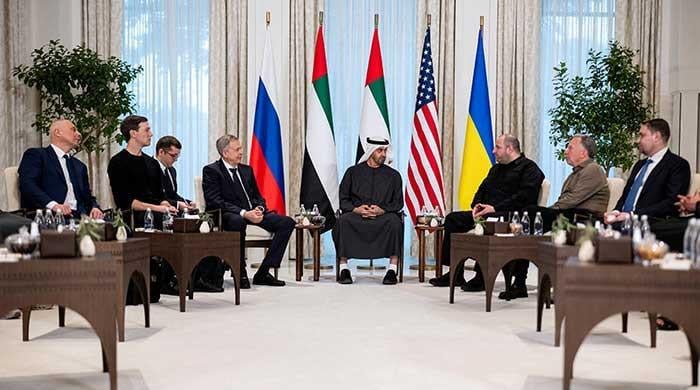
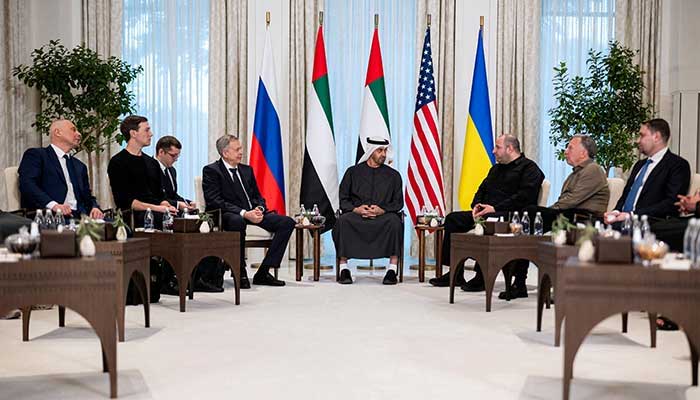
The first day of talks between Ukraine, Russia and the United States seeking to broker an end to the war in Ukraine concluded Wednesday in Abu Dhabi with Kyiv describing the negotiations as “substantive and productive”.
While there was no apparent breakthrough in the most recent round of discussions, the negotiations were set to carry on into a second day, Kyiv said.
The US-mediated talks are the latest in a flurry of diplomacy that has so far failed to strike a deal to halt the war, unleashed by Russia’s February 2022 invasion.
The war has spiralled into Europe’s deadliest conflict since World War II, with hundreds of thousands killed, millions forced to flee their homes in Ukraine and much of the eastern and southern part of the country decimated.
The talks were going on Wednesday as stepped-up Russian strikes on Ukraine’s power infrastructure left Kyiv residents in darkness and cold, with temperatures dropping as low as -20C.
But though the massive barrage threatened to overshadow progress, Ukraine’s top negotiator Rustem Umerov said the talks the first day were “substantive and productive, focused on concrete steps and practical solutions”.
As talks got underway, the Kremlin repeated its hardline demand that Kyiv give in if it wanted the four-year invasion to end.
“Our position is well known,” Kremlin spokesman Dmitry Peskov told reporters on Wednesday as the talks got underway.
“Until the Kyiv regime makes the appropriate decisions, the special military operation continues,” he said, using Russia´s term for the offensive.
In Ukraine, foreign ministry spokesman Georgiy Tykhy said Kyiv was “interested in finding out what the Russians and Americans really want.”
The content of the talks was on “military and military-political issues,” he added, without elaborating.
The main sticking point in settling the conflict is the long-term fate of territory in eastern Ukraine.
Moscow is demanding that Kyiv pull its troops out of swathes of the Donbas, including heavily fortified cities atop vast natural resources, as a precondition of any deal.
It also wants international recognition that land seized in the invasion belongs to Russia.
Kyiv has said the conflict should be frozen along the current front line and has rejected a unilateral pull-back of forces.
Trump dispatched his ubiquitous envoy Steve Witkoff and son-in-law Jared Kushner to try to corral the sides to an agreement.
Russia’s top negotiator is military intelligence director Igor Kostyukov, a career naval officer sanctioned in the West over his role in the Ukraine invasion.
Europe fears it has been sidelined in the process, even as France and Britain lead efforts to put together a peacekeeping force that could be deployed to Ukraine after any deal.
It was “strategically important for Europe to at some point be part of the negotiations,” the EU’s ambassador to Ukraine Katarina Mathernova told AFP on Wednesday in Kyiv.
Russia occupies around 20% of Ukraine, but Kyiv still controls around one-fifth of the Donetsk region.
Ukraine has warned that ceding ground will embolden Moscow and that it will not sign a deal that fails to deter Russia from invading again.
Russia also claims the Lugansk, Kherson and Zaporizhzhia regions as its own, and holds pockets of territory in at least three other Ukrainian regions in the east.
‘Prepare for the worst’
On the battlefield, Russia has been notching up gains at immense human cost, hoping it can outlast and outgun Kyiv’s stretched army.
Russian shelling of a market square in the frontline town of Druzhkivka killed seven on Wednesday, Ukrainian regional authorities said.
Following the first round of US-brokered talks in Abu Dhabi last month, Ukrainians were sceptical that a deal could be struck with Moscow.
“I think it’s all just a show for the public,” Petro, a Kyiv resident, told AFP.
“We must prepare for the worst and hope for the best.”
On the streets of Moscow, some were more hopeful.
“Everyone hopes, everyone is very optimistic about these negotiations,” says Larisa, a retiree who said she had family in Ukraine and relatives fighting at the front.
“It has to end one day, everyone’s had enough,” said Anton, a 43-year-old engineer.
- Xi urges peaceful coexistence and win-win cooperation with US.
- Trump says US-China relationship is “extremely good” after call.
- Trump looks forward to planned trip to China, discusses trade, Iran.
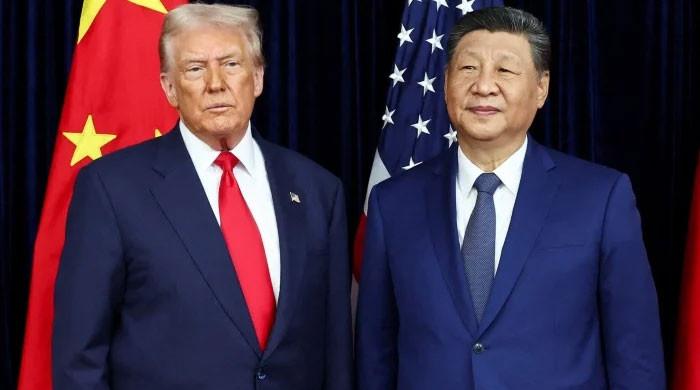
Chinese leader Xi Jinping called Wednesday for “mutual respect” in strengthening relations with the United States, warning President Donald Trump in a phone call to use “caution” when selling arms to Taiwan, Beijing’s state media reported.
Xi expressed the hope that bilateral issues — amongst which trade figures highly — could be resolved amicably between the world’s two largest economies.
“By tackling issues one by one and continuously building mutual trust, we can forge a right way for the two countries to get along,” Xi said, according to state broadcaster CCTV.
“Let us make 2026 a year in which China and the United States, as two major countries, move toward mutual respect, peaceful coexistence, and win-win cooperation,” he added.
Trump, in a post on his Truth Social platform following what he called an “excellent” call, said ties between the two countries were “extremely good”.
“The relationship with China, and my personal relationship with President Xi, is an extremely good one, and we both realise how important it is to keep it that way,” Trump said.
The president said he and Xi discussed trade, Taiwan, the Russian war against Ukraine, and Iran, as well as a planned trip to China, which he said “I very much look forward to”.
On Taiwan, however, Xi warned Washington to exercise caution in arms sales to the island.
“The Taiwan question is the most important issue in China-US relations… The US must handle arms sales to Taiwan with caution,” Xi said, according to state broadcaster CCTV.
The United States approved $11 billion-worth of arms to Taiwan in December, Taipei said.
Putin’s ‘dear friend’
Speaking by video call several hours earlier, Xi and Putin hailed the strengthening of Chinese-Russian ties.
The two countries have sought to present a united front against the West, with ties deepening since Moscow´s 2022 invasion of Ukraine.
A Kremlin aide said the Xi-Putin call was “friendly and trusting” and lasted nearly an hour and a half.
Moscow has increasingly relied on China throughout the Ukraine conflict to keep its economy afloat, faced with crippling Western sanctions.
“Since the beginning of the year, the international situation has become increasingly turbulent,” Xi told Putin, calling for “deeper” Chinese-Russian coordination, according to state TV.
Addressing Xi as his “dear friend”, Putin voiced a similar message, in a video broadcast on Russian state TV.
The Kremlin said Putin had accepted invitations to visit China in the first half of 2026 and attend the APEC regional summit hosted by Xi in November.
Xi also reiterated his commitment to the international system with the United Nations at its core, after Trump in January unveiled plans for a “Board of Peace” that critics see as an attempt to rival the UN.
The calls took place as Russian, Ukrainian and US negotiators met in Abu Dhabi for a new round of talks on ending the almost four-year war, which has turned into Europe’s worst conflict since World War II.
Putin and Xi discussed their “opinions” on the United States, views that, according to the Kremlin, “practically matched” each other.
And “special attention was given to the tense situation in Iran”, said Kremlin aide Yuri Ushakov.
The calls follow a series of meetings between Xi and various leaders in recent months, as he consolidates diplomatic support in the face of an increasingly unpredictable United States.


Hollywood Is Losing Audiences to AI Fatigue

Vietnam factory output expands as PMI holds above 50 in Jan

Man-made yarn prices rise in India on wedding demand, US deal

-

 Sports1 week ago
PSL 11: Local players’ category renewals unveiled ahead of auction
-

 Entertainment1 week ago
Claire Danes reveals how she reacted to pregnancy at 44
-

 Sports1 week ago
College football’s top 100 games of the 2025 season
-

 Politics1 week ago
Trump vows to ‘de-escalate’ after Minneapolis shootings
-

 Sports1 week ago
Tammy Abraham joins Aston Villa 1 day after Besiktas transfer
-

 Tech1 week ago
Brighten Your Darkest Time (of Year) With This Smart Home Upgrade
-

 Entertainment1 week ago
K-Pop star Rosé to appear in special podcast before Grammy’s
-

 Tech1 week ago
The Surface Laptop Is $400 Off