

Business
Merck scraps £1bn expansion in the UK over lack of state investment

Faarea Masud, Rachel Clun and Simon JackBusiness reporters
 Getty Images
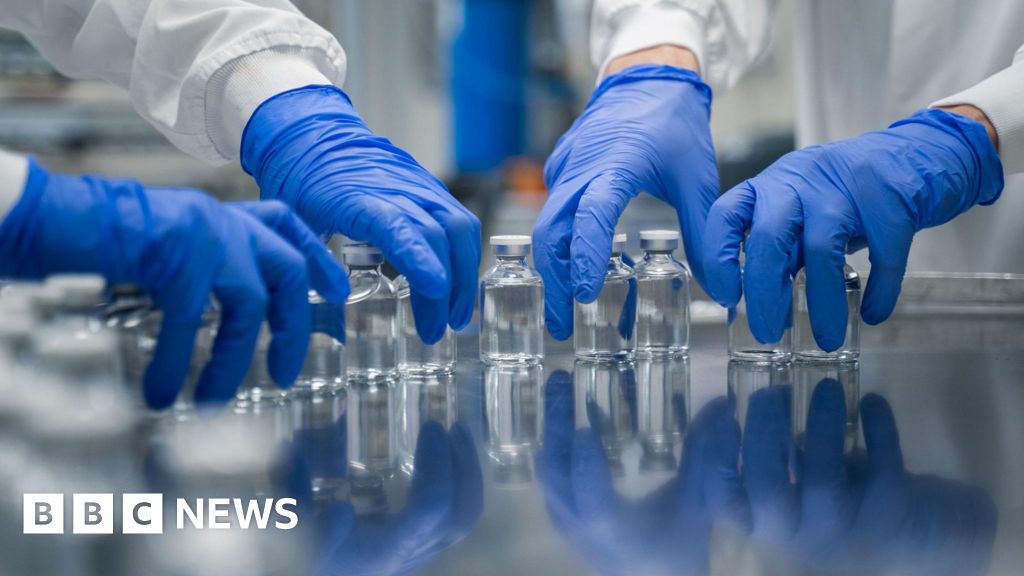
US pharmaceutical giant Merck is scrapping the planned £1bn expansion of its UK operations, saying the government is not investing enough in the sector.
The multi-national business, known as MSD in Europe, said it would move its life sciences research to the US and cut more than 100 UK jobs, blaming successive governments for undervaluing innovative medicines.
A spokesperson for the government defended its investments in science and research, but acknowledged there was “more work to do”.
Pharmaceutical companies have been refocusing on American investments following pressure from US President Donald Trump, including threats of sky-high tariffs on drug imports.
MSD had already begun construction on its site in London’s King’s Cross which was due to be completed by 2027, but said it no longer planned to occupy it.
The company will also vacate its laboratories in the London Bioscience Innovation Centre and the Francis Crick Institute by the end of the year, which will lead to 125 job losses.
A spokesperson for the drug company said the decision “reflects the challenges of the UK not making meaningful progress towards addressing the lack of investment in the life science industry and the overall undervaluation of innovative medicines and vaccines by successive UK governments”.
Richard Torbett, chief executive of the Association of the British Pharmaceutical Industry, said the decision was “an incredible blow”.
“We’ve really got to see it as a wake up call to try and understand what is driving companies to make these difficult decisions and what can we do to turn that round,” he told the BBC’s Wake Up To Money programme.
“The lack of competitiveness of the UK is the big thing that’s driven the decision,” he added.
“We’ve got great strengths in this country – we’ve got fantastic academic institutions, good infrastructure, amazing medical research charities – but we’ve got systematic under-investment in the products that come out of the end of innovation.”
MSD is the latest pharmaceutical company to abandon or reduce investment plans in the UK.
In January, AstraZeneca walked away from plans to invest £450m in expanding a vaccine manufacturing plant in Merseyside earlier this year, blaming reduced government support.
The UK boss of another pharmaceutical giant warned last month that NHS patients would lose access to cutting-edged treatments because Britain was “largely uninvestable”.
Norvartis’s Johan Kahlstrom said the company had “already been unable to launch several medicines” in the country due to the “declining competitiveness” of the UK market.
Industry sources told the BBC the industry had been attracting major funding in the hub around Kings Cross focused on the intersection between life sciences and AI.
They pushed back on claims that the decision was linked to ongoing negotiations over drug prices, in which industry has been lobbying hard for the NHS to approve more and pay more for medicines.
The current pricing regime was set and agreed to by drug companies in 2023 – less than 18 months ago.
Since then, drug companies have come under pressure from the Trump administration to lower drug prices for US customers and to invest more in the US – affecting their ability to invest elsewhere.
In an August interview with CNBC, Trump suggested that tariffs on pharmaceuticals imported to the US could reach up to 250%.
The threat followed an executive order signed by the president in May aimed at reducing drug prices for American consumers.
Dr David Roblin, chief executive of London-based biotechnology company Relation Therapeutics, told the BBC that the fundamentals that drove MSD to invest in the UK in the first place had not changed.
“The academic environment in the UK continues to produce innovative ideas and people to run with those ideas, which attracts foreign investment,” he said.
“The environment to do research is still outstanding: we’ve got great academics, the NHS does provide a research platform, for example the UK Biobank is proving to be a real attractor for companies like mine,” he said.
What has changed, Dr Roblin said, was the political landscape in the US which big pharma has to respond to, “because the US remains the largest market for pharmaceuticals on earth,” he added.
A spokesperson for the Department of Industry, Science and Technology said: “The UK has become the most attractive place to invest in the world, but we know there is more work to do.
“We recognise that this will be concerning news for MSD employees and the government stands ready to support those affected.”
The Reserve Bank of India (RBI) on Monday decided against activating the countercyclical capital buffer (CCyB), indicating that current financial and credit conditions do not warrant an additional capital requirement for banks, PTI reported.The central bank said the decision followed a review and empirical assessment of indicators used under the CCyB framework.“Based on review and empirical analysis of CCyB indicators, it has been decided that it is not necessary to activate CCyB at this point in time,” RBI said in a statement.Under the RBI (Commercial Banks – Prudential Norms on Capital Adequacy) Directions, 2025, the CCyB framework is activated when financial conditions indicate rising systemic risks linked to excessive credit growth.The framework primarily relies on the credit-to-GDP gap as a key indicator, along with supplementary metrics.According to the RBI, the CCyB mechanism is intended to serve two broad objectives.Firstly, it requires a bank to build up a buffer of capital in good times, which may be used to maintain the flow of credit to the real sector in difficult times.Secondly, it achieves the broader macro-prudential goal of restricting the banking sector from indiscriminate lending in the periods of excess credit growth that have often been associated with the building up of system-wide risk.The framework was introduced globally after the 2008 financial crisis as part of measures proposed by the Group of Central Bank Governors and Heads of Supervision (GHOS) under the Basel framework to strengthen financial system resilience.
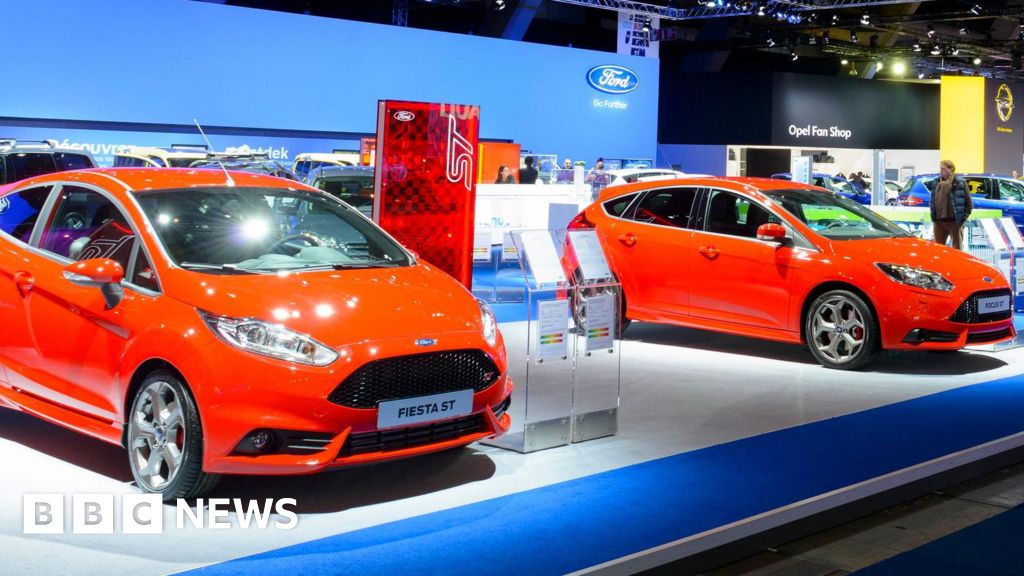
The company has announced plans to build seven new models in Europe including a small electric hatchback.
Source link

“Today’s policymaking is constrained by a more volatile external environment with more frequent and overlapping shocks, a rising public interest bill, in part reflecting market concerns with countries’ elevated debt, and the long-standing challenge of weak productivity growth,” he said.


Turkiye’s current account deficit expected to widen in 2026: Minister

UK’s clothing imports fall 3% in Q1, sharply lower than Q4 2025
RBI sees no signs of excess credit risk, keeps countercyclical capital buffer inactive

-

 Entertainment6 days ago
Conan O’Brien hat tricks as Oscar host
-

 Tech1 week ago
Could Contact-Tracing Apps Help With the Hantavirus? Not Really
-

 Fashion5 days ago
Italy’s Zegna Group’s Q1 growth boosted by strong organic performance
-

 Sports1 week ago
Bobby Cox, legendary Atlanta Braves manager who led 1995 World Series champions, dead at 84
-

 Entertainment1 week ago
Martin Short: Facing tragedy with joy
-

 Entertainment1 week ago
Tom Brady gets back at Kevin Hart during Netflix roast
-

 Sports1 week ago
Jacob Fatu unleashes vicious assault on Roman Reigns after World Heavyweight Championship loss at WWE Backlash
-

 Entertainment1 week ago
Martha Stewart: How to make an omelet