

Business
Message for Trump? Putin says Russia ready to continue ‘uninterrupted shipments of fuel’ to India; pitches reliable supply of oil – The Times of India


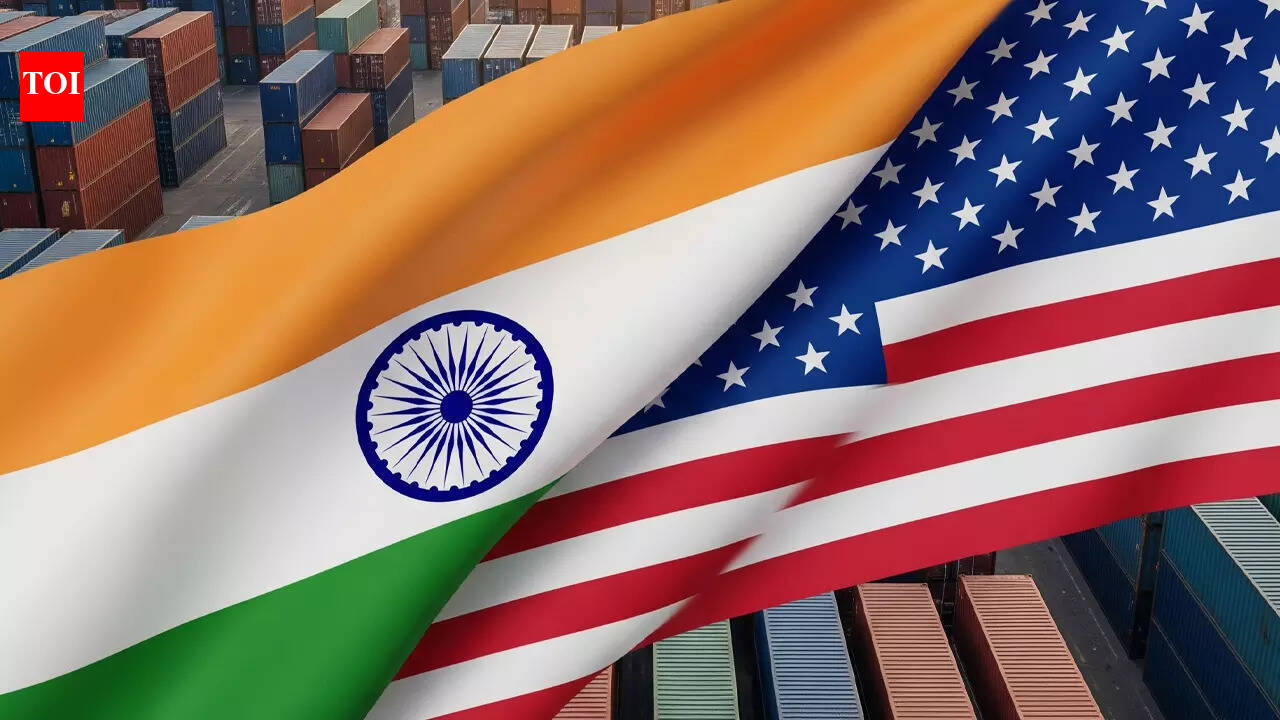
India has been facing increasing pressure from the Trump administration to stop its crude oil imports from Russia. Of the 50% tariffs imposed by the US on India, 25% are penal tariffs for its crude oil trade with Russia. The US has accused India of indirectly financing Russia’s war against Ukraine through the oil trade. The issue has emerged as a point of niggle in the trade deal talks between the countries. However, Trump’s latest round of sanctions against Rosneft and Lukoil have forced Indian refiners to find other sources of crude, though procurement of non-sanctioned Russian oil continues.
Message to Trump? What Putin said on Russian oil for India
During a combined media briefing with PM Narendra Modi, Putin affirmed, “Russia is a reliable supply of oil, gas, coal and everything that is required for the development of India’s energy. We are ready to continue uninterrupted shipments of fuel for the fast-growing Indian economy.” He noted their “successful partnership in energy.”As one of the world’s major energy players, Russia has huge oil and natural gas deposits, maintaining its position as a leading producer and consumer.In early 2024, Russia maintained its position as the world’s third-largest oil producer, with daily production reaching 10.8 million barrels and confirmed oil reserves of approximately 80 billion barrels.Russia has the world’s most extensive natural gas reserves, calculated at 1,600 trillion cubic metres, with production reaching 618 billion cubic metres in 2022. The country’s energy infrastructure predominantly relies on fossil fuels, with thermal power facilities generating more than 60 per cent of its electrical output.The Russian President said that the collaboration extends beyond traditional fuels. He spoke of the significant nuclear collaboration currently in progress, stating that Russia is executing “a flagship project to build the largest nuclear power plant in India.”Putin suggested potential expansion into “the construction of small modular reactors and floating nuclear power plants, and also non-energy applications of nuclear technologies, for example, in medicine or agriculture.”Transport and logistics remain crucial areas of collaboration. Putin indicated that both nations are developing new trade channels, aiming “to build new effective international transport logistic routes to create the INSTC corridor from Russia and Belarus to the Indian Ocean.”He additionally highlighted increasing collaboration in advanced sectors, mentioning joint ventures in “industry, machine manufacturing, digital technologies, space exploration and other science-intensive avenues.”




Business
Rupee inches closer to 94: Currency falls 20 paise to 93.96 per US dollar in early trade – The Times of India
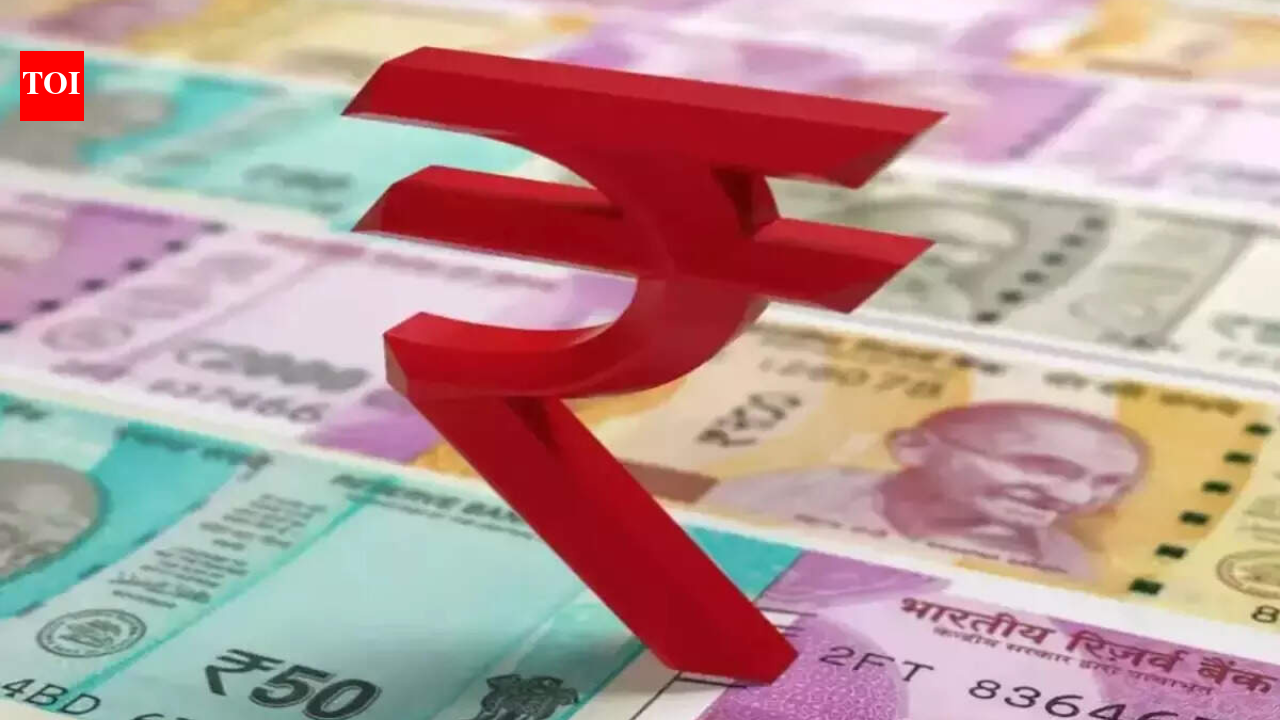
Rupee on Wednesday took another fall towards the 94 per US dollar mark, tumbling 20 paise in early trade to reach 93.96 against the greenback. This follows a weak run for the currency this month. Earlier on Tuesday, the currency had already slipped by 23 paise to settle at 93.76, pressured by a stronger US dollar against major currencies and elevated global crude oil prices, which weighed on investor sentiment.Rupee has been facing pressure due to foreign fund outflows, with forex traders citing uncertainty linked to the West Asia crisis as a key factor behind the sustained weakness. The currency had already shown signs of strain earlier in the week, inching closer to the psychological 94-level against the US dollar for the first time on Monday, before recovering to close flat at 93.53.“Persistent FPI outflows continue to pressure INR. A strong US dollar is keeping emerging market currencies weak, and the INR has weakened by about 4.5 per cent during the month. The rupee range for Wednesday is expected to be 93.65 to 94.25,” Anil Kumar Bhansali, head of treasury and executive director, Finrex Treasury Advisors LLP, said. Meanwhile, Dalal Street remained strong with benchmark indices jumping by over 1% each. As of 9:40 am IST, NSE Nifty50 was trading at 23,212.55, up 300.15 or 1.31%. BSE Sensex was also trading in green, gaining almost 900 points or 1.22% to trade at 74,969.91.Uncertainity around the Middle East tensions have also triggered volitality in financial markets. The plunge comes after the United States had put forward a 15-point proposal to Iran aimed at ending the ongoing conflict. US President Donald Trump said Washington and Tehran are “currently in negotiations” and suggested that Iran is eager to strike a peace deal, even as the Islamic Republic has denied holding any direct talks with the United States.
Business
Stock market today (March 25, 2026): Nifty50 opens above 23,100; BSE Sensex rises over 700 points as oil goes below $100 – The Times of India

Stock market today: Nifty50 and BSE Sensex continued their rally on Wednesday rising almost 1% in opening trade. While Nifty50 went above 23,100, BSE Sensex rose over 700 points. At 9:16 AM, Nifty50 was trading at 23,126.65, up 214 points or 0.94%. BSE Sensex was at 74,775.22, up 707 points or 0.95%.Dr. VK Vijayakumar, Chief Investment Strategist, Geojit Investments Limited says, “Hope is returning to the market with indications of deescalation in the conflict. Remarks from President Trump and from the Iranian regime indicate that the conflict might end soon. Particularly the reiteration from Iran that “non-hostile ships can transit the Strait of Hormuz” is good news that will mitigate India’s energy concerns. These positive geopolitical developments have reflected a sharp decline in Brent crude to around $98. The US 10-year yield also has declined. Gold has recovered. If this positive development sustains, there is room for a sharp rebound in the market. But if the recovery is to sustain FIIs should stop their big sustained selling, which, in turn, will require stability in the rupee. Yesterday’s 399 point recovery in the Nifty was caused more by short covering. In the near-term, mid and small caps can rebound more than large caps since there is no worry of significant FII selling in this segment.”Asian equities moved higher as optimism grew around Washington’s efforts to resolve the nearly month-long conflict in the Middle East. The dollar also weakened.US markets, however, saw choppy trading during Tuesday’s session, as investors weighed concerns over rising oil prices against hopes for a resolution to the conflict. This came even as reports indicated that additional American troops could be deployed to the region despite signs of diplomatic progress.Oil prices fell more than 5% on Wednesday on expectations that a potential ceasefire could ease supply disruptions from the key Middle East producing region, following reports that the US had presented Iran with a 15-point proposal to end the conflict.On the domestic front, foreign institutional investors remained net sellers, offloading shares worth Rs 8,009.56 crore on Tuesday, while domestic institutional investors provided some support by purchasing equities worth Rs 5,867.15 crore.(Disclaimer: Recommendations and views on the stock market, other asset classes or personal finance management tips given by experts are their own. These opinions do not represent the views of The Times of India)
Business
Top stocks to buy today: Stock recommendations for March 25, 2026 – check list – The Times of India

Stock market recommendations: Aurobindo Pharma, Infosys, and Larsen & Toubro (L&T) – these are the stocks that Mehul Kothari, DVP – Technical Research at Anand Rathi Shares and Stock Brokers has recommended as top stocks to buy today (March 25, 2026):Aurobindo Pharma – Breakout with Momentum ConfirmationBuy: ₹1280–₹1260 | Stop Loss: ₹1235 | Target: ₹1390Aurobindo Pharma has delivered a decisive breakout after several weeks of consolidation, indicating a potential resumption of the uptrend. The stock had been trading within a narrow range, forming a strong base before this upward move. From a technical standpoint, the setup appears constructive with multiple indicators aligning in favor of the bulls. The DMI reflects a positive bias, suggesting strengthening directional momentum, while the RSI has moved above the 60 mark, indicating strong buying interest and improving trend strength. Additionally, the MACD has given a bullish crossover above the zero line, confirming a shift in momentum toward the upside. This confluence of breakout and momentum signals points toward a continuation of the upward move, provided the stock sustains above the breakout zone.Infosys – Bullish Divergence Indicating Potential ReversalBuy: ₹1270–₹1240 | Stop Loss: ₹1175 | Target: ₹1375Infosys is showing early signs of a potential reversal as momentum indicators begin to diverge from price action. While the stock has been forming lower lows, the RSI has been making higher lows, indicating a clear bullish divergence and suggesting that selling pressure is gradually weakening. Adding to this, the MACD has given a bullish crossover, reflecting improving momentum and a possible shift in short-term trend direction. This combination of RSI divergence and MACD confirmation points toward emerging accumulation at lower levels. The setup indicates a high probability of a relief rally or short-term recovery as momentum stabilizes.Larsen & Toubro – Oversold Bounce with Positive DivergenceBuy: ₹3400–₹3350 | Stop Loss: ₹3250 | Target: ₹3600Larsen & Toubro appears to be nearing exhaustion in its recent downtrend, with momentum indicators signaling a potential bounce. Despite the extended decline in price, the RSI is not making fresh lower lows, indicating positive divergence and a gradual loss of selling momentum. At the same time, the MACD is positioned in an oversold zone, which typically reflects trend exhaustion and increases the probability of a reversal or technical pullback. The alignment of these indicators suggests that the stock may witness a short-term recovery if buying interest emerges near current levels.(Disclaimer: Recommendations and views on the stock market, other asset classes or personal finance management tips given by experts are their own. These opinions do not represent the views of The Times of India)


Techtextil 2026 to spotlight smart protective textile innovations

New Zealand players willing to play World Cup opener against Iran outside US

historic Moon mission set for lift-off

-

 Fashion7 days ago
Sales at US apparel, clothing accessories stores up 4% YoY in Jan 2026
-
 Business1 week ago
Peloton is launching bikes and treadmills for gyms, accelerating commercial strategy
-

 Tech1 week ago
Justice Department Says Anthropic Can’t Be Trusted With Warfighting Systems
-

 Fashion1 week ago
Trump signs order to combat fraudulent ‘Made in America’ labels
-
 Business1 week ago
Stocks and pound rise as US rate call approaches
-

 Fashion1 week ago
Lenzing launches TENCEL Lyocell-HV100 at Intertextile Shanghai
-

 Sports7 days ago
March Madness 2026 – How to watch in SA, start time, schedule, TV channel for NCAA championship basketball tournament
-

 Sports1 week ago
PCB files complaint over allowing Bangladesh to take review on penultimate ball – SUCH TV