

Entertainment
MGK ‘sad’ to end Lost Americana Tour epic european leg


MGK, formerly known as Machine Gun Kelly, is feeling sad because his time in Europe has come to an end amid the ongoing Lost Americana Tour.
After his final epic live rendition in the region, the Rap Devil hitmaker took to his Instagram Stories on Thursday night, March 12, to bid farewell to his European fans.
Over a black-and-white selfie of himself, he wrote, “what an epic Europe tour thank you for the memories… im sad it’s over [sad with single tear emoji].”
In the snapshot, set with his song Times of My Life in the background, the rapper is smiling at the camera, wearing a graphic t-shirt, a thick chain necklace, and a silver bracelet.

“At least I have a hole in my hand to go home with,” he added as the image showed him holding up his hand, which is heavily wrapped in a medical bandage.
His index and middle fingers are extended, showing white-painted fingernails.
For the unversed, the Bad Things singer’s recent hand injury occurred in Dublin, Ireland, on March 12, while he was in town for a music video shoot and his final European tour date.
While attempting to climb a wall for a video shoot at Liberty Lane, a popular street art spot in Dublin, he accidentally impaled his left hand on a large thorn.
The I Think I’m OKAY singer explained to fans on social media that he put his full body weight on the thorn, which went entirely through his hand.
After the incident, he noted that he was unable to properly move or close his pinky and ring fingers, though his other fingers were unaffected.
Despite the injury, the artist, whose real name is Colson Baker, successfully performed his final European show at the 3Arena that same night
Notably, MGK, 35, is currently on his Lost Americana Tour. After finishing the European leg, he will head to Australia and North America to kick off his remaining series of concerts.
The first concert after the brief break is scheduled to take place on April 8 at RAC Arena in Perth, Australia.
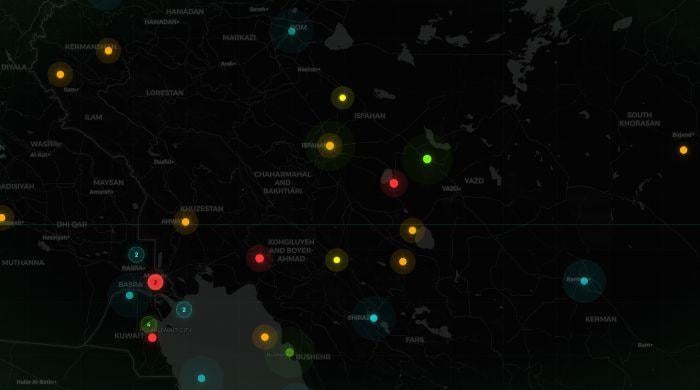
The AI dashboard shows frigates gathered around Cyprus and military planes flying towards the Gulf, where a breaking news pin alerts users to unconfirmed reports of a drone strike on Dubai.
At that precise moment on Friday, more than 3,200 people had their eyes glued to “Monitor the Situation”, which tracks everything from world leaders’ locations to internet outages.
It’s one of several free sites using artificial intelligence to crunch data into interactive world maps that are info-rich but not always reliable.
Interest has surged in these tools since conflict erupted in the Middle East, along with memes gently mocking the kind of people who seek a movie-like control centre experience.
“I think it’s human psychology — they feel like they have God’s view or something,” said Elie Habib, creator of the AI dashboard “World Monitor”.
Habib, CEO of Middle Eastern music streaming platform Anghami, told AFP “World Monitor” has had 4.4 million visits since he built it in January.
“I just want to understand what’s happening in the world,” said the 53-year-old based in Dubai, who originally envisaged his tool as a “Bloomberg Terminal for geopolitics”.
Despite the war driving a spike in interest, Habib said he has not put adverts on the site because he doesn’t want to profit from the conflict.
“World Monitor” displays more than 450 data sources on a crowded, customisable screen that includes live webcams from strategic global locations and AI-selected headlines from real news outlets.
Among a constellation of options on their map, users can see where protests, GPS jamming and earthquakes are taking place in real time.
Habib said he was “trying to move to the next step, which is extracting the signals from the noise. Otherwise, for me, it’s just too much noise.”
‘Not mere eye-candy’
Habib, a trained engineer based in Dubai, used AI to “vibe-code” his website over one weekend — a task he says would have taken at least a year if he had written the computer script by hand.

The inner workings of “World Monitor” are open source, so other programmers have made tweaks and suggestions that Habib has since built in.
Sites like “World Monitor” and “Monitor the Situation”, co-created by a staff member of US venture capital firm Andreessen Horowitz, have many flashy functions but experts said users should not treat all their insights as credible.
“They are not mere eye-candy… but they are not truth engines either,” Wei Sun, principal analyst for AI at Counterpoint Research, told AFP.
“The hallucination risk is real” when an AI model is tasked with determining the significance of information, or causal links, she said.
Despite the risk of false data points, these AI dashboards “satisfy a very modern psychological need”, Sun said.
“In a crisis, people want speed, synthesis, and a feeling of control when headlines are fragmented and overwhelming.”
Some of the sites have chatrooms for users to interact, noted Sun Sun Lim, a professor of communication and technology at Singapore Management University.
That is “especially engaging during unfolding events”, she said.
“Interest in global events has also been fuelled by the rise of prediction markets where people have been placing bets on events” from national elections to whether Iran’s supreme leader would be ousted, Lim said. Live feeds of these bets are sometimes featured on the AI dashboards.
So should news wires like AFP or Reuters be concerned about people turning to such sites for their updates on the global situation?
“They should worry somewhat, but not existentially,” said Counterpoint’s Sun.
“In my view, the real disruption doesn’t come from AI dashboards replacing these news wires, but how it pushes them upmarket, towards being the most trusted validators and explainers.”
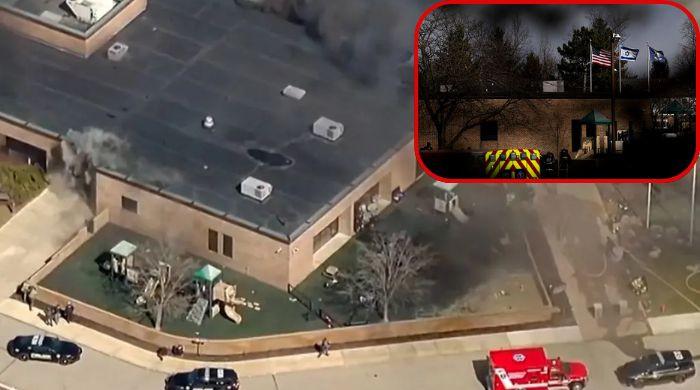
The Michigan synagogue shooter who crashed a truck into Temple Israel in West Bloomfield on Thursday, March 12, has been identified.
The Department of Homeland Security while confirming the name of the suspect as Ayman Mohamad Ghazali, provided his past history.
Ghazali was born in Lebanon in 1985 and entered the U.S. in May 2011 on an immigrant visa as the spouse of the U.S. citizen.
Multiple U.S. media reports have highlighted the alleged attacker had roots in Lebanon and whose family members were hit in an Israeli airstrike there.
The reports add the suspect had shared images of his relatives on WhatsApp hours before the attack.
However, the FBI has not yet determined the motive behind the attack on Michigan synagogue but said the incident is being investigated as a targeted act of violence against the Jewish community.
So far there’s no information that has been provided by the authorities as to how many people were injured during the incident.
The Oakland County Sheriff Mike Bouchard held a news conference on Thursday, March 12, and updated the status of those who were inside Temple Israel.
According to Sheriff Bouchard, no members of the synagogue’s staff, teachers or the roughly 140 children enrolled in its early childhood education center were injured.
Temple Israel in West Bloomfield is the nation’s largest Reform Jewish synagogue, located in suburban Detroit, about 25 miles northwest of the city.
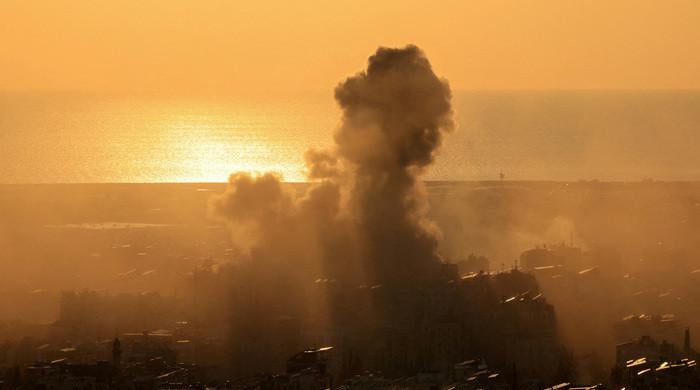
The illegal invasion of Israel and America against Iran may have created a ripple of excitement among the warmongers sitting in the power corridors of Washington and Tel Aviv but it seems to be pushing the Middle East towards a conflagration that might engulf other parts of the world.
The conflict has exposed the hypocrisy of the Western world, besides putting a question mark on the credibility of European leaders who promptly threw their support behind Israel, which has been accused of carrying out war crimes in the occupied territories of Palestine and elsewhere in the region. British Prime Minister Keir Starmer, French President Macron, and the much-vaunted new leader of the Western countries, Canadian Prime Minister Mark Carney, all issued statements suggesting that the aggression was not committed by Washington and Tel Aviv but by Tehran. While their statements expressed concerns over Iranian attacks against Arab states, they failed to offer any comments on the decimation of Iranian civilians, including over 160 schoolchildren.
Critics believe that the US has once again resorted to outright lies to justify this invasion, with American President Donald Trump and his tedious acolytes claiming that Iran was a threat to the security of the sole superpower and its allies. This was the same excuse employed in the past by George Bush Junior and former British PM Tony Blair during the Iraq war. Reports of international institutions and global independent bodies proved their claims to be completely concocted, which were employed to grab Iraqi oil.
The Trump administration has used the Iranian nuclear programme as an excuse to impose this illegal invasion, refuting, in a way, its own claim of dismantling Iranian nuclear infrastructure during the 12-day war of last year. Many feel that, in reality, it is Iran’s resources that the US and its companies are dreaming of capturing. There has been tremendous pressure on the Iranian government to open up its markets for the vultures of the capitalist world, which Iran has always resisted. The military strength of the Islamic Republic is said to be the second factor prompting Israel and the US to invade the country, plunging it into death and destruction.
In order to achieve this target, Washington and Tel Aviv are trying to carry out another regime change, which could turn out to be a recipe for disaster not only for the region but also for the world’s sole mighty power. The US managed to install pliant leaders in Libya and Syria by indirectly interfering in the affairs of those countries or carrying out limited intervention in the case of Syria. However, in Iraq and Afghanistan, the US and its allies had to resort to ruthless force to carry out the regime change. Despite this, they were not in a position to prop up new governments.
Sending troops to those countries proved catastrophic. The US and its allies lost thousands of soldiers and thousands of others got maimed or wounded. Washington also had to spend around $8 trillion on the two conflicts, according to the Watson Institute of Brown University. The end result: a humiliating withdrawal from the two countries.
In all these countries, local ethnic and sectarian entities were encouraged by the US to ally with the occupying forces or anti-government elements. This sharpened divisions in these societies, with different sections still fighting each other in countries like Libya and Syria.
It seems Washington is also trying to apply the same formula in Iran which has multiple ethnic and sectarian fault Lines. The Trump administration has reportedly been in contact with Kurds and other ethnic groups who faced repression and crackdown from the Iranian government in the past and seem to be ready to fight the theocratic system. Washington might also try to engage other non-Persian entities in Iran to weaken the government.
The Baloch in the Iranian East could also be a potential collaborator of the invading forces of Israel and the US. Dissident Iranian elements settled in the US and other parts of the world might also use this opportunity to stage a comeback and lead the anti-government battle in a bid to topple the Iranian government
But such an American approach would spell disaster for the entire region and may not go down well with some of America’s allies. Any attempt to strengthen Iranian Kurds risks rejuvenating desires of Kurds in Iraq, Turkey and Syria to create their own homeland, infuriating Baghdad, Damascus and Ankara, which, in one or another way, are American friends. Support for the Iranian Baloch would infuriate Islamabad, which has historically been a close ally of the US.
The US might bomb Iran mercilessly but such aerial strikes would still not cause regime change. That would require ground troops, risking American lives and forcing Iranians to wage a guerrilla war. Such a situation would jeopardise Trump’s popularity, who won elections on the promise of non-intervention.
While sections of Iranian society are not happy with the theocratic government of Iran, it is equally possible that the majority of the Iranians might end up despising the very idea of the intervention and collaboration with the enemies. And, while some ethnic entities like the Kurds and Baloch seek independence from the central authority, there are other ethnic entities inside the Islamic Republic that share the same sect as the majority Persian-speaking Iranians. Despite having different ethnic backgrounds, these national entities share the same name. Therefore, they would not be amenable to the idea of destroying a country that is considered a protector of their faith.
Nonetheless, Israeli and American moves seem to be sowing the seeds of chaos in the region, with far-reaching consequences that might include disruption of aerial and marine transport, as well as skyrocketing prices for energy and other commodities. Their wish to see the Balkanisation of Iran would plunge the country into a protracted civil war, which might cause massive displacement, killings and destruction of infrastructure. Europe has witnessed a 35% rise in gas prices. Oil price is also seeing an upward spiral, while the global chain and supply is facing the risk of great disruption.
If the situation does not normalise, it would also create a migration crisis for the region and Europe. Therefore, American allies in the region and Europe must spring into action to prevent Israel and America from sowing the seeds of chaos in the region.
The writer is a freelance journalist who can be reached at: [email protected]
Disclaimer: The viewpoints expressed in this piece are the writer’s own and don’t necessarily reflect Geo.tv’s editorial policy.
Originally published in The News


Why India’s Next Growth Story Will Come From Rail Connectivity and Mid-Sized Cities

Gotham signs Norway’s Guro Reiten on initial loan from Chelsea

No shortage of petrol-diesel, kerosene, ATF, fuel oil: Indian minister

-

 Politics6 days ago
India let Iran warship dock the day US sank another off Sri Lanka, say officials
-

 Sports6 days ago
Pakistan set for FIH Pro League debut | The Express Tribune
-
 Business6 days ago
Restaurant group changes name after bid to buys pubs across the UK
-

 Entertainment6 days ago
Harry Styles kicks off new era with ‘One Night Only’ comeback show
-

 Sports6 days ago
Winners and losers of the 2026 NHL trade deadline
-
 Business6 days ago
Home heating oil: ‘Most of my pension has gone on home heating oil’
-

 Tech1 week ago
Google’s Pixel 10a May Not Be Exciting, but It’s Still an Unbeatable Value
-

 Entertainment6 days ago
Kanye ‘Ye’ West trips during trial: ‘Is he asleep?’