

Fashion
Milan: An invitation to journey with Calcaterra, J. Salinas and Pierre-Louis Mascia

Published
September 28, 2025
After the rain that spoiled part of fashion week, the final day of Milan’s in-person catwalk shows drew to a close in style beneath an azure sky on Sunday. Before the much-anticipated Giorgio Armani show that rounded off the day, several collections stood out for their creative richness, each designer immersing onlookers in a distinct world, from Calcaterra’s Berber-accented fashion to the virtuoso knitwear crafted by Peruvian artisans for J.Salinas, via the cinematic and 18th-century inspirations of Pierre-Louis Mascia.
Yves Montand’s warm voice humming “Les Feuilles Mortes” opened Pierre-Louis Mascia’s enchanting show; he is unrivalled in conjuring a poetic atmosphere steeped in nostalgia. For his new collection, the Toulouse-born designer drew inspiration from his favourite film, Marcel Carné’s “Les Enfants du Paradis”.
“The setting is a theatre, and the theme revolves around impossible love affairs. This black-and-white film, shot during the war, sets the tone for the collection with faded, dusty, sun-bleached hues, into which colour gradually seeps,” he explained.
Another source of inspiration is the 18th-century fabrics and silk jacquards of court dresses held in the archives of the Musée Galliera, to which Mascia gained access as part of a partnership between the label and the Paris institution, to be announced next March.
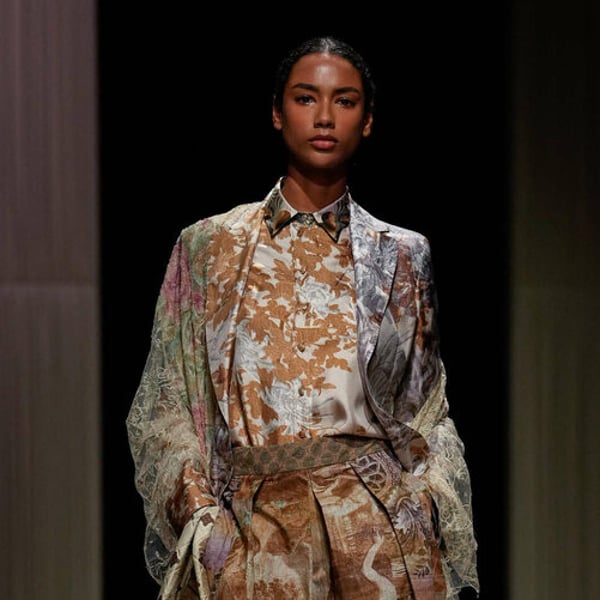
These two strands culminated in a refined, supremely elegant collection, with silk taking the lead in shimmering, fluid pieces. The light, comfortable garments featured very few fastenings and eschewed superfluous details. Front and centre were Mascia’s drawings and illustrations, including twenty-one new original prints in which diverse themes collide in finely calibrated balance.
Landscapes in India ink, foliage, toile de Jouy, animal prints, tapestry effects, abstract or geometric motifs, and paisley all come together harmoniously in precious silhouettes. A little silk robe-style coat slipped, revealing a shoulder. Blouses matched skirts in the same tones, while their prints evoked imaginary, melancholy tales.
Blouses and slip dresses were cut from finely fringed shawls. Delicate tunics fell to the knee over trousers tied at the ankle, at times recalling saris. Lightweight overcoats whirled above shirts and skirts fashioned from silky fabrics. Backed by his partner, the Como silk printer Achille Pinto, Mascia also offered this season a breathtaking series of silk pieces that perfectly simulate denim. Since he began showing, his visibility has grown. For 2025, revenue is expected to rise by 15%.

For Spring/Summer 2026, Daniele Calcaterra conceived a journey through time and cultures, leaping between the twenties, forties and nineties, with a detour via the Sahara. The collection oscillated between austere, masculine rigour and sensuous, free-flowing femininity.
On one side, there were trench coats, overcoats and, above all, suits with wide-lapel jackets, oversized men’s waistcoats and generously cut trousers with rounded lines, whose volume imbued women with power. This comfortable, practical wardrobe was conceived for everyday life, featuring, among other pieces, two-tone jeans, the classic striped shirt elongated into a tunic at the back, a slit pencil skirt and a chic suit with a swirling skirt.
On the other, the wardrobe turned more lustrous and fluid, with long fringed silk dresses that caressed the body, cloud-like tops punctuated with ostrich feathers or formed from series of fine fringes in differing lengths, and sheer organza looks. Scarves were worked into outfits to lend an airy touch, whether in skirts or T-shirts. They were sometimes draped over the shoulders like little capes, or tied around the neck.
Ethnic details ran throughout, such as Berber jewellery and belts edging the collars and cuffs of certain blouses.

For his second Milan show, J.Salinas enlisted the services of stylist Anna Dello Russo. Designer Jorge Luis Salinas, determined to win over the European market, pulled out all the stops, staging his show in an elegant, sun-drenched city-centre garden.
Ever focused on knitwear, the Peruvian couturier—who deploys countless knitting techniques to crochet sinuous mermaid dresses in a multitude of stitches—broadened his offer this season with more wearable pieces designed for a Western clientele. These include mini dresses, miniskirts, shorts, flared trousers, jackets and cropped tops with ruffled shoulders, tied at the back with long knitted ribbons.
The collection was presented in a pastel palette of dragée pink, sage green, sky blue and tangerine, spotlighting Peruvian craftsmanship. Each piece was knitted in Pima cotton by local craftswomen, then assembled to create openwork garments composed of a cascade of motifs (roses, flowers, raised polka dots, feathers, shells, and scales), layers of doilies and other lace which, arranged in garlands, traced curves and whorls around the body.
Salinas collaborates with communities of craftswomen across the country—around fifty knitters who enrich his work, each bringing her own ideas and skills. Seven of them were present in Milan on Sunday. They came to greet the public in their traditional dress to a round of applause.
This article is an automatic translation.
Click here to read the original article.
Copyright © 2025 FashionNetwork.com All rights reserved.









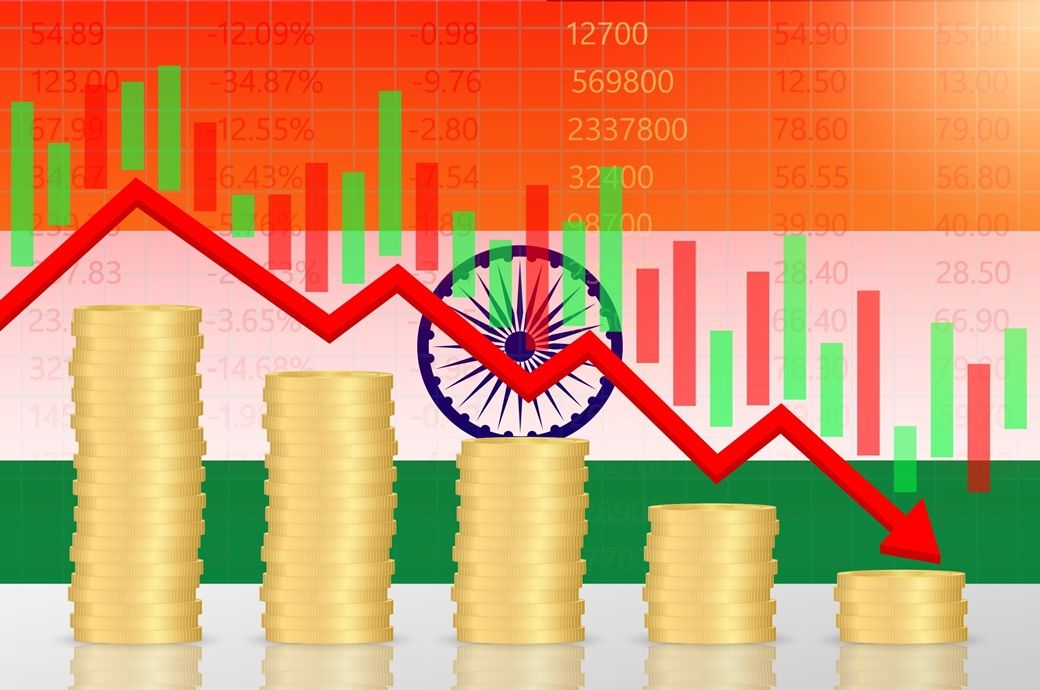
While trends in high frequency indicators for January-February 2026 appear favourable, the heightened uncertainty around the duration of the Middle East conflict casts a shadow on the near-term macroeconomic outlook for India amid high import dependency for items like crude oil, natural gas and fertilisers, it noted.
India’s FY27 GDP growth is likely to slow to 6.5 per cent from the projected 7.5 per cent in FY26 owing to the impact of higher energy prices and concerns around energy availability, ICRA Ratings said.
The heightened uncertainty around the duration of the Iran war casts a shadow on the near-term macroeconomic outlook for India.
If the conflict lasts longer, the adverse effects could widen across sectors.
If the conflict lasts for an extended period, the adverse implications of the same could widen across sectors, amid an uptick in input costs and the consequent impact on profitability of the India corporate sector.
Amid the projected uptrend in the consumer price index-based inflation in FY27 with risks tilted to the upside, ICRA Ratings expects an extended pause on the policy rates by the central bank’s monetary policy committee in the fiscal despite the anticipated softening in the GDP growth. However, it expects the Reserve Bank of India to continue to intervene on the liquidity front during FY27.
The available data for January–February FY2026 indicate a positive trend across most non-agricultural indicators, with the year-on-year performance of 12 out of 18 indicators improving compared to the third quarter of FY26, while the remaining six deteriorated.
Fibre2Fashion News Desk (DS)
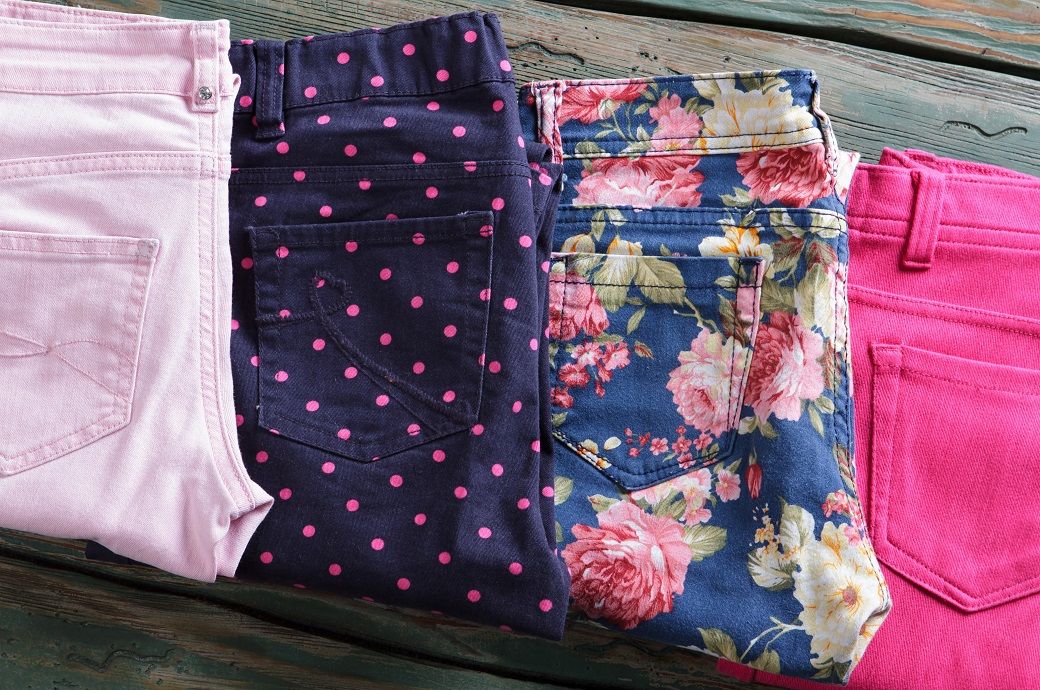
Indonesia’s apparel exports rose modestly to $8.705 billion in 2025 from $8.316 billion in 2024, reflecting gradual recovery.
The US remained dominant, accounting for over 56 per cent of shipments, highlighting growing market dependence.
While Japan, South Korea and Europe offered stability, exports stayed concentrated in key products and segments.
Source link

Methanol prices in India have surged nearly 150 per cent from pre-Iran–US tension levels, tracking a sharp rise in crude oil and tightening global energy markets.
Hormuz disruption risks, limited rerouting capacity, rising freight and insurance costs, and constrained imports are fuelling volatility, with prices seen approaching ₹90 per kg.
Source link


Italy veterans aware 2026 World Cup is their ‘last chance’

Iran air defenses shoot down MQ-9 drone in Isfahan, LUCAS drone over Qeshm Island

Iran oil returns: India set to receive first cargo in 5 years, tanker heads to Gujarat – The Times of India

-

 Politics1 week ago
Afghanistan announces release of detained US citizen
-

 Sports1 week ago
Broadcast industry CEO says consolidation is ‘essential’ to compete for NFL soaring media rights prices
-

 Entertainment1 week ago
UN warns migratory freshwater fish numbers are spiralling
-
 Business1 week ago
Property Play: Home flippers see smallest profits since the Great Recession, real estate data firm says
-

 Tech1 week ago
Can a Home Appliance Fix the Problem of Soft-Plastic Waste?
-
 Business1 week ago
Gold prices soar in Pakistan – SUCH TV
-

 Fashion1 week ago
ICE cotton slips on weaker crude, profit booking
-
 Business1 week ago
More women are entering wealth management, but few are in advisory roles, study finds