

Politics
Millions angry with Trump expected to fill American streets

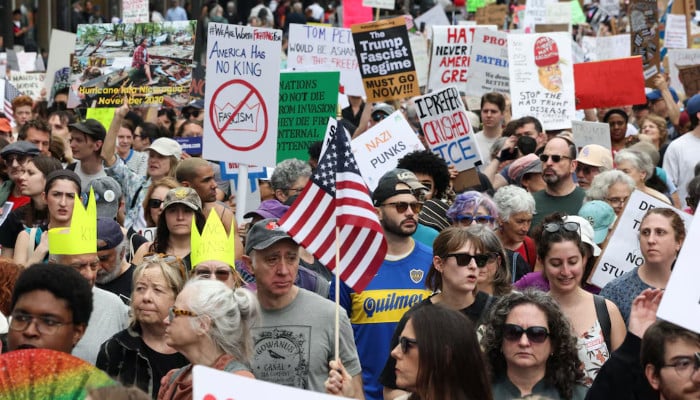
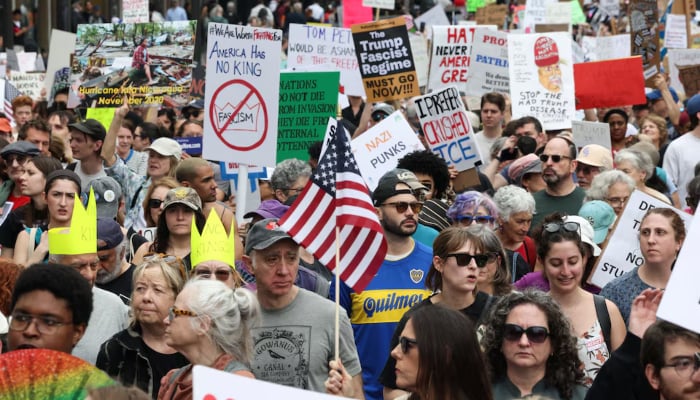
MINNEAPOLIS: Massive nationwide protests against US President Donald Trump are expected Saturday as millions of people vent fury over what they see as his authoritarian bent and other forms of cruel, law-trampling governance.
It is the third time in less than a year that Americans will take to the streets as part of a grassroots movement called “No Kings,” the most vocal and visual conduit for opposition to Trump since he began his second term in January 2025.
And now they have something new to fume over — the war in Iran that Trump launched alongside Israel, with ever-shifting goals and timelines for completion.
The first such nationwide protest day came in June on Trump’s 79th birthday and coincided with a military parade in Washington that he insisted on holding.
Several million people turned out, from New York to San Francisco and many places in between.
The second “No Kings” day in October drew an estimated seven million protesters, according to organisers.
The goal now is to bring out even more people on Saturday, as Trump’s approval rating is low at around 40% and midterm elections loom in November, when Trump’s Republicans could lose control of both chambers.
Just as Trump is worshipped by many in his “Make America Great Again” movement, on the other side of America’s wide political chasm, he is disliked or even loathed with equal passion.
Trump foes bemoan his penchant for ruling by executive decree, his use of the Justice Department to prosecute opponents, his embrace of fossil fuels and climate change denial even as the planet warms, his fight against racial and gender diversity programs, and his newfound taste for flexing US military power after campaigning as a man of peace.
“Since the last time we marched, this administration has dragged us deeper into war,” said Naveed Shah of Common Defence, a veterans association that belongs to the “No Kings” movement.
“At home, we’ve watched citizens killed in the streets by militarised forces. We’ve seen families torn apart and immigrant communities targeted. All of it done in the name of one man trying to rule like a king,” Shah said.
Springsteen in Minneapolis
Organisers say more than 3,000 rallies are planned, an increase from the last protest day, in major cities coast to coast and in suburbs and rural areas — even in the Alaskan town of Kotzebue, above the Arctic circle.
Minnesota will be a key focal point, returning to the limelight months after becoming ground zero for the national debate over Trump’s violent immigration crackdown.
Legendary rocker Bruce Springsteen, a fierce critic of the president, is scheduled to perform in St Paul, the capital of the northern state, his song “Streets of Minneapolis.”
It is a ballad he wrote and recorded in the space of 24 hours in memory of Renee Good and Alex Pretti, Americans shot and killed by federal agents during protests in frigid January weather against Trump´s immigration offensive.
“Masked secret police terrorising our communities. An illegal, catastrophic war putting us in danger and driving up our costs. Attacks on our freedom of speech, our civil rights, our freedom to vote. Costs pushing families to the brink. Trump wants to rule over us as a tyrant,” the “No Kings” movement said.
It said what began in 2025 as a simple day of defiance has mushroomed into a powerful movement of national resistance to the Trump administration.
Organisers say two-thirds of those who plan to rally Saturday do not live in big cities, which in America are often Democratic strongholds — a data point that is up sharply since the last protest.
“America is at an inflection point,” said Randi Weingarten, president of the American Federation of Teachers.
“People are afraid, and they can’t afford basic necessities. It’s time the administration listened and helped them build a better life rather than stoking hate and fear.”
- Over 2,000 mourners honour men killed defending mosque.
- FBI investigates attack as suspected hate crime.
- Mourners call for end to anti-Muslim hatred.
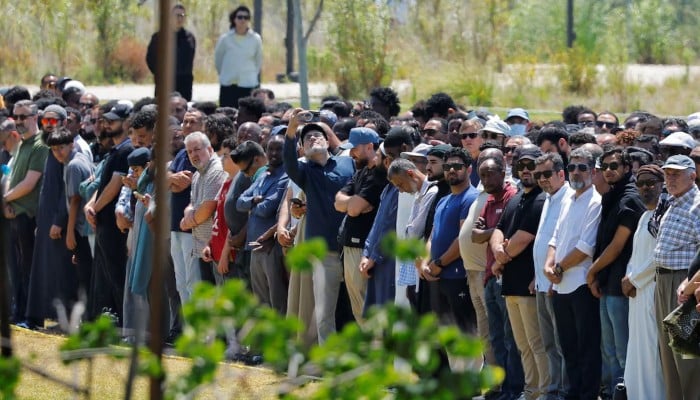
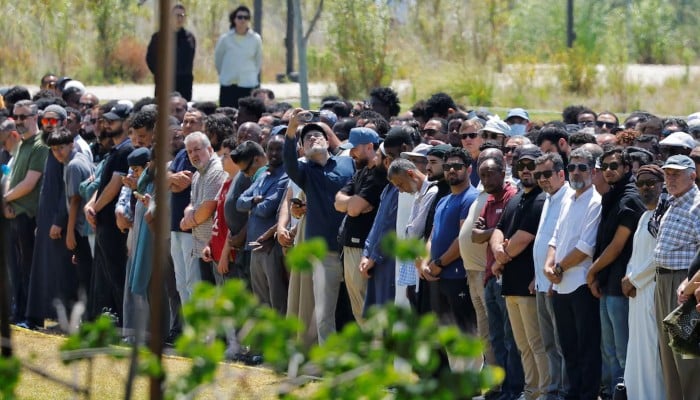
SAN DIEGO: More than 2,000 people gathered in a San Diego park on Thursday to mourn a security guard and two other men murdered as they tried to stop this week’s attack on the city’s largest mosque.
Men and women, including police officers in uniform, stood in rows for the funeral prayer, or Janazah, to remember the three men referred to as heroes by mourners for delaying and distracting the attackers, preventing further bloodshed at a time when children were at the mosque’s school.
The bodies of the men, Amin Abdullah, 51, Mansour Kaziha, 78, and Nadir Awad, 57, lay beneath cloths and rugs, underneath a white canopy.
“[Allahu Akbar] God is the greatest,” the mourners chanted in Arabic, raising their hands at the service in a park wedged between the city’s river and a soccer stadium.
The three men were set to be buried alongside one another later in the day at a nearby cemetery.
“Today is a message to everyone. Our community got hurt but our community is standing strong and firm,” said the centre’s imam, Taha Hassane, adding that people had travelled from the eastern United States and across California for the service.
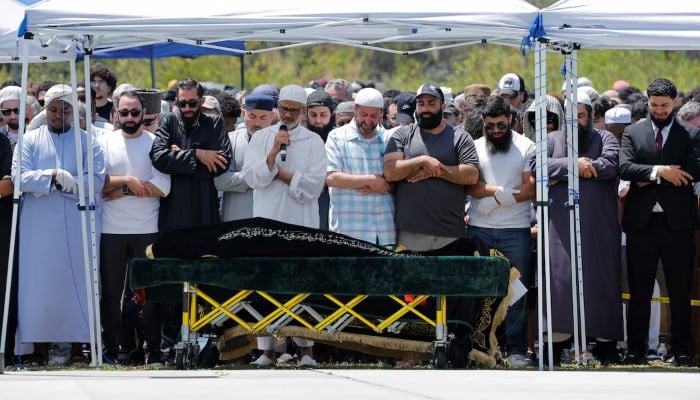
The FBI is investigating the attack as a suspected hate crime, and the killings have put Muslims across the United States on edge at a time of rising Islamophobia.
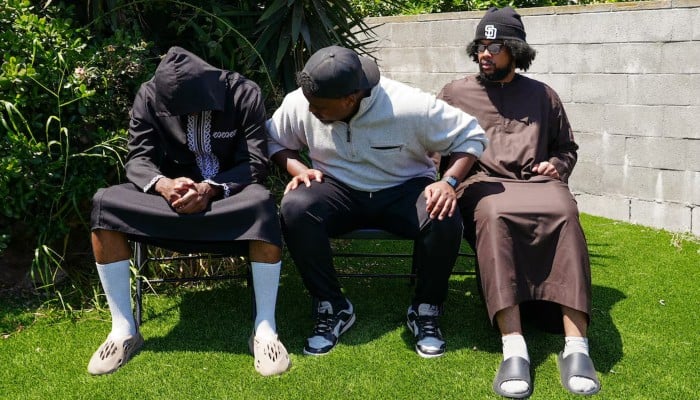
Mourner Ruba Abu Jamah, who knew all three men, called for an end to the hatred of Muslims that she believed inspired the attackers. She questioned why the mother of one of the teenage suspects, who alerted police that her son was suicidal, allegedly allowed him to have access to guns.
“For God’s sake, why are we going backwards? Hate takes us backwards,” said Abu Jamah, after hearses took the men’s bodies for burial. “Moms, don’t have a whole display of weapons if you know your 16-year-old kid is depressed.”
Abdullah was shot dead in a gun battle with the teenage assailants during which he used his radio to call in a lockdown procedure, police said.
Kaziha, the centre’s handyman and cook, as well as Awad, whose wife is a teacher at the centre and who lived across the street from the mosque, were shot dead by the attackers after they heard gunfire and ran towards the centre.
Abdullah’s actions are credited with delaying the assailants’ entry to the centre, where 140 students hid in closets and other spaces, police said.
The assailants fled the mosque in their vehicle and were later found dead in the car from self-inflicted gunshots, police said.
Khaled Abdullah, 24, the security guard’s son, said his family has drawn strength from the way his father died.
“The fact that he was on the front line, trying to defend kids and innocent people, that makes me feel good,” Khaled told Reuters on Wednesday. “Calling him a hero is the least we can do.”
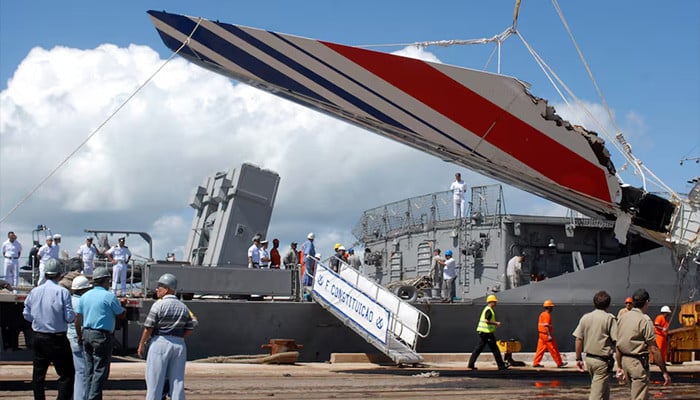
A French appeals court found Airbus and Air France guilty of corporate manslaughter on Thursday over the Rio-Paris plane crash, but a 17-year legal battle over the country’s worst aviation disaster is set to continue.
“Justice has absolutely been done,” Daniele Lamy, president of the AF447 victims’ association, whose son was one of 228 people who died in the crash, said outside the courtroom.
Relatives of some of those who died when the Airbus A330 plunged in pitch darkness into the Atlantic during an equatorial storm on June 1, 2009, listened to the verdict in silence.
A lower court had in 2023 cleared the two French companies, both of which have repeatedly denied the charges.
Thursday’s verdict is the latest milestone in a legal marathon involving relatives of the mainly French, Brazilian and German victims and two of France’s most emblematic companies.
The appeals court ordered them both to pay the maximum fine for corporate manslaughter, €225,000 ($261,720), following the request of prosecutors during last year’s eight-week trial.
The fines, amounting to just a few minutes of either company’s revenue, have been widely dismissed as a token penalty but families said corporate reputations were on the line.
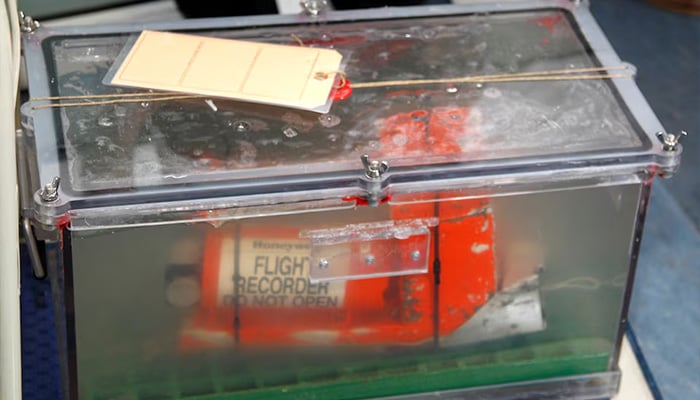
Airbus and Air France both said they would appeal to France’s highest court, ignoring pleas from the relatives.
“There is no human, moral or legal justification in continuing this procedure,” said Lamy, who appealed to both companies to stop what she called “procedural harassment”.
Divisions over crash cause
Lawyers had predicted further appeals on legal points and warned these could potentially drag the process out for years.
Families’ lawyer Alain Jakubowicz told Reuters a second full re-trial, rehashing the evidence a third time, could not be ruled out if the Court of Cassation faulted Thursday’s verdict.
Relatives and lawyers sat in a high-windowed courtroom that has witnessed some of France’s most historic trials as a judge read out a list of victims, many sharing the same family names.
The black boxes from Flight 447 were retrieved in 2011, after a two-year deep-sea search that was almost called off.
The trial exposed bitter divisions between the airline and planemaker over the cause of the accident and a gulf between a civil crash report that focused mainly on the actions of pilots and a wider chain of cause and effect highlighted by the court.
Analysts said the ruling was unlikely to alter regulators’ views on the crash, which did not lead to major technical changes. France’s BEA crash investigators found the plane’s crew had pushed their jet into a stall, chopping lift from under the wings, after mishandling a problem to do with iced-up sensors.
Prosecutors, however, focused their attention on alleged failures inside both the planemaker and airline. Those included poor training and failing to follow up on earlier sensor flaws.
To prove manslaughter, prosecutors had to not only establish negligence but also pull the threads together to demonstrate how this caused the crash. Their failure to make that part of the argument stick had resulted in the earlier acquittal.
Lamy said the deceased pilots had been “rehabilitated”.
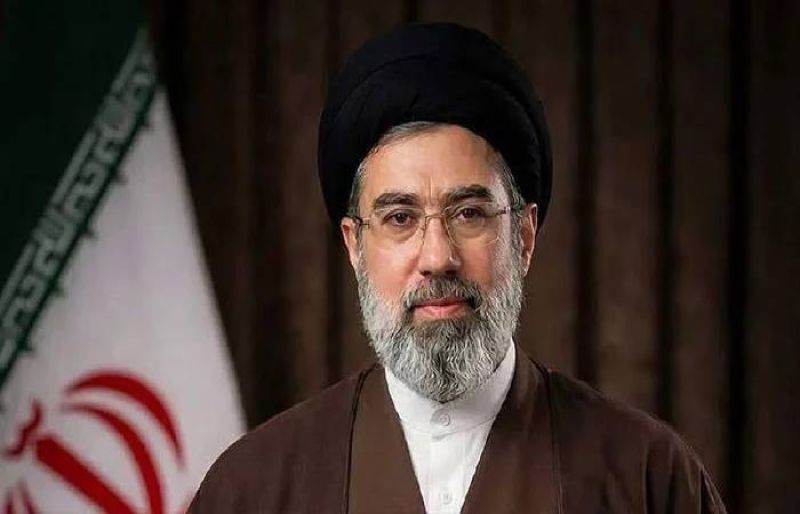
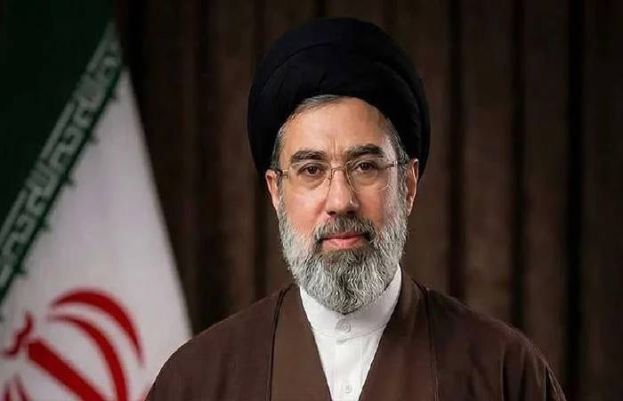
Iran’s Supreme Leader has issued a directive that the country’s near-weapons-grade uranium should not be sent abroad, two senior Iranian sources said, hardening Tehran’s stance on one of the main US demands at peace talks.
Ayatollah Mojtaba Khamenei’s order could further frustrate US President Donald Trump and complicate talks on ending the US-Israeli war on Iran.
Israeli officials have told Reuters that Trump has assured Israel that Iran’s stockpile of highly enriched uranium, needed to make an atomic weapon, will be sent out of Iran and that any peace deal must include a clause on this.
Israeli Prime Minister Benjamin Netanyahu has said he will not consider the war over until enriched uranium is removed from Iran, Tehran ends its support for proxy militias, and its ballistic missile capabilities are eliminated.
“The Supreme Leader’s directive, and the consensus within the establishment, is that the stockpile of enriched uranium should not leave the country,” said one of the two Iranian sources, who spoke on condition of anonymity because of the sensitivity of the matter.
Iran’s top officials, the sources said, believe that sending the material abroad would leave the country more vulnerable to future attacks by the United States and Israel. Khamenei has the last say on the most important state matters.
The White House and Iran’s foreign ministry did not respond to requests for comment.
Deep suspicion among top Iranian officials
A shaky ceasefire is in place in the war that began with US-Israeli strikes on Iran on February 28, after which Iran fired at Gulf states hosting US military bases and fighting broke out between Israel and Hezbollah in Lebanon.
But there has been no big breakthrough in peace efforts, with a US blockade of Iranian ports and Tehran’s grip on the Strait of Hormuz, a vital global oil supply route, complicating negotiations mediated by Pakistan.
The two senior Iranian sources said there was deep suspicion in Iran that the pause in hostilities was a tactical deception by Washington to create a sense of security before it renews airstrikes.
Iran’s top peace negotiator, Mohammad Baqer Qalibaf, said on Wednesday that “obvious and hidden moves by the enemy” showed the Americans were preparing new attacks.
Trump said on Wednesday the US was ready to proceed with further attacks on Tehran if Iran did not agree to a peace deal, but suggested Washington could wait a few days to “get the right answers.”
The two sides have started to narrow some gaps, the sources said, but deeper splits remain over Tehran’s nuclear programme — including the fate of its enriched uranium stockpiles and Tehran’s demand for recognition of its right to enrichment.
Iran hardens stance on enriched uranium stockpile
Iranian officials have repeatedly said Tehran’s priority is to secure a permanent end to the war and credible guarantees that the US and Israel will not launch further attacks.
Only after such assurances are in place, they said, would Iran be prepared to engage in detailed negotiations over its nuclear programme. Tehran has long denied seeking a nuclear bomb.
Israel is widely believed to have an atomic arsenal but has never confirmed or denied it has nuclear weapons, maintaining a so-called policy of ambiguity on the issue for decades.
Before the war, Iran signalled willingness to ship out half of its stockpile of uranium, which has been enriched to 60%, a level far higher than what is needed for civilian uses.
But sources said that the position changed after repeated threats from Trump to strike Iran.
Israeli officials have told Reuters it is still unclear whether Trump will decide to attack and whether he would give Israel a green light to resume operations. Tehran has vowed a crushing response if attacked.
However, the source said there were “feasible formulas” to resolve the matter.
“There are solutions like diluting the stockpile under the supervision of the International Atomic Energy Agency,” one of the Iranian sources said.
The IAEA estimates that Iran had 440.9kg of uranium enriched to 60% when Israel and the US attacked Iranian nuclear facilities in June 2025. How much of that has survived is unclear.
IAEA chief Rafael Grossi said in March that what remained of that stock was “mainly” stored in a tunnel complex in its Isfahan nuclear facility, and that his agency believed slightly more than 200 kg of it was there. The IAEA also believes some is at the sprawling nuclear complex at Natanz, where Iran had two enrichment plants.
Iran says some highly enriched uranium is needed for medical purposes and for a research reactor in Tehran which runs on relatively small amounts of uranium enriched to around 20%.


New Balance signs US midfielder Yunus Musah to football roster

NASCAR driver Casey Mears reflects on Kyle Busch’s impact on the sport after his death

Philippines’ T&A imports fall 9%, exports rise in Q1 2026

-

 Fashion1 week ago
Italy’s Zegna Group’s Q1 growth boosted by strong organic performance
-

 Entertainment6 days ago
Where Pete Davidson, Elsie Hewitt stand after breakup: Details revealed
-

 Entertainment1 week ago
Emilia Clarke recalls near-death incident while filming ‘Game of Thrones’
-
 Business1 week ago
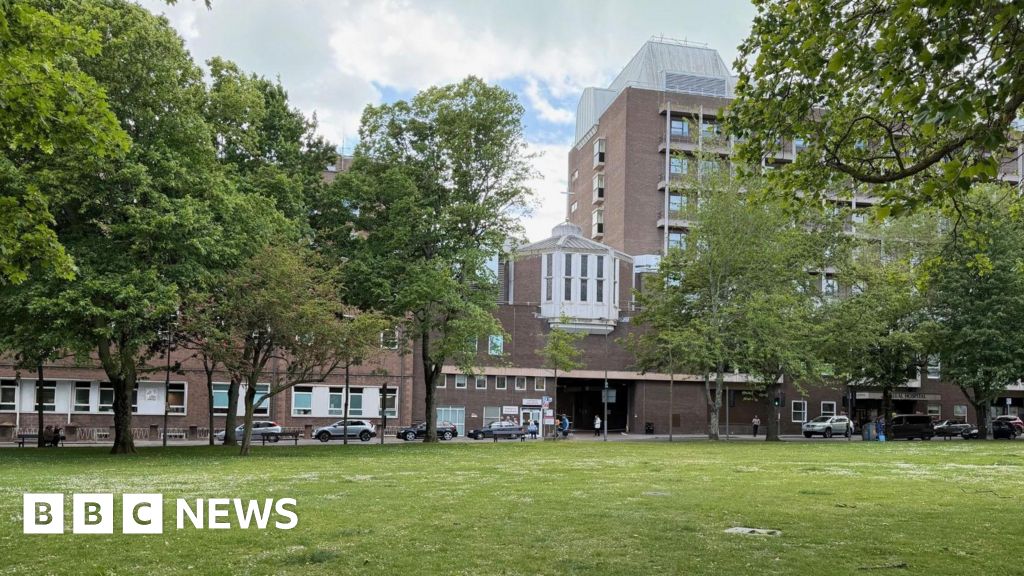
Jersey Election 2026: Cost of living concern in St Helier Central
-
 Fashion1 week ago
Global cotton production, stocks to fall; consumption to rise: WASDE
-

 Politics6 days ago
Rising diesel costs from Iran war strain US school budgets
-

 Politics1 week ago
UK’s Starmer faces survival battle as potential rivals circle
-

 Entertainment7 days ago
Drake drops highly anticipated "Iceman" album, plus two surprise albums