

Politics
Millions of Iranians rally on International Quds Day amid US-Israeli strikes

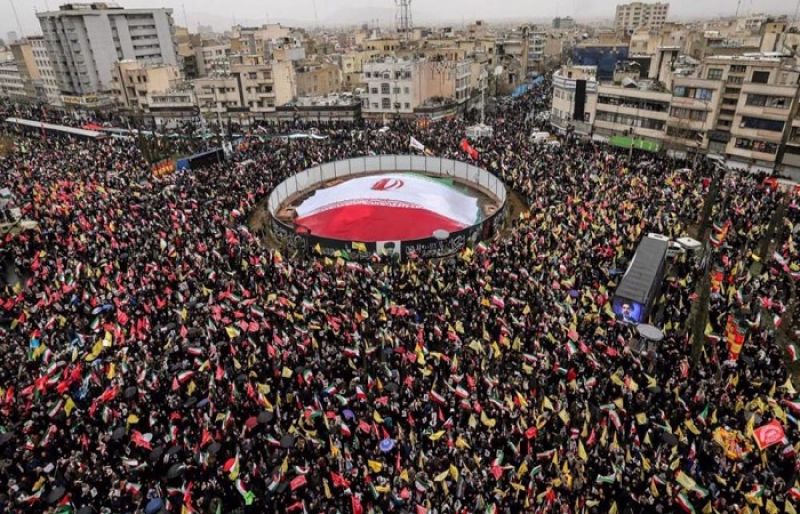

The event, which takes place on the last Friday of the holy month of Ramadan, is commemorated through mass rallies that saw citizens from all walks of life gathering in major cities, including Tehran, to demonstrate their unwavering support for Palestinians.
This year’s International Quds Day is particularly poignant, occurring amid the ongoing military aggression by the United States and Israel against Iran.
The attacks, which have lasted for over two weeks, have claimed over 1,300 Iranian lives and left more than 10,000 injured, with a significant number of casualties being women, children, and students.
In response, Iranians have rallied in vast numbers, holding Iranian and Palestinian flags, and displaying images of Ayatollah Seyyed Mojtaba Khamenei, the newly elected leader of the Islamic Revolution.
In Tehran’s Enqelab Square, participants chanted “God is Great” in response to explosions that were heard during the rally amid US and Israeli airstrikes which have targeted schools, hospitals, police stations, and historical landmarks.
The atmosphere of defiance and solidarity was palpable, with people pledging their loyalty to the late founder of the Islamic Republic, Imam Khomeini, and his vision for the liberation of Palestine.
A notable feature of this year’s events has been the demonstrators’ allegiance to Ayatollah Seyyed Mojtaba Khamenei. Many rally participants carried his images, signaling their support for his leadership and commitment to the ideals of the revolution.
Some participants even signed petitions and gathered in groups to affirm their loyalty to him
Top officials attended the rallies, with President Masoud Pezeshkian seen walking alone on the street, without any security escort.
Speaking at the rally in Tehran, Supreme National Security Council Secretary Ali Larijani stated that US President Donald Trump “does not understand” the resolve of the Iranian people.
“The Iranian people are a determined and capable nation, and the more pressure Trump applies, the stronger our will becomes,” Larijani said.
Responding to a question about Israeli attacks on Quds Day participants, Larijani said that such actions are driven by “fear and desperation,” adding that the Israeli regime’s aggression demonstrates its weakening position.
In a statement issued by the Islamic Development Coordination Council, the significance of this year’s Quds Day was noted.
“The security equations of the region and the world have changed with the power of resistance,” the statement declared.
It further described how “the Middle East, once envisioned by enemies as a space for expansion, has transformed into a ‘resistant Middle East.’
The statement called for continued unity, saying: “We are resolute in our commitment to the ideals of Imam Khomeini and the martyred leader Ayatollah Khamenei. We will stand by our leaders until the last drop of our blood.”
It also condemned US and Israeli actions, calling them “clear war crimes” that must be addressed by international bodies.
President Masoud Pezeshkian, in a post on social media, urged Iranians to disappoint the country’s enemies through massive participation in the Quds Day marches.
Speaker of the Iranian Parliament Mohammad-Baqer Qalibaf emphasized that this historic occasion has turned into a nightmare for the “fake and child-killing Zionist regime.”
The significance of this year’s International Quds Day rallies is further underscored by the ongoing US-Israeli aggression against Iran, which began two weeks ago.
The violent campaign has sparked outrage among Iranians and bolstered their resolve to defend the Palestinian cause.
Ayatollah Khamenei, in his first public message on Thursday, called for participation in Quds Day events, describing them as a unifying force for people worldwide.
Reports from across Iran reveal that the participation in this year’s Quds Day is more widespread and determined than ever.
The mass rallies, which are also taking place in over 900 cities and dozens of towns and villages, are a clear statement of defiance against the external forces that seek to weaken Iran and its allies in the region.
Even in adverse weather conditions—heavy snow and rain and cold temperatures—Iranians are flooding the streets to voice their unwavering support for Palestine under Israeli and US military aggression.
The central rally in Tehran, which began at multiple points across the capital and converged at the University of Tehran, featured Qur’an recitations, speeches, and chanting of slogans condemning US and Israeli atrocities in Gaza and other Palestinian territories.
International Quds Day was first proposed by Imam Khomeini in 1979, who designated the last Friday of Ramadan as a day of global solidarity with the Palestinian people.
The initiative is aimed at preventing the Palestinian cause from being forgotten amid other global issues.
Over the years, Quds Day has become a symbol of resistance against the occupation of Palestinian territories by Israel, with rallies held in numerous countries worldwide, including across West Asia, North Africa, and in Western nations like the US, the UK, France, and Germany.
Iran’s mass participation this year carries particular significance, occurring amidst a campaign of terrorism by the US and Israel against Iran, aimed at stifling the only beacon of hope for the world’s oppressed peoples and resistance movements.
The brutal attacks on Iran, including bombings that have targeted civilian infrastructure, schools, and hospitals, have served to deepen the public’s resolve to confront the Zionist regime and its supporters.
The Quds Day rallies in Iran are not only a display of political opposition but also of national unity. From north to south, east to west, the Iranian people have united across ethnic and religious lines to voice their anger at the US-Israeli war of terrorism.
In cities such as Ahvaz, Shiraz, and Mashhad, participants from diverse backgrounds, including Shia, Sunni, and ethnic minorities, have gathered in solidarity with Palestinians. They are joined by Iranians who are mourning the recent slaughter of their loved ones in the Israeli-US airstrikes.
The rallies also carry a personal dimension for many Iranians, particularly in light of the recent bombing of a girls’ school in the town of Minab, which resulted in the deaths of 175 students and teachers.
The spirit of Quds Day transcends national borders, with similar events taking place across the globe.
In countries like Lebanon, Iraq, Syria, Yemen, and Pakistan, hundreds of thousands of people have joined in rallies to demonstrate their support for Palestine and denounce Israeli aggression.
Even in Western capitals, where political pressures often limit public demonstrations, Muslims and activists have gathered to show their solidarity with Palestinians.
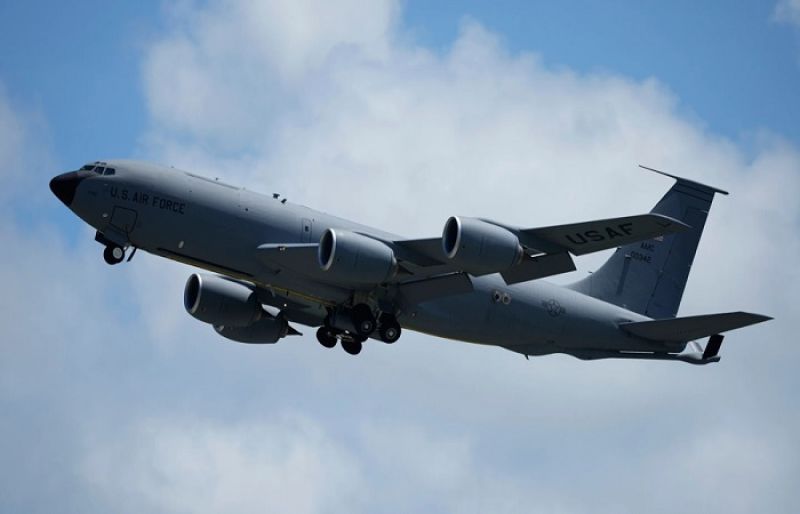

All six crew members of a US Air Force refueling aircraft have been confirmed killed after it was shot down by resistance groups in western Iraq on Thursday.
US Central Command (CENTCOM) confirmed the deaths in a post on the social media platform X on Friday, hours after it reported that the KC-135 refueling aircraft had gone down in western Iraq.
It said at the time that four of the six crew members on board were killed.
CENTCOM also claimed that “the loss of the aircraft was not due to hostile fire or friendly fire.”
The aircraft, however, was targeted and struck by a missile fired by the Resistance Front in western Iraq, according to a statement issued by the Khatam al-Anbiya Central Headquarters of Iran on Thursday night.
In a separate statement, Iran’s Islamic Revolutionary Guard Corps (IRGC) said that the aircraft was intercepted and destroyed while it was in the middle of a refueling mission for an “aggressor fighter jet.”
The incident has brought the number of US troops killed, as per the Pentagon data, to at least 13 since the US and the Israeli regime launched an unprovoked war against Iran on February 28.
Ever since, Iraqi resistance groups have been carrying out daily attacks on US assets in Iraq and across the region.
The KC-135 is at least the fourth known US military aircraft lost during the war with Iran.
At least three F-15 aircraft were also shot down over Kuwait.
Many observers see the latest incident as a major blow to the US military.
They argue that by targeting the refueling aircraft, the Resistance Front has struck the logistical backbone of US aerial operations, proving that American air superiority is no longer unchallenged in the region.
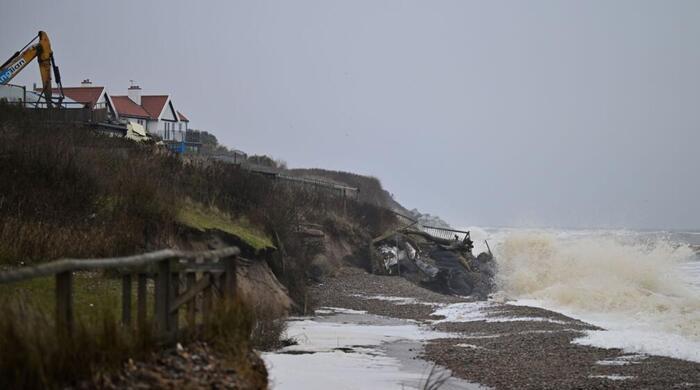
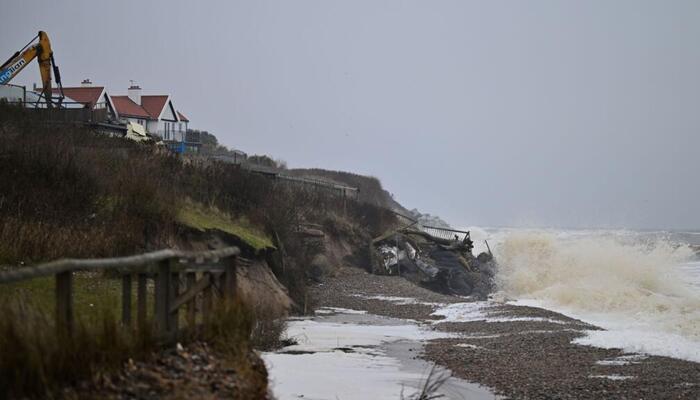
In an English seaside village, researchers discuss options for relocating a graveyard threatened with slipping into the sea, or moving back a car park perilously close to a cliff edge.
The team from the Coastwise project have been granted over £15 million ($20 million) in government funding to adapt the coastline in North Norfolk, eastern England, to accelerating erosion worsened by climate change.
There is one caveat: it cannot spend that money on traditional coastal defences like sea walls or rock-filled cages known as gabions.
Instead, the team is assessing the best ways to lose at-risk homes to the sea and helping better inform cliffside property purchases.
Some measures it has considered include selective buyouts, government insurance schemes, replacing houses with mobile homes and early warning systems for when people may have to vacate their residences.
“It is quite groundbreaking… different countries are trying different things, but there’s nothing quite similar,” Robert Goodliffe from Coastwise told AFP.
“It will take a shift in how we think about this,” he added.
For decades, the default approach in Britain and elsewhere was to “hold the line” against erosion using human-made defences.
But, with some defences reaching the end of their design life and sea levels rising, the government and coastal experts warn the tide cannot be held back everywhere.
The UK’s Environment Agency has determined some communities on the soft, sandy eastern English coast — among the fastest-eroding in Europe — will need to conduct a “managed retreat” and move back from the shoreline.
The government is funding pilots like Coastwise, tasked with preparing parts of the coastline that may not be defended in the future.
“When it comes to building a defence there’s a process and a system, and a way of applying for funding,” explained Sophie Day, a coastal adaptation specialist working on the project.
“But when it comes to losing places, there isn’t”.
Creeping anxiety
The team hopes measures it assesses in Norfolk, like the logistics and legal complications of exhuming bodies and moving a graveyard, can be applied to other parts of the country.
But some locals feel the government’s managed retreat policy is failing communities at imminent risk.
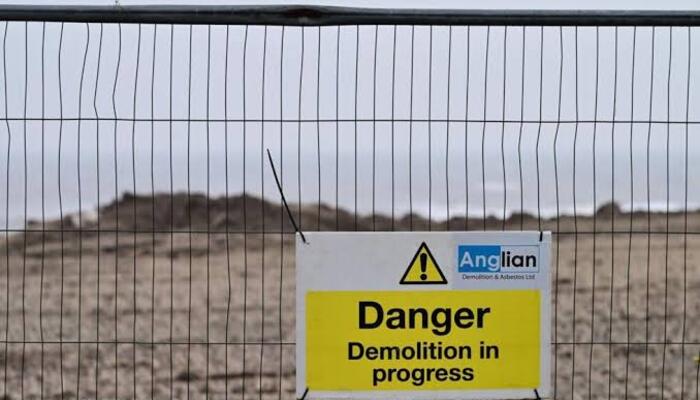
Shelley Cowlin’s home of five decades was demolished in January after winter storms lashed the coast of a resort in Suffolk, eastern England.
“On the cliff top, here, lovely, big white house… which gave me a fantastic view,” Cowlin, 89, told AFP in Thorpeness, where 10 clifftop properties have been demolished since October.
In January, a wall at the edge of her property was destroyed in a storm, the gabions “floated away” and “the gate was just swinging and all very sad”.
“They won’t give you any money,” she said, criticising the government for the lack of compensation.
As she spoke, a bulldozer was breaking down another residence in the holiday village, which the government has recommended should move back from the coast rather than invest in more defences.
Shelley’s son, Simon Carrick Cowlin, described creeping anxiety as neighbouring houses were pulled down.
“When’s it my turn? … A horrible space to be living in,” said Simon.
“Any defences that have been put in historically or that will continue to be put in will (only) slow down the erosion, it cannot stop it,” said local councillor Katie Graham.
“We do need more money, we do need more support from government. This is a very urgent situation,” she added.
‘Far-sighted’
Thorpeness residents say storms have grown fiercer, as scientists warn climate change will make such extreme weather more intense and frequent.
“In the UK we seem to (be) like: I’ll just let the sea take what it wants,” said Craig Block, the boatman at Thorpeness’ lake.
Local Nicholas Millor said it was a “traumatic time” for the small village with some 130 residents and dozens of holiday homes.
The community had to prepare “for a much more liminal, uncertain kind of future”, he said.
“What Thorpeness is going through now is a microcosm, is an example actually of what many, many communities will go through.”
But experts insist costly traditional defences will not solve erosion, and that adaptation projects like Coastwise are needed to help communities move away from the coastline.
According to climate adaptation researcher Robert Nicholls, the government’s policy is “deliberately experimental” and “translating these ideas elsewhere is a good idea”.
“They’re trying to learn what can and can’t be done. They’re trying to innovate,” said the University of East Anglia professor.
“To me, it seems very rational that you follow the approach that Britain’s doing… I think it’s quite wise and far-sighted.
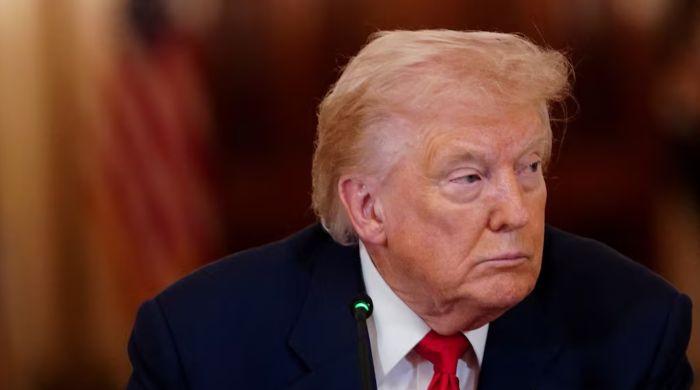
A complex tug-of-war inside the White House is driving US President Donald Trump’s shifting public statements on the course of the Iran war, as aides debate when and how to declare victory even as the conflict spreads across the Middle East.
Some officials and advisers are warning Trump that surging gasoline prices could exact a political cost from the US-Israeli attacks on Iran, while some hawks are pressing the president to maintain the offensive against the Islamic Republic, according to interviews with a Trump adviser and others close to the deliberations.
Their observations to Reuters offer a previously unreported glimpse inside White House decision-making as it adjusts its approach to the biggest US military operation since the 2003 Iraq war.
Shifting messages, various internal viewpoints
The behind-the-scenes manoeuvring underscores the high stakes Trump, who returned to office last year promising to avoid “stupid” military interventions, faces nearly two weeks after plunging the nation into a war that has rattled global financial markets and disrupted the international oil trade.
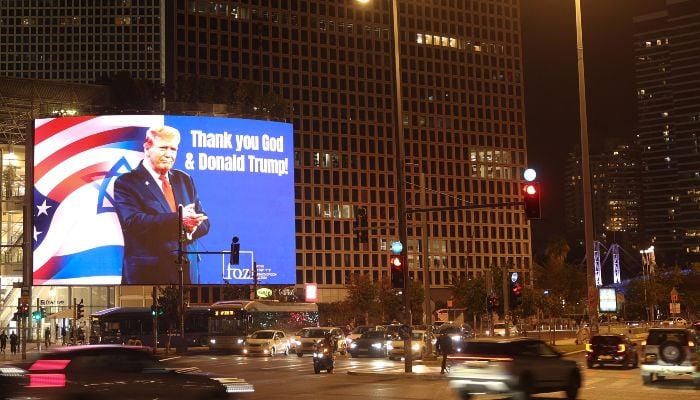
The jockeying for Trump’s ear is a feature of his presidency, but this time the consequences are a matter of war and peace in one of the world’s most volatile and economically critical regions.
Shifting from the sweeping goals he framed in launching the war on February 28, Trump in recent days has emphasised that he views the conflict as a limited campaign whose objectives have mostly been met.
But the message remains unclear to many, including the energy markets, which have lurched in both directions in response to Trump’s statements.
He told a campaign-style rally in Kentucky on Wednesday that “we won” the war, then abruptly pivoted: “We don’t want to leave early, do we? We’ve got to finish the job.”
Economic advisers and officials, including from the Treasury Department and the National Economic Council, have warned Trump that an oil shock and rising gasoline prices could quickly erode domestic support for the war, said the adviser and two others close to the deliberations, speaking on the condition of anonymity to disclose internal discussions.
Political advisers, including Chief of Staff Susie Wiles and deputy chief James Blair, are making similar arguments, focusing on the political fallout from higher gas prices and urging Trump to define victory narrowly and signal the operation is limited and nearly finished, the sources said.
Pushing in the other direction are hawkish voices urging Trump to sustain military pressure on Iran, including Republican lawmakers such as US Senators Lindsey Graham and Tom Cotton, and media commentators such as Mark Levin, according to people familiar with the matter.
They argue the US must prevent Iran from obtaining a nuclear weapon and respond forcefully to attacks on American troops and shipping.
A third force comes from Trump’s populist base and figures such as strategist Steve Bannon and right-wing television personality Tucker Carlson, who have been pressing him and his top aides to avoid getting dragged into another prolonged Middle East conflict.
“He is allowing the hawks to believe the campaign continues, wants markets to believe the war might end soon and his base to believe escalation will be limited,” the Trump adviser said.
Asked for comment, White House press secretary Karoline Leavitt said in a statement: “This story is based on gossip and speculation from anonymous sources who aren’t even in the room for any discussions with President Trump.
“The President is known for being a good listener and seeking the opinions of many people, but ultimately everyone knows he’s the final decision maker and his own best messenger,” she said. “The President’s entire team is focused on ensuring the objectives of Operation Epic Fury are fully achieved.”
Other people named for their roles in the deliberations did not immediately respond to Reuters’ questions.
Looking for an exit
In taking America to war, Trump offered little explanation, and the administration’s stated war aims have ranged from thwarting an imminent attack by Iran to crippling its nuclear programme to replacing its government.
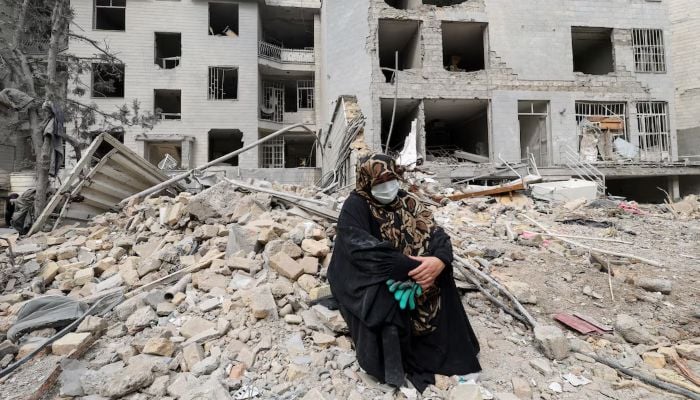
As he seeks an exit from an unpopular conflict, Trump is trying to juggle competing narratives that some critics say have complicated an already difficult situation, with Iran defiant despite the devastating US-Israeli air assault.
Top political aides and economic advisers, whose warnings before the war of the potential economic shock were largely ignored, appear to have played a major role in pushing Trump’s efforts this week to reassure skittish markets and contain rising oil and gas prices.
His public shift to downplaying the war’s impact, describing it as a “short-term excursion,” and his insistence that gas price hikes would be short-lived appeared aimed at calming fears of an open-ended conflict.
Some top aides have advised him to work toward a conclusion to the conflict that he can call a triumph, at least militarily, the sources said, even if much of the Iranian leadership survives, along with remnants of a nuclear program that the campaign was meant to target.
Wave after wave of US and Israeli air strikes have killed a number of top Iranian leaders among some 2,000 people overall — some as far away as Lebanon – devastated its ballistic missile arsenal, sunk much of its navy and degraded its ability to support armed proxies around the Middle East.
But the military achievements have been seriously undercut by Iran’s stepped-up attacks on oil tankers and transport facilities in the Gulf, driving up oil prices.
Trump has said he will decide when to end the campaign. He and his aides say they are far ahead of the four- to six-week timeframe Trump initially announced.
The shifting reasons for launching the conflict, which has spilt over into more than half a dozen other countries, have only made it more difficult to predict what comes next.
For their part, Iran’s rulers will claim victory, analysts say, for simply surviving the US-Israeli onslaught, especially after demonstrating their ability to fight back and inflict damage on Israel, the US and its allies.
Venezuela miscalculation
Critical to the war’s final trajectory will be the Strait of Hormuz. A fifth of the world’s oil shipments, which normally traverse the narrow waterway, have come to a near-standstill.
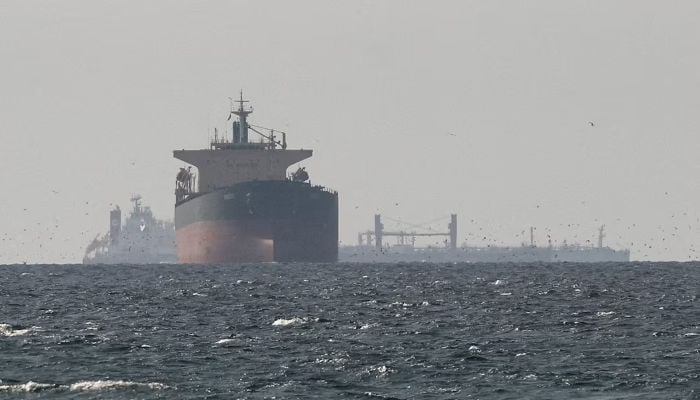
Iran, in recent days, has struck tankers in Iraqi waters and other ships near the strait, and the new Supreme Leader Mojtaba Khamenei has vowed to keep it shut.
If Iran’s stranglehold on the waterway pushes US gas prices high enough, that could increase political pressure on Trump to end the military campaign to help his Republican Party, which is defending narrow majorities in Congress in November’s midterm elections.
Trump has recently refrained from pushing the idea that the war seeks to topple the government in Tehran. US intelligence indicates that Iran’s leadership is not at risk of collapse anytime soon, Reuters reported on Wednesday.
At least some of the confusion over the war’s trajectory appears rooted in the quick US military success in Venezuela.
Since the start of the war, some aides have struggled to convince Trump that the Iran campaign was unlikely to unfold in the same way as the January 3 Venezuela raid that captured President Nicolas Maduro, according to another source familiar with the administration’s thinking.
That operation opened the way for Trump to coerce former Maduro loyalists into giving him considerable sway over the country’s vast oil reserves – without requiring extended US military action.
Iran, by contrast, has proved a much tougher, better-armed foe with an entrenched clerical and security establishment.
Experts have rejected claims by Trump aides that Iran had been within weeks of being able to produce a nuclear weapon, despite the president’s insistence in June that US-Israeli bombing had “obliterated” its nuclear program.
Most of Iran’s stockpile of highly enriched uranium is believed to have been buried by the June strikes, meaning the material potentially could be retrieved and purified to bomb grade. Iran has always denied seeking nuclear weapons.
If the war drags on, American casualties mount and the economic costs multiply, some analysts say it could erode backing from Trump’s political base. But despite criticism from some supporters opposed to military interventions, members of his “Make America Great Again” movement have so far largely stayed with him on Iran.
“The MAGA base is going to give the president wiggle room,” said Republican strategist Ford O’Connell.


Inside Man United’s big decisions between now and next season

An Air Fryer That Makes Juicy Steak? Yes. It’s Nearly Half Off

Millions of Iranians rally on International Quds Day amid US-Israeli strikes

-
 Politics6 days ago
India let Iran warship dock the day US sank another off Sri Lanka, say officials
-

 Sports7 days ago
Pakistan set for FIH Pro League debut | The Express Tribune
-
 Business6 days ago
Restaurant group changes name after bid to buys pubs across the UK
-

 Entertainment6 days ago
Harry Styles kicks off new era with ‘One Night Only’ comeback show
-

 Sports7 days ago
Winners and losers of the 2026 NHL trade deadline
-
 Business2 days ago
Stock market crash today (March 12, 2026): Nifty50 opens below 23,600; BSE Sensex down over 900 points on continuing US-Iran war – The Times of India
-
 Business7 days ago
Home heating oil: ‘Most of my pension has gone on home heating oil’
-

 Entertainment7 days ago
Kanye ‘Ye’ West trips during trial: ‘Is he asleep?’