

Business
Miners drive FTSE 100 up despite Fed probe worry

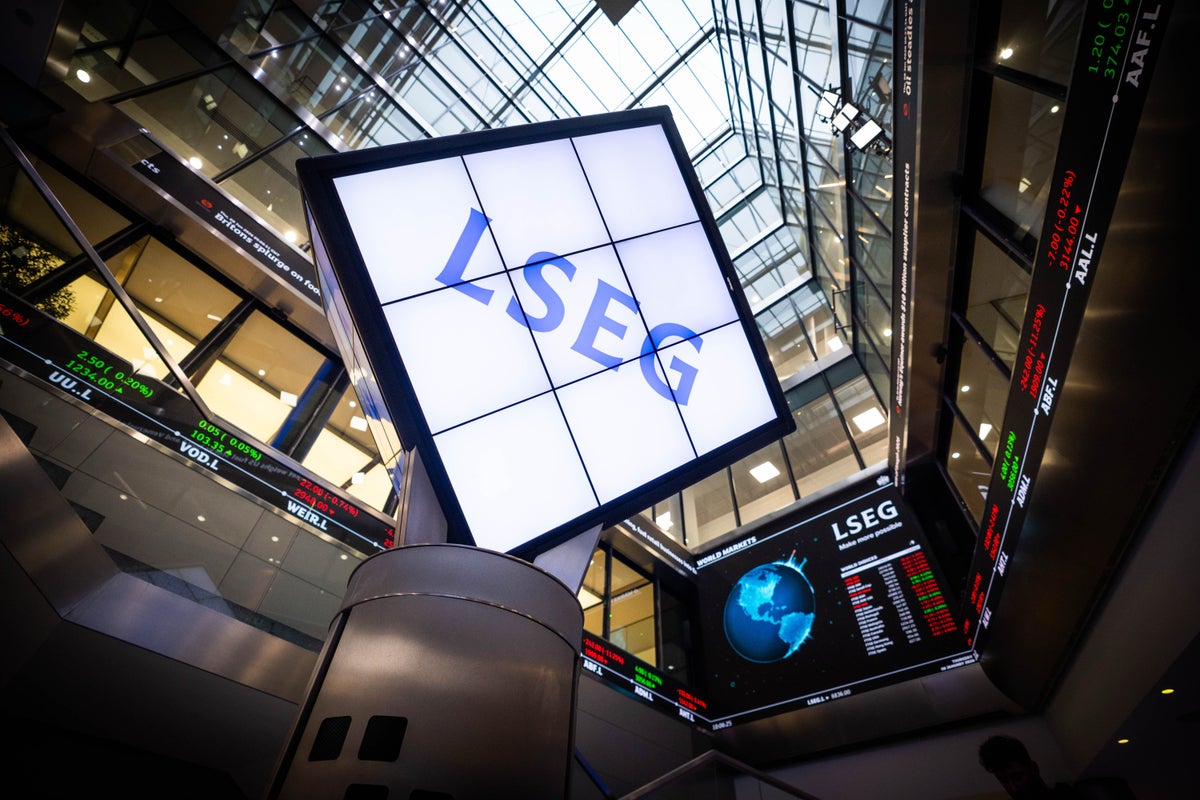
The FTSE 100 on Monday pushed close to recent record levels, while gold rocketed to a new high, as investors weighed renewed concerns about the US Federal Reserve’s independence.
The FTSE 100 index closed up 16.10 points, 0.2%, at 10,140.70.
The FTSE 250 index ended up marginally at 23,036.86, and the AIM All-Share was up 6.44 points, 0.8%, at 796.86.
On Sunday, US Federal Reserve chairman Jerome Powell said that the central bank had been served grand jury subpoenas from the Department of Justice threatening a criminal indictment.
Mr Powell said the subpoenas relate to his Senate Banking Committee evidence in June and ongoing renovations at the Fed headquarters.
But Mr Powell said: “Those are pretexts. The threat of criminal charges is a consequence of the Federal Reserve setting interest rates based on our best assessment of what will serve the public, rather than following the preferences of the president.”
Russ Mould, investment director at AJ Bell, said the probe “unnerved markets” and “raised questions” about what might happen to the Fed once Mr Powell steps down in May.
“There is a fear that (US President Donald) Trump is meddling too much with policies that are meant to be set independently,” he added.
Mr Powell claimed the moves are about “whether the Fed will be able to continue to set interest rates based on evidence and economic conditions, or whether instead monetary policy will be directed by political pressure or intimidation”.
Atakan Bakiskan, economist at Berenberg, said this marks the first time Mr Powell has “openly confronted” Mr Trump about the Fed’s independence.
He said: “A Fed that aligns more closely with politics could trigger higher-for-longer inflation, possibly negative real rates at the short end of the curve, elevated long-term borrowing rates and a weaker dollar.”
Analysts at Wells Fargo said: “While we do not believe this will alter the near-term course of monetary policy, it will make the next Fed chair’s job that much harder to build a consensus among the 19 members of the Federal Open Market Committee.”
Stocks in New York were mixed at the time of the London close on Monday.
The Dow Jones Industrial Average was down 0.2%, the S&P 500 was flat and the Nasdaq Composite advanced 0.2%.
The yield on the US 10-year Treasury was quoted at 4.19% on Monday, widened from 4.17% on Friday. The yield on the US 30-year Treasury was at 4.84%, stretched from 4.83%.
The pound was quoted at 1.3468 US dollars at the time of the London equities close on Monday, up from 1.3407 US dollars on Friday.
The euro was higher at 1.1677 US dollars from 1.1631 US dollars. Against the yen, the dollar was trading at 158.12 yen, up slightly from 158.06 yen.
Analysts at Wells Fargo said of the Fed probe: “Markets mostly took the news in stride, but the modest financial market moves thus far have been consistent with what we would expect to see when worries flare up about Fed independence: higher Treasury yields, a steeper yield curve, a weaker dollar and a rally in gold prices.”
On the FTSE 100, Fresnillo, up 6.5%, and Endeavour Mining, up 4.2%, jumped as the gold price hit a fresh high amid the proposed action against the Fed and heightened geopolitical uncertainty.
Gold shot up to 4,621.38 US dollars an ounce at Monday’s close, another record high, up against 4,504.56 US dollars on Friday.
Glencore gained 3.5% as the copper price gained, and on further reflection of a potential tie-up with Rio Tinto.
In European equities on Monday, the CAC 40 in Paris closed down slightly while the DAX 40 ended up 0.6% in Frankfurt, setting another all-time high.
In London, Barclays fell 2.5%, after Mr Trump called for a 10% cap on credit card interest rates.
“We will no longer let the American Public be “ripped off’ by Credit Card Companies that are charging Interest Rates of 20 to 30%,” he said on Truth Social.
Niklas Kammer, senior equity analyst at Morningstar, said: “This is especially sensitive for Barclays as the UK lender has been building out its exposure to the US credit card market over the last years and has further ambitions to grow its portfolio.
“The bank will publish its new strategy in February, which we expect to partially rely on growth in Barclays’ US business.
“As this topic develops, we think it is possible that Barclays may have to fine tune its messaging for February.”
Also heading downwards, Mondi, which fell 2.5% after being downgraded by Morgan Stanley, and Ashtead Group, down 2.9% after Bank of America lowered its rating to “underperform”.
Pearson climbed 1.1% as Citi initiated coverage with a “buy” rating after a period of weak performance by media stocks.
The broker thinks the current perception of the AI risk facing Pearson’s portfolio is “overdone”, and current levels present an “attractive entry point”.
Sage rose 2.0% as UBS upgraded the accountancy software provider to “buy”.
“We see 9%-plus growth as well underpinned and AI more of an opportunity than threat,” the Swiss bank said.
But British Land fell 3.8% as chief executive Simon Carter said he was stepping down.
Analysts at JPMorgan said: “The news comes as a negative surprise to us, with uncertainty at the C-Suite level rarely welcomed by the market.
“British Land has been one of the best performers in recent periods, we think this is partly given its clear strategy. Uncertainty is likely to remain for now too.”
On the FTSE 250, well received trading updates drove Oxford Nanopore and Plus 500 up 9.4% and 5.4% respectively.
Oxford Nanopore expects full year revenue slightly ahead of previous expectations, while Plus 500 said it expects to report forecast-topping 2025 results.
Brent oil traded at 63.55 US dollars a barrel at the time of the London equities close on Monday, up from 63.42 US dollars late Friday.
The biggest risers on the FTSE 100 were Fresnillo, up 228.0 pence at 3,734.0p, Endeavour Mining, up 162.0p at 4,056.0p, Glencore, up 15.8p at 468.5p, Diageo, up 44.5p at 1,674.5p, and Rio Tinto, up 129.0p at 6,135.0p.
The biggest fallers on the FTSE 100 were British Land, down 15.8p at 397.0p, IAG, down 13.1p at 411.0p, Severn Trent, down 86.0p at 2,821.0p, Ashtead, down 162.0p at 5,432.0p and Marks & Spencer, down 8.9p at 344.1p.
Tuesday’s local corporate calendar has half year results from Warhammer owner Games Workshop plus trading statements from housebuilder Persimmon and recruiter PageGroup.
Tuesday’s global economic calendar has US inflation figures and the BRC retail sales monitor in the UK.
Contributed by Alliance News.
Business
Gudhi Padwa, Eid-Ul-Fitr And Weekend Holidays Next Week: Banks Closed On These Days Between March 16-22

Last Updated:
Banks across India will observe several public and regional holidays next week in March 2026 under the RBI holiday calendar.




Bank Holiday This Week: Full RBI Holiday List
Bank Holiday In February 2026: Banks across India will observe several public and regional holidays next week in March 2026 under the RBI holiday calendar. These holidays are not uniform nationwide and vary from state to state. That means on some dates, banks in certain states will remain closed, while in others, they will function normally.
During bank holidays, customers can continue to access services through net banking, mobile banking, UPI, and ATMs. However, cheque clearing and other over-the-counter services under the Negotiable Instruments Act will not be available.
March 17: Shab-I-Qadr
Banks will be closed in Imphal, Jammu, and Srinagar.
March 19: Gudhi Padwa / Ugadi Festival / Telugu New Year’s Day / Sajibu Nongmapanba (Cheiraoba) / 1st Navratra
Banks will be closed in Belapur, Bengaluru, Chennai, Hyderabad, Imphal, Jammu, Mumbai, Nagpur, Panaji, Srinagar, and Vijayawada.
March 20: Eid-Ul-Fitr (Ramzan) / Jumat-ul-Vida
Banks will be closed in Agartala, Ahmedabad, Aizawl, Belapur, Bengaluru, Bhopal, Bhubaneswar, Chandigarh, Dehradun, Gangtok, Guwahati, Hyderabad, Imphal, Itanagar, Jaipur, Kanpur, Kochi, Kohima, Kolkata, Lucknow, Mumbai, Nagpur, New Delhi, Panaji, Patna, Raipur, Ranchi, Shillong, Shimla, Srinagar, Thiruvananthapuram, and Vijayawada.
March 21: Ramzan-Id (Id-Ul-Fitr) (Shawal-1) / Khutub-E-Ramzan / Sarhul
Banks will be closed in Ahmedabad, Aizawl, Belapur, Bhopal, Chandigarh, Dehradun, Jaipur, Kanpur, Kolkata, Lucknow, Mumbai, Nagpur, Patna, and Ranchi.
March 22: Sunday
Bank branches across India will be closed for the weekend.
Upcoming Bank Holidays In March 2026
March 26: Shree Ram Navami
Banks will be closed in Ahmedabad, Bhopal, Bhubaneswar, Belapur, Hyderabad, Jaipur, Kanpur, Kolkata, Lucknow, Mumbai, Nagpur, Patna, Ranchi, and Shimla.
March 27: Shree Ram Navami (Chaite Dasain)
Banks will be closed in Ahmedabad, Bhopal, Dehradun, Jaipur, Kanpur, Kolkata, Lucknow, Mumbai, Nagpur, Patna, Ranchi, and Gangtok.
March 31: Mahavir Janmakalyanak / Mahavir Jayanti
Banks will be closed in Ahmedabad, Belapur, Bengaluru, Chennai, Hyderabad, Jaipur, Kanpur, Kolkata, Lucknow, Mumbai, Nagpur, New Delhi, Patna, Raipur, Ranchi, and Vijayawada.
| Holiday Description | Day |
|---|---|
| Holika Dahan | 2 |
| Holi (Second Day)/Dol Jatra/Dhulandi/Holika Dahan | 3 |
| Holi/Holi 2nd Day – Dhuleti/Yaosang 2nd Day | 4 |
| Chapchar Kut | 13 |
| Shab-I-Qadr | 17 |
| Gudhi Padwa/Ugadi Festival/Telugu New Year’s Day/Sajibu Nongmapanba (Cheiraoba)/1st Navratra | 19 |
| Eid-Ul-Fitr (Ramzan)/Jumat-ul-Vida | 20 |
| Ramzan-Id (Id-Ul-Fitr) (Shawal-1)/Khutub-E-Ramzan/Sarhul | 21 |
| Shree Ram Navami | 26 |
| Shree Ram Navami (Chaite Dasain) | 27 |
| Mahavir Janmakalyanak/Mahavir Jayanti | 31 |
March 15, 2026, 09:13 IST
Read More
Politicians are furious Churchill will be replaced on banknotes. The RSPCA wants rats and pigeons to feature.
Source link
Trump says he hopes China, France, Japan and South Korea will also send ships to defend the key oil shipping route.
Source link


Chinese Grand Prix LIVE: Latest updates as Antonelli stays in lead, Russell overtakes Hamilton

Kate Middleton gives King Charles big relief by fulfilling urgent mission

Sarah Ferguson receives eye-popping offer during exile: ‘only lifeline’

-

 Politics1 week ago
India let Iran warship dock the day US sank another off Sri Lanka, say officials
-

 Sports1 week ago
Pakistan set for FIH Pro League debut | The Express Tribune
-

 Entertainment1 week ago
Harry Styles kicks off new era with ‘One Night Only’ comeback show
-
 Business1 week ago
Restaurant group changes name after bid to buys pubs across the UK
-
 Business3 days ago
Stock market crash today (March 12, 2026): Nifty50 opens below 23,600; BSE Sensex down over 900 points on continuing US-Iran war – The Times of India
-
 Business1 week ago
Home heating oil: ‘Most of my pension has gone on home heating oil’
-

 Sports1 week ago
Winners and losers of the 2026 NHL trade deadline
-

 Entertainment1 week ago
Kanye ‘Ye’ West trips during trial: ‘Is he asleep?’