

Business
Miners prosper as FTSE 100 makes steady progress

The FTSE 100 recouped some of Friday’s hefty losses, while gold soared once more, as President Donald Trump dialled down his rhetoric in the trade spat between the US and China.
The FTSE 100 index closed up 15.40 points, 0.2%, at 9,442.87. The FTSE 250 ended 262.48 points higher, 1.2%, at 22,064.32, and the AIM All-Share rose 6.14 points, 0.8%, to 792.47.
In European equities on Monday, the CAC 40 in Paris closed up 0.2%, while the DAX 40 in Frankfurt ended up 0.6%.
Stocks in New York were up at the time of the London close, regaining some of Friday’s falls.
Over the weekend, Mr Trump said the US wants to help China, not hurt it, striking a more conciliatory tone days after threatening “massive” additional tariffs on Friday.
“The USA. wants to help China, not hurt it!!!,” he said in Sunday’s post on Truth Social, adding that “respected President Xi [Jinping]…doesn’t want Depression for his country”.
Jim Reid, at Deutsche Bank, said Friday’s developments were a reminder that the underlying tension between the two countries still exists, and he thinks these tensions will probably be a recurring theme in the years ahead as both sides compete on the global stage for dominance.
“China currently holds considerable leverage in the rare earths market and seems keen to use it to secure a better deal – particularly in the chip sector, where the US has imposed export controls. So, this battle is shaping up as rare earths versus AI chips,” he suggested.
The US government shutdown is dragging on, meanwhile. It began at the start of the month.
Since then, a nonfarm payrolls report has gone unpublished.
On Friday, the Bureau of Labour Statistics (BLS) said US inflation data, due this Wednesday, has been pushed back to October 24.
“No other releases will be rescheduled or produced until the resumption of regular government services. This release allows the Social Security Administration to meet statutory deadlines necessary to ensure the accurate and timely payment of benefits,” the BLS said.
Barclays said that September’s data quality “should remain unaffected since collection finished before the shutdown, but prolonged closures may affect October data collection and quality”.
The pound was quoted lower at 1.3331 dollars at the time of the London equity market close on Monday, compared with 1.3338 dollars on Friday.
The euro stood at 1.1569 dollars, lower compared with 1.1616 dollars. Against the yen, the dollar was trading at 152.30 yen, higher compared with 151.87 yen.
The yield on the US 10-year Treasury was quoted at 4.04%, narrowed from 4.07% on Friday. The yield on the US 30-year Treasury stood at 4.62%, trimmed from 4.66%.
On the FTSE 100, gold miners Fresnillo and Endeavour Mining leapt 9.1% and 11% respectively, as gold’s safe haven qualities saw the price of the yellow metal hit fresh highs.
Gold traded at 4,093.56 dollars an ounce on Monday, up from 4,014.76 dollars on Friday.
Copper miners were also in demand as the price of the metal jumped 6.5%. Glencore jumped 3.3% and Antofagasta 5%.
Elsewhere, M&G, up 3%, benefited from an upgrade from Berenberg to ‘buy’ from ‘neutral’.
The broker thinks the UK life insurance sector will see an acceleration in dividend per share growth in the coming years.
AstraZeneca gave back early gains, closing down 0.7%, despite confirming a “historic” drug pricing agreement with the US.
The agreement, which follows a similar accord announced last month with Pfizer, requires AstraZeneca to charge “Most Favoured Nation” pricing – matching the lowest price offered in other wealthy nations – to Medicaid, the US health insurance programme for low-income Americans.
The company added that specific terms of the agreement remain confidential.
In exchange, Trump administration officials agreed to a three-year delay on new tariffs on AstraZeneca, which had previously announced plans to invest 50 billion dollars in the US in response to looming tariff threats.
UBS analyst Matthew Weston said the deal removes uncertainty on Section 232 tariffs.
The agreement is the first with the White House for a non-US drugmaker, with more expected to follow for AstraZeneca’s peers.
On the FTSE 250, Big Yellow Group jumped 15% after Blackstone Europe confirmed it is a potential bidder for the company.
Surrey-based self-storage site operator Big Yellow said it has held meetings with “a small number of parties” that could lead to a takeover offer.
Blackstone Europe, part of New York-based private equity investment manager Blackstone, said any offer for Big Yellow would be via one or more investment funds that it advises.
Oxford Instruments said order intake suffered in the first half of its financial year amid tariff disruption, meaning that full-year revenue is likely to be little changed year-on-year.
Chief executive Richard Tyson said the start of the financial year coincided with the beginning of a “turbulent time in our markets”, and despite an “improving picture” in the second quarter, “we are now assuming that we will not recover the [first half] revenue shortfall”.
In response, shares in the provider of high technology products and services to industry and scientific research communities fell 7.6%.
Brent oil traded at 63.40 dollars a barrel on Monday, up from 63.19 dollars late Friday.
The biggest risers on the FTSE 100 were Endeavour Mining, up 348.00 pence at 3,436.00p, Fresnillo, up 216.00p at 2,592.00p, Antofagasta, up 134.00p at 2,827.00p, Anglo American, up 119.00p at 2,999.00p and Glencore, up 11.40p at 357.25p.
The biggest fallers on the FTSE 100 were BAE Systems, down 31.00p at 1,951.50p, Intertek, down 74.00p at 4,812.00p, British American Tobacco, down 57.00p at 3,788.00p, Babcock International, down 18.00p at 1,211.00p and Burberry, down 17.00p at 1,182.50p.
Tuesday’s global economic diary has UK unemployment and average earnings data.
Tuesday’s UK corporate calendar has full-year results from housebuilder Bellway and a trading statement from miner Rio Tinto.
Contributed by Alliance News

The government on Thursday kept petrol and high-speed diesel (HSD) prices unchanged at Rs253.17 per litre and Rs257.08 per litre respectively, for the coming fortnight, starting from January 16.
This decision was notified in a press release issued by the Petroleum Division.
Earlier, it was expected that the prices of all petroleum products would go down by up to Rs4.50 per litre (over 1pc each) today in view of variation in the international market.
Petrol is primarily used in private transport, small vehicles, rickshaws, and two-wheelers, and directly impacts the budgets of the middle and lower-middle classes.
Meanwhile, most of the transport sector runs on HSD. Its price is considered inflationary, as it is mostly used in heavy transport vehicles, trains, and agricultural engines such as trucks, buses, tractors, tube wells, and threshers, and particularly adds to the prices of vegetables and other eatables.
The government is currently charging about Rs100 per litre on petrol and about Rs97 per litre on diesel.
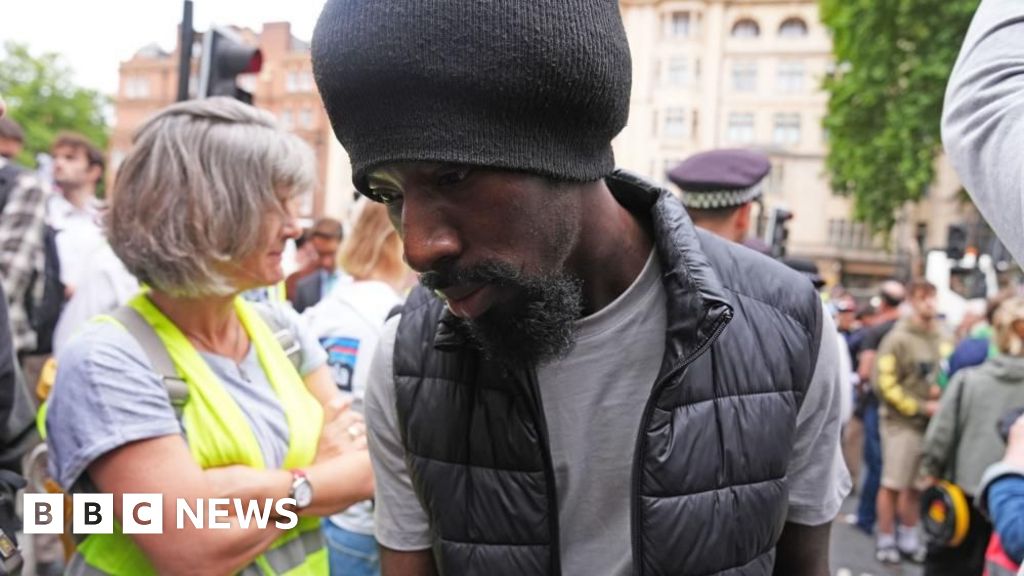
One of Britain’s most prolific rail fare dodgers could face jail after admitting dozens of travel offences.
Charles Brohiri, 29, pleaded guilty to travelling without buying a ticket a total of 112 times over a two-year period, Westminster Magistrates’ Court heard.
He could be ordered to pay more than £18,000 in unpaid fares and legal costs, the court was told.
He will be sentenced next month.
District Judge Nina Tempia warned Brohiri “could face a custodial sentence because of the number of offences he has committed”.
He pleaded guilty to 76 offences on Thursday.
It came after he was convicted in his absence of 36 charges at a previous hearing.
During Thursday’s hearing, Judge Tempia dismissed a bid by Brohiri’s lawyers to have the 36 convictions overturned.
They had argued the prosecutions were unlawful because they had not been brought by a qualified legal professional.
But Judge Tempia rejected the argument, saying there had been “no abuse of this court’s process”.

JSW Jetour T2 Launch: JSW Motors Limited, the passenger vehicle arm of the JSW Group, is reportedly preparing to enter the Indian car market this year. It has partnered with Jetour, a China-based automotive brand owned by Chery Automobile, and the Jetour T2 SUV could be the company’s first product, according to the reports.
Media reports suggest that the launch will happen independently and not under the JSW MG Motor India joint venture. The SUV will wear a JSW badge and name, instead of the Jetour branding. The upcoming SUV will be assembled at JSW’s upcoming greenfield manufacturing facility in Chhatrapati Sambhaji Nagar, Maharashtra.
According to the reports, the company plans to have the vehicle on sale by the third quarter of this year. With this move, JSW aims to establish itself as a standalone carmaker in India.
Expected Powertrain
The SUV is likely to arrive with a 1.5-litre plug-in hybrid setup. Internationally, this hybrid powertrain is offered with both front-wheel drive and all-wheel drive options. It is still unclear which version will be introduced in India.
Design
In terms of design, the T2 is a large and rugged-looking SUV. It has a boxy and upright stance, similar to vehicles like the Land Rover Defender. Despite its tough appearance, it uses a monocoque chassis instead of a ladder-frame construction.
Size
The SUV measures around 4.7 metres in length and nearly 2 metres in width. This makes it larger than the Tata Safari, even though it is a five-seater. A longer 7-seat version is also sold in some markets.
Price
Pricing details for India are yet to be announced. For reference, the front-wheel-drive five-seat T2 i-DM is priced at AED 1,44,000 (around Rs 35 lakh) in the UAE.
Jetour
Jetour is a brand owned by Chinese automaker Chery. Launched in 2018, it focuses mainly on SUVs and is present in markets across China, the Middle East, Africa, Southeast Asia and Latin America.


NCAA president responds to integrity concerns after alleged point-shaving scheme leads to dozens of arrests

How A$AP Rocky and Rihanna fell in love?

Xreal files patent suit against rival smart glasses maker Viture

-
 Politics1 week ago
UK says provided assistance in US-led tanker seizure
-
 Entertainment1 week ago
Does new US food pyramid put too much steak on your plate?
-

 Entertainment1 week ago
Why did Nick Reiner’s lawyer Alan Jackson withdraw from case?
-
 Business1 week ago
Trump moves to ban home purchases by institutional investors
-

 Sports5 days ago
Clock is ticking for Frank at Spurs, with dwindling evidence he deserves extra time
-
 Sports1 week ago
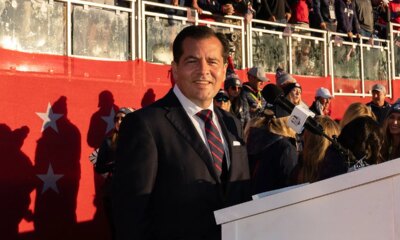
PGA of America CEO steps down after one year to take care of mother and mother-in-law
-
 Business1 week ago
Bulls dominate as KSE-100 breaks past 186,000 mark – SUCH TV
-
Sports6 days ago
Commanders go young, promote David Blough to be offensive coordinator