

Entertainment
Misty Copeland made history in ballet. Now she’s ready to make an impact off-stage

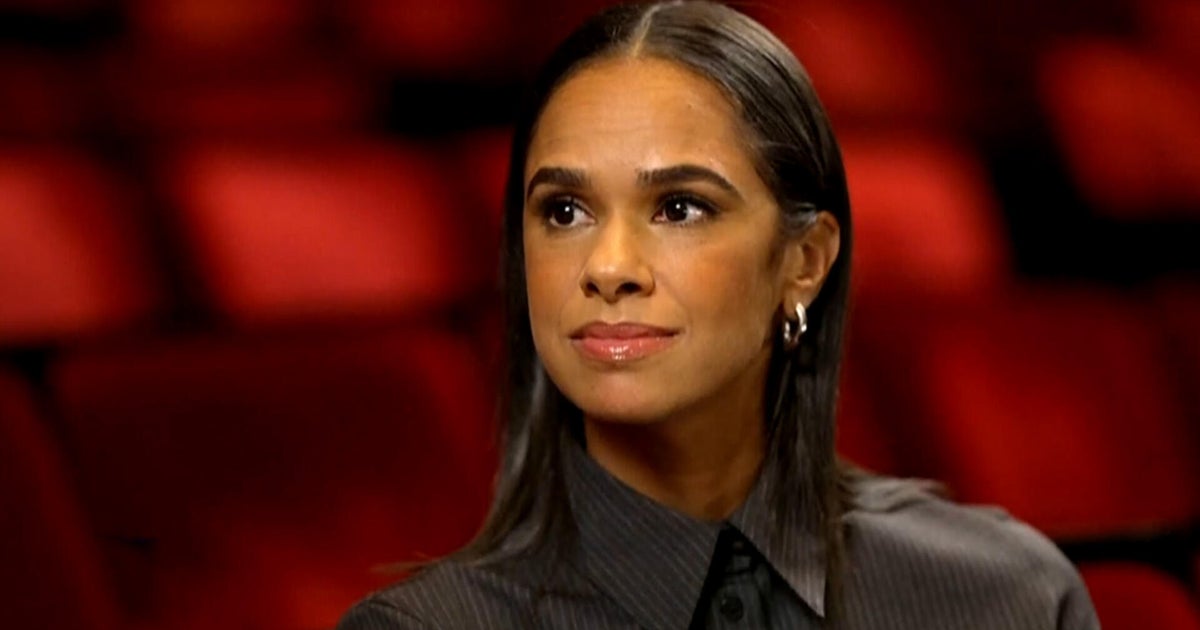
Under the bright lights of the David H. Koch Theater at Lincoln Center, Misty Copeland took her final bow, a moment that marked not just the end of a performance but the close of a chapter that transformed American ballet. The trailblazing dancer, who shattered racial barriers in the art form, retired on Wednesday as a principal dancer with the American Ballet Theatre after 25 years with the company.
But she told “CBS Mornings” in an exclusive interview that the decision to perform one last time wasn’t something she initially wanted.
“It’s been such an interesting kind of lead up to this moment, because I in all honesty I didn’t wanna come back to the stage and have this moment,” she told Gayle King.
When asked why, Copeland explained that by 2019, her last year performing with the American Ballet Theatre before taking a 5-year hiatus, she had begun to feel drained after decades of dancing.
“I really was starting to feel burnt out, kind of losing that passion that I’ve had my whole career and whole life for dance,” she said. “And I always promised myself I wouldn’t go onstage if I didn’t feel that I was delivering from my heart and, you know, my soul.”
She said that after taking time away, she viewed her return as an opportunity for closure and gratitude.
“In taking these five years, and really thinking about what this moment means in terms of just closure and saying thank you, that, I think, is what has gotten me back onstage for the show,” Copeland said.
The final bow
At Copeland’s farewell gala at Lincoln Center, Oprah Winfrey and Debbie Allen were among those who honored her career and impact.
“Misty Copeland didn’t just perform ballet, she changed it,” Winfrey said. “She did. She redefined who belongs, who gets to be seen, and who gets to lead.”
Allen also praised Copeland’s influence. “You are a prophecy come true. A prophecy of goodness, and genius and grace and power,” she said.
Copeland helped organize the evening’s program, which included a scene from “Romeo and Juliet.”
“I really wanted to do this piece because Calvin Royal, he’s the second Black male principal dancer in ABT’s history,” Copeland said. “And we were set to perform the full-length ballet, the first two Black dancers to perform the leads together at ABT right before the pandemic hit. And then that never came to fruition. So I thought, even though it’s not the full ballet, to be able to perform just a piece of it.”
The night ended with a standing ovation. Copeland received bouquets from her husband, Olu Evans, and their 3-year-old son, Jackson, who saw her perform for the first time.
Redefining ballet
Copeland looked back on the moment that made history, becoming the first Black woman promoted to principal dancer at the American Ballet Theatre. She said the title carried a deeper meaning beyond personal recognition.
“I think that and I’ve gone back and forth over the years in terms of, like, what that really means and the title is what has opened the doors for the next generation,” she said.
Her 2015 promotion was celebrated around the world, but it also brought new challenges. Copeland said the attention came with intense pressure and unfair expectations. “There were articles being written, ‘If Misty doesn’t go onstage and perform Swan Lake perfectly does she deserve to be a principal dancer? Is this because she’s Black? Is this why she’s getting this opportunity?'” she recalled.
For Copeland, ballet was never just about perfect lines or technical mastery. “I know deep down, like, to me the art form and dance is not even, it’s not about, these technical feats. It’s not about, to me, the aesthetic and, and what’s on the outside. To me what’s saved my life is the storytelling, and being able to kind of step into this beautiful world and express myself in ways that I couldn’t as a child,” she said.
Her relationship with dance began at 13, an age when most professional ballerinas were already years into their training. Growing up amid uncertainty and instability, she said ballet became a place of safety and self-discovery.
“I felt beautiful and I felt powerful and I felt strong and I felt like I had a voice. I felt confident and I felt stability for the first time in my life,” she said. “Because the way I grew up there was no stability. There was a lot of chaos and movement, and, didn’t always have a home and food on the table. And so ballet became, dance allowed me to flourish. It gave me structure. It gave me discipline. It gave me grace. It gave me a purpose.”
As diversity, equity and inclusion initiatives face growing criticism, Copeland said she believes this is the right time to step away from performing.
“I think it’s the exact right time for me to be stepping off the stage for this,” she said. “Because I think that the impact that I can have off the stage is, is going to be, greater than what I’ve done. It’s been 25 years that I’ve been a Black body on this stage, and I think that there’s been a lot of movement and shifts.”
She said progress in ballet must also happen behind the curtain.
“It’s more than just seeing yourself on the stage. It’s what’s being implemented behind the scenes,” she said. “It’s the schools. It’s how are we getting teachers in schools who look like the children they’re serving? It’s getting board members who are making these decisions who represent a greater group of people. There’s so much work to be done.”
Copeland also announced that she will be joining ABT’s board of trustees.
“You know, it’s not common that you see artists come onto boards and that you see women of color. And so to be able to have a seat at the table — in a really impactful way — I think is progress. And that, to me, is — is so thrilling and so exciting to be able to stay connected to this company that has been everything to me. I mean, it’s been my dream since I was 13 years old. And I still to this day can’t believe I’ve been able to live it out the way that I have.”
Copeland said the timing of her departure was important.
“I always said to myself, like, I’m not gonna be that ballerina that they’re pulling off by the pointe shoes, like, ‘Girl, it’s time.’ You know, that I wanna be able to say, you know, like, I feel good in this moment, and now is time for me to bow,” she said.








Taylor Swift and Travis Kelce’s wedding planning has been going on in full swing – and is almost done ahead of their June 13 ceremony.
The 36-year-old pop superstar and the Kansas City Chiefs tight end, also 36, have both been actively involved in the preparations, and now they are about to make it all official.
While earlier reports suggested that the grand event would be taking place at the Eras Tour performer’s Rhode Island estate, insiders have now updated that the ceremony will be split between Swift’s mansion and a luxury resort nearby, Ocean House.
“The guest list grew, so the ceremony and private gatherings associated with the wedding [will be split between the venues]. Taylor always has a plan B and C for every scenario. They feel confident hosting it there. The entire area will be very private and guarded,” insiders told Us Weekly.
The sources near Swift divulged that the couple went over the guest list a few times and it came down to 150 people. While the wedding is not huge, it sure will be traditional.
The source told the outlet that the couple has still not sent out physical wedding invites but their friends and family all know the venue and the date.
Speaking of June 13, they said, “The wedding timeline is based on Travis’ offseason rhythm,” so that they’re able to enjoy their honeymoon without any hurry.
Swift’s dad Scott Swift will reportedly be “walking her down the aisle and all the classic touches, like the father-daughter and mother-son dances,” will be checked off the list, they added, “Taylor loves those emotional, meaningful moments, and Travis [is] on the same page.”
The Love Story hitmaker has already picked out the dress, and it is currently under final tailoring, and as for her bachelorette party, the Grammy winner “has already asked her close girlfriends, like Selena and Gigi, to sleep over at her Rhode Island home the night before the wedding.”
Although, the source maintained, both of their families have been fully supportive and hands-on with help wherever required, the couple have mostly been the ones making the calls.
The Swifts and Kelces have also been tight-lipped whenever asked about the details about the couple’s big day.
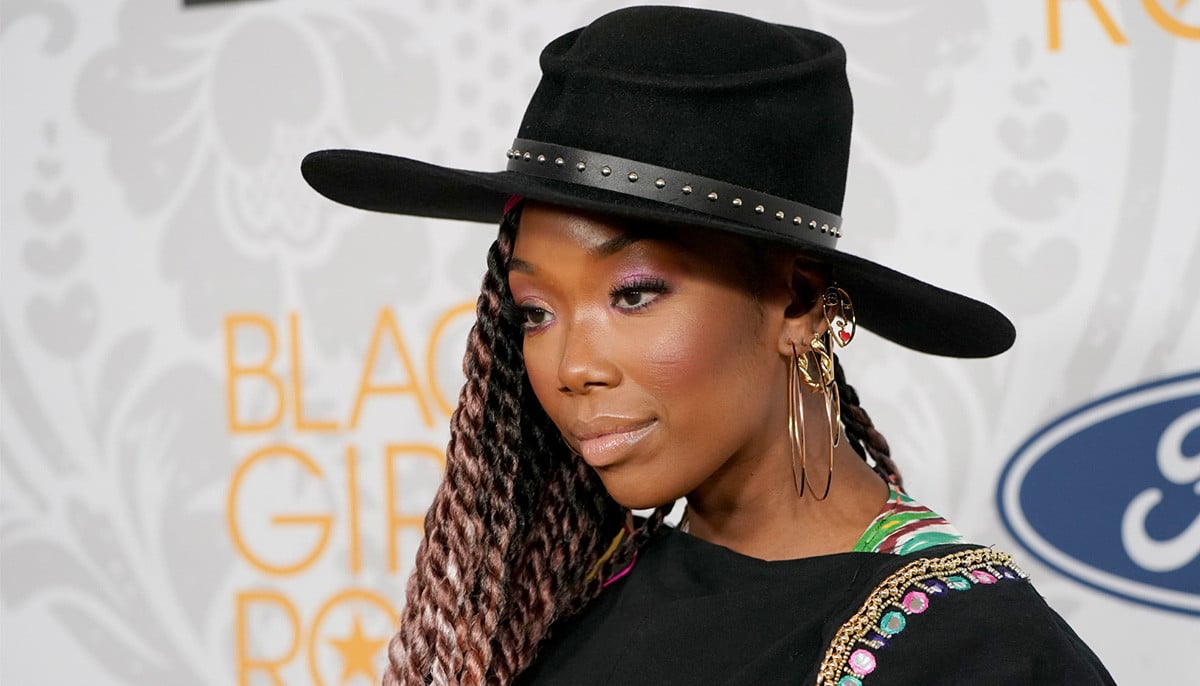
Brandy Norwood broke silence on one of the most haunting chapters of her life.
In her new memoir Phases, the singer recounted a late ’90s relationship with Boyz II Men’s Wanya Morris that began when she was just 16.
It is the time she says left scars that lasted decades.
In a week where Brandy received her star on the Hollywood Walk of Fame, the “Vocal Bible” also opened up about her past.
Her memoir Phases revisits her 2006 car accident, her feud with Monica, and, most strikingly, her teenage romance with Wanya Morris.
Brandy recalled sneaking around with Morris while touring with Boyz II Men, hiding the relationship from her parents and the public.
“I was in over my head,” she wrote.
She explained that the pair pretended to wait until her eighteenth birthday to avoid scandal.
She admitted she lost her virginity to Morris and endured comparisons to other singers including Mariah Carey before the relationship ended when Morris confessed to cheating.
“I believe he took advantage,” Brandy stated in the memoir.
Reflecting on the experience, she added, “The shame ends here. The silence ends here… I was a child. And he was an adult. And it’s time the world understood the difference.”
Morris previously claimed during a 2020 Instagram Live that he did not date Brandy until she was of age, even referencing her famous prom night with Kobe Bryant.
But Brandy’s account in Phases paints a far different picture, one she says was marked by “neon warning signs” she ignored at the time.

Jessie Jones, a television actress who reinvented herself as one of America’s most-produced female playwrights, has died at 75.
Her longtime friend and writing partner Jamie Wooten confirmed she passed away March 20 in Washington, D.C. after a long illness.
Jones is survived by her sisters, a brother-in-law, a niece and nephews, and by her close collaborator Wooten.
Jessie Jones’ popular sitcoms:
Jones built a career in front of the camera throughout the 1980s and ’90s, appearing in popular sitcoms such as Night Court, Newhart, Designing Women, Murphy Brown (where she played Betty Hooley), Who’s the Boss, Perfect Strangers, Grace Under Fire and Melrose Place.
Jessie Jones’ TV movies:
She also starred in TV movies including The Positively True Adventures of the Alleged Texas Cheerleader-Murdering Mom, Everybody’s Baby: The Rescue of Baby Jessica alongside Patty Duke and Beau Bridges, and the frequently aired Wife, Mother, Murderer.
Jessie Jones as playwright:
As her acting career wound down, Jones turned to writing.
She co-created the Off-Broadway Southern funeral comedy Dearly Departed, which became a staple for theater companies nationwide.
She later co-wrote the screenplay for Fox Searchlight’s Kingdom Come starring Whoopi Goldberg and LL Cool J.
Her most enduring legacy came through the Jones Hope Wooten partnership with Nicholas Hope and Jamie Wooten.
Together, they penned more than two dozen Southern-flavored comedies including The Sweet Delilah Swim Club, The Red Velvet Cake War, Christmas Belles and The Savannah Sipping Society.
Published by Concord Theatricals, their plays have been widely produced and translated into multiple languages.
Wooten described Jones as “the most-produced female American playwright.”


Taylor Swift, Travis Kelce wedding planning comes to life: Details

Lulus expands wholesale reach with Amazon, Victoria’s Secret

Minimum wage rises to £12.71 an hour as firms warn of impact

-

 Politics1 week ago
Afghanistan announces release of detained US citizen
-

 Tech1 week ago
Can a Home Appliance Fix the Problem of Soft-Plastic Waste?
-

 Sports1 week ago
Broadcast industry CEO says consolidation is ‘essential’ to compete for NFL soaring media rights prices
-
 Business1 week ago
Property Play: Home flippers see smallest profits since the Great Recession, real estate data firm says
-

 Entertainment1 week ago
UN warns migratory freshwater fish numbers are spiralling
-
 Business1 week ago
Gold prices soar in Pakistan – SUCH TV
-

 Fashion1 week ago
ICE cotton slips on weaker crude, profit booking
-
 Business1 week ago
More women are entering wealth management, but few are in advisory roles, study finds