

Business
Logan Paul sold a Pokémon card for more than $16 million. Here’s why investors are watching


Pokémon cards aren’t just childhood collectibles anymore.
Some owners are increasingly treating the popular 1990s and 2000s trading cards like alternative assets, with some of the rarest cards outperforming traditional benchmarks like the S&P 500 in recent years.
During key periods like the pandemic boom and another surge in 2025, trading card indexes tracking Pokémon sales posted gains that far exceeded the S&P 500’s long-term average annual return of 10% to 12%, according to trading card valuation tool Card Ladder. The comparison isn’t perfect — stock data spans decades, while trends in trading card values are shorter and more volatile — but the outperformance in certain windows is still striking.
The jump in prices come down to scarcity, grading and a surge of deep-pocketed buyers chasing a limited supply of top-tier assets.
At the high end, that dynamic is clear. A rare Pikachu Illustrator card, owned by influencer and wrestler Logan Paul, sold for more than $16 million in February, which set a record for the most expensive trading card ever sold at auction.
“There are certain individuals trying to acquire the rarest, highest-grade cards and taking them off the market for as long as they can,” said auctioneer Ken Goldin, whose online marketplace, owned by eBay, consigned and sold Paul’s rare Pokémon card. “It’s possible you may never see that card come up for sale again in our lifetime.”
Rare Pokémon card designed by Atsuko Nishida.
Courtesy: Goldin
That supply squeeze helps explain why prices can surge and why a small slice of the market is driving most of the gains.
The condition of a card in particular, which drives its grade on a scale of up to 10, can make or break value, Goldin added.
“You can have a card graded a 10 [perfect score] and nobody cares if the underlying card isn’t important,” Goldin said. “But when you have the right card, the condition become critical — especially in Pokémon, where there’s a massive premium for a 10.”
That premium can be extreme, Goldin said. A perfect condition $100,000 card evaluated by Professional Sports Authenticator, the premier authentication and grading company, might only get 1% or 2% of that value in a much lower condition.
Outside the most rare handful of cards, retail investors and collectors are flipping back open their dusty collection books from 20 or more years ago and hoping to strike gold. The boom in card sales accelerated during the pandemic as stimulus money and interest in alternative assets surged. Spending on non-sports trading cards, including Pokémon, jumped 350% between 2020 and 2025, according to market research firm Circana. At the same time, celebrities like Post Malone, Steve Aoki and Kevin O’Leary fueled mainstream attention.
“We are seeing people use this as an alternative asset and allocation of wealth,” said Goldin. “Whether that becomes more institutional over time is still to be determined.”
But risk remains for hopeful investors in the market. The same forces driving gains also create risk. Prices are volatile, heavily influenced by hype, and card prices lack the stability and track record of traditional markets.
Still, some highly sought after Pokémon cards continue to outperform the market.



The Reserve Bank of India (RBI) on Monday decided against activating the countercyclical capital buffer (CCyB), indicating that current financial and credit conditions do not warrant an additional capital requirement for banks, PTI reported.The central bank said the decision followed a review and empirical assessment of indicators used under the CCyB framework.“Based on review and empirical analysis of CCyB indicators, it has been decided that it is not necessary to activate CCyB at this point in time,” RBI said in a statement.Under the RBI (Commercial Banks – Prudential Norms on Capital Adequacy) Directions, 2025, the CCyB framework is activated when financial conditions indicate rising systemic risks linked to excessive credit growth.The framework primarily relies on the credit-to-GDP gap as a key indicator, along with supplementary metrics.According to the RBI, the CCyB mechanism is intended to serve two broad objectives.Firstly, it requires a bank to build up a buffer of capital in good times, which may be used to maintain the flow of credit to the real sector in difficult times.Secondly, it achieves the broader macro-prudential goal of restricting the banking sector from indiscriminate lending in the periods of excess credit growth that have often been associated with the building up of system-wide risk.The framework was introduced globally after the 2008 financial crisis as part of measures proposed by the Group of Central Bank Governors and Heads of Supervision (GHOS) under the Basel framework to strengthen financial system resilience.
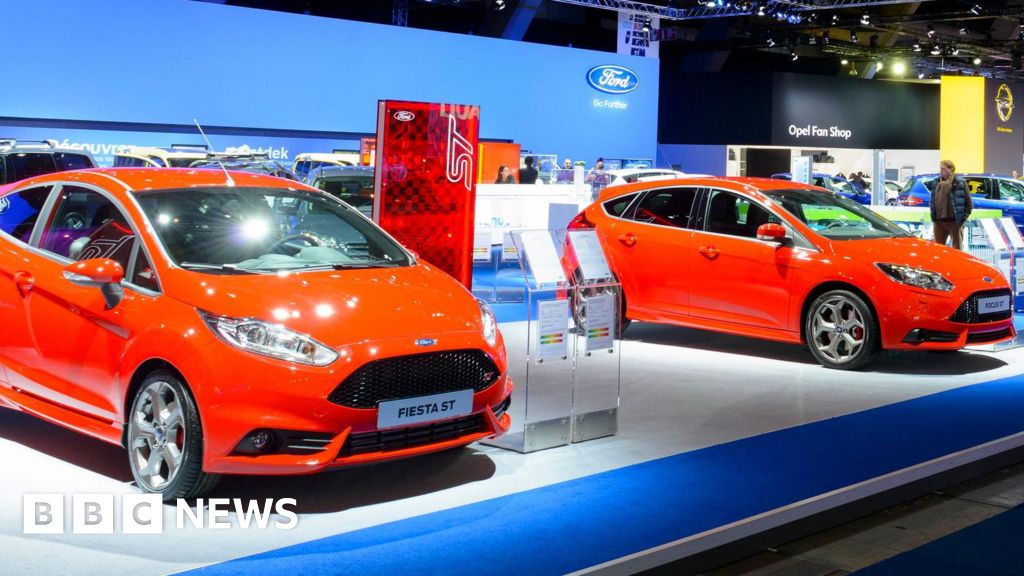
The company has announced plans to build seven new models in Europe including a small electric hatchback.
Source link

“Today’s policymaking is constrained by a more volatile external environment with more frequent and overlapping shocks, a rising public interest bill, in part reflecting market concerns with countries’ elevated debt, and the long-standing challenge of weak productivity growth,” he said.


Two Americans arrested at Japanese zoo

Turkiye’s current account deficit expected to widen in 2026: Minister

UK’s clothing imports fall 3% in Q1, sharply lower than Q4 2025

-

 Entertainment6 days ago
Conan O’Brien hat tricks as Oscar host
-

 Tech1 week ago
Could Contact-Tracing Apps Help With the Hantavirus? Not Really
-

 Fashion5 days ago
Italy’s Zegna Group’s Q1 growth boosted by strong organic performance
-

 Sports1 week ago
Bobby Cox, legendary Atlanta Braves manager who led 1995 World Series champions, dead at 84
-

 Entertainment1 week ago
Martin Short: Facing tragedy with joy
-

 Entertainment1 week ago
Tom Brady gets back at Kevin Hart during Netflix roast
-

 Sports1 week ago
Jacob Fatu unleashes vicious assault on Roman Reigns after World Heavyweight Championship loss at WWE Backlash
-

 Entertainment1 week ago
Martha Stewart: How to make an omelet