

Sports
Move over, blue bloods! This playoff belongs to the ‘new bloods’

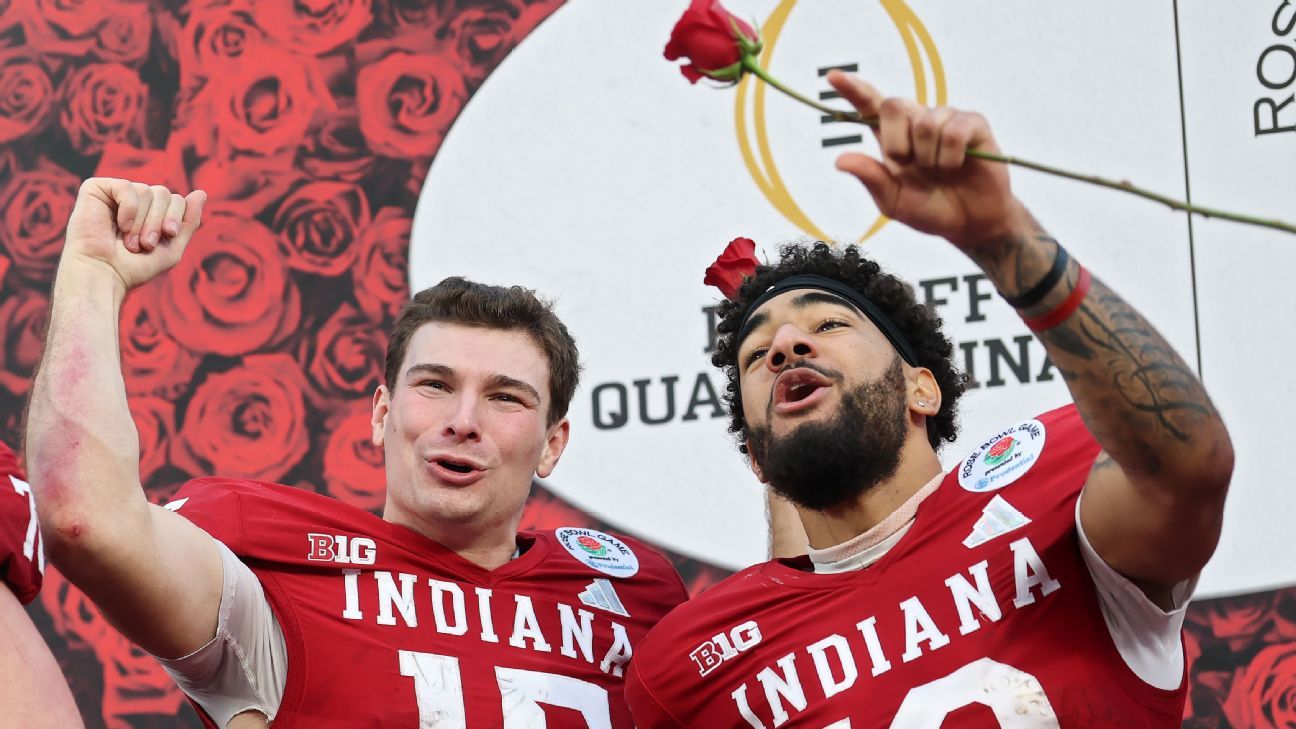
For ages, certainly as long as we have been in the College Football Playoff age, people have politely asked and desperately pleaded, when were some new bloods finally going to replace the blue bloods on college football’s biggest postseason stage?
Well, folks, the age of new is officially the age of now.
The promise of the four-team CFP versus the two-team Bowl Championship Series title game was to create more room for more teams to challenge the same old establishment. One year ago, the impetus behind the playoff’s further expansion to a dozen teams was to widen that door even further and perhaps interject a little March Madness into college football.
It’s working. At least for now, it is. And fittingly, it’s a basketball school that is leading the movement.
For the first time since the CFP debuted at the end of the 2014 season, the playoff’s final four lineup does not include Alabama, Georgia, Ohio State or Clemson. And over those first 11 editions, any team that did manage to break the big four’s big box déjà vu blockade to earn a spot in the semis or final … well, they weren’t exactly George Mason ’06 or Loyola Chicago ’18.
Notre Dame made it to the title game one year ago, following Michigan‘s 2023 run to the championship. But no one is going to mistake the Irish and Wolverines for UMBC and VCU. The closest we came to a true CFP Cinderella run was TCU in 2022, when the Horned Frogs crashed the big ball in Los Angeles, only to have Georgia take away their glass slipper and beat them over their horned heads with it 65-7.
However, this year’s fortuitous foursome — with Ole Miss facing Miami on Thursday night and Indiana taking on Oregon on Friday — is guaranteed to bring us a new-age champion, no matter who winds up standing atop the stage at Hard Rock Stadium on Jan. 19. And it won’t merely be the boldest new-blood dash of the CFP era, but also of nearly the entire BCS era that began in 1998. Or, honestly, even the Bowl Alliance, the Bowl Coalition or the plain old Bowl era that reaches back more than a century.
No matter your age, you know that Indiana has never had a football golden age until now. No offense to Coach Corso and the 1979 Holiday Bowl champs or Vaughn Dunbar and the 1991 Copper Bowl victors or even Antwaan Randle-El and Anthony Thompson, but that’s really as good as it ever got. The good people of Bloomington were content to let the Irish be the state’s football school with occasional loan-outs to Purdue, while everyone waited for hoops season to finally tip off.
IU has fielded football teams since 1887, but the Hoosiers hadn’t posted double-digit wins in a season until the past two years and hadn’t won an outright Big Ten title since 1945, nor had they won a Big Ten championship game or a Rose Bowl until these past six weeks. Should they win it all, someone needs to let the kids of the 1954 Milan High Indians and Jimmy Chitwood’s Hickory Huskers know that they are no longer the greatest underdog story in “Hoosiers” history.
If you are of a certain age, then you remember when Oregon was really bad at football. As in, most of the 20th century. From 1893 through 1993, the Ducks made exactly three Rose Bowl trips, two of those prior to 1920. They did win seven conference championships, but six of those were shared with other teams; their only outright title came in the four-game Oregon Intercollegiate Football Association campaign of 1895. When they made it to the 1992 Poulan Weed Eater Independence Bowl, it was a very big deal … and they lost that game to Wake Forest.
But the revolutionary football evolution that followed, fueled by Oregon grad Phil Knight and the little shoe company he started on the Eugene campus back in the day, was every bit the equivalent to what Indiana is doing now. They turned around a battleship in a bathtub. But even the dapper dayglo Ducks we’ve known since then — from Joey Harrington’s towering likeness in Times Square and Marcus Mariota’s Heisman win of 2014 to Chip Kelly, Earth’s funniest mascot and those bazillion uniform combinations — Oregon has yet to win a national title, despite two appearances in the BCS/CFP finals, the last coming a decade ago with Mariota behind center.
If you are of the Gen X age, then you knew the unstoppable machine that was The U. But your kids and grandkids have never seen the Miami Hurricanes on college football’s biggest stage. Unless you’ve shown them the Canes dynasty 30 for 30 films on the ESPN App or you’ve made them watch standard definition footage of Ed Reed, Jeremy Shockey & Co. winning the 2001 BCS title (shoutout to Larry Coker), then they only know Miami football as the embodiment of #goacc.
So many preseason predictions of “The U is back!” have ended with Sebastian the Ibis flat on his back in the Everglades mud. Miami’s biggest postseason victory since it beat Nebraska on that January night in Pasadena — so far back the Canes were still a member of the Big East — was, what? The 2016 Russell Athletic Bowl?
And speaking of ages, unless you were an Ole Miss student during the Space Age, you’ve never seen the Rebels fitted for a real championship ring. Fact: There are few, if any, Saturday college football experiences as glorious as strolling The Grove, red Solo cup in hand. The best food served by the most beautiful people beneath tents taken straight out of home decorating magazines beneath magnolia trees taken straight out of Southern Living magazine. We all know about Archie and Eli Manning, about Deuce McAllister and Jaxson Dart.
But also a fact: When you enter Vaught-Hemingway Stadium, you are struck first by how well everyone is dressed. Then you realize how naked that stadium’s walls are when it comes to addressing the program’s championship seasons. The 2003 SEC West Co-Division champions? The 1963 SEC champions? The ’62 national champions, a title bestowed upon the Rebels by the Litkenhous Difference by Score Ratings system (we’re not making that up!) while USC was dubbed the champ by the major polls? The Rebels’ last natty was their third in four years, but it was won so long ago that Johnny Vaught, the name that adorns their stadium, was still coach, and JFK was in the White House.
The point of this four-part, four-team history lesson is not to harp on those programs’ longtime struggles to insert themselves into college football’s most exclusive room, or return to that room after a generational absence, or to finally be able to take care of business once they do get in there.
Reliving the statistical pain of this year’s playoff survivors is to give us all the proper perspective on what it will mean for the one squad that manages to emerge from this quirky quartet to finally hoist the big gold trophy. Also, to fully recognize the realization of a much-demanded postseason team transfusion.
Y’all have been asking for it. Well, now we’ve got it. The new age of new CFP blood has arrived. Enjoy it now, folks, because 156 years of college football history tells us the blue bloods never stay out of power for long. Then again, that same history would have tried to tell us that this quadrumvirate was never going to happen in the first place. And that’s why, as the semifinal kickoffs loom, it feels like it could be, yes, one for the ages.
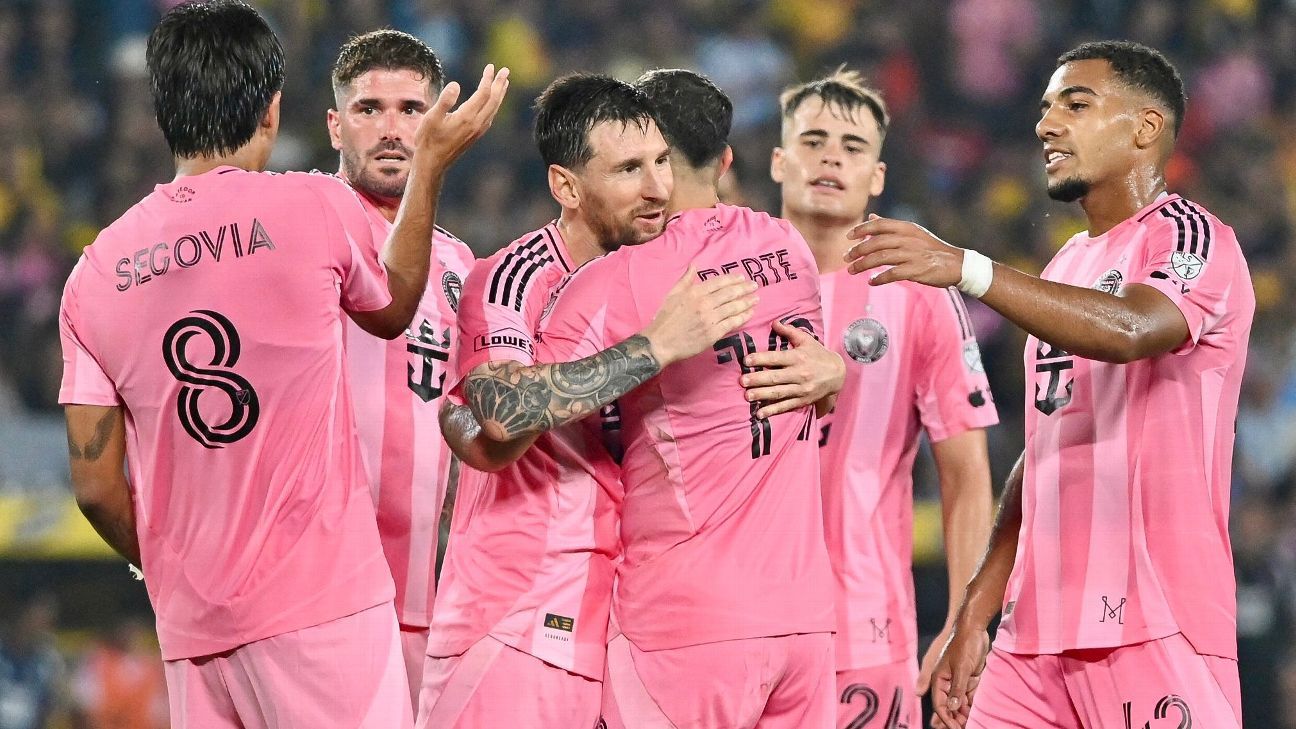
Inter Miami head coach Javier Mascherano has confirmed he will use the friendly against Independiente del Valle on Thursday night as an opportunity to give all players some minutes on the field despite returning to Major League Soccer regular-season action just 72-hours later.
The Herons will play the rescheduled preseason friendly in Puerto Rico on Thursday night before traveling to Orlando on Sunday to face Orlando City.
“This game clearly gives us the opportunity to, first, give minutes to guys who have perhaps had fewer minutes in the preseason and in the last game we played. But yes, we’re going to try to give everyone playing time,” Mascherano said on Thursday morning.
“We need to give the whole squad some opportunities.
“Obviously, being careful because then, in 72 hours, we have a very important game, where beyond the loss against LAFC, those of us who have been here at Inter Miami for a while know that regardless of a loss or a win, the next game is always the most important, and the next game is always the one we have to win.”
Inter Miami was originally set to face Independiente del Valle on Feb. 13, before the club, in collaboration with the event promoter and government of Puerto Rico, opted to postpone the event after Lionel Messi suffered a hamstring strain.
“Hi everyone, I wanted to send this message to the people of Puerto Rico and all the people that will be going to the training session and game,” Messi said in a video.
“To be honest, during the last game in Ecuador I concluded with a muscle strain, which is why I left the field early. So, together with the people of the organization and Inter Miami it was decided to suspend this game. We hope it can be reprogrammed, and we can see each other.
– Messi did not violate league policy after alleged locker room video, MLS says
– Lionel Messi ‘deeply regrets’ not learning English
– Inter Miami target Blackmon signs new Vancouver deal – sources
Visit you soon. Sending a hug to you all and thank you for all the love that you always give. I hope we can do it in the future, all the best.”
Messi has since returned to action, playing the full 90 minutes in the team’s MLS season opener against Los Angeles FC on Feb. 21.
Mascherano later emphasized that he’ll use the friendly in Puerto Rico to prepare the players for Orlando City at the weekend.
“We’re trying to use today’s match, beyond the fact that it’s a friendly, to see certain things, to see players we perhaps haven’t had the opportunity to see in terms of playing time, and use this game to prepare for the match on Sunday,” he said.
Mateo Silvetti, however, stands as the only player mentioned by Mascherano to be in doubt for the game after he suffered a strain over a week ago. The coach confirmed the team will evaluate his condition before deciding whether he features against Independiente del Valle.
Sports
Jontay Porter, who was given a lifetime ban by the NBA for gambling, makes pro basketball comeback in USBL
NEWYou can now listen to Fox News articles!
Jontay Porter, whom the NBA banned for life for gambling in 2024, is making his return to the court.
Porter, 26, is going to the Seattle SuperHawks, a member of the re-created United States Basketball League. The SuperHawks announced Porter’s signing on Wednesday. The team begins its season on March 7.
Porter is currently awaiting sentencing after he pleaded guilty to a related federal charge. In July 2024, he pleaded guilty to a federal court in Brooklyn to one count of conspiracy to commit fraud, a sentence that carries up to 20 years in prison.
CLICK HERE FOR MORE SPORTS COVERAGE ON FOXNEWS.COM
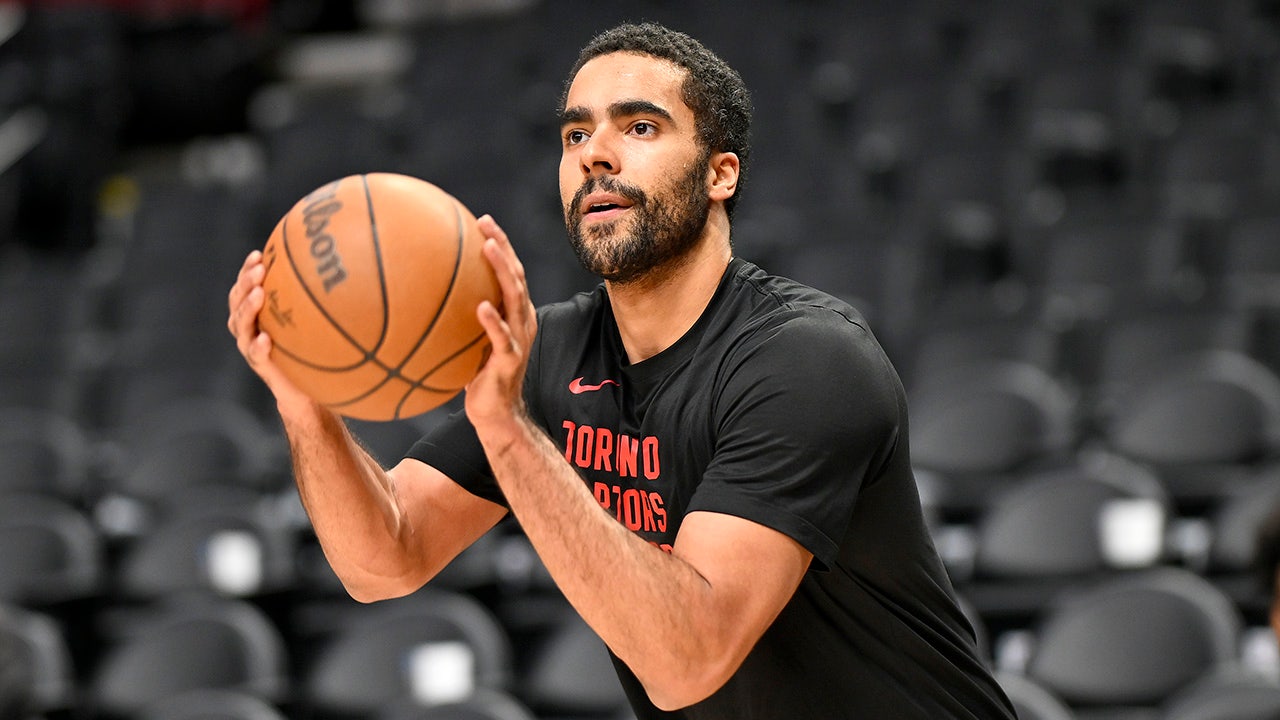
Jontay Porter (34) of the Toronto Raptors warms up before a game against the Portland Trail Blazers at the Moda Center. The game was played in Portland, Oregon, on March 9, 2024. (Alika Jenner/Getty Images)
However, Porter is expected to get a sentencing of between 3 and 4 years. The former Toronto Raptors player was accused of manipulating his performance in coordination with gamblers to win prop bets during two games in the 2023-24 season.
Porter also won $22,000 by gambling on 13 NBA games that he didn’t play in, which is a violation of league rules, according to an NBA investigation.
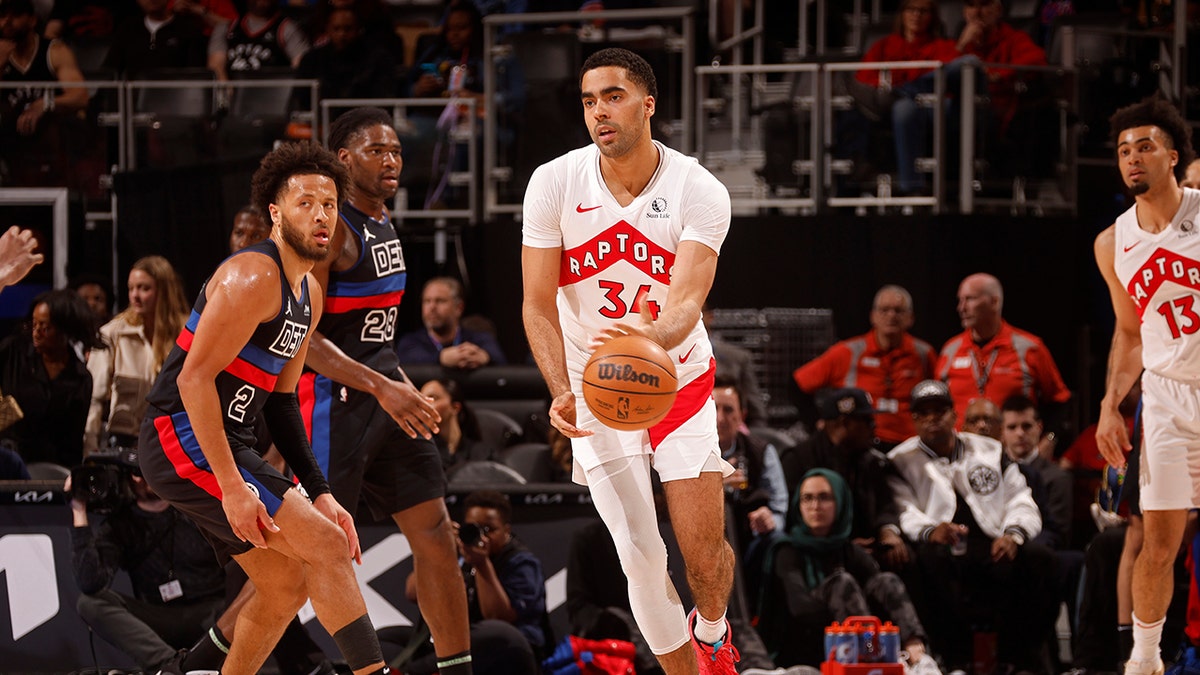
Jontay Porter (34) of the Toronto Raptors handles the ball during a game against the Detroit Pistons at Little Caesars Arena. The game was played in Detroit, Michigan, on March 13, 2024. (Brian Sevald/NBAE via Getty Images)
Federal prosecutors in the Eastern District of New York indicted dozens of others based on the investigation that began with Porter. Miami Heat guard Terry Roziers, former Portland Trail Blazers head coach Chancey Billups and former NBA player and assistant coach Damon Jones were all indicted as part of the expanded investigation into Porter.
Porter spent two seasons in the NBA. He signed with the Memphis Grizzlies as an undrafted free agent out of Missouri and played 11 games with them in the 2020-21 season. After spending two years out of the NBA, he played 26 games with the Raptors in the 2023-24 season.
CLICK HERE TO DOWNLOAD THE FOX NEWS APP
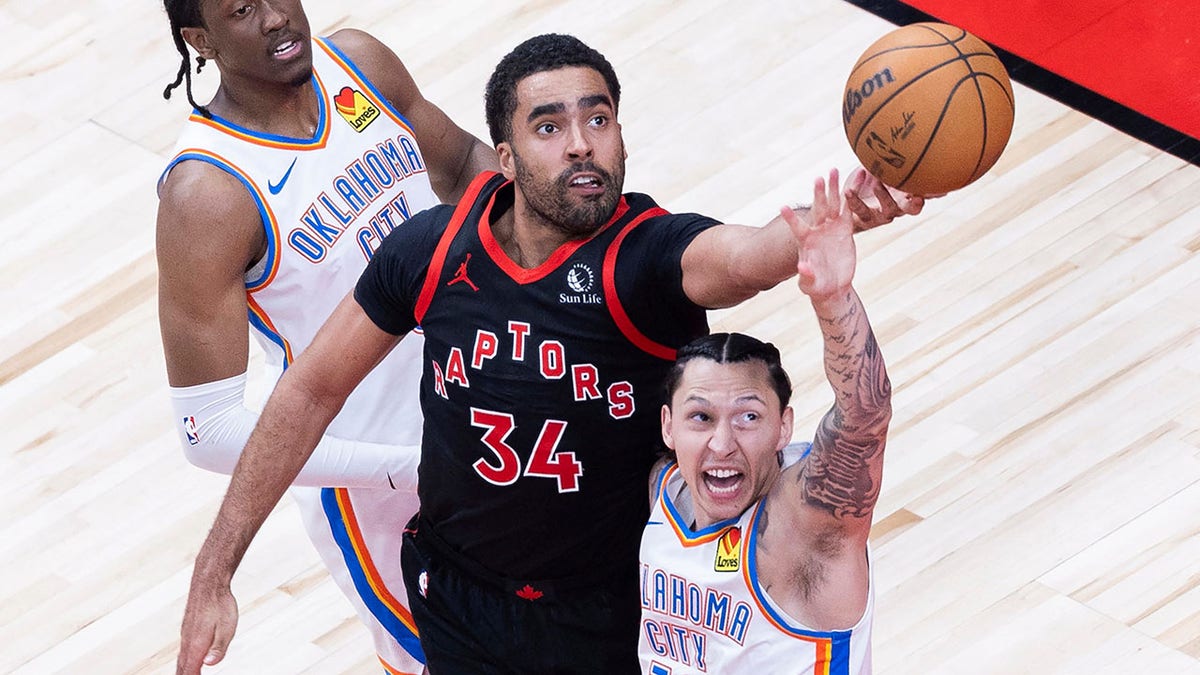
Jontay Porter of the Toronto Raptors fights for a rebound with Lindy Waters III of the Oklahoma City Thunder during a 2023–2024 NBA regular-season game between the Raptors and the Thunder in Toronto on March 22, 2024. (Zou Zheng/Xinhua via Getty Images)
In 37 career NBA games, Porter averaged 3.7 points per game.
Follow Fox News Digital’s sports coverage on X, and subscribe to the Fox News Sports Huddle newsletter.
Related Article

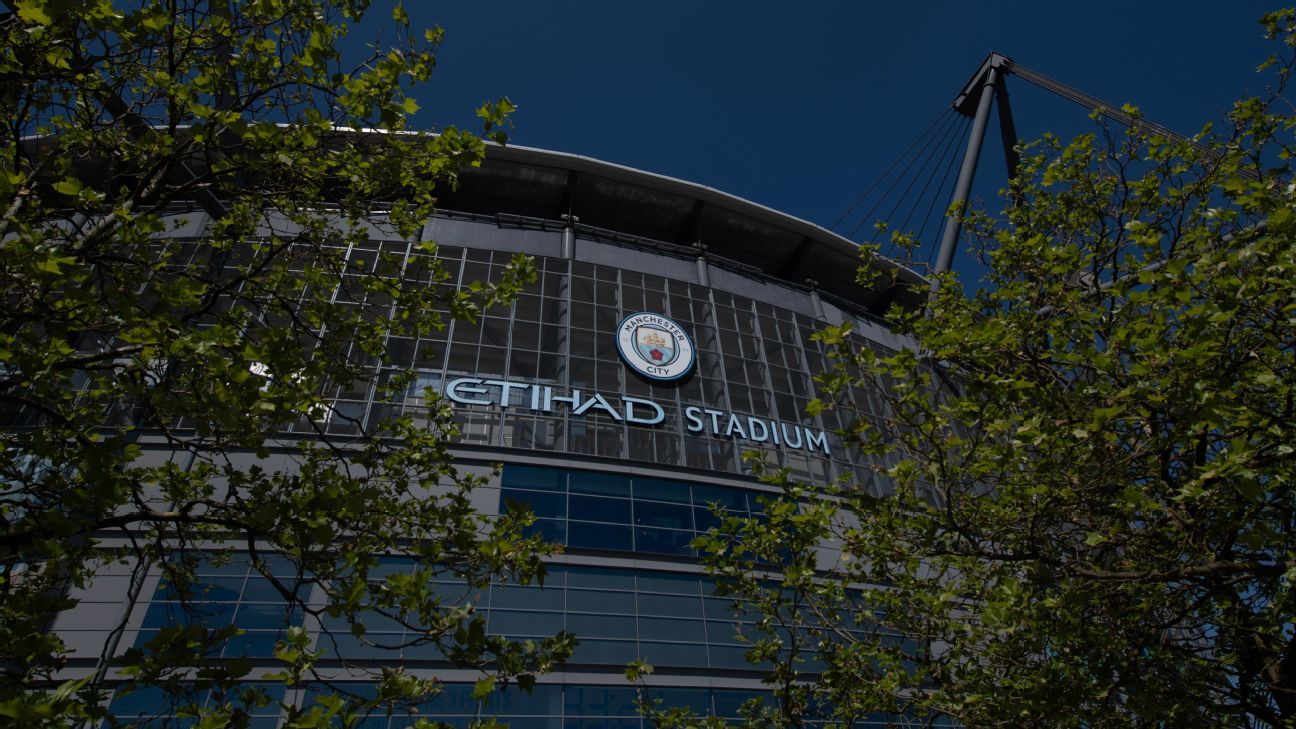
Over three years have passed since the Premier League announced it was charging Manchester City for breaching a long list of rules related to alleged wrongdoing. Most of them relate to actions taken to circumvent financial regulation, from false accounting to making payments off the books to failing to cooperate with investigators. City deny the charges.
Depending on the number of charges on which they are found guilty (if any) City could face a range of sanctions, from fines and points deductions to being stripped of titles to outright expulsion from the Premier League. If they’re found guilty — depending on the nature and number of the charges — they also run the risk of having to pay damages via the league’s arbitration process as other clubs could seek compensation for lost revenue. A three-person independent panel is tasked with issuing a verdict.
“While the complexity of the Manchester City case is undeniable — and unique in a sporting context — similar commercial cases have reached decisions in far less time than the 15 months we’ve seen here,” Stefan Borson, head of sport at London-based law firm McCarthy Denning, tells ESPN. “There are few legitimate excuses, and there is an urgent need for progress.”
Let’s start with the obvious: Why is this taking so long?
To some degree, we can only speculate because the whole process is shrouded in secrecy. This is partly due to the fact that the Premier League’s own rules allow defendants to request confidential hearings, and partly due to British law and safeguards that protect defendants in certain situations.
One example illustrates this well. The investigation into City began in Dec. 2018 following the publication of the “Football Leaks” documents by the German magazine “Der Spiegel.” But we only found out that there even was an investigation in March 2021 after a High Court judgement ruled against City, who had tried to block investigators’ access to documents. The start date of the investigation was later confirmed in official documents, but there wasn’t even confirmation from the Premier League that City were even under scrutiny.
It’s a similar story with the hearings themselves, which are confidential and held in private. We know they started on Sept. 16, 2024, at the International Dispute Resolution Centre in London because this was leaked, and media photographed lawyers for both sides arriving and leaving the venue. We know the hearing concluded in Dec. 2024 because Manchester City mention it in their 2024-25 annual report and because, in Feb. 2025, Pep Guardiola, the City coach, said the verdict would come out “in one month.”
One month? Wow, it’s been 12 months and counting…
Yes, and that tells you the degree to which everybody’s lips have been sealed in this process. There is so little that we know about it, other than the charges. For example, we don’t even know for certain the identity of the three members of the independent commission that will sit in judgement. The trio was assembled by Murray Rosen, chair of the Premier League’s judicial panel at the time. Some reports suggest Rosen named himself to the panel, but that is unconfirmed.
Anyway, if the hearing concluded in Dec. 2024, why it is taking so long for the panel to issue a verdict?
Correct.
We’re in the realm of speculation here, but there are several reasons cited by sports lawyers.
The first is that this is a massive, hugely complicated case. We’re not even certain of the exact number of charges. It came to be known as the “115 charges” case because that’s the number of bullet points in the original document, but according to multiple reports, the number of individual rule breaches in the document is 130, though it’s possible that some are overlapping (i.e. one action violates multiple rules).
It’s also possible, as some reports have suggested, that since the original document was issued, more charges were added, most likely relating to failure to cooperate. Whatever the number, each of the charges must be proved individually with specific evidence.
Furthermore, many of the charges in practice allege deliberate intent to mislead regulators and/or obstruct investigators. The panel isn’t just deciding whether City breached spending regulations, but whether they intentionally breached them and then covered it up to violate the spirit of the rules and, later, knowingly withheld evidence. To make an analogy, it’s the difference between speeding on the highway and speeding on the highway while remotely manipulating the police officer’s radar gun and then spewing a bunch of sovereign citizen nonsense to intentionally screw up your traffic stop. The burden of proof is far higher in the latter case.
Bear in mind that the panel won’t just be issuing a verdict and a sentence. It will be issuing what are known as “written reasons” detailing how it arrived at its conclusions. These “written reasons” could form the basis of any appeal — whether by City or by the Premier League — and therefore need to be “bullet-proof” when it comes to scrutiny.
Still… They’ve had more than a year to issue a verdict since the hearing concluded in Dec. 2024 and, presumably, they have staff to help them…
That’s where another factor comes in. It’s highly likely that the panel members aren’t working on this full-time. You’d assume all three have day jobs and other commitments; presumably, the panel allocated a certain amount of time to hear and deliberate on the case, but it proved to be far more complex than anticipated, and so they members have had to work around their calendars, finding time as and when.
“The members of the independent commission have undoubtedly had other commitments since the hearing ended and they will be acutely aware of making the decision as robust against appeal as possible, given the unprecedented scrutiny this ruling will attract,” said Borson.
Why wouldn’t more time have been allocated to the deliberations?
That’s another mystery. I guess if you want top-notch legal and financial experts to deliberate, you have to accept that they will be in demand elsewhere. This isn’t a jury that’s being sequestered in a room; these are senior figures who handle very important cases in their everyday lives. They can’t just check out indefinitely.
There’s another potential explanation here. While it’s a remote possibility, it would help explain a number of the mysteries surrounding this case.
What’s that?
What if, separate from the arbitration proceedings, the Premier League and City are trying to hammer out some sort of settlement deal? After all, the Premier League is nothing more than its 20 member clubs. If they all agree on an outcome, that’s that. Now, I think it’s unlikely, partly because clubs are notoriously leaky (and there hasn’t been a peep) and partly because it would be extremely difficult to agree to something all sides could accept.
What might it look like? City would need to admit to some level of wrongdoing and take some level of punishment, while rival clubs would need to drop threats of legal action to recover damages.
How would one even do this? Maybe by dumping the blame on the people running the club and arguing that City’s owners were entirely unaware and were, in fact, duped by the folks they employed. And then negotiating a sanction severe enough — massive fine? Some vacated titles? — that the “victim clubs” accept it, but not so severe that it ruins City’s chance of being competitive in the medium term. Why? Because otherwise, they’re not going to accept it and will take their chances with the commission and, possibly, the appeal.
Again, I think it’s highly unlikely, but it would explain why deliberations are taking so long. And it would give the Premier League closure and allow it to move on. Because even when the verdict does come in, it’s highly likely that the losing side will appeal. And this will only drag the process out further, which is not good for the Premier League.


We Gave These Android-Ready Earbuds a 9/10, and They’re Just $180

Netflix ditches deal for Warner Bros. Discovery after Paramount’s offer is deemed superior

‘Uncanny Valley’: Pentagon vs. ‘Woke’ Anthropic, Agentic vs. Mimetic, and Trump vs. State of the Union

-
 Tech1 week ago
A $10K Bounty Awaits Anyone Who Can Hack Ring Cameras to Stop Sharing Data With Amazon
-

 Fashion6 days ago
ICE cotton ticks higher on crude oil rally
-
 Business6 days ago
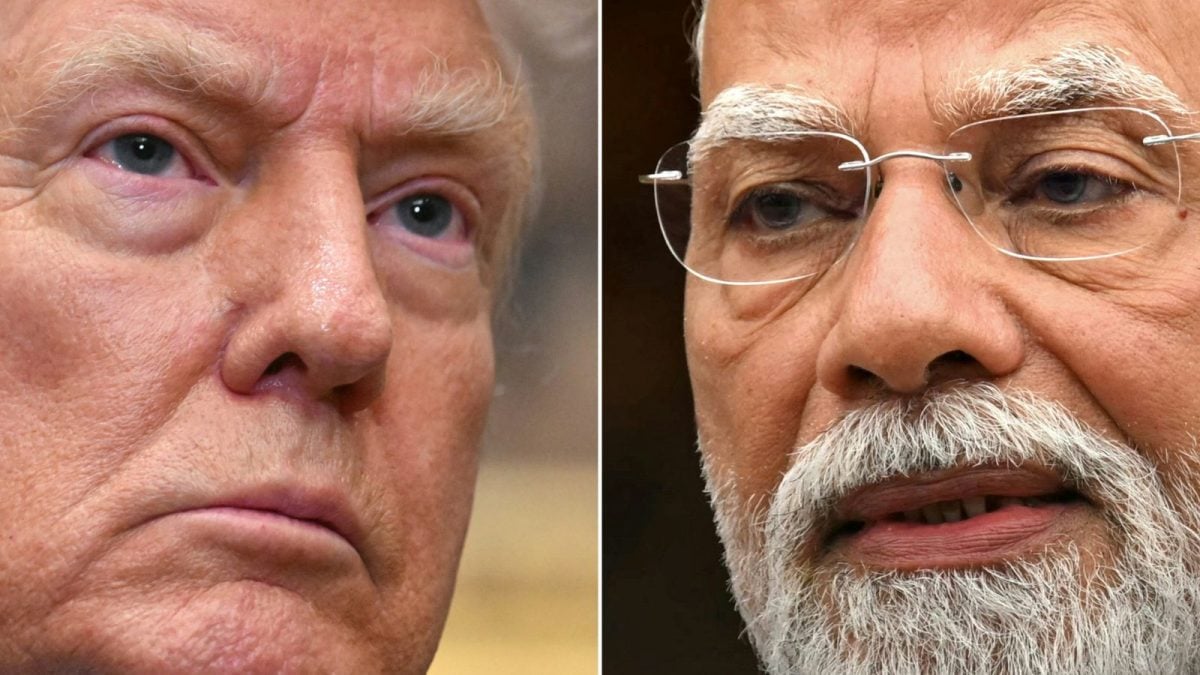
US Top Court Blocks Trump’s Tariff Orders: Does It Mean Zero Duties For Indian Goods?
-
 Business5 days ago
Eye-popping rise in one year: Betting on just gold and silver for long-term wealth creation? Think again! – The Times of India
-

 Tech1 week ago
Donald Trump Jr.’s Private DC Club Has Mysterious Ties to an Ex-Cop With a Controversial Past
-

 Entertainment5 days ago
Viral monkey Punch makes IKEA toy global sensation: Here’s what it costs
-
 Sports6 days ago
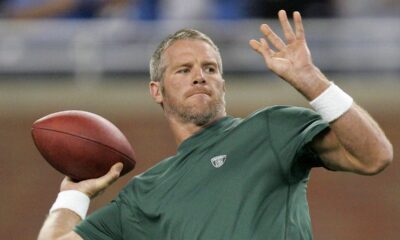
Brett Favre blasts NFL for no longer appealing to ‘true’ fans: ‘There’s been a slight shift’
-

 Entertainment6 days ago
The White Lotus” creator Mike White reflects on his time on “Survivor