

Business
MPs urge Reeves to tax online betting games to reflect the harm they cause


The government has been told by MPs that it should not “cave in to industry scaremongering” about the negative effects of taxing online betting games, and that it should tax them at a rate that reflects the harm they can cause.
The recommendation from the cross-party Treasury committee comes just weeks ahead of Rachel Reeves’s Budget, in which she will be looking to plug a substantial gap in the public finances.
In its report, released on Friday, the committee warned that online betting can lead to harmful, addictive, high-frequency gambling that delivers no benefit to the people taking part, their families or their communities.
The report urged the government to “more sharply recognise that different types of gambling inflict different levels of harm”, and recommended that this be reflected in its approach to taxing the activity.
The committee’s report said that while various forms of gambling, ranging from seaside arcades and bingo through to betting on the races and football, are safely enjoyed by many people, there is “another side to the industry”.
The shift towards online betting games has picked up pace in recent years, with the proportion of the “gross gambling yield” associated with remote gaming rising from 12 per cent in 2014 to 44 per cent in 2024.
The committee had called for evidence of the possible effects of taxing the activity, as it held a series of sessions examining the choices faced by the chancellor in her forthcoming Budget. It said it rejected the industry’s assertion that gambling causes no social ills. It also heard evidence that it said both supported and challenged the gambling industry’s concern that increased taxation could drive more customers to the black market.
The committee said it recommends that the government examine how to tackle black-market gambling, and consider whether additional anti-tax-avoidance measures were needed.
The chair of the Treasury select committee, Dame Meg Hillier, said: “Whether at a local racetrack or a seaside arcade, for many people, gambling is a fun pastime enjoyed with family and friends. But we heard that the industry is hiding its more insidious parts behind the friendly facade of its traditional, cultural forms.
“For too many people, the highly addictive and harmful nature of online betting games has seriously impacted their lives and the lives of those around them. The impacts of problem gambling in our communities are plain to see, and the industry’s boldfaced claim to our inquiry that it does no social harm is staggering.
“Online betting games are extracting huge amounts of money from people who have been funnelled into the most addictive, harmful corners of the industry via their love of sports or the occasional game of bingo. We are urging the government not to cave in to industry scaremongering, and to tax online betting games at a rate that reflects the level of harm they inflict.”
The chief executive of the Betting and Gaming Council (BGC), Grainne Hurst, said: “Further tax increases on the regulated online sector risk undermining consumer protections by pushing players towards the unsafe, unregulated black market – while reducing Treasury revenues and cutting the vital funding our members provide to British sport, including horseracing, football, rugby league, darts and snooker.
“We have always recognised that betting and gaming can lead to harm for a small minority, which is why our members are investing more than ever in safer gambling – including new stake limits on online gaming, enhanced affordability checks, swift data-driven interventions, robust advertising safeguards, and funding for a new £100m statutory levy for research, prevention, and treatment to tackle problem gambling and related harm.”
Ms Hurst added: “BGC members contribute £6.8bn to the economy, generate £4bn in tax, and support 109,000 jobs, while facing an effective tax rate of up to 80 percent when duties are combined with corporation tax, business rates, national insurance, VAT, and the new statutory and economic crime levies.
“Much is at stake in the chancellor’s Budget. Get it wrong, and it’s not just jobs and growth that will suffer, it’s safer gambling itself. To protect consumers and support a safer, stronger industry, we must keep gamblers playing within the regulated market.”
A spokesperson for Flutter UK and Ireland, whose brands include Paddy Power, Sky Betting & Gaming, Sportsbet and Tombola, said: “It’s not scaremongering to suggest that tax rates of 50 per cent on machine games and online games such as bingo – as demanded by the Institute for Public Policy Research – could have a significant impact on the industry, jobs and investment.
“A tax rise is not a free hit.”

Two ads promoting British beef and milk have been banned after television presenter and environmental campaigner Chris Packham complained that they misled consumers about the products’ carbon footprints.
Both ads for the Agriculture and Horticulture Development Board’s (AHDB) Let’s Eat Balanced campaign used the carbon footprint of British beef and milk to promote the products, firstly stating: “British beef not only tastes great, but has a carbon footprint that’s half the global average*.”
The asterisk linked to text that stated: “Full lifecycle emissions of CO2 eq (carbon dioxide equivalent) per kg of beef.”
The ad for milk stated: “British milk not only tastes good, but is also produced to world-class standards, and has a carbon footprint a third lower than the global average.”
Packham complained to the Advertising Standards Authority (ASA) that the ads, and specifically the carbon footprint claims, were misleading as they did not reflect the full environmental impact of British meat and dairy.
The AHDB said the ads’ mention of carbon emissions would be understood in relation to the environmental impact of beef and milk that occurred between the “cradle-to-retail” stages.
But the ASA said the average consumer “being reasonably well-informed, observant and circumspect” would understand the claims to apply beyond the retail stage and include actions such as cooking and wastage.
The ASA said: “While we acknowledged the potential difficulties in producing post-retail emissions data, the claims in the ads suggested those emissions were included and we therefore expected the evidence provided to also include them.
“We therefore concluded that the evidence presented was insufficient to support the full life-cycle claims in the ads, which was how the average consumer was likely to interpret them.
“We reminded AHDB that environmental claims should be based on the full life cycle unless the ad stated otherwise.”
AHDB’s director of communications and market development, Will Jackson, said: “Let’s Eat Balanced is doing what it was designed to do, providing clear, factual, evidence-led information about British food, nutrition and farming standards.
“Since the investigation began, we have conducted independent consumer research which found that the majority of respondents interpreted these adverts as relating to the production phase only, from farm to retail.
“This research provides important insight into consumer understanding and supports our belief that consumers were not misled by the information we shared in these two specific adverts.”

BENGALURU: India’s Gen Z workforce is embracing what experts describe as “portfolio careers” – balancing multiple professional identities and income streams simultaneously. New research from LinkedIn shows that 75% of Gen Z entrepreneurs in India now manage multiple income streams, significantly higher than the 62% among Gen X entrepreneurs. The findings point to a growing preference among younger professionals for flexibility, autonomy and diversified sources of income. “We’re also seeing the rise of the ‘portfolio era’, with more professionals creating multiple income streams and redefining what a career can look like. This shift is making entrepreneurship more accessible than ever before,” said LinkedIn India country manager Kumaresh Pattabiraman.Rather than depending on a single full-time role, many professionals are simultaneously building businesses, freelancing, consulting, creating online content and monetising specialised skills through digital platforms. The trend comes amid a broader rise in entrepreneurial activity in India. LinkedIn recorded a 104% year-on-year increase in members adding “Founder” to their profiles – the highest growth among all global markets.AI is also emerging as a major enabler of this shift. The report found that 85% of Gen Z entrepreneurs consider AI and digital tools important to their business operations.
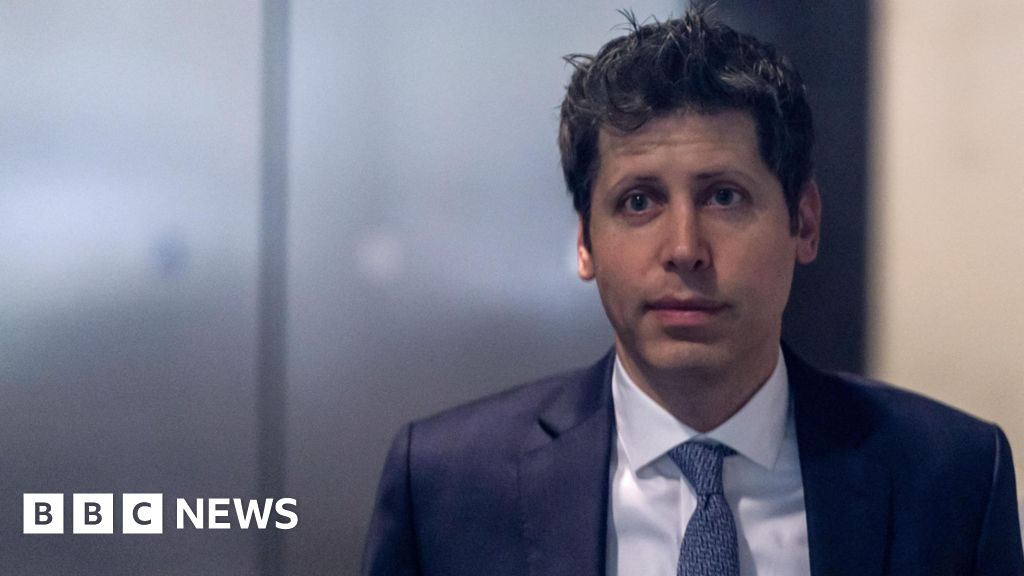
Sam Altman said Elon Musk tried many times for total control of OpenAI, which he’s now suing.
Source link


Will LeBron James retire after current season?

South Korea reviews phased support for Strait of Hormuz security efforts

New Jersey Gov. Mikie Sherrill announces another NJ Transit World Cup ticket cut days after first reduction

-

 Tech1 week ago
DHS Demanded Google Surrender Data on Canadian’s Activity, Location Over Anti-ICE Posts
-
 Business1 week ago
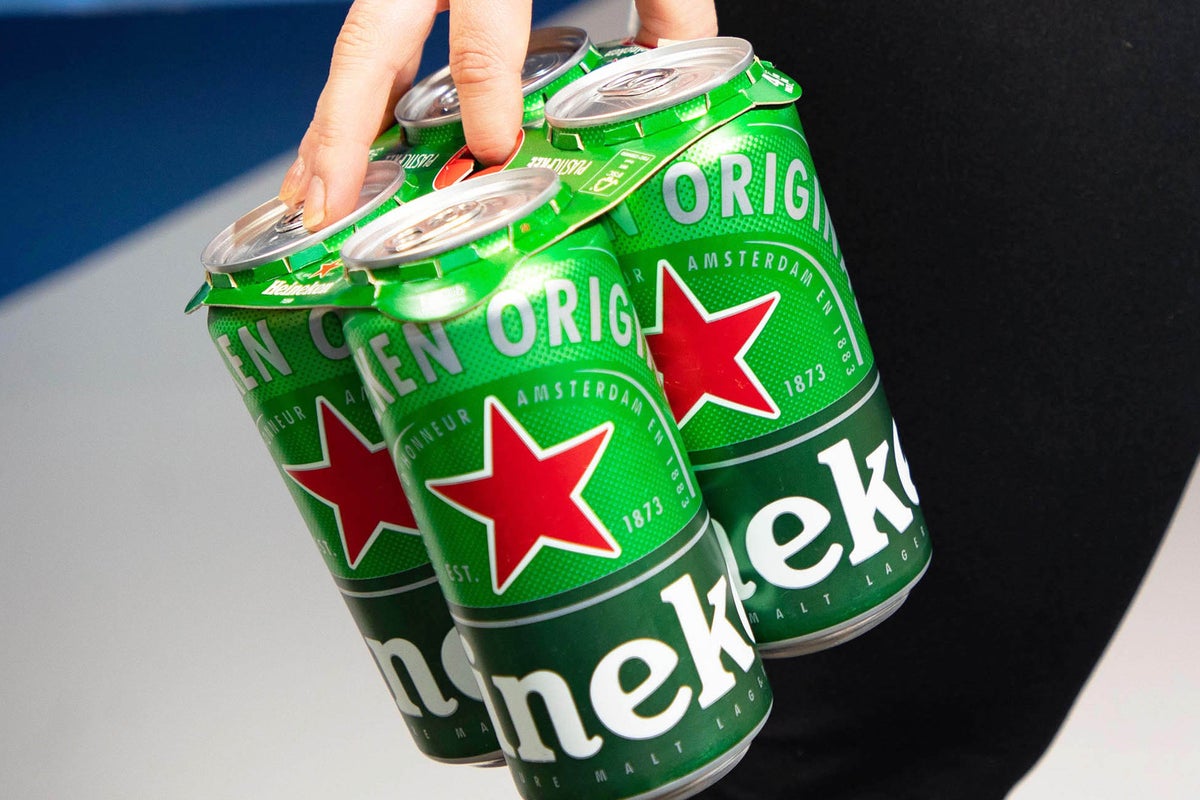
Heineken plans huge investment in hundreds of UK pubs ahead of World Cup
-

 Tech5 days ago
A new frontier: Identity stack evolves for agentic systems | Computer Weekly
-

 Tech4 days ago
‘Orbs,’ ‘Saucers,’ and ‘Flashes’ on the Moon: Pentagon Drops New UFO Files
-
 Business1 week ago
India among most resilient large EMs, better placed for future global shocks; policy reforms & strong buffers help: Moody’s – The Times of India
-

 Tech5 days ago
What Microsoft Executives Really Thought About OpenAI in 2018
-

 Fashion5 days ago
New orders in German manufacturing up 5% MoM in Mar 2026: Destatis
-

 Sports5 days ago
Shaheen Afridi achieves landmark feat during opening Test against Bangladesh