

Fashion
MS & JK rewrites its mission in industrial inkjet printing

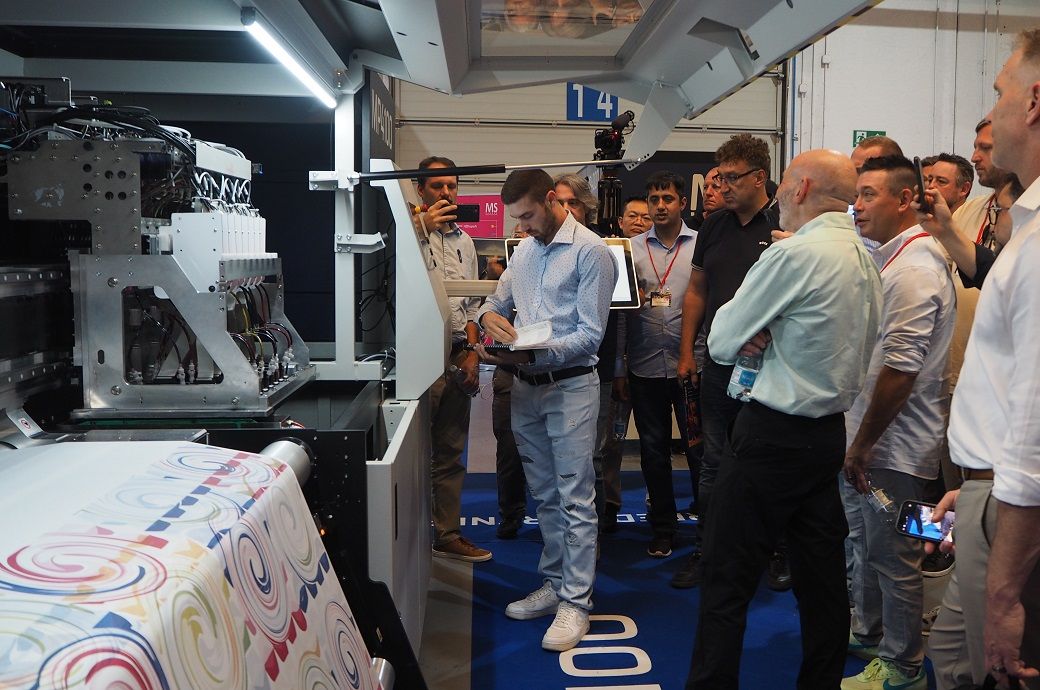
Five new printers, high-performance inks, customer focus, and solid partnerships with dealers: this is how the two Dover brands are responding to the challenges of a market under pressure
MS & JK unveiled five new MP series printers at their 2025 Global Dealer Meeting in Como, alongside advanced inks and a revamped customer service model.
The printers offer higher speed, robustness, and versatility, supported by sustainable ink innovations.
The company aims to boost dealer collaboration, upgrade installed bases, and expand global market reach.
Since the mid-1990s, when “digital textile” was little more than a utopia, Como has been considered the Silicon Valley of textile printing, and MS one of its most forward-thinking pioneers and interpreters. In those formative years, the ink manufacturers that would later merge to form JK developed the first water-based inks that could be deposited with inkjet heads, ranging from sublimation to direct printing with reactive, acid, and disperse dyes.
Since 2015, with the acquisitions by Dover Corporation, the technology, people, patents, and production sites of MS & JK have become key assets of Dover, forming, together with Markem-Imaje, the backbone of the US industrial conglomerate’s imaging solutions offering. With a young and dynamic management team, the company boasts an installed base of thousands of multi-pass and single-pass printers in the apparel, home textiles, graphics, and industrial decoration sectors.
This June, MS & JK held its Global Dealer Meeting 2025 in Como, where it unveiled five new printers, opened the doors of its factories and demo centers, organized visits to companies using its technologies, and shared with its partners a strategy set to revolutionize the customer experience in the years to come.
At the heart of the multi-pass printers of the future
In industrial printing, hardware is of paramount importance. This is where MS has built its leadership, bringing bestsellers such as the JP4 and JP7 to market in 2011 and 2013, respectively. Today, the historic JP acronym is giving way to MP (short for Multi Pass) and a range of inkjet printers that aim to set new market benchmarks: MP3000, MP3100, MP4000, MP4100, and MP5000.
The new equipment shares a brand-new technological platform in every respect: body design, construction architecture, user interface, electronics, print heads, safety, and ease of use. The MP printers are, first and foremost, more robust and heavier, and they are manufactured using 20% fewer parts, which is beneficial for both spare parts inventory and maintenance. The new Kyocera KJ4B–0600EX (Katana) print heads feature 2,560 nozzles arranged in a line rather than in trapezoidal blocks to reduce banding at high speeds. Among Katana’s original technical solutions is the use of silicone to seal edges and other parts of the head, providing greater protection and easier cleaning. With drop sizes ranging from 5 to 24 pl (+30% compared to the previous model), the KJ4B–0600EX also enables speeds up to 35% higher. This speed increase is also supported by MS’s new proprietary electronics, which use the high-performance EtherCAT communication protocol. Designed to meet different application requirements as well as productivity, quality, and budget constraints, the new printers are currently available only in a 1.8 m width (but MS is already working on 3.2 m models).
To each their own MP
Designed for printing on sublimation paper, the MP3000 is the entry-level model in the range and features four heads with the classic CMYK configuration. The printer is equipped with a mini-jumbo roll feeder for rolls up to 500 mm in diameter and reaches a speed of 315 m2/h, equivalent to 223 m/h (linear). The MP3100 offers the same speed and is designed for high-quality sportswear applications. It is equipped with eight heads in a single row, allowing for an eight-color configuration (CMYK + Gray, Orange, Green, Blue) or double four-color printing.
Moving up a level, we find the MP4000, dedicated to the world of fashion and equipped with eight heads in two rows configured in double four-color printing for a maximum speed of 630 m2/h, equal to 400 m/h. The MP4000 is fitted with a jumbo roll feeder for reels up to 1,000 mm in diameter. Even more versatile is the MP4100, which, thanks to its 16 heads arranged in two rows, can combine the speed of the MP4000 with eight-color configurations.
The MP5000, on the other hand, is designed for direct printing on fabric with reactive, disperse, acid, or pigment inks, as well as adhesive tape feeding. It also has a maximum of 16 heads arranged in two rows, supports various four- or eight-color configurations, and reaches a maximum speed of 585 m²/h, equal to 390 m/h, which drops to 201 m²/h, or 134 m/h, in high quality. The MP5000 can be expanded with a range of optional feeding, tensioning, drying, and polymerization devices as well as a new recirculation system for the water used to clean the belt.
All MP printers can be equipped with the Qwizard touchscreen control system and are compatible with the exclusive Color Pack automatic color calibration and management software.
Leader in water-based inkjet
While high-performance, reliable hardware is essential for developing volumes and turnover, repeatability of processes and compliance with quality and safety standards are the real keys to success. With expertise, laboratories, and production sites for designing and manufacturing printers, inks, and software, MS & JK occupies a unique position in the market.
The JK plant in Novedrate (Como), covering 9,000 m² and employing 60 people in two shifts, is one of the most modern sites in Europe for the production of inkjet inks, as well as the location where all Kiian Digital products are created. The company has a capacity of 1,500 tons/year per shift and manufactures around 300 products in different chemicals and colors, for a total of over 800 active product codes. The plant includes raw material warehouses, mixing centers, quality control rooms, filling facilities, analysis and testing laboratories, and a laboratory dedicated to intensive printing tests with different MS printer models.
Before releasing a product, the product development team performs countless physical, chemical, and functional tests and supports customers in obtaining the required certifications. At all levels of production, the company has invested in hardware and software automation, cobots, and vision systems to reduce human variables in the formulation, packaging, raw material control, and batch traceability processes.
New inks and unexpected applications
Kiian Digital inks are the fuel that powers the new generation of MS printers, and JK has developed new and improved versions. Among these is the new generation (V2) of Digistar Bellagio BIB reactive dyes, packaged in bag-in-box to reduce the space taken up by empty tanks by 87%. V2 introduces the new colors Ultra Grey and Light Magenta, designed to achieve softer and cleaner tonal transitions in the light areas of the image. In the disperse dye segment, the offering focuses on Digistar Bravo with its 13 colors, while Digistar Pigment is attracting growing interest in pigment applications. One of the advantages of the latter chemistry, available in eight colors, is its extraordinary color rendering and wash fastness, even without pre- and post-treatment, as well as its compliance with OEKO-TEX ECO PASSPORT, GOTS, and ZDHC Level 3 standards. In addition to formulating and producing inks, MS & JK handles the creation of waveforms for the print heads installed in the printers in-house so as to always guarantee maximum performance for the end user.
During the Global Dealer Meeting 2025, MS & JK presented its partners with a provocation and a challenge, distributing blue jeans made by printing denim fabric with Digistar Pigment inks on MS printers. In addition to the striking aesthetic result, the manufacturer demonstrated the extraordinary color fastness by subjecting the jeans to bleaching and rubbing.
Amidst the surprise and applause of the numerous dealers present, the session highlighted the significant opportunity arising from the digitization of a segment of the fashion industry that is heavily reliant on chemicals and washing water, which would reap enormous environmental, economic, logistical, and creative benefits from the use of digital printing.
The revolution starts with the customer experience
With 20 years of experience in customer service, including 16 at Markem-Imaje, Federica Maggi has been committed since 2024 to rethinking the customer experience for MS and JK Group customers and partners. In just a few months, the manager and her team unified the customer service infrastructure, which had previously been separated by equipment and inks, creating a more orderly flow of information and facilitating process metrics. In addition, she worked with Markem-Imaje’s global entities to overhaul the logistics model and make the supply chain more resilient.
“When I arrived, I found an organization with 25 years of history, incredible skills, and solid fundamentals, but one that was undergoing a major revolution,” says Maggi. “So, we decided to focus on implementing best practices that would enhance the professionalism of our people and make a huge amount of data usable and analyzable so that we could all use it to build the future.”
The corrective measures taken, combined with weekly alignment meetings, are translating into increased product availability, reduced delivery times, higher quality, a sharp drop in complaints, and the ability to adapt quickly to local regulations.
“We are living in a time of intense pressure, where rules are constantly changing, generating disruptive impacts on the supply chain and production,” concludes Maggi. “That’s why it’s no longer realistic to work locally and it’s crucial to think globally.”
Consumables and services: from critical issues to assets and opportunities
With over 2,000 machines installed and ambitious plans to capture new market share, the ability to effectively supply consumables and technical support is a crucial challenge for MS & JK. To this end, ink and spare parts warehouses have been consolidated over the past year, and the products are now stored and shipped together. In this area, the company aims to work side by side with its dealers around the world to develop predictive models, optimize local warehouses, and generate business opportunities.
“Prevention is better than cure, and the only way to improve is to analytically and rigorously monitor and study recurring situations, market trends, seasonality, and changes,” Maggi points out. “Only if we are united, if we talk to our customers, if we share information, can we make reliable forecasts and plans.”
The group sees enormous potential in its established customer base to generate added value for itself and its customers, including through the upgrading of its machine fleet with more productive and efficient technologies and the introduction of more advantageous and sustainable service and maintenance models. Last but not least, given the enthusiastic response from participants at the launch event, MS & JK expects that the adoption of the new MP will start with users of older printers.
“We should always think of our installed base as an asset, seeking to create new business opportunities, starting with the replacement of existing printers with the latest generation models,” says Matteo Forte, Global Marketing Manager at MS & JK. “Customer service has also long been seen as a cost center, whereas it is actually a valuable opportunity to become consultants to users of our technology and contribute to their success by aligning ourselves with local habits and needs.”
Commitment and synergies for a win-win collaboration
Over the next twelve months, the MS & JK team will work actively to promote new products, optimize strategies and services, and support dealers in the field in analyzing and meeting customer needs. The addition of Massimo Cavazzini, former head of sales for Markem-Imaje in Southern Europe and now Global Sales Lead for MS & JK, will bring further speed and vigor to the commercial strategy.
“Working with our dealers is one of our strengths. We intend to focus on improving their satisfaction and strengthening relationships with our mutual customers,” said Cavazzini. “Establishing agreements that generate significant value for both parties will be the most interesting challenge in the coming months.”
The quality of the relationship, both human and professional, and the commitment to achieving ambitious goals seem to be the new leitmotif of MS & JK and its channel partners, who have come to Como from all over the world. Equally important is the celebration of a brilliant technical achievement, which lays the foundations for a research and development process that, in the medium term, will lead the company towards the release of new technologies and entry into new markets.
“We have invested time and energy in forming a team of people who are able to collaborate constructively, support each other, and help the company become even better,” concludes Sergio Giannone, Senior Director of Product Engineering and Operations at MS & JK. “It had been years since MS had introduced a completely new product. The launch of the MP series is the extraordinary result of a long journey together and the first step in an exciting journey that the company has just begun.”
All models in the MP series are already installed, operational, and available for demonstrations at the Center of Excellence in Guanzate (Como). Series production is scheduled to start in Q3 2025, with the first deliveries expected in Q4.
Note: The headline, insights, and image of this press release may have been refined by the Fibre2Fashion staff; the rest of the content remains unchanged.
Fibre2Fashion News Desk (HU)











In a blog post, Alfred Kammer, director of the IMF’s European department, said his organisation sees growth slowing down in the continent. Initial data point already to weaker private investment and consumption.
The energy shock that has hit Europe due to the Middle East conflict, though smaller than in 2022, is weighing on growth and pushing inflation higher, an IMF expert recently cautioned.
IMF sees growth slowing down in the continent.
Initial data point already to weaker private investment and consumption.
Central banks must remain laser focused on keeping inflation expectations anchored, he wrote.
The outlook for euro area growth is projected at just 1.1 per cent in 2026, for the European Union it is 1.3 per cent; and this forecast comes with a high degree of uncertainty.
In a more severe scenario as described in the World Economic Outlook—a persistent supply shock compounded by tightening financial conditions—the EU could come close to recession with inflation approaching 5 per cent. No European country is spared, Kammer observed.
Policymakers face intense pressure—to act fast, visibly and for all, which results in policies that have more long-term downsides than short-term benefits, he wrote.
Targeted support is much more effective. Europe’s response to this shock should be shaped by two imperatives, he suggested. First, robust macroeconomic policy that is fit for a world with unpredictable and frequent shocks, and second, resilience built without wasting fiscal resources or getting in the way of markets.
The first imperative involves getting monetary and fiscal policy right. Central banks must remain laser focused on keeping inflation expectations anchored, the IMF expert wrote.
In the euro area, where inflation is close to target and medium-term expectations are broadly anchored, the European Central Bank has some scope to wait and observe the shock evolve before acting. IMF now expects a cumulative 50 basis point increase in the policy rate by the end of this year, maintaining a broadly neutral monetary stance in light of higher near-term inflation expectations, Kammer noted.
A rise in core inflation or increasing medium-term expectations would warrant a more restrictive stance, he wrote.
“Europe must reform under pressure. The current shock is not an argument for delay. It is all the more reason to push forward the reform agenda,” Kammer added.
Fibre2Fashion News Desk (DS)

The text of the agreement was released on February 7.
India and the US will today resume talks on the first phase of their bilateral trade agreement in Washington, DC.
The three-day talks will discuss the situation that has evolved under the changed US tariff regime.
The two unilateral probes launched by the USTR against India may also be discussed at the meeting.
Darpan Jain, additional secretary in the department of commerce, is leading the Indian team.
Darpan Jain, additional secretary in the department of commerce, is leading the Indian team.
The three-day talks will discuss the situation that has evolved under the changed US tariff regime, according to Indian media reports.
Following the US Supreme Court decision against the sweeping tariffs imposed by President Donald Trump on several countries, the US administration imposed a 10-per cent tariff on all countries beginning February 24 for 150 days.
This led to a meeting between chief negotiators of both sides scheduled in February getting postponed to this month.
The two unilateral investigations launched by the US Trade Representative (USTR) against India may also be discussed at the meeting. India has rejected allegations made by the USTR in these two probes under its Section 301 of Trade Law and has called for termination of the probes as the initiation notice has failed to provide cogent rationale to substantiate the claims.
Fibre2Fashion News Desk (DS)
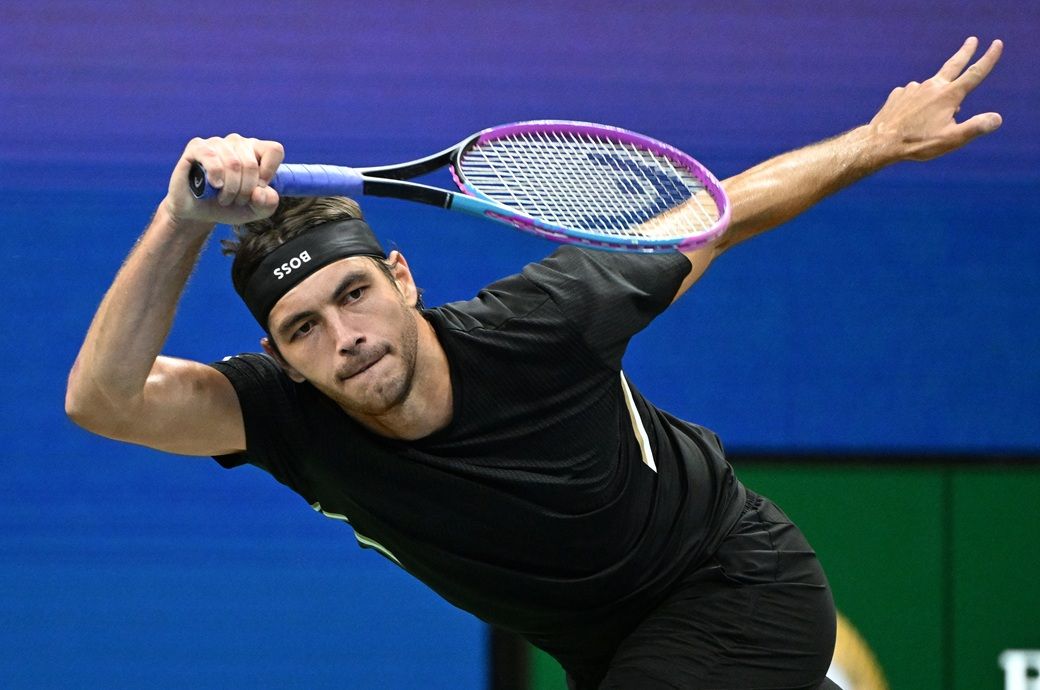
The partnership is rooted in a shared mindset: ambition, world-class performance, global relevance, and a bold confidence that defines both BOSS and the Australian Open. As a cornerstone of BOSS’s cultural strategy, the collaboration creates a powerful platform to connect with fans at scale, unlock new audiences, and showcase the full world of BOSS through its collections, ambassadors, and experiences.
BOSS will become Official Lifestyle Outfitter of the Australian Open from 2027, marking a key step in its sport and culture strategy.
The brand will dress up to 4,000 staff and elevate on- and off-court style through tailored looks, activations and merchandise, strengthening its global presence in tennis while redefining the tournament’s visual identity.
“We are absolutely excited to partner with the Australian Open, which is one of the most dynamic and globally followed sporting events worldwide,” stated Daniel Grieder, CEO of HUGO BOSS. “This collaboration is a natural fit for us, as it brings together two brands that share the same commitment to excellence, innovation, and creating extraordinary experiences. Tennis is part of BOSS’s DNA. The partnership therefore
marks an important step in our strategy to further drive the brand’s positioning at the intersection of sport, lifestyle, and global fan engagement.”
“The Australian Open has always been about more than just great tennis – it’s about atmosphere, innovation, and setting the benchmark for major sporting events worldwide,” Tennis Australia CEO Craig Tiley said. “BOSS is a global brand with impeccable credentials in sport and style, and together we will enhance how our tournament looks, feels, and connects with fans from around the world.”
In its new role as the tournament’s Official Lifestyle Outfitter, BOSS is set to transform the visual identity of the Australian Open like never before. Dressing up to 4,000 staff, officials, umpires, and ball kids, BOSS will make an unmistakable impact, setting its signature confident style from the very first moment. The result is a bold step change: a unified, elevated, and distinctly modern aesthetic that will be visible across every corner of Melbourne Park. A curated palette of refined shades, subtle nods to the brand’s tailoring expertise, and easy-wear silhouettes engineered for the Melbourne heat come together to signal a new era in tournament style – perfectly in tune with the fast-paced, high-energy spirit of the event.
BOSS branding will also be displayed around the venue, including inside the iconic Rod Laver Arena. Beyond the tournament’s courts, the collaboration will extend to exclusive replica teamwear, merchandise, and off-court capsules. Dedicated pop-up stores, immersive on-site fan activations, an elevated guest experience, and further special events will bring the BOSS attitude to every part of “The Happy Slam.” Online and in store, impactful storytelling and curated initiatives will also share the sunshine spirit of Melbourne with tennis fans around the globe.
In a powerful opening serve that ignites excitement and sets the tone for what’s to come, the brand has created bold visuals to accompany today’s announcement. Bridging the worlds of fashion and sport, the imagery reimagines tennis balls in tactile fabrics – from rich wool to soft alpaca – as a nod to BOSS’s roots in craft and tailoring.
The brand’s history in tennis dates back to the 1980s, when it embarked on a 15-year-long sponsorship of the Davis Cup, the world’s largest international team competition in men’s tennis. Most recently, BOSS has welcomed star players Taylor Fritz and Matteo Berrettini, as well as emerging talents Noma Noha Akugue and Ella Seidel, as brand ambassadors, and since 2022 has served as title sponsor of popular ATP 250 tournament the BOSS OPEN in Stuttgart. Through the Australian Open partnership, BOSS is cementing its presence in tennis at one of the world’s most prestigious tournaments and propelling its position as a leading global style authority at the intersection of sport and culture.
Note: The headline, insights, and image of this press release may have been refined by the Fibre2Fashion staff; the rest of the content remains unchanged.
Fibre2Fashion News Desk (JP)


War-linked energy shock pushing inflation higher in Europe: IMF expert

Scam messages offering ships safe transit through Hormuz, warns security firm

Billions to be paid! US starts refund process for Trump tariffs: Can Indian exporters claim? – The Times of India

-

 Fashion5 days ago
France’s LVMH Q1 revenue falls 6%, shows resilience amid Iran war
-

 Sports1 week ago
The case for Man United’s Fernandes as Premier League’s best
-

 Entertainment1 week ago
Palace left in shock as Prince William cancels grand ceremony
-
 Business1 week ago
UK could adopt EU single market rules under new legislation
-

 Entertainment6 days ago
Is Claude down? Here’s why users are seeing errors
-

 Fashion1 week ago
Energy emerges as biggest cost driver in textile margins
-
 Business1 week ago
Delta Air Lines unveils first new Delta One suite in premium cabin arms race
-

 Tech1 week ago
A Lot of Shops Won’t Fix Electric Bikes. Here’s Why