

Fashion
New EU strategy proposed to shape global clean, resilient transition

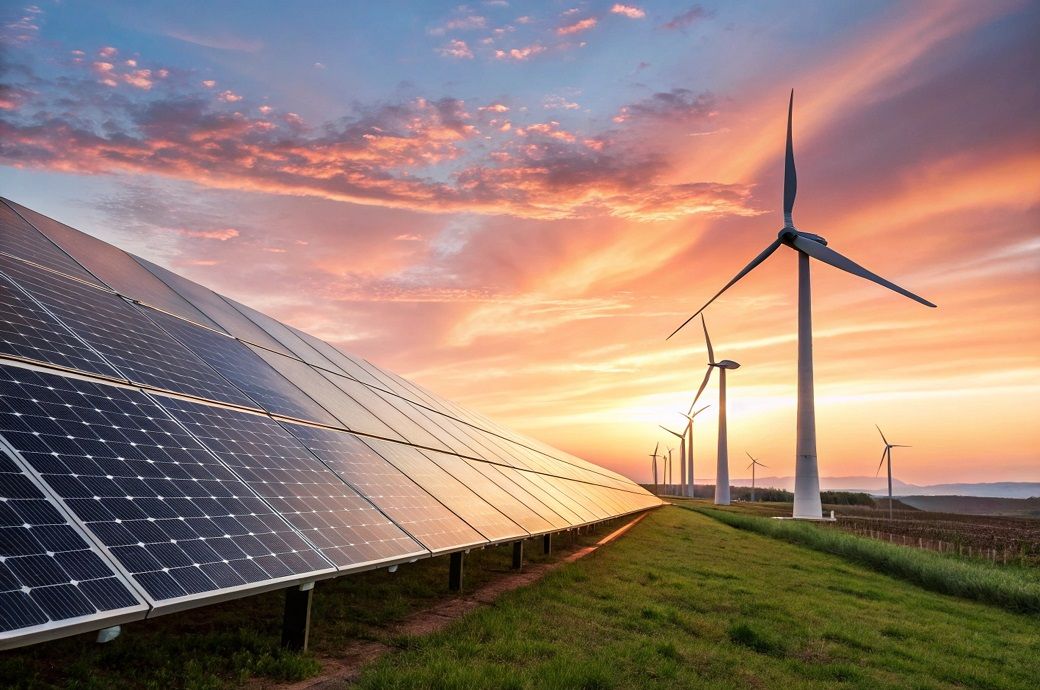
The new EU global climate and energy vision adds an external dimension to the Clean Industrial Deal and sets a new strategy to strengthen existing partnerships and forging new, mutually beneficial ones, an official release said.
A new strategy for securing Europe’s place in global markets was recently proposed by using diplomacy to protect core EU interests, promoting standards for a fair transition and addressing new security threats and challenges.
The vision proposes to ramp up the EU’s clean technology manufacturing capacity to reach 15 per cent of the global technology market, while improving its industrial competitiveness.
Launched in February 2025, the EU’s Clean Industrial Deal is a strategy to boost European industrial competitiveness and decarbonisation by lowering energy costs, accelerating clean technology, supporting circularity and developing skills.
As a market still dependent on fossil energy imports, renewables will remain at the heart of the EU’s clean transition. Almost half of EU electricity was generated by renewables in 2024. This significantly increases the EU’s energy independence and security. The EU has also seen an increase of 111% in the share of clean energy investments since 2015.
The vision proposes to ramp up the EU’s clean technology manufacturing capacity to reach 15 per cent of the global technology market, while improving its industrial competitiveness, in line with the Clean Industrial Deal.
The vision also reaffirms the EU’s commitment to a rules-based international order.
The EU will continue driving robust international climate policies. This includes stronger action to address the nexus between climate change, environmental degradation, and security and resilience by engaging at multilateral (UN and NATO) and bilateral levels.
It will implement the actions set out in the 2023 Joint Communication on the Climate-Security Nexus and continue combatting information manipulation and disinformation on climate change, the release noted.
The new vision presents a series of strategic actions for global energy and climate engagement to drive the clean transition, competitiveness and clean technologies and investments.
These include injecting political momentum by encouraging multilateral and bilateral fora and initiatives to deliver on the Paris Agreement and Global Stocktake commitments; boosting EU clean tech businesses internationally and enabling climate resilient investments by organising business fora, setting up an EU external Clean Transition Business Council, scaling up investments and establishing business models for climate adaptation; and supporting and connecting European businesses with global investments by making full use of the Global Gateway Investment Hub to assist joint investments projects outside the EU.
These also include expanding networks of mutually beneficial partnerships for global and resilient clean value chains and reforming global financial institutions for the clean and resilient transition and stepping up EU’s climate security work.
Fibre2Fashion News Desk (DS)







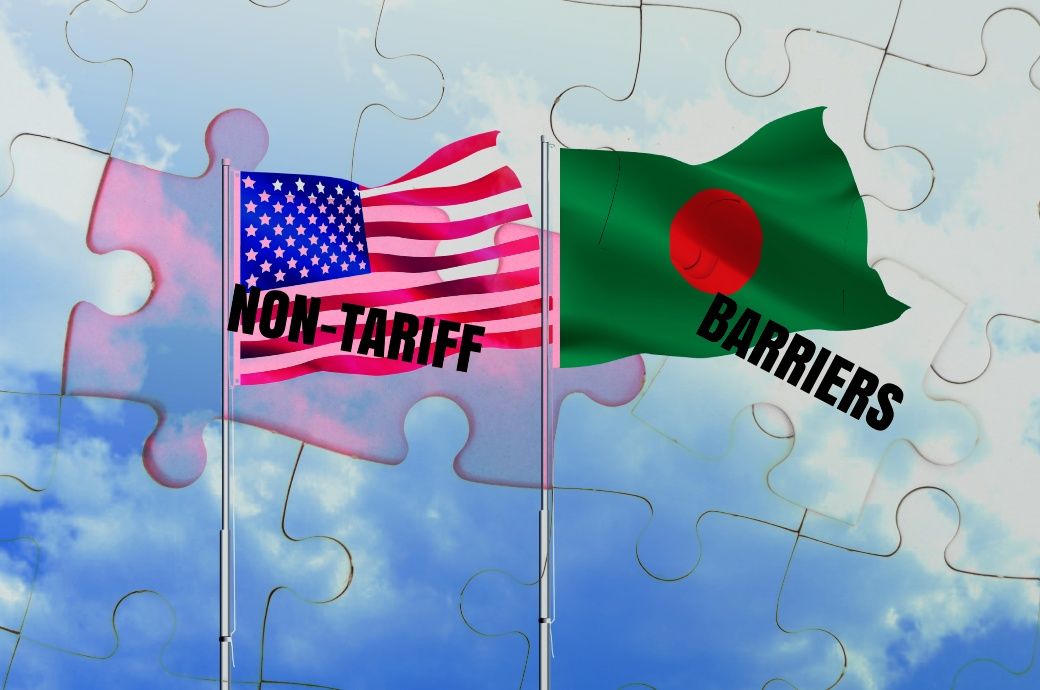
Addressing these issues would also facilitate Bangladesh’s greater access to US development assistance and financing programmes, he said after meeting US Assistant Secretary of State for South and Central Asian Affairs S Paul Kapur in Dhaka.
Cutting unnecessary complexities and eliminating selected non-tariff barriers could significantly boost US investment in Bangladesh and enhance the country’s appeal as a foreign investment destination, according to Commerce, Industry, and Textiles & Jute Minister Khandakar Abdul Muktadir.
Addressing these would also facilitate greater access to US development assistance and financing programmes, he said.
The meeting focused on strengthening bilateral trade ties, expanding investment into new sectors, improving digital infrastructure and deepening overall trade and investment cooperation.
Certain procedural and policy-related bottlenecks continue to affect the investment climate, the minister observed.
Fibre2Fashion News Desk (DS)

The announcement was made during a summit in Brussels, where leaders from both sides emphasised the need to deepen transatlantic trade amid global economic uncertainty and shifting geopolitical dynamics.
Canada and the EU have agreed to modernise the Comprehensive Economic and Trade Agreement (CETA) following a summit in Brussels.
It aims to reduce trade barriers, support SMEs while expanding co-operation in digital services and cross-border data flows.
Leaders including Ursula von der Leyen said it will strengthen economic resilience, diversify trade partnerships and secure supply chains.
The initiative seeks to update the 2017 free trade deal by reducing remaining non-tariff barriers, improving regulatory co-ordination and creating clearer investment dispute mechanisms, particularly to support small and medium-sized enterprises.
Canadian Prime Minister Mark Carney has set a target of doubling Canada’s non-US trade within the next decade, positioning Europe as a key partner in achieving that goal. According to Canada’s Trade Minister Maninder Sidhu, the effort aligns with the country’s broader strategy to diversify trade beyond its largest partner, the United States, which currently accounts for nearly 70 per cent of Canadian exports and leaves the country vulnerable to shifts in American trade policy.
The agreement also launches talks on a digital trade framework covering data flows, cybersecurity, artificial intelligence regulation and digital services.
Maros Sefcovic, the EU’s Commissioner for Trade and Economic Security, said the initiative reflects the growing importance of digital commerce, noting that more than 40 per cent of EU-Canada services trade is already delivered digitally.
European Commission President Ursula von der Leyen highlighted that the partnership would support sustainable development, innovation and secure supply chains, particularly in areas such as rare minerals, clean energy and advanced technologies.
The modernisation effort underscores both partners’ commitment to strengthening economic resilience, promoting sustainable trade practices and deepening cooperation in the digital era.
Fibre2Fashion News Desk (CG)
Imports of knitted apparel and clothing accessories (Chapter **) were valued at $***.*** million in January ****, slightly lower than $***.*** million a year earlier. The imports of non-knitted apparel and clothing accessories (Chapter **) totalled $***.*** million, down *.** per cent from $***.*** million in January ****.
South Korea typically exports fabrics and textile materials while importing readymade garments. During January ****, exports of man-made filaments, strips and similar materials (Chapter **) were valued at $***.*** million, down *.** per cent from $***.*** million a year earlier. Exports of knitted or crocheted fabrics (Chapter **) reached $***.*** million, easing *.** per cent from $***.*** million.


King Charles crucial trip comes to screeching halt amid new conflict

Removing NTBs could boost trade with US: Bangladesh commerce minister

Longtime Blackhawks great and broadcaster Troy Murray dies at 63, team says

LPGA legend shares her feelings about US women’s Olympic wins: ‘Gets me really emotional’

India Us Trade Deal: Fresh look at India-US trade deal? May be ‘rebalanced’ if circumstances change, says Piyush Goyal – The Times of India

South Korea’s Misto Holdings completes planned leadership transition

-
 Sports1 week ago
LPGA legend shares her feelings about US women’s Olympic wins: ‘Gets me really emotional’
-
Business1 week ago
India Us Trade Deal: Fresh look at India-US trade deal? May be ‘rebalanced’ if circumstances change, says Piyush Goyal – The Times of India
-
 Fashion1 week ago
South Korea’s Misto Holdings completes planned leadership transition
-

 Entertainment1 week ago
Bobby J. Brown, “The Wire” and “Law & Order: SUV” actor, dies of smoke inhalation after reported fire
-

 Entertainment1 week ago
Pakistan’s semi-final qualification scenario after England defeat New Zealand
-
 Business1 week ago
CNBC To Merge TV And Digital News Operations, Nearly A Dozen Jobs To Be Cut: Report
-
 Business1 week ago
Greggs to reveal trading amid pressure from cost of living and weight loss drugs
-
 Entertainment1 week ago
What’s new in Pokémon? Every game, update, surprise from 30th anniversary event