

Business
New income-tax draft rules 2026: What it means for your salary, PAN and property


New Delhi: The Central Board of Direct Taxes (CBDT) has released the draft Income-tax Rules, 2026, along with a new set of tax forms. This offers a clear glimpse into how the Income Tax Act, 2025 will be implemented from April 1. The draft has been made public for review, giving stakeholders and taxpayers a chance to understand the proposed changes. The government has invited feedback on the rules, with the consultation window open until February 22.
PAN Rules May Ease For Daily Use
The draft rules indicate a big shift in how PAN will be used in everyday financial transactions. One of the key proposals is a higher threshold for quoting PAN in cash dealings. Currently, individuals must provide PAN for a single cash deposit above Rs 50,000 in a day. Under the new framework, PAN may only be required when total cash deposits or withdrawals across accounts touch Rs 10 lakh in a financial year.
Spending at hotels, banquet halls, and event venues may also become less restrictive, with PAN reporting proposed only for payments above Rs 1 lakh double the existing limit. The automobile sector could see relief as well. While PAN is currently needed for most vehicle purchases, the new proposal limits the requirement to transactions above Rs 5 lakh, which may benefit entry-level car buyers.
In the real estate market, the threshold for quoting PAN in property deals may be raised from Rs 10 lakh to Rs 20 lakh, easing compliance for smaller transactions.
However, the draft tightens rules around insurance. PAN may become mandatory for every life insurance premium payment, compared to the earlier rule where it was needed mainly if annual premiums crossed Rs 50,000. Additionally, maturity proceeds from ULIPs could be taxed if annual premiums exceed Rs 2.5 lakh, indicating closer scrutiny of insurance-based investments.
Tax Burden May Rise On Company Car Benefits
Salaried employees may feel the biggest impact of the draft rules in the form of revised perquisite valuations, especially for employer-provided cars. The taxable value of such perks has remained unchanged for years. At present, it ranges between Rs 2,700 and Rs 3,300 per month, depending on the engine capacity of the car.
The draft proposes a significant hike in these valuations. The taxable value may rise to Rs 8,000 per month for cars with engines up to 1.6 litres, and Rs 10,000 per month for vehicles above 1.6 litres. While the revision aims to bring valuations in line with current economic realities, it could lead to a higher taxable salary for employees who receive company cars as part of their compensation.
Relief On Some Employee Benefits Likely
The draft rules also propose higher tax-free limits for several employee benefits that have remained unchanged for years. One of the key changes is in employer-provided meals, where the tax-free value may increase fourfold to Rs 200 per meal.
Similarly, the annual exemption on gifts received from employers could be raised to Rs 15,000, up from the current Rs 5,000 limit.
The rules also offer relief on staff loans, with the tax-free threshold proposed to jump significantly from Rs 20,000 to Rs 2 lakh. If implemented, these changes could provide some cushion to salaried employees despite tighter taxation in other areas.
Education Allowance Hike May Ease Family Expenses
The proposed rules bring welcome relief for parents dealing with rising education costs. Families with school-going children are likely to benefit the most from the revised tax-free limits. The children’s education allowance, which is currently just Rs 100 per month per child (for up to two children), may be increased to Rs 3,000 per month per child. The hostel allowance is also set for a major jump, rising from Rs 300 per month to Rs 9,000 per month per child.
In addition, employees working in educational institutions may see higher tax-free benefits. The exemption on free or concessional education for their children is proposed to go up from Rs 1,000 to Rs 3,000 per month per child.
If these changes come into effect, they could help reduce the tax burden for many middle-class families.
HRA Relief Likely For More Cities
Salaried taxpayers who continue with the old tax regime may soon get extra relief through a higher House Rent Allowance (HRA) exemption. As per draft proposals, the government may expand the list of cities where 50% HRA exemption is allowed.
Currently, this benefit is limited to Delhi, Mumbai, Kolkata and Chennai, while other cities qualify for only 40%. The new proposal could include Bengaluru, Hyderabad, Pune and Ahmedabad in the higher exemption category. If approved, employees living in these cities will be able to claim a larger portion of their HRA as tax-free, helping reduce their overall tax burden.
Tighter ITR Rules And More Disclosure
While the existing ITR-1 to ITR-7 filing system will remain unchanged, the draft rules propose stricter eligibility norms and wider disclosure requirements, indicating closer scrutiny by tax authorities. A new Rule 166 has been proposed to clearly define what qualifies as a defective return. This could include missing schedules, unpaid tax liabilities, or mismatches in MAT and AMT credit claims.
In a major digital push, officials may start sending notices and orders through a dedicated mobile app, alongside the current online communication channels.
Taxpayers with overseas income could face tighter checks as well. Under the proposed rules, claiming Foreign Tax Credit will require additional verification. If the foreign tax paid is Rs 1 lakh or more, certification from a Chartered Accountant will become mandatory, replacing the earlier self-declaration method.
Overall, the draft rules aim to simplify routine compliance, modernise outdated provisions, and tighten oversight of high-value and cross-border transactions. Taxpayers and industry bodies still have a limited window to share feedback before the proposed changes come into effect from April 2026.






A Nike logo is displayed at a Nike store in Austin, Texas, Feb. 5, 2026.
Brandon Bell | Getty Images
Shares of Nike fell in extended trading Tuesday after the retailer warned sales will fall for the rest of the calendar year, led by an expected 20% decline in its key China market during the current quarter.
Chief Financial Officer Matt Friend said during the company’s earnings call that Nike expects sales for its current fiscal fourth quarter to drop between 2% and 4%, compared with Wall Street estimates of a 1.9% increase, according to LSEG.
For the duration of the calendar year, Friend said, the company expects sales to fall by a low single-digit percentage, led by growth in North America and offset by declines in China. That outlook wasn’t comparable to estimates.
Nike beat expectations across the business on both the top and bottom lines for its fiscal third quarter, but its guidance left investors with more questions about how long its turnaround will take. Friend also cautioned that Nike’s guidance was based off of where the global economic picture stands today — and it could change given recent geopolitical volatility.
“We also recognize that the environment around us has become increasingly dynamic, and we could experience unplanned volatility due to the disruption in the Middle East, rising oil prices and other factors that could impact either input costs or consumer behavior,” said Friend. “We are focused on what we can control.”
Shares fell more than 8% in extended trading.
Here’s how the world’s largest sneaker company did for its fiscal third quarter, compared with estimates from analysts polled by LSEG:
- Earnings per share: 35 cents vs. 28 cents expected
- Revenue: $11.28 billion vs. $11.24 billion expected
The company’s reported net income for the three-month period that ended Feb. 28 was $520 million, or 35 cents per share. That’s a 35% decline from $794 million, or 54 cents per share, a year earlier. That plunge came as Nike’s gross profit margin slid 1.3 percentage points to 40.2%, “primarily due to higher tariffs in North America,” the company said.
Sales were flat at $11.28 billion, compared to $11.27 billion last year.
While Nike beat expectations on the top and bottom lines, it posted a mixed picture regionally. Nike’s largest market of North America continued to show steady growth, as revenue climbed 3% to $5.03 billion, but that was just shy of Wall Street’s expectations of $5.04 billion, according to StreetAccount.
Meanwhile, Nike’s Greater China market continued to shrink, with revenue down 7% to $1.62 billion during the quarter. Still, that total beat analyst estimates of $1.50 billion, according to StreetAccount.
Nike is continuing to work through a colossal turnaround under CEO Elliott Hill. About a year and a half into his tenure, Hill has made strides in repairing parts of the business, but has been clear that it’ll take time for the entire company to improve given the retailer’s scale and complexity.
He reiterated that expectation on Tuesday, saying in a news release that “the pace of progress is different across the portfolio.”
“The areas we prioritized first continue to drive momentum,” Hill said. “The work is not finished, but the direction is clear, our teams are moving with focus and urgency, and our foundation is getting even stronger to build the future of NIKE.”
Friend said Nike’s turnaround efforts “will continue to impact results over the balance of the calendar year.”
Nike’s recovery was already coming at a tough time as a global trade war dented its efforts to improve profitability and drive sales from inflation-weary shoppers. But now the athletic company will have to contend with a new war in the Middle East that’s already led to rising gas prices and is expected to send consumer prices even higher, which could push shoppers to cut back on nice-to-haves like new clothes and shoes to save money elsewhere.
“We continue to be encouraged by the momentum in North America. We’ve got a strong order book for summer,” Friend said. “We’re seeing positive signs and sell through. We’re not seeing a consumer reaction to what’s going on in the Middle East at this point in time, in North America.”
Hill has focused in part on revitalizing Nike’s business with wholesale partners as opposed to direct sales on its website and in stores. Wholesale revenue climbed 5% to $6.5 billion.
Meanwhile, direct sales slid 4% to $4.5 billion.
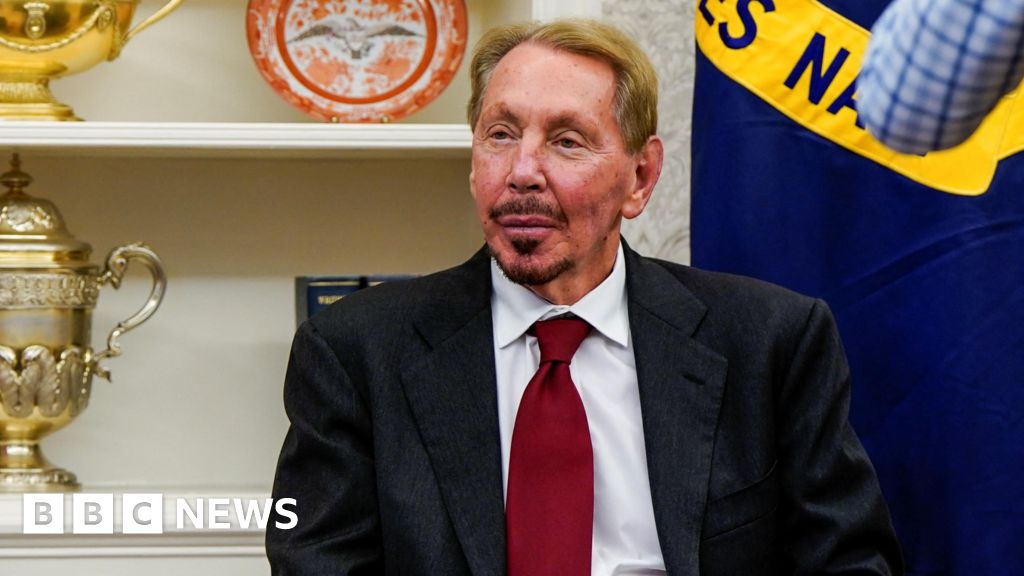
It is thought that thousands of people may have lost their jobs at Oracle, one of the world’s largest tech companies.
Source link
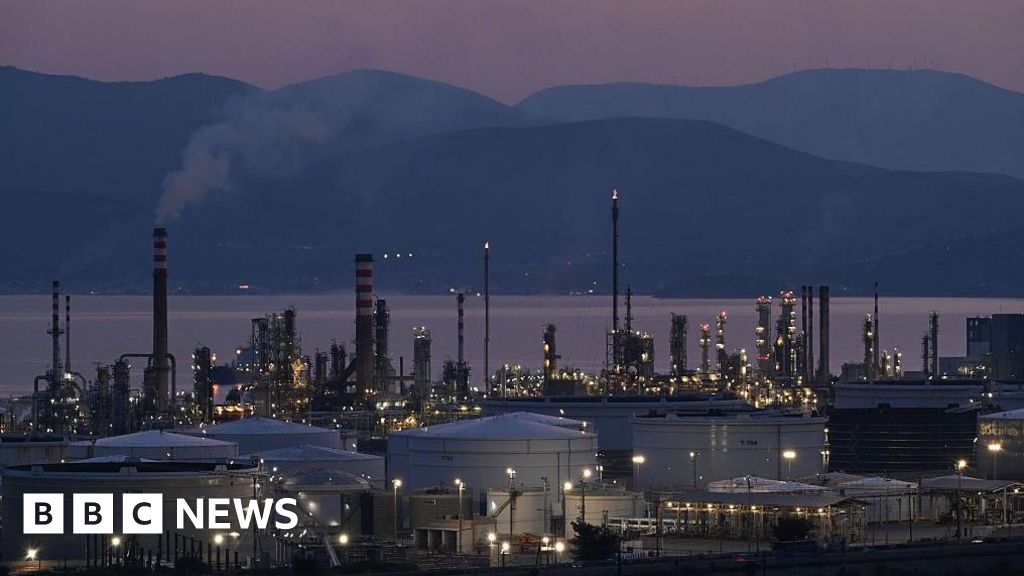
The US-Israel Iran war has halted almost all traffic in a key waterway and the price Brent crude has surged.
Source link

Nike shares fall 9% on weak outlook, expected 20% sales decline in China

Prince Harry surprises crowd by calling attendees his source of hope

Wrigley Field to host Big Ten/SEC volleyball doubleheader

-

 Politics1 week ago
Afghanistan announces release of detained US citizen
-

 Sports1 week ago
Broadcast industry CEO says consolidation is ‘essential’ to compete for NFL soaring media rights prices
-

 Tech1 week ago
Can a Home Appliance Fix the Problem of Soft-Plastic Waste?
-

 Entertainment1 week ago
UN warns migratory freshwater fish numbers are spiralling
-
 Business1 week ago
Property Play: Home flippers see smallest profits since the Great Recession, real estate data firm says
-
 Business1 week ago
Gold prices soar in Pakistan – SUCH TV
-

 Fashion1 week ago
ICE cotton slips on weaker crude, profit booking
-
 Business1 week ago
More women are entering wealth management, but few are in advisory roles, study finds