

Business
New income-tax draft rules 2026: What it means for your salary, PAN and property


New Delhi: The Central Board of Direct Taxes (CBDT) has released the draft Income-tax Rules, 2026, along with a new set of tax forms. This offers a clear glimpse into how the Income Tax Act, 2025 will be implemented from April 1. The draft has been made public for review, giving stakeholders and taxpayers a chance to understand the proposed changes. The government has invited feedback on the rules, with the consultation window open until February 22.
PAN Rules May Ease For Daily Use
The draft rules indicate a big shift in how PAN will be used in everyday financial transactions. One of the key proposals is a higher threshold for quoting PAN in cash dealings. Currently, individuals must provide PAN for a single cash deposit above Rs 50,000 in a day. Under the new framework, PAN may only be required when total cash deposits or withdrawals across accounts touch Rs 10 lakh in a financial year.
Spending at hotels, banquet halls, and event venues may also become less restrictive, with PAN reporting proposed only for payments above Rs 1 lakh double the existing limit. The automobile sector could see relief as well. While PAN is currently needed for most vehicle purchases, the new proposal limits the requirement to transactions above Rs 5 lakh, which may benefit entry-level car buyers.
In the real estate market, the threshold for quoting PAN in property deals may be raised from Rs 10 lakh to Rs 20 lakh, easing compliance for smaller transactions.
However, the draft tightens rules around insurance. PAN may become mandatory for every life insurance premium payment, compared to the earlier rule where it was needed mainly if annual premiums crossed Rs 50,000. Additionally, maturity proceeds from ULIPs could be taxed if annual premiums exceed Rs 2.5 lakh, indicating closer scrutiny of insurance-based investments.
Tax Burden May Rise On Company Car Benefits
Salaried employees may feel the biggest impact of the draft rules in the form of revised perquisite valuations, especially for employer-provided cars. The taxable value of such perks has remained unchanged for years. At present, it ranges between Rs 2,700 and Rs 3,300 per month, depending on the engine capacity of the car.
The draft proposes a significant hike in these valuations. The taxable value may rise to Rs 8,000 per month for cars with engines up to 1.6 litres, and Rs 10,000 per month for vehicles above 1.6 litres. While the revision aims to bring valuations in line with current economic realities, it could lead to a higher taxable salary for employees who receive company cars as part of their compensation.
Relief On Some Employee Benefits Likely
The draft rules also propose higher tax-free limits for several employee benefits that have remained unchanged for years. One of the key changes is in employer-provided meals, where the tax-free value may increase fourfold to Rs 200 per meal.
Similarly, the annual exemption on gifts received from employers could be raised to Rs 15,000, up from the current Rs 5,000 limit.
The rules also offer relief on staff loans, with the tax-free threshold proposed to jump significantly from Rs 20,000 to Rs 2 lakh. If implemented, these changes could provide some cushion to salaried employees despite tighter taxation in other areas.
Education Allowance Hike May Ease Family Expenses
The proposed rules bring welcome relief for parents dealing with rising education costs. Families with school-going children are likely to benefit the most from the revised tax-free limits. The children’s education allowance, which is currently just Rs 100 per month per child (for up to two children), may be increased to Rs 3,000 per month per child. The hostel allowance is also set for a major jump, rising from Rs 300 per month to Rs 9,000 per month per child.
In addition, employees working in educational institutions may see higher tax-free benefits. The exemption on free or concessional education for their children is proposed to go up from Rs 1,000 to Rs 3,000 per month per child.
If these changes come into effect, they could help reduce the tax burden for many middle-class families.
HRA Relief Likely For More Cities
Salaried taxpayers who continue with the old tax regime may soon get extra relief through a higher House Rent Allowance (HRA) exemption. As per draft proposals, the government may expand the list of cities where 50% HRA exemption is allowed.
Currently, this benefit is limited to Delhi, Mumbai, Kolkata and Chennai, while other cities qualify for only 40%. The new proposal could include Bengaluru, Hyderabad, Pune and Ahmedabad in the higher exemption category. If approved, employees living in these cities will be able to claim a larger portion of their HRA as tax-free, helping reduce their overall tax burden.
Tighter ITR Rules And More Disclosure
While the existing ITR-1 to ITR-7 filing system will remain unchanged, the draft rules propose stricter eligibility norms and wider disclosure requirements, indicating closer scrutiny by tax authorities. A new Rule 166 has been proposed to clearly define what qualifies as a defective return. This could include missing schedules, unpaid tax liabilities, or mismatches in MAT and AMT credit claims.
In a major digital push, officials may start sending notices and orders through a dedicated mobile app, alongside the current online communication channels.
Taxpayers with overseas income could face tighter checks as well. Under the proposed rules, claiming Foreign Tax Credit will require additional verification. If the foreign tax paid is Rs 1 lakh or more, certification from a Chartered Accountant will become mandatory, replacing the earlier self-declaration method.
Overall, the draft rules aim to simplify routine compliance, modernise outdated provisions, and tighten oversight of high-value and cross-border transactions. Taxpayers and industry bodies still have a limited window to share feedback before the proposed changes come into effect from April 2026.





Pets at Home investors will be hoping the retailer’s new boss can lay out a strategy to return it to profit growth despite a challenging consumer backdrop.
Shares in the company currently sit close to its lowest level for almost seven years following a recent downturn in the group’s retail arm.
The dip in the group’s performance contributed to the departure of previous chief executive Lyssa McGowan late last year.
In March, former Waitrose boss James Bailey took the reins in a bid to drive a turnaround in performance.
Shareholders will be hoping the new boss can show early signs of improvement and a long-term strategy to drive growth in Pets at Home’s update on Wednesday May 27.
The pet products retailer and vet chain is expected to report an underlying pre-tax profit of around £93 million for the year to March, according to analysts.
It would represent a roughly 30% fall from last year, after the company came under pressure from weak demand for discretionary products.
Analysts have said investors will be looking at early trading in the current financial year to see how consumer spending is holding up.
AJ Bell’s investment director Russ Mould said: “Pets at Home could badly do with some renewed pep.
“Under executive chair Ian Burke, who has returned to a non-executive role after leading the business on an interim basis, Pets at Home laid out a plan to fix a retail business which has been badly affected by a reduction in discretionary spend on toys and treats for Britons’ furry and feathered friends.
“The country may have a reputation for loving their animal companions but in an environment where households are having to watch their pennies, these nice-to-have items were off the list.”
The group has also seen sales of pet food and similar products face fierce pricing competition from non-specialist retailers, such as supermarkets.
It has since cut prices among around 1,000 products in order to help drive activity, with cash-strapped shoppers looking for value.
Data from the Office for National Statistics (ONS) showed that UK retail sales volumes dropped to an 11-month low in April, with a 1.3% fall for the month.
Pets at Home is predicted to report revenues of £1.47 billion for the past year, just marginally lower than £1.482 billion reported last year.
Business
India’s fuel demand growth may slow sharply in H2 2026 amid price hikes, austerity push: Report
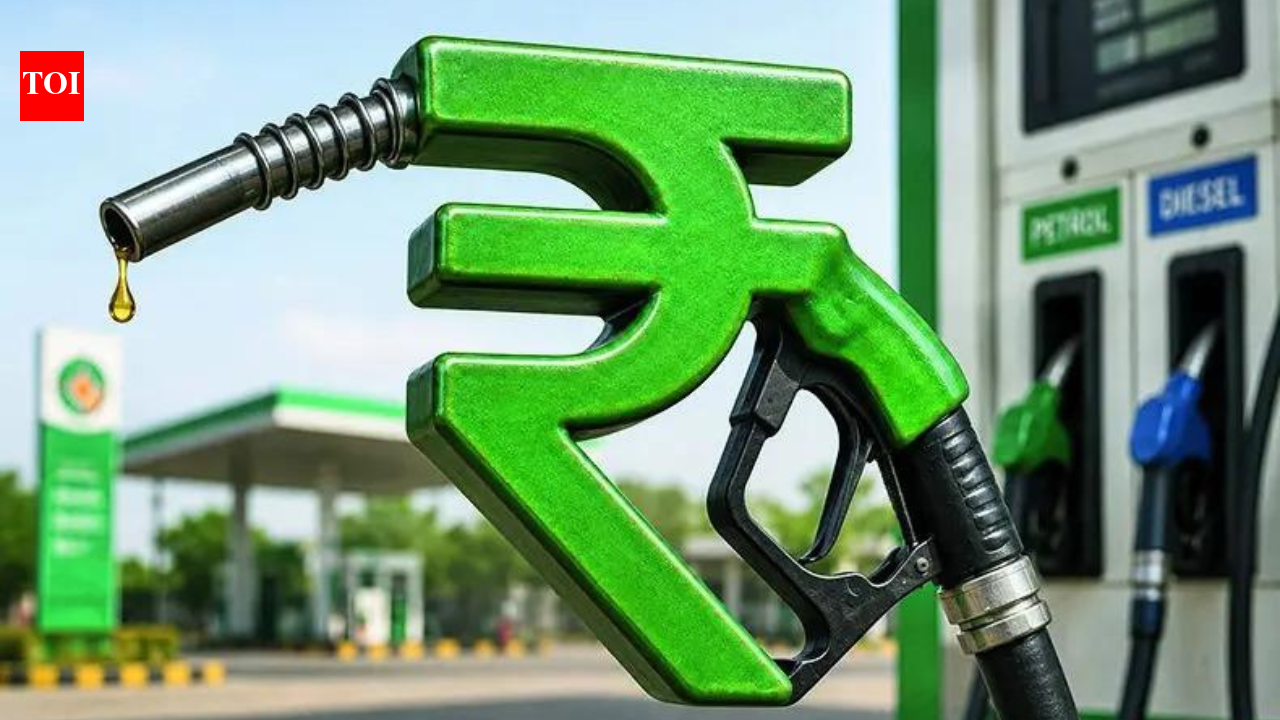
India’s transportation fuel demand growth is expected to slow sharply in the second half of 2026 as higher fuel prices, government-led conservation measures and a weakening rupee weigh on mobility and consumption trends, according to a report.The report by Kpler’s lead analyst (modelling), Elif Binici, revised down India’s 2026 refined products demand growth forecast by around 77,000 barrels per day (kbd), or 39 per cent, to nearly 78 kbd from an earlier estimate of 128 kbd.As per news agency PTI, the downgrade reflects weaker expected growth in petrol and diesel demand due to elevated fuel costs, softer mobility trends and official efforts to conserve fuel amid the ongoing West Asia crisis.Petrol and diesel prices have been increased by around Rs 5 per litre in three instalments since May 15, after oil marketing companies passed on part of the burden of soaring global crude oil prices to consumers.
Petrol demand faces steepest downside risk
The report said petrol demand is likely to see the sharpest slowdown, with projected growth revised down by 25 kbd, from 63 kbd to 38 kbd.Petrol consumption is now estimated at 1,010 kbd, compared to the earlier estimate of 1,035 kbd.According to the report, weaker commuting activity, slower discretionary travel and government fuel-saving campaigns are expected to curb fuel consumption.Annual diesel demand growth was also cut by around 20 kbd, while jet fuel demand growth was nearly halved to about 6 kbd from 11 kbd earlier due to expectations of reduced air travel and tighter spending patterns.“The revisions primarily reflect weaker expected growth in gasoline and diesel demand as higher costs, weaker mobility trends, and recent government-led fuel conservation efforts increasingly feed into domestic transportation activity,” the report said, as quoted by PTI.
Rupee weakness, crude surge add pressure
The report noted that India’s macroeconomic environment has deteriorated since the escalation of the US-Iran conflict, with rising crude import costs, refinery expenses and rupee depreciation increasing inflationary pressure.The rupee has weakened by around 6 per cent since the conflict began and nearly 10 per cent over the past year. Foreign exchange reserves have also reportedly declined by about 4.3 per cent since late February as authorities attempted to stabilise the currency and contain imported inflation.The report said the current average petrol price of around Rs 103 per litre remains well below the estimated breakeven level of nearly Rs 125 per litre.Diesel prices near Rs 94 per litre are also below the estimated breakeven range of Rs 115-120 per litre.Before the recent price revisions, state-run fuel retailers were reportedly losing nearly Rs 1,000 crore daily because rising crude procurement costs and currency weakness outpaced retail fuel prices.“The key issue is the inability of state-run retailers to pass through rising import costs quickly enough to restore profitability,” the report said.
Russian crude continues to support supply security
The report added that India’s dependence on discounted Russian crude imports, estimated at around 1.9-2 million barrels per day, continues to provide stability to the domestic fuel market amid geopolitical uncertainty in West Asia.Policymakers now appear to be prioritising macroeconomic stability, inflation management, foreign exchange preservation and fuel supply security over near-term fuel demand growth.The report warned that unless crude prices ease significantly, the rupee stabilises or additional fiscal support measures are introduced, further fuel price hikes and stricter fuel-conservation measures may become difficult to avoid.
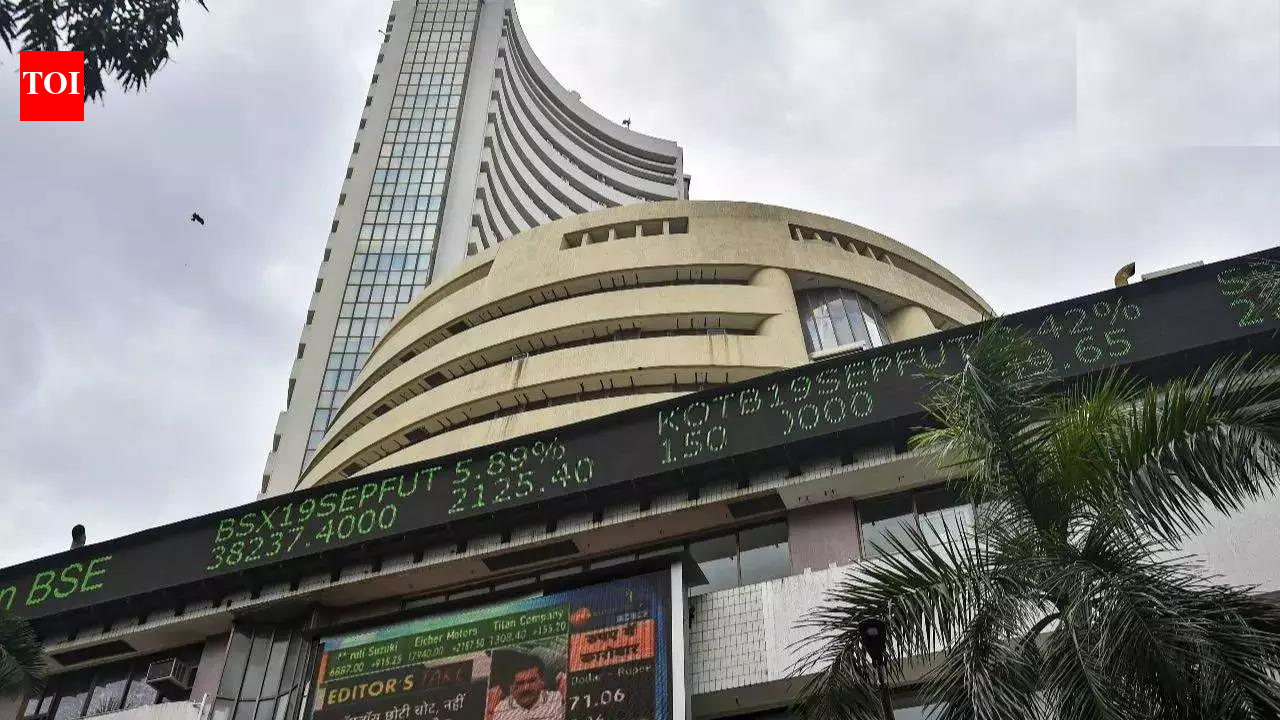
The combined market valuation of six of India’s top-10 most valued companies rose by Rs 74,111.57 crore last week, with Reliance Industries emerging as the biggest gainer. The rally came during a volatile trading week in which the BSE Sensex advanced 177.36 points, or 0.23%.According to news agency ANI, Reliance Industries added Rs 24,696.89 crore to its valuation, taking its total market capitalisation to Rs 18,33,117.70 crore.Tata Consultancy Services saw its valuation jump by Rs 19,338.68 crore to Rs 8,38,401.33 crore, while ICICI Bank added Rs 14,515.93 crore to reach a market capitalisation of Rs 9,06,901.32 crore.The valuation of Life Insurance Corporation of India climbed Rs 9,076.37 crore to Rs 5,14,443.69 crore.Meanwhile, Bajaj Finance gained Rs 3,797.83 crore, taking its valuation to Rs 5,70,515.57 crore, while Larsen & Toubro added Rs 2,685.87 crore to Rs 5,40,228.21 crore.
Airtel, HUL among laggards
On the losing side, Bharti Airtel witnessed the sharpest erosion in market value, losing Rs 20,229.67 crore to settle at Rs 11,40,295.49 crore.The market valuation of Hindustan Unilever declined by Rs 16,212.18 crore to Rs 5,17,380 crore, while State Bank of India lost Rs 12,784.4 crore in valuation to Rs 8,76,077.92 crore.HDFC Bank also saw its market capitalisation dip by Rs 2,094.35 crore to Rs 11,79,974.90 crore.Reliance Industries retained its position as India’s most valued company, followed by HDFC Bank, Bharti Airtel, ICICI Bank, State Bank of India, TCS, Bajaj Finance, Larsen & Toubro, Hindustan Unilever and LIC.
Markets end volatile week with modest gains
Ajit Mishra, SVP, research at Religare Broking Ltd, said markets ended the week with marginal gains amid a “highly volatile and range-bound trading environment”.“Benchmark indices witnessed sharp intraday swings throughout the week, driven by persistent rupee weakness, mixed global cues, sectoral rotation, and continued uncertainty around inflation and interest rates,” he said, as quoted by ANI.Benchmark indices recovered on Friday, with the Sensex closing 231.99 points higher at 75,415.35 and the NSE Nifty rising 64.60 points to settle at 23,719.30.Analysts cited optimism surrounding possible progress in US-Iran peace negotiations and easing Middle East tensions as factors supporting market sentiment.Vinod Nair, head of research at Geojit Investments, was quoted by news agency PTI as saying that domestic markets traded with a “mild positive bias” due to buying at lower levels and constructive global cues.“Globally, the AI investment theme remained the primary driver, while domestically, financial stocks led the gains,” he said.Brent crude prices climbed 2.3% to $104.7 per barrel, while foreign institutional investors (FIIs) sold equities worth Rs 1,891.21 crore in the previous session.


Prince George set to reconnect with cousin in unexpected twist

Queen Elizabeth II heartbreaking final message for Prince Philip emerges

Proposed US-Iran deal involves opening strait during ceasefire extension: report

-

 Entertainment1 week ago
Where Pete Davidson, Elsie Hewitt stand after breakup: Details revealed
-

 Politics1 week ago
Rising diesel costs from Iran war strain US school budgets
-

 Entertainment1 week ago
Drake drops highly anticipated "Iceman" album, plus two surprise albums
-

 Tech1 week ago
Greg Brockman Officially Takes Control of OpenAI’s Products in Latest Shakeup
-

 Tech1 week ago
Why Is Your Grill So Dumb? The Best Grills Set Temp Like an Oven
-

 Tech1 week ago
This Solar-Powered Smart Sprinkler Keeps My Lawn Watered Without Any Power Cables
-

 Fashion1 week ago
RMG trade bodies seek policy support from Bangladesh PM
-
 Business1 week ago
Oil price gains and Westminster worry sink stocks