

Fashion
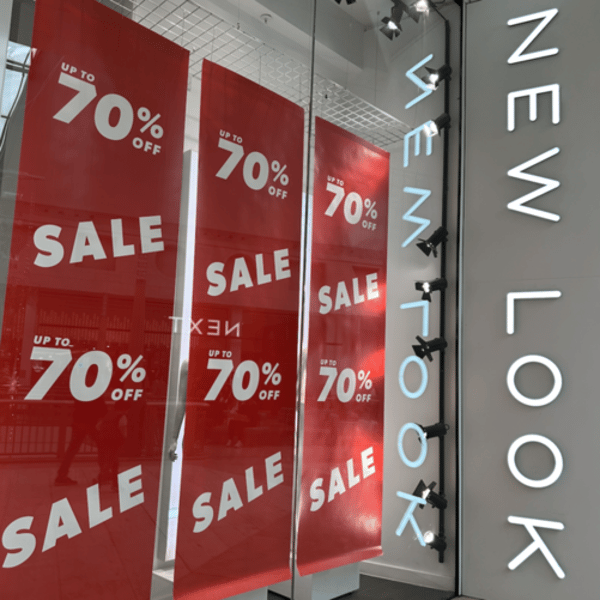
New Look sales and profits dip as it discounts heavily, but CEO upbeat as progress is made

Published
January 5, 2026
New Look has filed its accounts for the year to the end of March and they show both challenges and progress. The company — or New Look Retailers Limited to give it its official name — is reportedly up for sale. So what condition would any buyer find it in?
Bearing in mind that the latest year was the 52 weeks to late March 2025, rather than 53 weeks in the prior year, it saw a revenue fall that was about more than just the loss of an extra trading week.
The company said that total revenue dropped to £687.7 million from £735.4 million due to “store closures and tough trading conditions”.
The gross margin fell to 48.1% from 48.7% due to higher levels of discounting, the overall challenging market and unseasonal weather.
Meanwhile the company’s adjusted EBITDA fell to £18.47 million from £46.65 million due to that reduction in sales and the increased promotional activity.
The operating loss was £47.6 million after a profit of £17.4 million on the same basis is the year before. The statutory loss before tax widen to £77.2 million from a £3.6 million loss the previous year, partly due to those lower sales but also increased admin expenses. They included the cost of liquidation of the Irish business (which added up to more than £40 million) and increased staff costs. Finance expense was also higher for the business.
The net loss for the period was also £77.2 million after a £3.7 million loss in the prior year.
But the company got a £30 million cash injection from its shareholders to accelerate its digital transformation during the period.
Other upbeat news during the year was that the company remains a key part of the UK womenswear retail scene (it was number three overall for womenswear in the 18 to 44 age range both online and offline). It also maintained its number one market share position in women’s dresses, jeans and footwear.
And its total known customers grew by 15% to 10 million with its CRM customer base growing 32% to 4.5 million.
It ended the year with 337 stores compared to 356 in the previous period.
CEO Helen Connolly told FashionNetwork.com: “The past year has been about sharpening our focus and strengthening our existing foundations. We have made deliberate choices to simplify the business and invest where we know we can win – in digital, data and customer experience.
“Moving through the festive season, we are seeing encouraging signs of momentum, with strong customer loyalty and engagement, along with an expanding digital base. We remain focused on our goal to double digital orders from £500m to £1bn by 2030. There is still more to do, but our direction is clear and our strategy is working. We are entering this next phase with confidence, discipline and a strong understanding of what matters most to our customers.”
As her upbeat stance suggests, the company has been putting a number of growth initiatives in place since the financial year ended and only last month named a new retail director responsible for the store estate and for implementing its omnichannel strategy across stores “to drive sales and enhance the customer experience”.
It also recently launched its first-ever loyalty programme, Club New Look; added all its major suppliers to the TrusTrace global platform to standardise its supply chain traceability and compliance data management; and got that big cash injection. The £30 million will be spent on its data, AI and e-commerce platforms “to enhance [the] seamless, personalised shopping experience for its 10 million customers”. As well as doubling digital orders from to £1 billion by 2030, it wants to grab a 10% online market share by FY28.
Copyright © 2026 FashionNetwork.com All rights reserved.












ASEAN+3 comprises the members of the Association of Southeast Asian Nations (ASEAN), China, South Korea and Japan.
Macroeconomic stabilisation in the ASEAN+3 nations has progressed while navigating the new energy shock triggered by the Middle East conflict.
Structural adjustments continue, according to the latest ASEAN+3 Regional Economic Outlook.
While vulnerabilities remain, the pace and direction of policy adjustment have improved significantly in the region.
In Singapore and Malaysia, strong institutional credibility, financial stability and well-developed investment frameworks support relatively stable economic management.
In Vietnam and Cambodia, manufacturing and services continue to underpin economic activity despite external headwinds.
Adjustment is also visible in economies that have faced more acute macroeconomic pressures, where policy measures to stabilise exchange rates, recalibrate fiscal policy and strengthen debt management have contributed to a marked improvement in macroeconomic conditions compared with earlier periods of stress, the report released by the ASEAN+3 Macroeconomic Research Office (AMRO) said.
While vulnerabilities remain, the pace and direction of policy adjustment have improved significantly, it noted.
Taken together, these experiences suggest that economic management in the region has evolved around a pragmatic combination of policy approaches rather than a single doctrinal model, the report remarked.
Regional economies are placing greater emphasis on strengthening flexibility and resilience in trade, foreign direct investment and financial flows.
At the same time, many economies across the region are investing in digitalisation, advanced manufacturing and emerging technologies.
Rather than narrow sectoral targeting, industrial strategies often emphasise foundational capabilities—human capital development, digital infrastructure and technological capacity. These efforts support adaptation to shifting global conditions while maintaining long-term competitiveness, it added.
Fibre2Fashion News Desk (DS)

Kornit Digital Ltd. (NASDAQ: KRNT “Kornit Digital”, “Kornit”, or the “Company”), a global pioneer in sustainable, on-demand digital fashion and textile production, today announced more than 500 leaders from across the apparel ecosystem are gathering in Hollywood, Florida for Konnections 2026 – Powered by Kornit. With more than 20 sessions across three days, the event takes place at a pivotal moment as the industry explores how technology is enabling new levels of agility.
Kornit’s Konnections 2026 gathers 500+ global leaders to advance on-demand apparel production.
With Atlas MATRIX and PrintFactory, the company is building a digital infrastructure linking demand, production, and fulfilment.
The event underscores a shift towards agile, real-time manufacturing with reduced inventory risk and scalable global consistency.
Now in its third year, Konnections has become a central global platform where the industry aligns around what comes next. The event brings together leading sports and fashion brands, digital platforms, creators, designers, software partners, fulfillment providers, investors, analysts, and media, all focused on one clear direction: accelerating the move from forecast-driven production toward agile, on-demand manufacturing.
Critical inflection point
The apparel industry is undergoing a structural shift. Demand is faster, more fragmented, and increasingly shaped by digital platforms and creators. Brands are seeking to reduce risk, improve margins, and operate more sustainably while delivering higher quality at greater speed. These dynamics are accelerating the transition toward demand-driven production, enabled by technologies allowing companies to respond in real time to market needs. Konnections highlights this shift not as a future vision, but as a transformation already underway across the global apparel industry.
From technology to infrastructure
At Konnections 2026, Kornit will unveil Atlas MATRIX, a breakthrough system enabling true on-demand manufacturing across all major fabric types, including cotton, polyester, and blends, within a single platform. By enabling consistent retail-quality production across multiple fabrics, Atlas MATRIX removes one of the largest barriers preventing digital production at scale.
In parallel, Kornit is highlighting the strategic acquisition of PrintFactory, a cloud-native color and production platform enabling consistent output across digital and analog environments. PrintFactory expands Kornit’s ability to support large global producers transitioning from analog to digital production while enabling distributed production at scale. This acquisition strengthens Kornit’s infrastructure connecting demand generation with consistent global fulfillment and expands Kornit’s reach into the large global screen-printing market.
Together, these innovations reflect a clear strategic direction: building a fully digital infrastructure linking demand generation with production and fulfillment, supporting scalable on-demand manufacturing globally. This integrated approach enables brands and demand generators to scale on-demand production globally with consistent quality, supporting faster response to market trends while reducing inventory risk.
“We are witnessing the gradual decline of traditional production models and the emergence of a new era in apparel manufacturing,” said Ronen Samuel, Chief Executive Officer of Kornit Digital. “Production is increasingly moving closer to demand, enabled by digital infrastructure connecting demand generation, production, and fulfillment. Konnections unifies the leaders shaping this transformation.”
A global ecosystem connected
Konnections brings together the full value chain enabling this shift, including global brands, sportswear leaders, digital-native platforms, designers, and fulfillment providers. Participants represent a truly global ecosystem with attendees from the Americas, Europe, and Asia. Keynote speakers include Nick Beighton, former CEO of ASOS; Alex Saltonstall, CEO of the combined Printful and Printify platform; Daymond John, entrepreneur and Shark Tank investor; and senior leaders from global brands including Legends, Custom Ink, Redbubble, Zumiez, Life is Good, Nine Line, Grand Style, and additional industry innovators.
Innovation in action
A central component of the event is the Konnections Solutions Showcase, where Kornit will highlight Atlas MATRIX, Apollo, and Presto MAX PLUS for roll-to-roll and technical applications, alongside innovations in materials, automation, and integrated production solutions. A broad ecosystem of partners will present complementary technologies spanning software, robotics, blank goods, and production automation, demonstrating how connected solutions enable faster, more efficient, and more responsive production environments.
Mr. Samuel concluded, “Konnections 2026 represents a defining moment for an industry increasingly shaped by agility, real-time production, and minimal waste. Konnections unifies the global ecosystem enabling this transformation and demonstrates how the future of apparel production is becoming a reality.”
Note: The headline, insights, and image of this press release may have been refined by the Fibre2Fashion staff; the rest of the content remains unchanged.
Fibre2Fashion News Desk (MS)
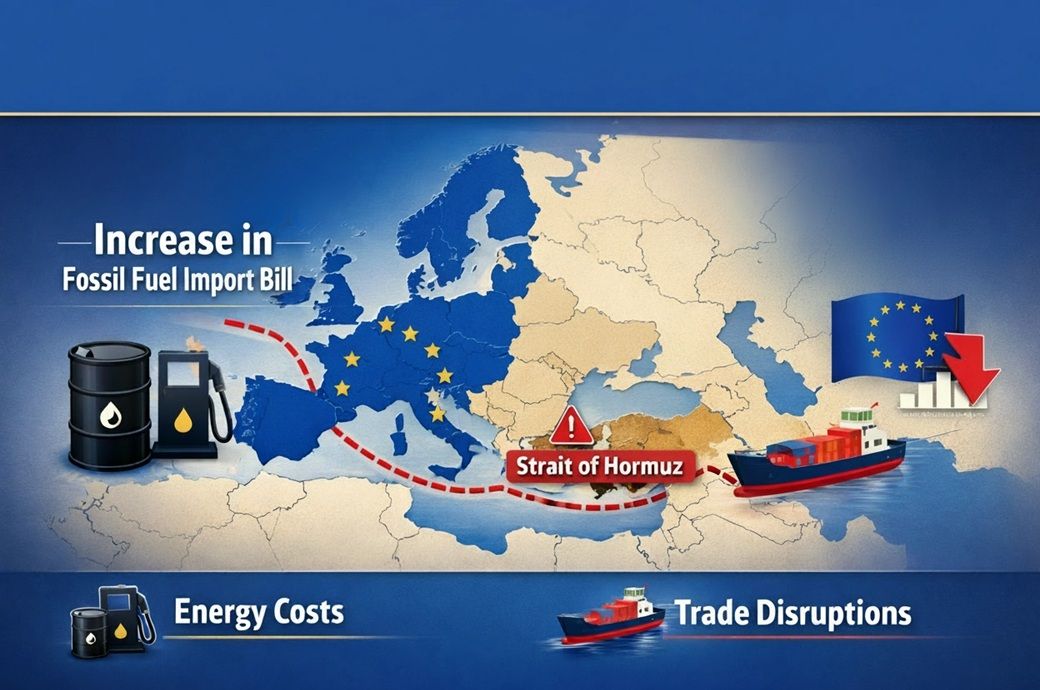
This was mentioned by Commission President Ursula von der Leyen in her recent statement on the impact of the situation in the Middle East on the EU.
Robust intra-EU coordination, measures member states might apply to better protect vulnerable households and sectors from high energy prices, and ways to reduce energy demand are among the measures that the European Commission will present at the European Council meeting in Cyprus soon.
The protection measures should be targeted to vulnerable groups, timely and temporary, Commission president said.
“We are also looking into EU-wide coordination of member states’ gas storage filling, to avoid that many member states go to the market at the same time, so they are competing against each other. We will also coordinate oil stock releases, to achieve the largest possible effect of these releases. And we will ensure that member states’ emergency measures will not impact the Single Market,” her statement said.
“The [protection] measures should be targeted to vulnerable groups, timely—they have to be fast, not in a year but immediately—and temporary—so for a short amount of time you can apply them, but if they are cast in law, you have to make sure that you get out of the measures in a timely manner,” she noted.
This week, the Commission will consult member states on more flexible state aid rules—an important tool—to give members more space for temporary state aid support in the most exposed sectors.
“And my goal is that this temporary state aid framework should be adopted still this month—so that we have the new temporary framework for state aid in April,” she said.
“At the same time, we also need more structural measures to bring down energy prices and give relief to citizens and businesses,” she noted.
She said the only lasting way out of the fossil dependence is to modernise by shifting electricity generation to renewables and nuclear, and by electrifying the economy as rapidly as possible.
She encouraged member states to make better use of existing EU funding like the Cohesion Funds by investing it in grids, storage and batteries.
Fibre2Fashion News Desk (DS)


ASEAN+3 sees macroeconomic stabilisation amid structural adjustments

Morgan Stanley tops estimates as trading revenue exceeds expectations by nearly $1 billion

Kornit brings global apparel leaders together at Konnections 2026

-

 Fashion1 week ago
India’s exports face reset as EU links trade to carbon metrics: EY
-

 Entertainment1 week ago
Queen Elizabeth II emotional message for Archie, Lilibet sparks speculation
-

 Tech7 days ago
As the Strait of Hormuz Reopens, Global Shipping Will Take Months to Recover
-

 Entertainment1 week ago
Lamar Odom shocking response to Khloé Kardashian account of his overdose
-

 Tech1 week ago
Azure customers up in arms over ‘full’ UK South region | Computer Weekly
-

 Fashion1 week ago
CII submits 20-pt agenda to Indian govt to back firms hit by Iran war
-

 Tech6 days ago
This AI Button Wearable From Ex-Apple Engineers Looks Like an iPod Shuffle
-

 Tech1 week ago
A Single Strike Won’t Shut Off the Gulf’s Desalination System