

Fashion
Nextil strengthens its US presence with the acquisition of a 51% stake in medical textile specialist Isavela


By
Europa Press
Published
December 17, 2025
Nextil has signed a Memorandum of Understanding (MoU) with the shareholders of Texas-based US company Isavela, with a view to acquiring a 51% majority stake in the company.
As reported by the company in a statement to the Spanish National Securities Market Commission (CNMV) on Wednesday, Isavela specialises in the design, manufacture, and marketing of compression and post-operative garments for the medical sector, operating in the high value-added “medical garments” segment.
Specifically, the company develops textile solutions that require premium elastic fabrics, high-quality standards, traceability and regulatory compliance, as well as close collaboration with hospitals, clinics and healthcare professionals, mainly in the US.
At present, Isavela generates recurring revenues of more than 10 million dollars (8.6 million euros), with EBITDA of over 3 million dollars (2.6 million euros), reflecting a specialised, profitable business model with high recurrence.
Thus, the potential integration of Isavela would enable Nextil to complete the value chain in the medical segment, from fabric development through to the finished garment, drawing on its international industrial platform and its expertise in management, innovation and sustainability.
Following the transaction, Isavela will continue to operate independently under the leadership of its current executive team, maintaining its identity, culture, and specialisation, while benefiting from Nextil’s industrial, technological, and commercial support to accelerate its expansion in the United States and other international markets.
The agreement provides for a flexible payment structure, combining an initial cash payment and a deferred component, which may be settled in cash or in Nextil shares, at Nextil’s discretion. The MoU also includes a future option to acquire 100% of Isavela, within a timeframe agreed by the parties, with the aim of supporting the project’s growth and maximising joint value creation in the medium and long term.
Likewise, the agreement establishes a joint work period to carry out due diligence, draw up the business plan and negotiate the final agreements.
“Isavela is a company with an excellent position in the medical and post-operative sector, an exceptional team and a solid business model,” said Nextil Group, stressing that this agreement enables it to advance in a strategic segment, integrate the entire value chain and strengthen its presence in the US with a long-term vision, as it has “great ideas for product, market and design development.”
Furthermore, the company highlighted that this agreement forms part of Nextil’s strategic plan, which continues to actively analyse new opportunities for inorganic growth, especially in high value-added segments with strong potential for international expansion.
Lastly, the company stated that it will promptly inform the market of any relevant developments relating to this transaction and to the rest of the group’s strategic initiatives.
This article is an automatic translation.
Click here to read the original article.
Copyright © 2025 Europa Press. Está expresamente prohibida la redistribución y la redifusión de todo o parte de los contenidos de esta web sin su previo y expreso consentimiento.











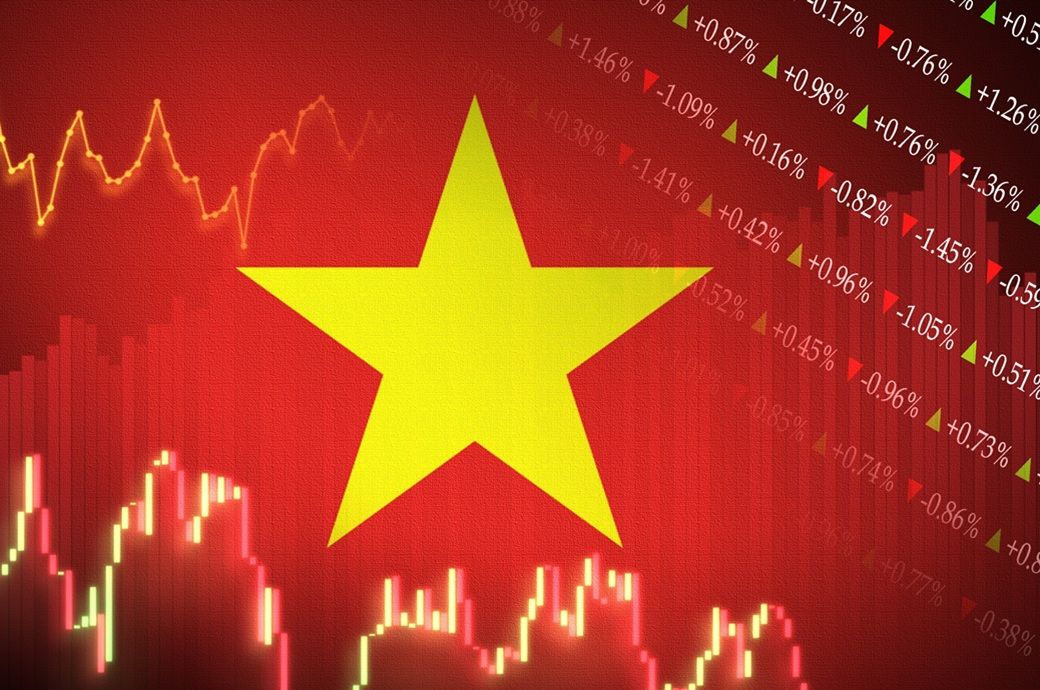
Affirming its ’Ba2’ rating, the agency said Vietnam’s institutional quality and governance were improving due to administrative, legal, and public sector reforms implemented since late-2024, and downside risks from US trade measures had eased compared with what was expected earlier.
Moody’s Ratings recently raised its outlook on Vietnam to ‘positive’ from ‘stable’, citing rising confidence in the country’s ability to strengthen its credit profile over the medium term.
Affirming its ’Ba2′ rating, it said Vietnam’s institutional quality and governance were improving due to reforms implemented since late-2024, and downside risks from US trade measures had relatively eased.
Moody’s emphasised that the country’s growth potential continues to be a primary anchor for its credit profile. This is supported by a diversified export base, recovering domestic demand and robust foreign direct investment (FDI) inflows, all of which provide a solid foundation for macroeconomic stability.
Vietnam has demonstrated a high degree of adaptability to global volatility like fluctuating energy prices, rising shipping costs and inflationary pressures stemming from geopolitical tensions. This resilience is underpinned by a stable economic foundation, a positive external balance and a highly diversified trade structure, it noted.
However, risks within the banking system, vulnerabilities in the real estate market and lingering institutional bottlenecks continue to serve as hurdles for a potential rating upgrade in the future, the rating agency cautioned.
Fibre2Fashion News Desk (DS)

He said the sharp increase in oil and gas prices has fuelled inflationary pressures, weighing on the country’s growth outlook. Despite the downgrade, the government expects economic recovery, projecting growth to rebound to 5 per cent in 2027 and average around 5.5 per cent annually through 2029.
Cambodia has lowered its 2026 growth forecast to 4.2 per cent from 5 per cent due to rising oil and gas prices amid Middle East instability and Thailand border tensions.
Inflationary pressures are weighing on the economy, though growth is expected to recover to 5 per cent in 2027.
Export-driven sectors and tourism remain vulnerable to global volatility.
Cambodia’s economy continues to rely heavily on exports of garments, footwear and travel goods, alongside tourism, agriculture and construction. Authorities cautioned that prolonged global uncertainty could further impact these key sectors and slow overall economic momentum.
Fibre2Fashion News Desk (CG)

In the Tiruppur market, cotton yarn trade soared by ****;*–** per kg since last Friday. Spinning mills are increasing yarn prices to cover additional cost of production due to costly cotton. Cotton prices jumped by ****;*,***–*,*** per candy in the last couple of days. A trader from Tiruppur market told Fibre*Fashion, “It was inevitable to increase yarn prices as mills cannot absorb such steep rise in cotton prices. Even after increase in yarn prices, supplies are still limited as mills are exporting yarn at attractive prices. Indian spinning mills’ cotton yarn export ratio increased up to ** per cent of its total production from nearly ** per cent, few months ago.”
In Tiruppur, knitting cotton yarn prices were noted as: ** count combed cotton yarn at ****;***–*** (~$*.**–*.**) per kg (excluding GST), ** count combed cotton yarn at ****;***–*** (~$*.**–*.**) per kg, ** count combed cotton yarn at ****;***–*** (~$*.**–*.**) per kg, ** count carded cotton yarn at ****;***–*** (~$*.**–*.**) per kg, ** count carded cotton yarn at ****;***–*** (~$*.**–*.**) per kg, and ** count carded cotton yarn at ****;***–*** (~$*.**–*.**) per kg.


Moody’s raises Vietnam’s outlook to ‘positive’ from ‘stable’

Motorbikes, buses, rickshaws to use designated lanes on Karachi’s Sharea Faisal or face fines

Cambodia cuts 2026 growth forecast to 4.2% amid Middle East turmoil

A Brain Implant for Depression Is About to Be Tested in Humans

Pro wrestling star Steph De Lander reveals how colleague’s advice helped lead her to title triumph at ACW

‘I had £20,000 stolen and had to fight a 13-month fraud reporting rule to get it back’

-
 Tech1 week ago
A Brain Implant for Depression Is About to Be Tested in Humans
-
 Sports1 week ago
Pro wrestling star Steph De Lander reveals how colleague’s advice helped lead her to title triumph at ACW
-
Business1 week ago
‘I had £20,000 stolen and had to fight a 13-month fraud reporting rule to get it back’
-

 Entertainment1 week ago
Norway joins Type 26 Frigate Programme to boost NATO naval power
-

 Entertainment1 week ago
Melania Trump says ABC should ‘take a stand’ on late-night host Kimmel
-

 Tech1 week ago
Are tech leaders risking a cyber resourcing crisis? | Computer Weekly
-
 Business6 days ago
PSX plunges over 4,800 points | The Express Tribune
-
 Business1 week ago
Starmer says ‘tide could be turning’ on shoplifting epidemic